Artwork
Dawn
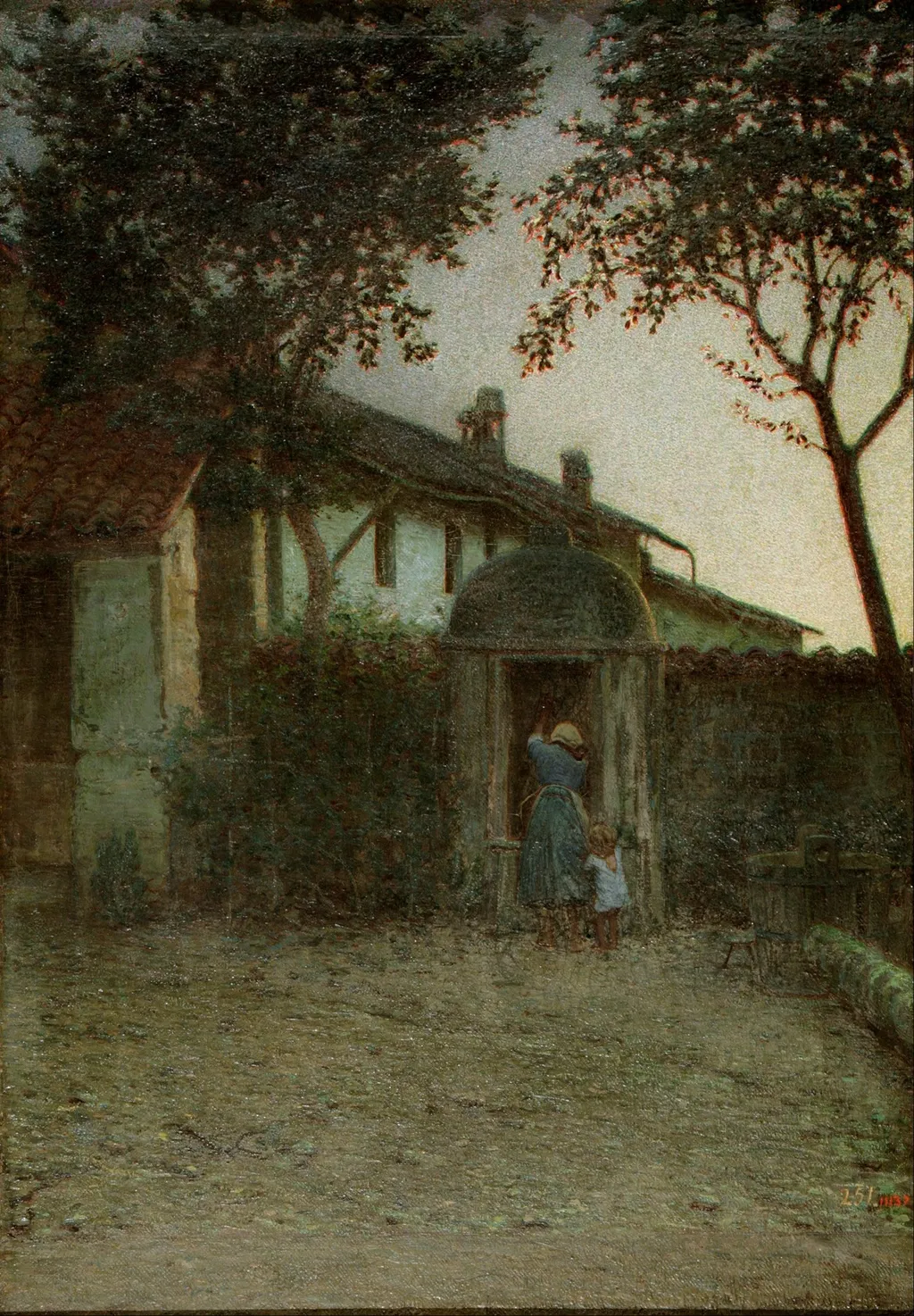
Dawn is an oil painting by the Post-Impressionist artist Angelo Morbelli. It dates from 1896 and is held in the collection of the Museu Nacional d'Art de Catalunya.
About this work
Overview
Angelo Morbelli painted *Dawn* in 1896 using oil on canvas, marking a shift toward the Divisionist technique in his later career.
Angelo Morbelli painted *Dawn* in 1896 using oil on canvas, marking a shift toward the Divisionist technique in his later career. The work belongs to the broader post-Impressionist movement in Italy, reflecting a growing interest in capturing everyday life with structural precision and emotional restraint. It is currently held in the collection of the Museu Nacional d'Art de Catalunya, where it contributes to the museum’s representation of late 19th-century European realism.
Subject & Meaning
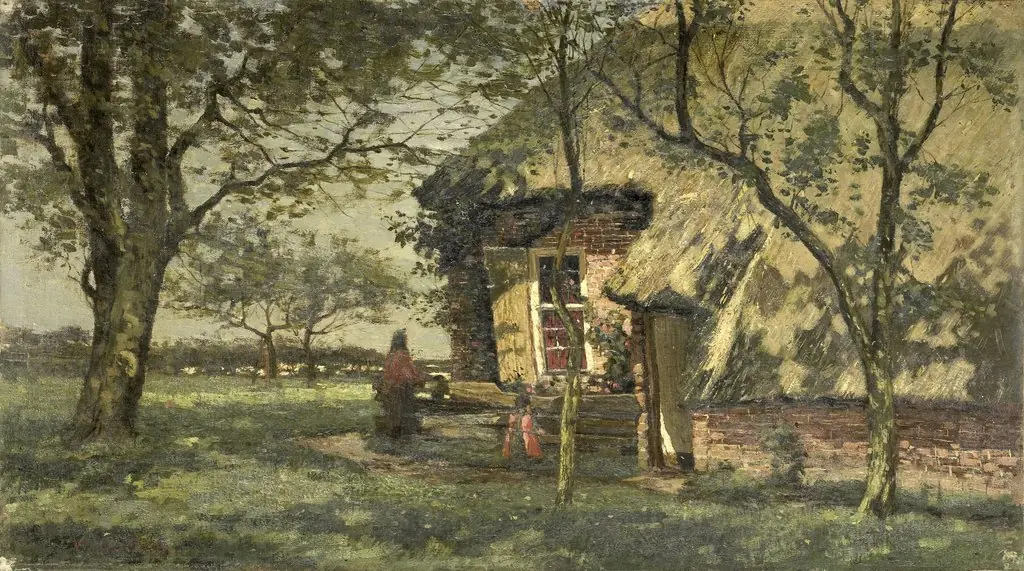
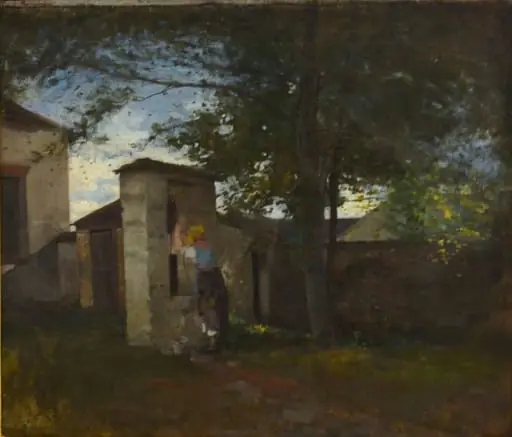
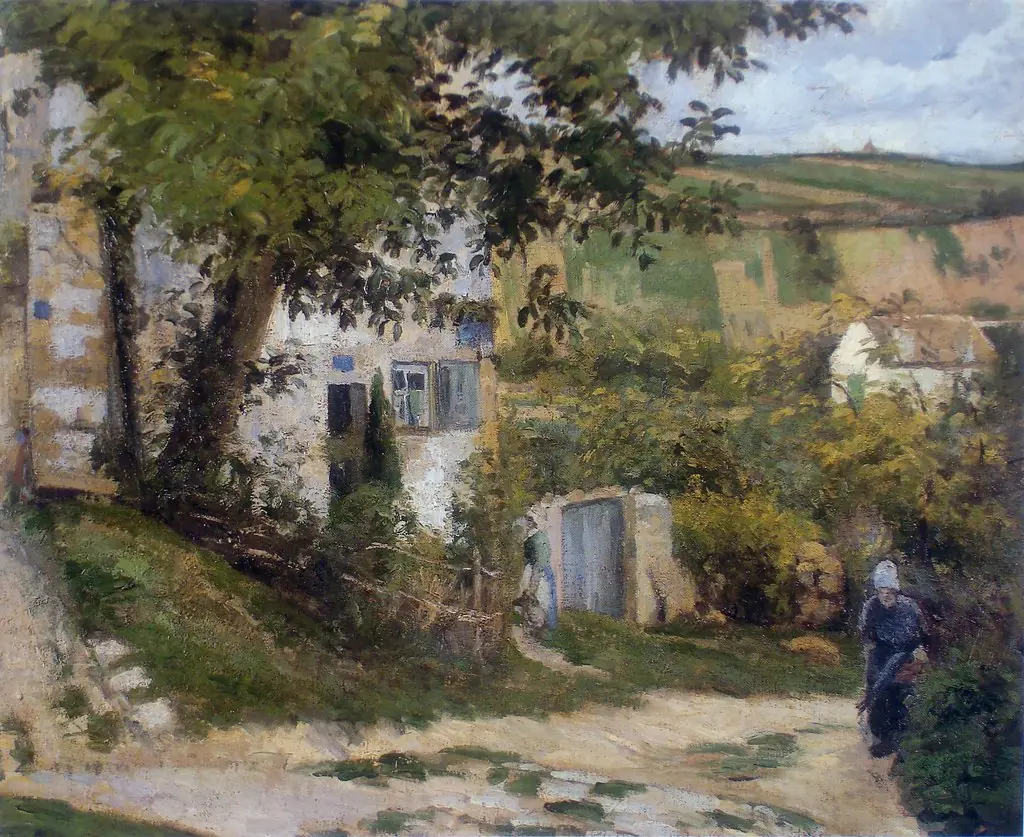
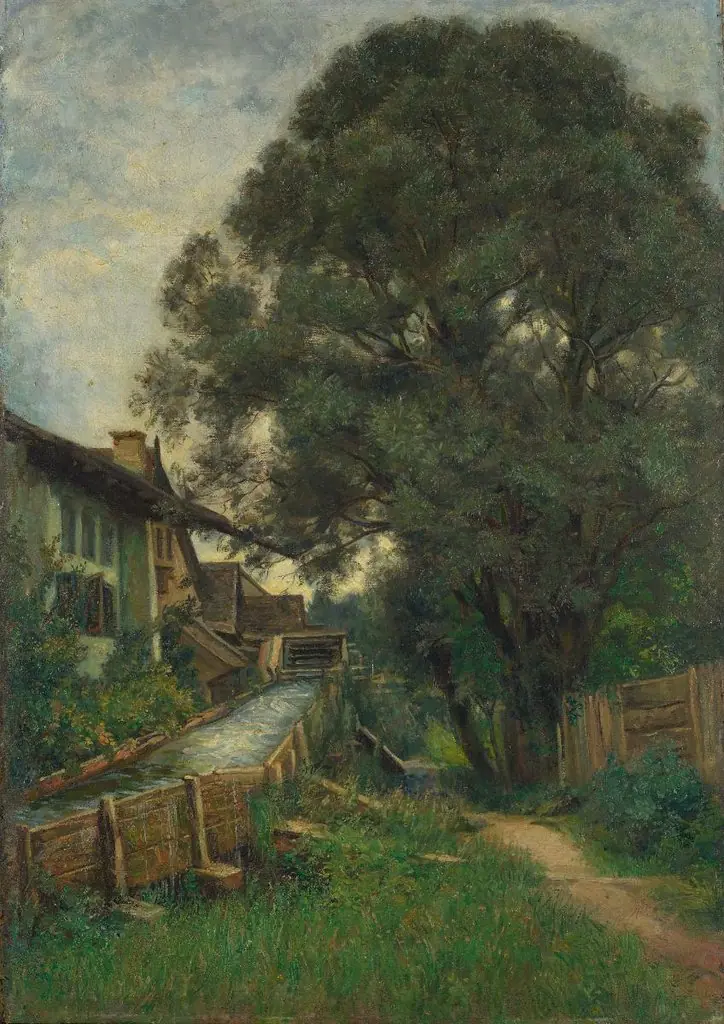
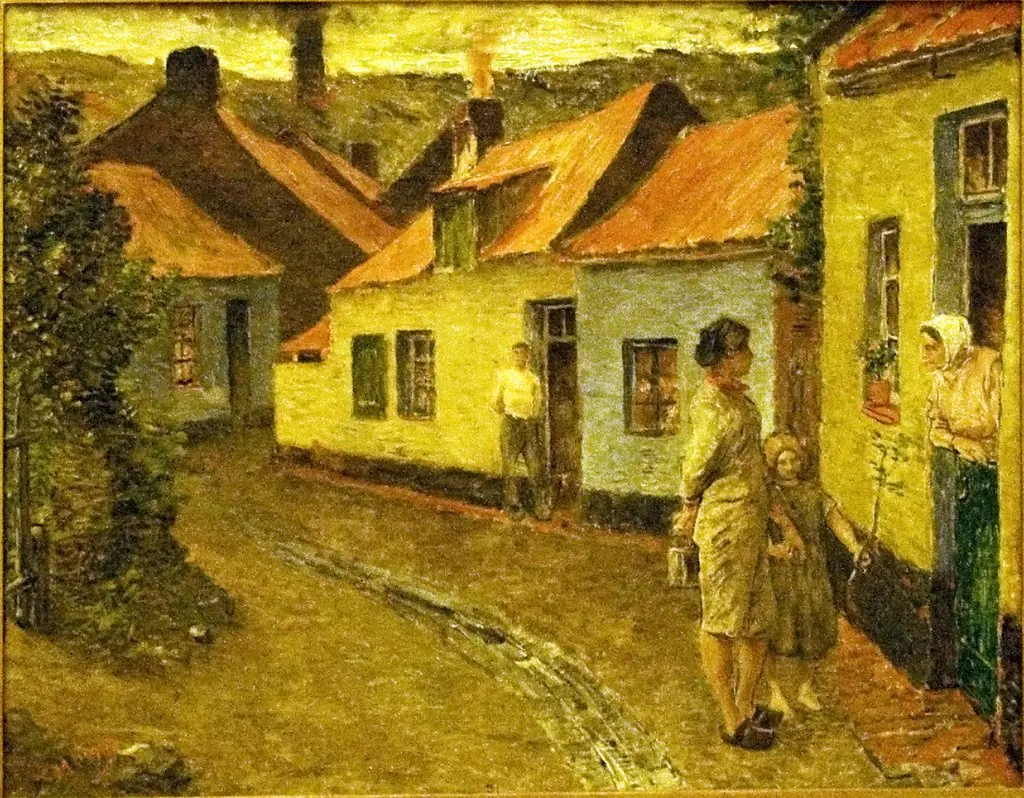
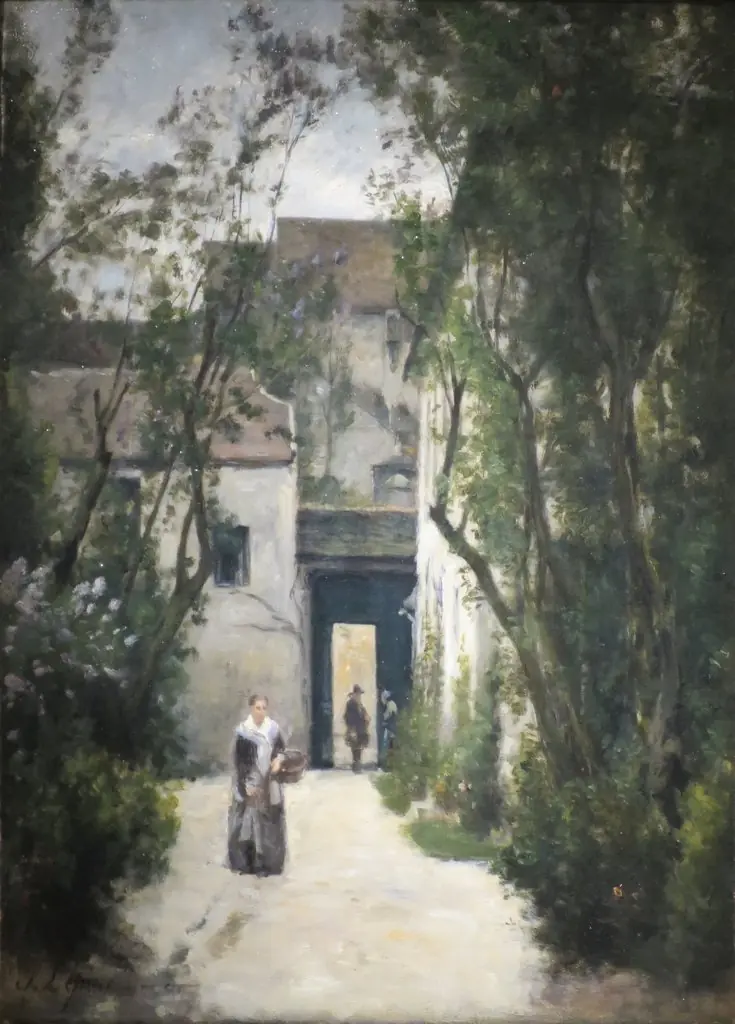
The painting portrays a woman and child standing before a modest rural home, their quiet posture suggesting a moment of stillness at daybreak. The woman, dressed in simple blue attire and a hat, holds the child’s hand as both face the viewer with calm attention. No overt narrative is given, but the scene evokes themes of domestic solitude, early labor, or quiet resilience—common concerns in Morbelli’s socially aware depictions of rural life.
Technique & Style
Morbelli employed Divisionist brushwork, applying small, distinct strokes of color to create luminous surfaces without blending. The light is rendered through layered tones rather than chiaroscuro, producing a diffuse, atmospheric glow. The composition is carefully balanced, with the figures anchored against the architectural forms of the house and surrounding wall, while the textured ground of dirt and fallen leaves adds tactile realism to the scene.
History & Provenance
Created in 1896, *Dawn* emerged during a period when Morbelli was increasingly focused on the lives of the rural poor, moving away from earlier, more theatrical subjects. The painting entered the Museu Nacional d'Art de Catalunya’s collection in the 20th century, likely through acquisition or donation. Its presence in a Catalan institution reflects broader European interest in Italian social realism during the early modern period.
Context
In late 19th-century Italy, artists like Morbelli responded to industrialization and urban migration by documenting rural existence with empathy. *Dawn* aligns with contemporaneous movements in France and Spain that sought to elevate ordinary life through formal innovation. While not overtly political, the painting’s quiet dignity reflects a cultural shift toward recognizing the dignity of labor and the emotional weight of daily routine.
Legacy
Though Morbelli is less widely known than his French or Spanish peers, *Dawn* exemplifies his contribution to the evolution of Italian realism. The painting’s restrained palette and deliberate composition influenced later generations interested in merging social observation with modernist technique. Its preservation in a major European museum ensures continued scholarly attention to his nuanced portrayal of quiet human moments.
Own this work as a print
Artist & collection
Artist
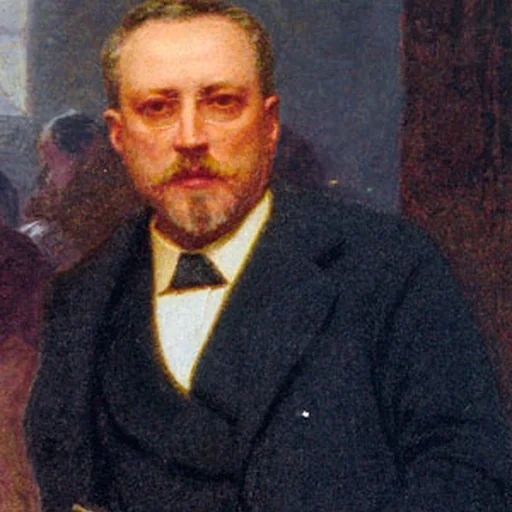
Angelo Morbelli (18 July 1853, Alessandria – 7 November 1919, Milan) was an Italian painter of socially conscious genre scenes. During his later years, he painted in the Divisionist style.