Artwork
Icon of the Mother of God and Infant Christ (Virgin Eleousa)
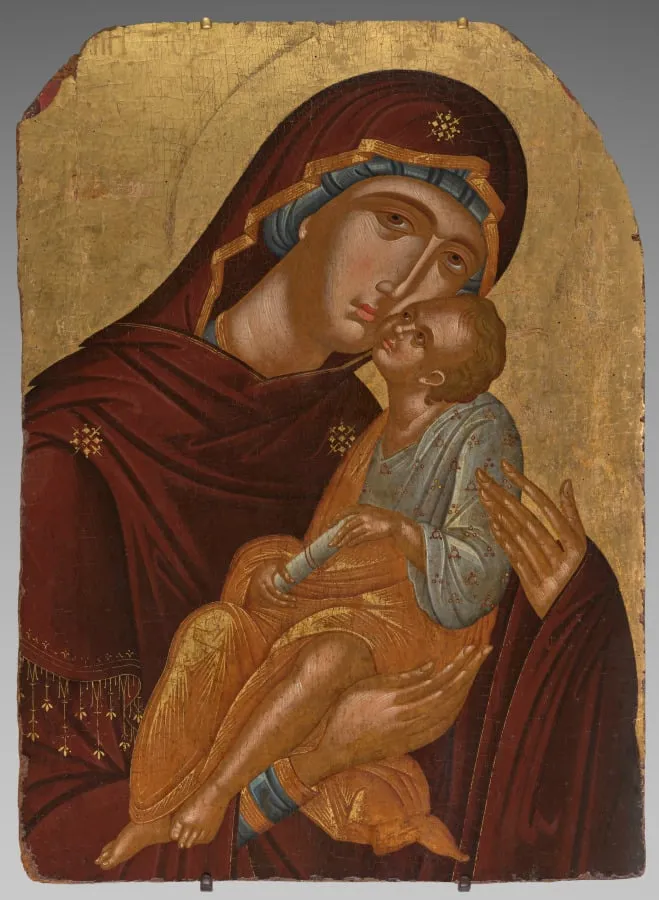
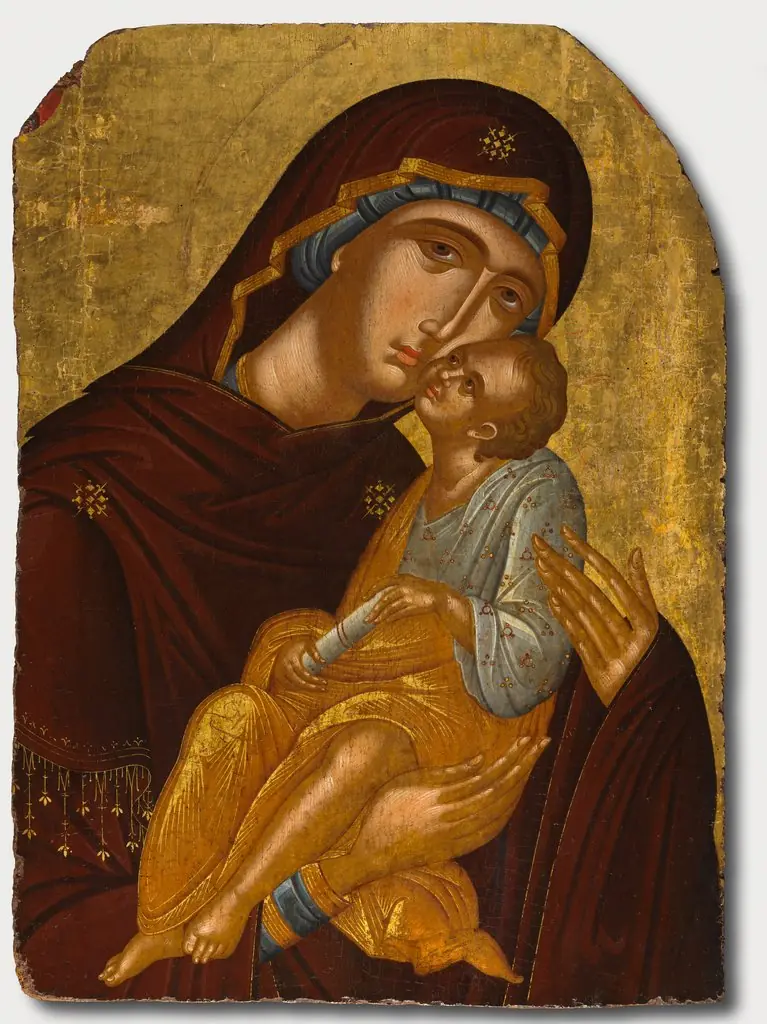
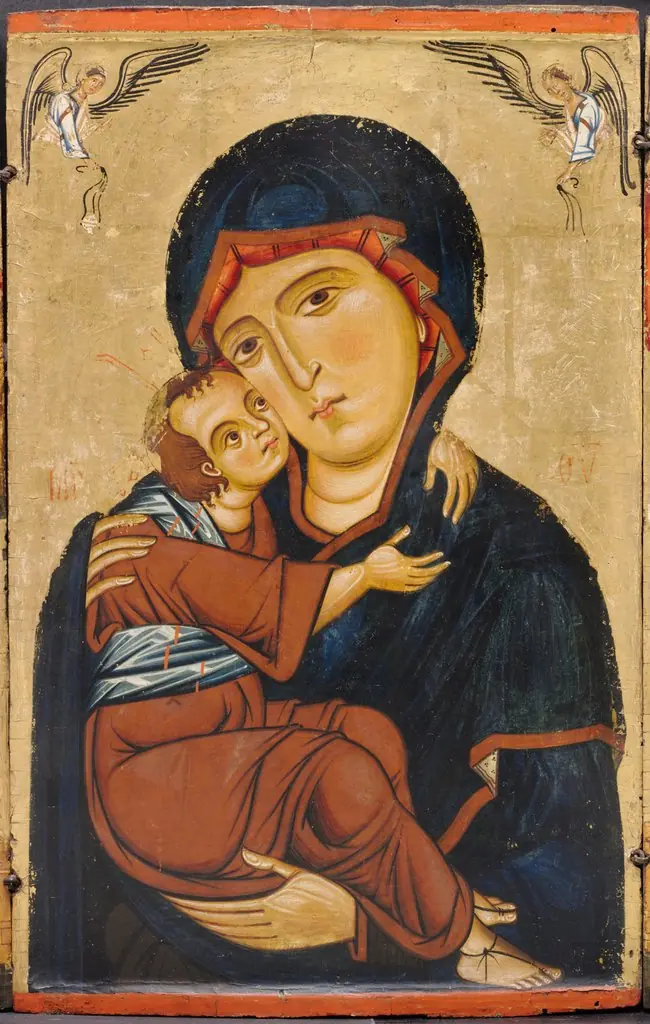
Icon of the Mother of God and Infant Christ (Virgin Eleousa) is an unspecified painting by the Byzantine icon painting artist Angelos Akotantos. It dates from 1438 and is held in the collection of the Cleveland Museum of Art. This large icon depicts the Virgin Mary and the infant Christ in a tender embrace.
About this work
Overview
This large icon depicts the Virgin Mary and the infant Christ in a tender embrace. Created by Angelos Akotantos, a renowned artist from Candia, Crete, it exemplifies the Byzantine style amidst Venetian rule.
Subject & Meaning
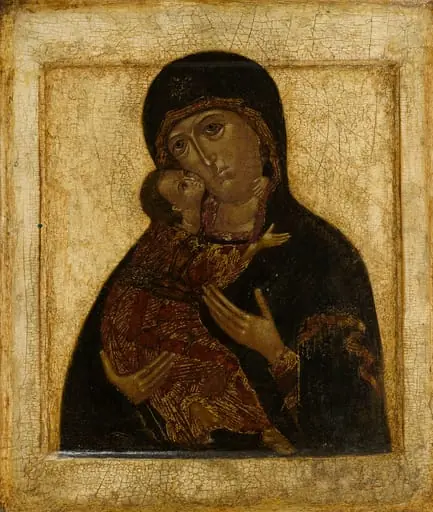
The icon shows Mary holding Jesus cheek-to-cheek, their faces nearly touching, set against a glowing gold background. This intimate portrayal was likely intended to evoke a sense of devotion and spiritual connection.
Technique & Style
Akotantos's skill is evident in the soft, serene faces and the intricate folds of the robes, characteristic of the Byzantine style. His work reflects a blend of traditional techniques and the artistic influences of his time.
History & Provenance
The icon was likely part of an iconostasis in a Greek Orthodox church. Cretan icons, including those by Akotantos, were highly prized and exported to various regions, including Ethiopia, where they remain venerated in churches.
Context
Akotantos worked in Candia, a major artistic center under Venetian rule, yet his style remained rooted in Byzantine traditions. This blend of cultural influences is a hallmark of his work and that of his contemporaries.
Artist & collection
Artist
Angelos Akotantos (Greek: Άγγελος Ακοτάντος; 1390–1457) was a Greek painter, educator, and protopsaltis.