Artwork
Teresina
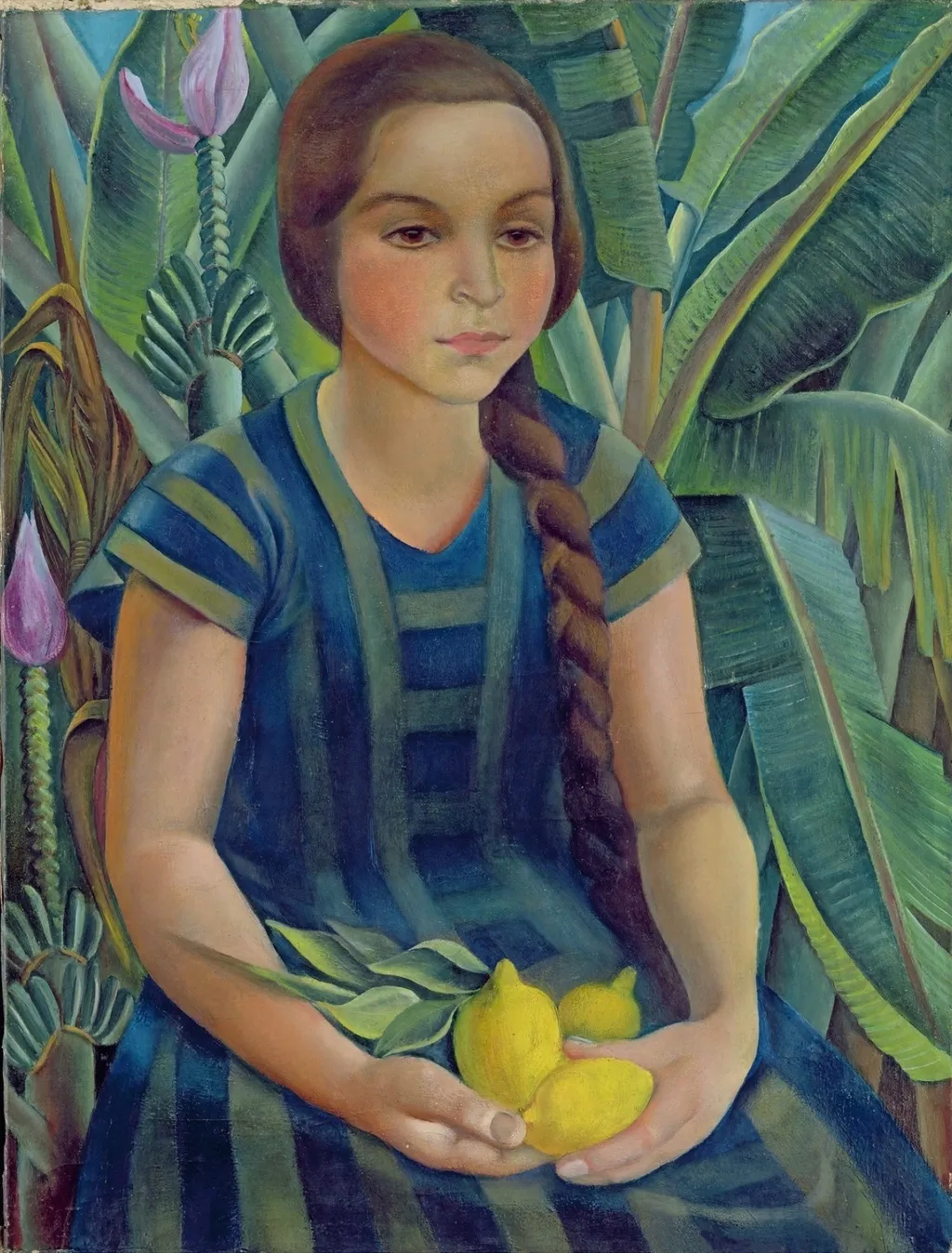
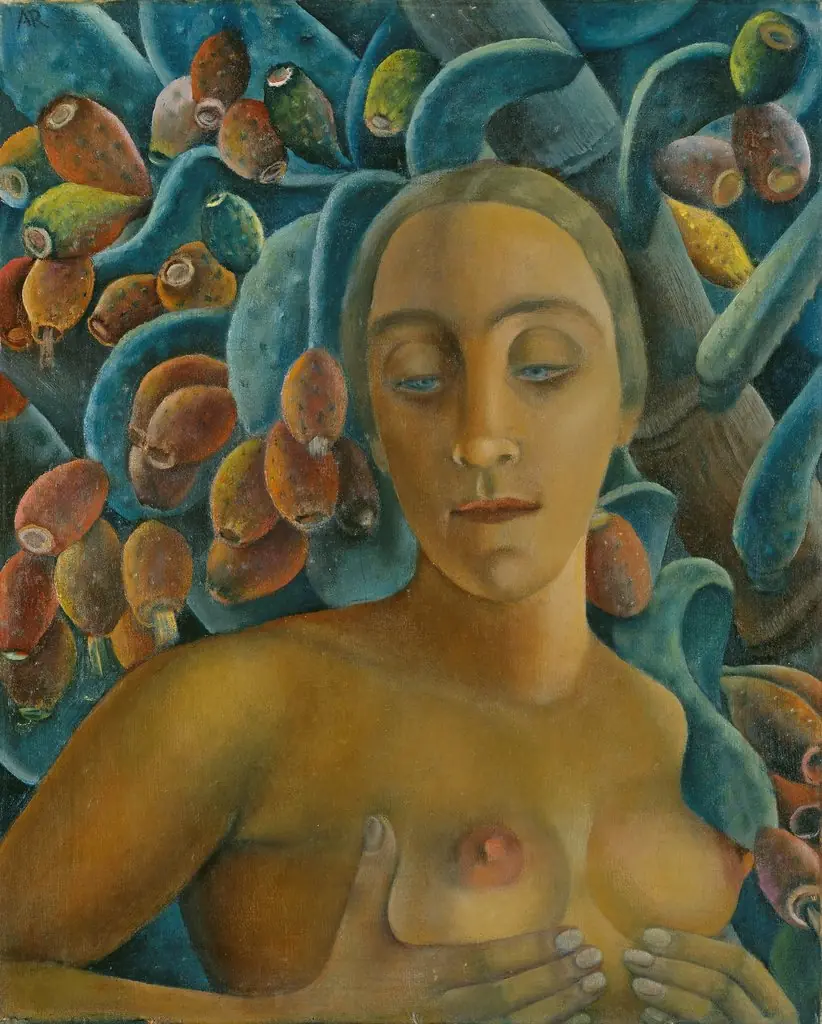
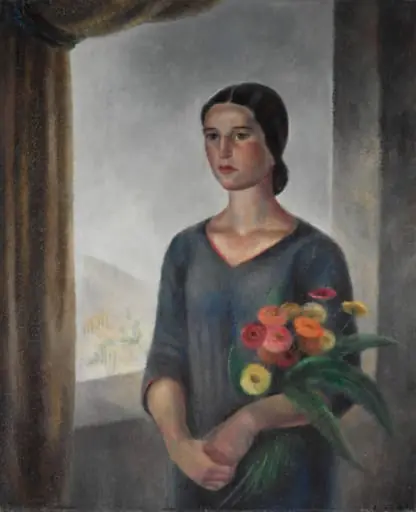
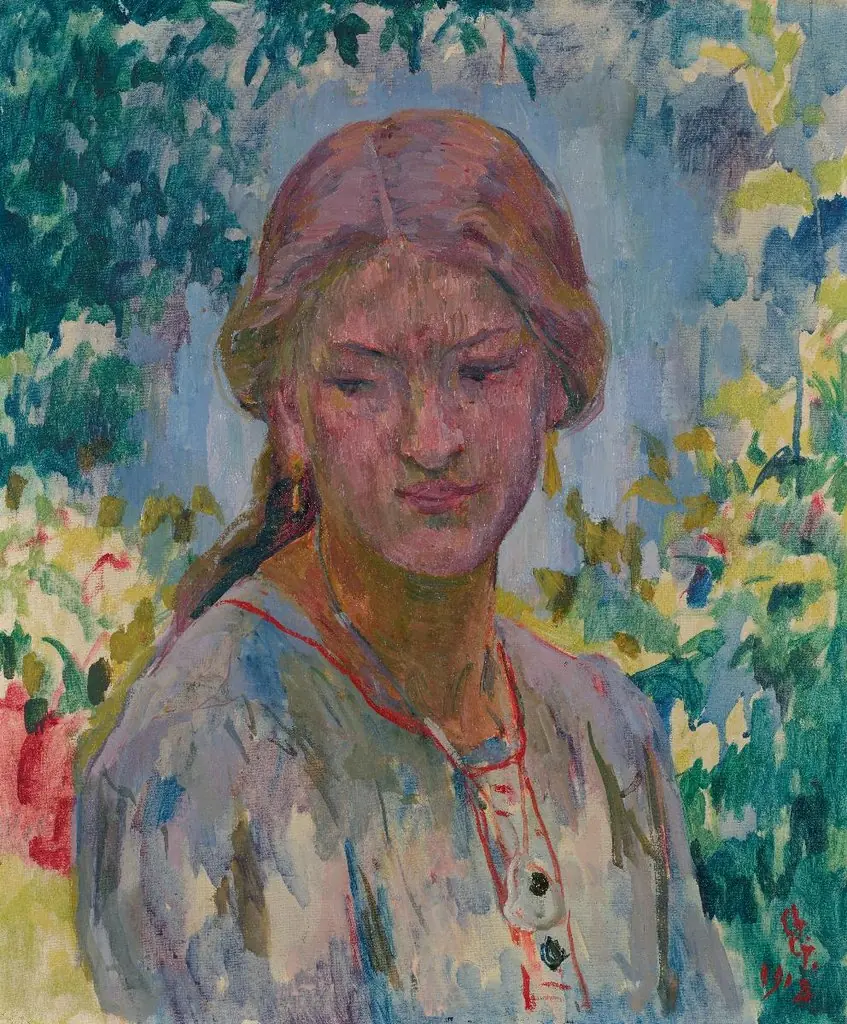
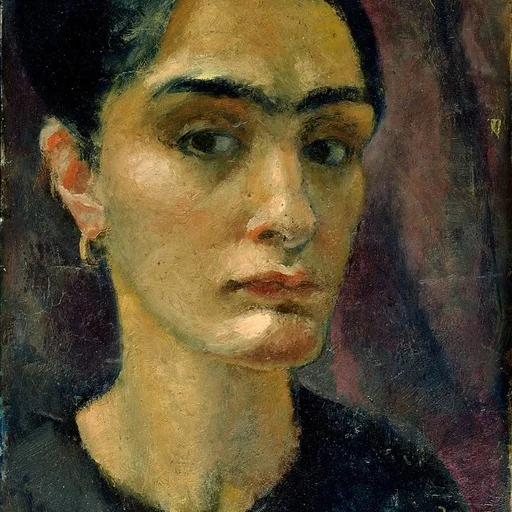
Teresina is an oil painting by Anita Rée. It dates from 1925 and is held in the collection of the Hamburger Kunsthalle.
About this work
Overview
The painting is now part of the Hamburger Kunsthalle’s collection, preserved despite the later suppression of her work under Nazi rule.
Anita Rée painted *Teresina* in 1925 using oil on canvas, capturing a quiet, contemplative figure within a lush natural setting. A German artist active in the Weimar era, Rée worked outside mainstream academic traditions, developing a personal style marked by intimate portraiture and expressive color. The painting is now part of the Hamburger Kunsthalle’s collection, preserved despite the later suppression of her work under Nazi rule.
Subject & Meaning
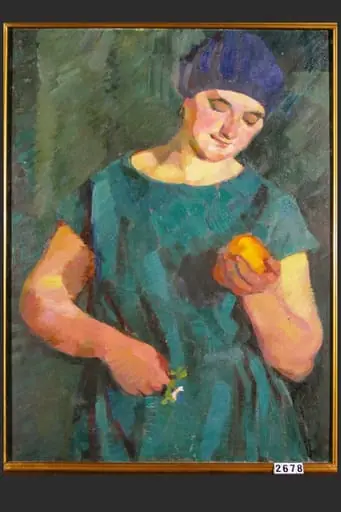
The subject, Teresina, is depicted seated with long dark hair braided down her back, dressed in a blue garment striped with green. She holds three yellow fruits, their presence suggesting abundance or ritual. Her calm gaze and still posture invite quiet reflection rather than narrative. The absence of overt symbolism leaves interpretation open, emphasizing mood over story — a hallmark of Rée’s approach to portraiture.
Technique & Style
Rée employed layered oil paint to build soft transitions between the figure and the dense foliage behind her. The green leaves and pink blossoms are rendered with loose, fluid brushwork, creating depth without sharp definition. The figure’s form is simplified yet solid, anchored by the contrast of her dark hair and the warm tones of the fruit. Color is used emotionally, not descriptively, enhancing the scene’s stillness.
History & Provenance
Created during Rée’s most active period, *Teresina* survived the Nazi campaign against so-called degenerate art, which targeted her work due to her Jewish heritage. After her death in 1933, her paintings were removed from public view and largely forgotten. The Hamburger Kunsthalle later reclaimed and preserved the piece, restoring its place in the narrative of early 20th-century German modernism.
Context
Rée worked amid the experimental energy of Weimar-era Berlin and Hamburg, where artists explored new modes of expression beyond realism. Though not formally aligned with any movement, her portraits reflect the period’s interest in psychological depth and individuality. Her focus on women in serene, private moments contrasts with the era’s more overtly political or abstract trends.
Legacy
Though her career was cut short by persecution, Rée’s work has been gradually reintroduced to public view since the late 20th century. *Teresina* stands as a quiet testament to her ability to convey inner life through subtle color and composition. Today, it contributes to broader recognition of artists marginalized by Nazi ideology, offering a nuanced counterpoint to dominant narratives of the time.
Own this work as a print
Artist & collection
Artist
Anita Clara Rée (born 9 February 1885 in Hamburg, died 12 December 1933 in Kampen) was a German avant-garde painter during the Weimar Republic.