Artwork
Scolopendrium Vulgare
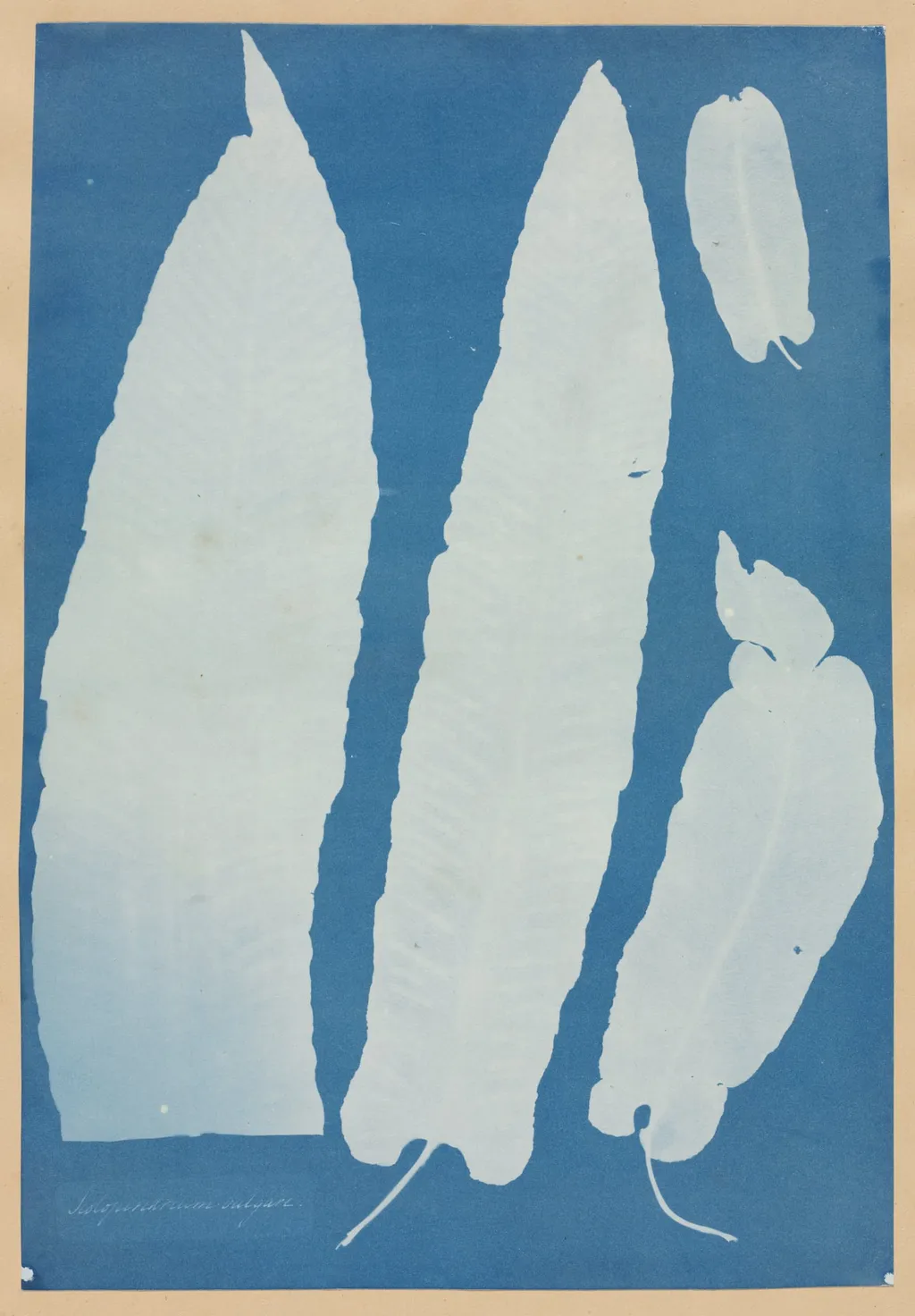
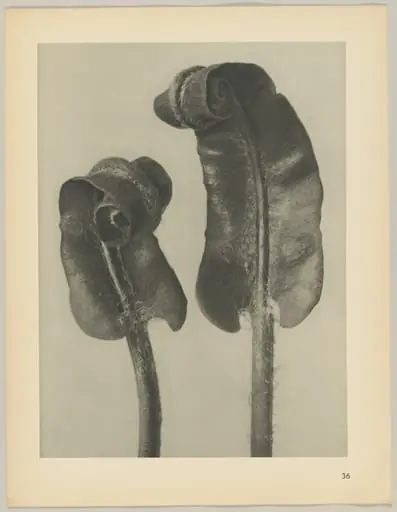
Scolopendrium Vulgare is a photography by the Impressionist artist Anna Atkins. It dates from 1853 and is held in the collection of the Cleveland Museum of Art. The image presents a pressed Hart’s‑Tongue fern rendered as a photogram on light‑sensitive paper.
About this work
Its feathery fronds stand out in silver against a dark background.
This is a ghostly green plant pressed onto light-sensitive paper. Its feathery fronds stand out in silver against a dark background. You can see every vein and curve.
Anna Atkins did this with sunlight instead of a camera. She placed the fern on treated paper, let light do the work. No paint or brush needed—just chemistry and patience.
This shows how photography started as science, not art. If you like this, look up Anna Atkins (British, 1799–1871).
Overview
The image presents a pressed Hart’s‑Tongue fern rendered as a photogram on light‑sensitive paper. The plant’s delicate fronds appear as translucent, silver‑toned outlines against a darker field, revealing the intricate network of veins and margins. The work exemplifies an early scientific use of photography, capturing botanical detail without a camera.
Technique & Style
Anna Atkins arranged the fern directly on paper coated with a silver nitrate emulsion and exposed it to sunlight. The transparent portions allowed light to bleach the coating, while the opaque leaf tissue blocked it, leaving a negative silhouette. This cameraless method, later termed a photogram, relies on chemical reaction rather than pigment, producing a precise, high‑contrast record of form.
Subject & Meaning
The specimen depicted is Scolopendrium vulgare, commonly called Hart’s‑Tongue fern, noted for its broad, tongue‑shaped fronds. By preserving the plant’s exact morphology, the image serves both as a botanical reference and as a visual study of natural texture, emphasizing the scientific aim of documenting plant structure with fidelity.
History & Provenance
Created in 1843, the photogram formed part of Anna Atkins’s pioneering publication, the first book to incorporate photographic illustrations. The work emerged from her broader effort to compile a portable herbarium using this new medium, marking a milestone in the integration of photography into scientific literature.
Context
Atkins, an amateur botanist active in mid‑19th‑century Britain, employed this technique at a time when photography was still experimental. Her approach demonstrated that photographic processes could serve rigorous documentation, predating later artistic uses and influencing subsequent scientific imaging practices.
Artist & collection