Artwork
Self-Portrait at the Age of Twelve
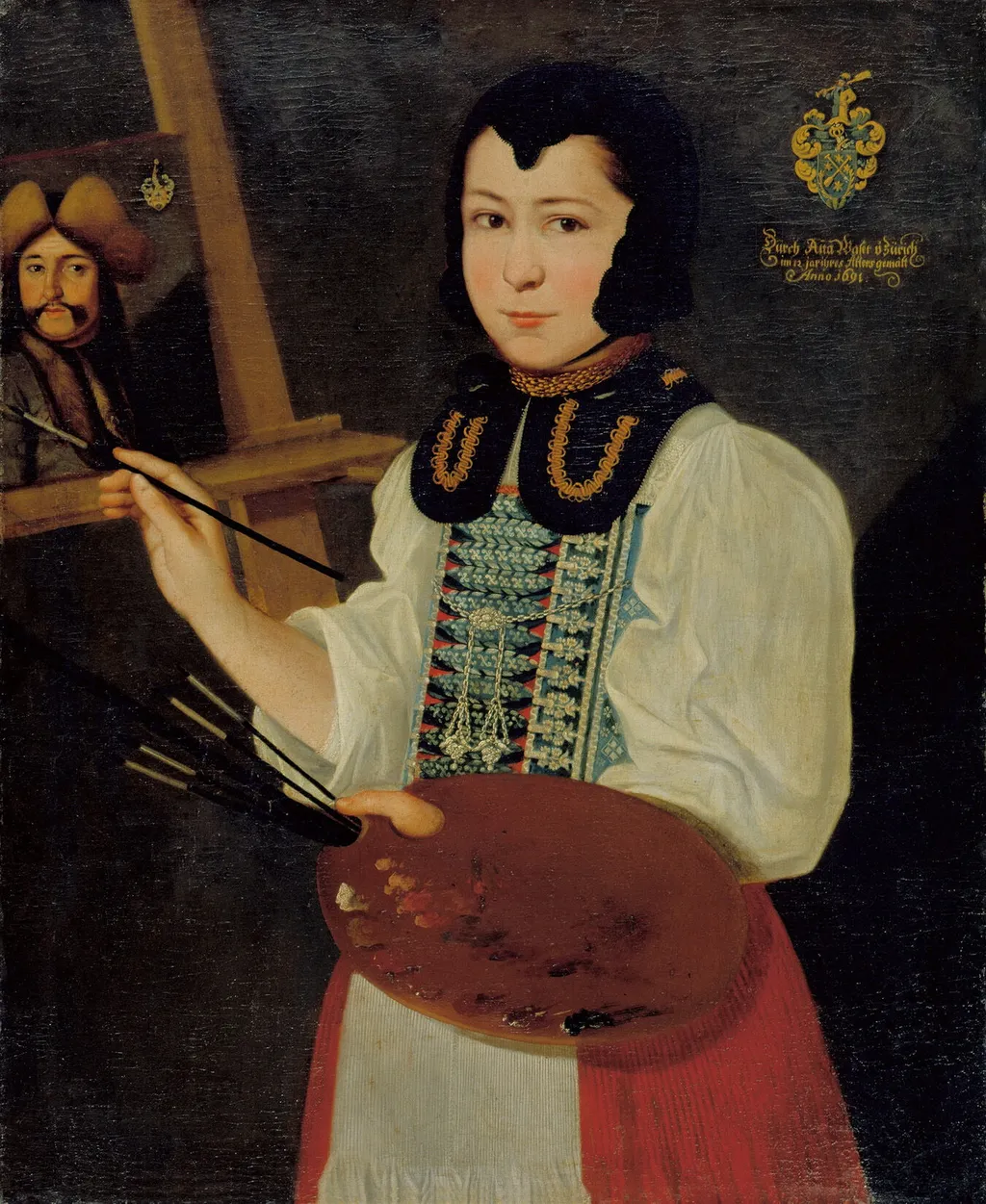
Self-Portrait at the Age of Twelve is an oil painting by the Rococo painting artist Anna Waser. It dates from 1696 and is held in the collection of the Kunsthaus Zürich.
About this work
If you're interested in learning more about the artist's techniques, you might want to look up the use of chiaroscuro in her work.
This painting shows a young girl in a white dress with a blue and red patterned vest, holding a palette and brushes. She has dark hair and is standing in front of an easel with a canvas on it.
The girl is looking directly at the viewer with a serious expression. The background of the painting is dark, which helps to focus attention on the girl and her art supplies.
The painting is a self-portrait by Anna Waser, created in 1691. It is held at the Kunsthaus Zürich. If you're interested in learning more about the artist's techniques, you might want to look up the use of chiaroscuro in her work.
Overview
Painted in 1691, this oil portrait captures Anna Waser at the age of twelve, presenting herself as a young artist in training. The work is held in the collection of the Kunsthaus Zürich and stands as one of the earliest known self-portraits by a female artist in Switzerland. Its intimate scale and direct gaze convey a quiet confidence unusual for a child subject of the period.
Subject & Meaning
The girl, dressed in a white gown with a patterned blue and red vest, holds a palette and brushes, positioning herself not merely as a sitter but as a practitioner of art. The easel behind her, bearing an unfinished canvas, reinforces her identity as an artist-in-the-making. Her steady gaze toward the viewer suggests self-awareness and a deliberate assertion of her role in a male-dominated field.
Technique & Style
Waser employs subtle chiaroscuro to model the folds of fabric and the contours of her face, drawing focus to her features and tools. The dark, unmodeled background isolates the figure and her equipment, heightening the portrait’s introspective tone. Brushwork is precise yet restrained, reflecting both technical discipline and the conventions of portraiture for young subjects in late 17th-century Europe.
History & Provenance
The painting has remained in Swiss collections since its creation, eventually entering the Kunsthaus Zürich’s holdings. Its survival is notable, as few works by female artists of this era were preserved or documented. The date of 1691, when Waser was twelve, aligns with records of her early artistic training under her father, a painter in Zürich.
Context
In late 17th-century Switzerland, artistic training for girls was rare and often limited to domestic crafts. Waser’s self-portrait defies these norms, signaling familial support and personal ambition. Her depiction with professional tools reflects a growing, though still marginal, recognition of women as serious artists, particularly within educated urban circles.
Legacy
This portrait endures as a rare visual testament to a girl’s early artistic identity in a time when such expressions were seldom recorded. It contributes to broader scholarship on women’s participation in the arts before the 18th century, offering insight into how young female artists negotiated visibility and agency through self-representation.
Own this work as a print
Artist & collection

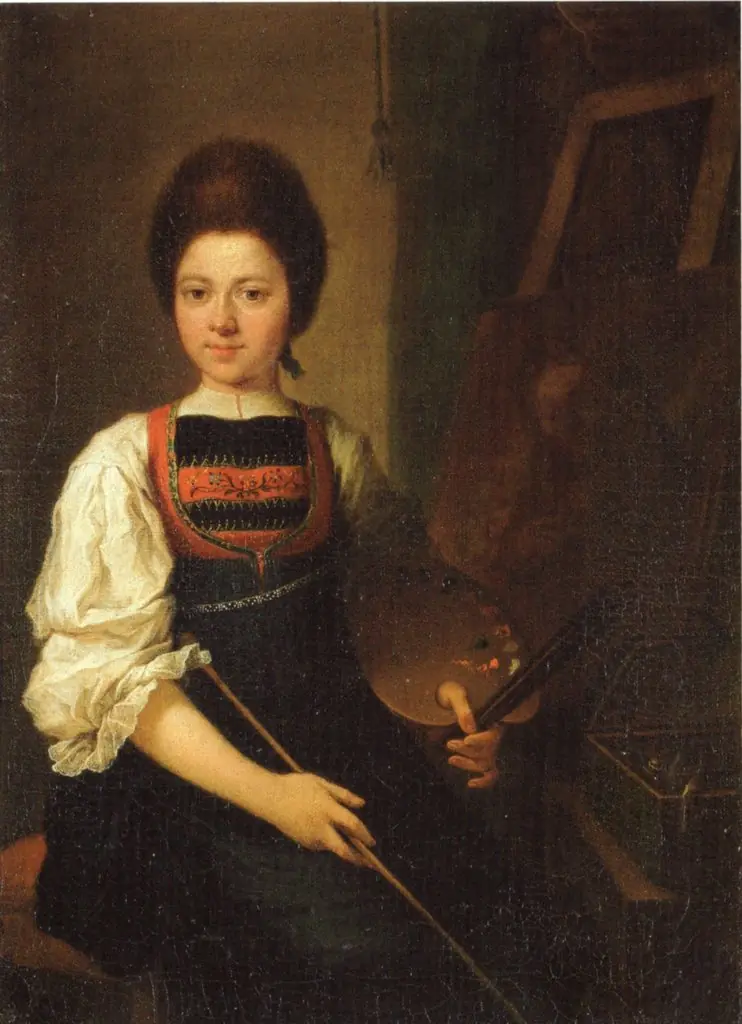 Self-Portrait in the Traditional Costume of the Bregenz Forest, Seated at her Easel
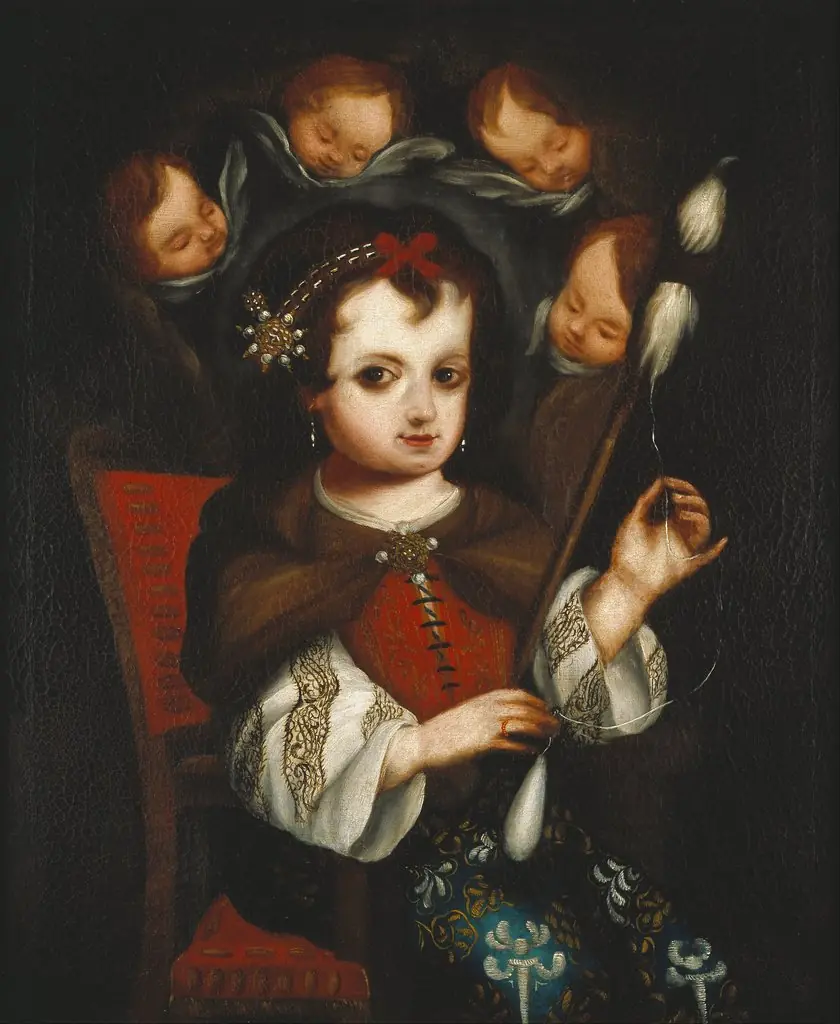 Virgin Mary Spinning
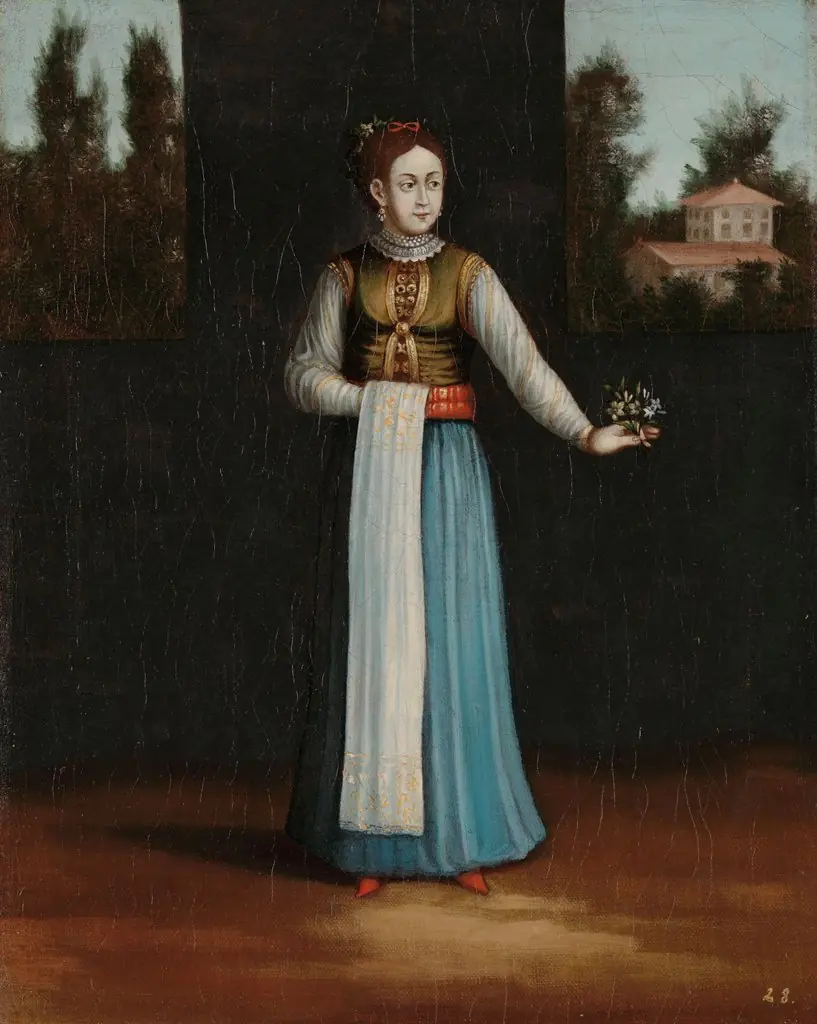 Woman from the Albanian Coast
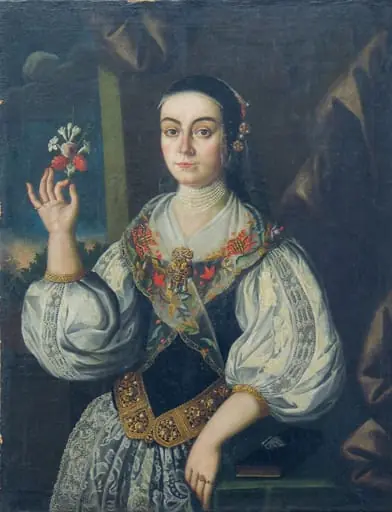 Portret de femeie
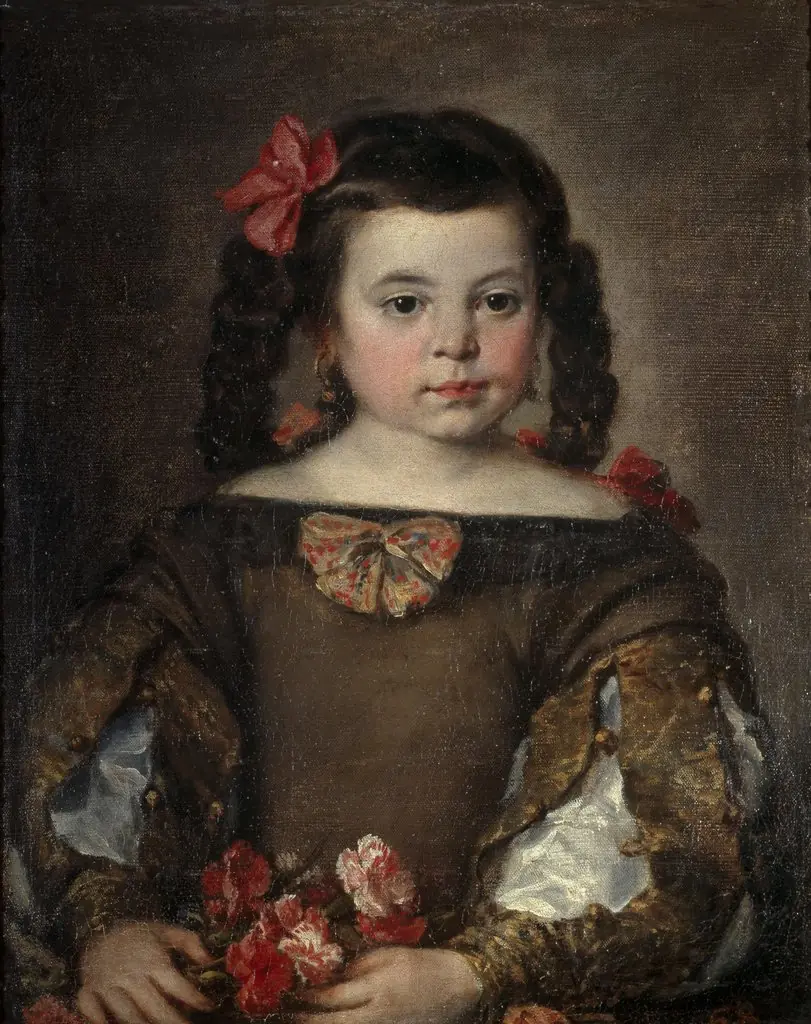 Portrait of a Young Girl
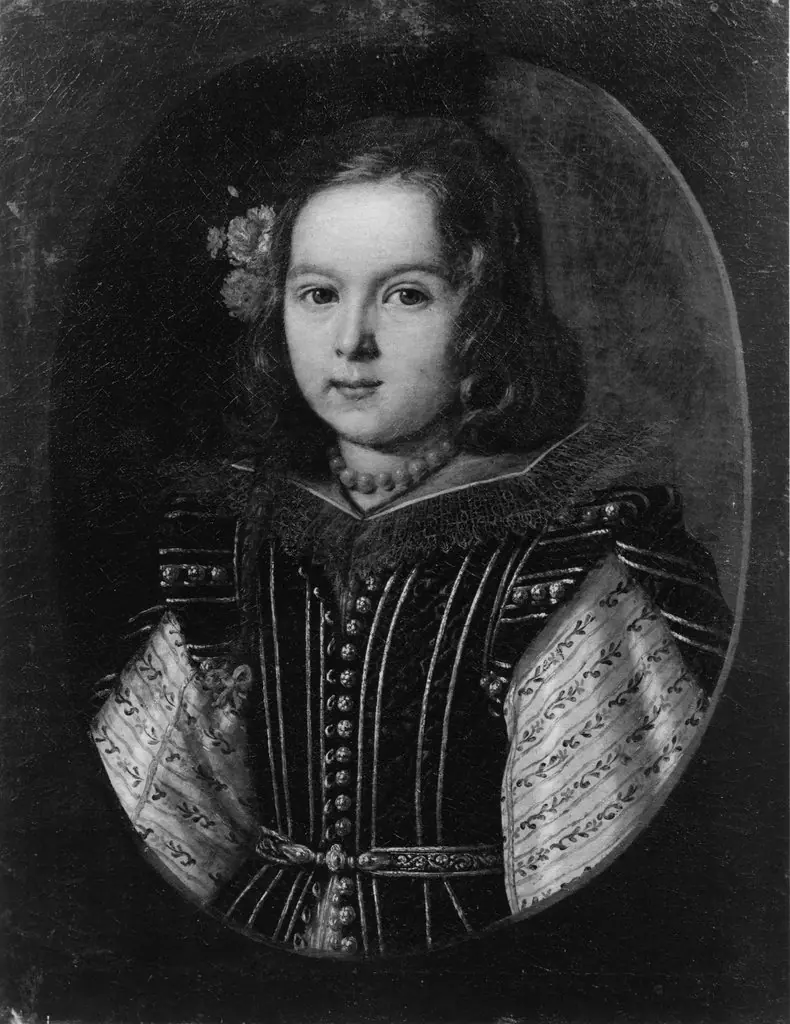 Portrait of a Girl
 Young woman from Monnikendam
 Portrait of an Adolescent Girl
 Catherina Elmendorf
 Doña María de la Luz Padilla y (Gómez de) Cervantes
 Kinderbildnis der Prinzessin Maria Christina von Toskana
 Woman from Edam