Artwork
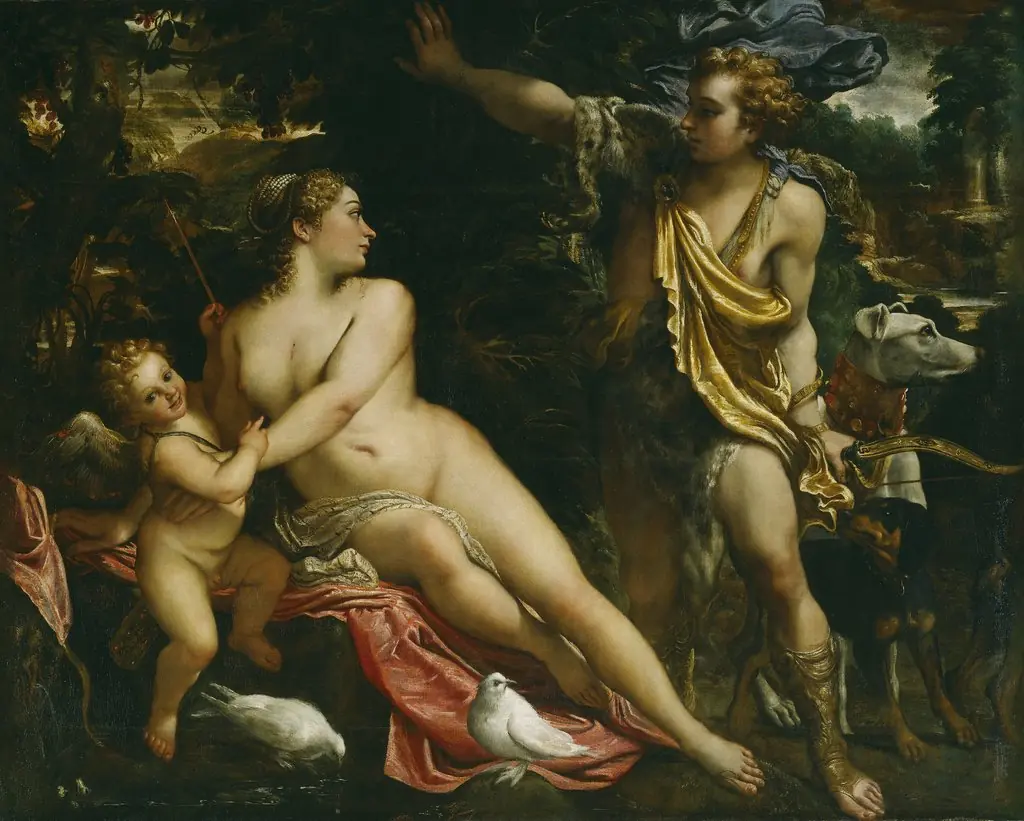
Venus and a Satyr
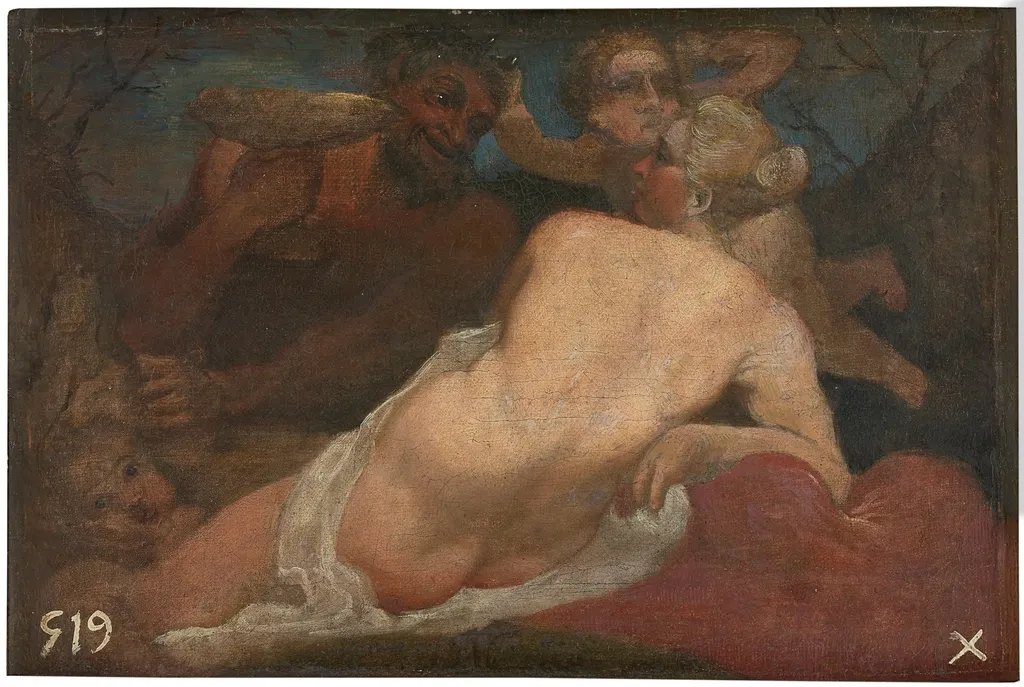
Venus and a Satyr is an oil painting by the Early Baroque Italian artist Annibale Carracci. It dates from 1569 and is held in the collection of the Museo del Prado.
About this work
Overview
Annibable Carracci’s *Venus and a Satyr* (1569) is an oil on canvas that belongs to the mythological tradition. Executed while the Bolognese painter was still establishing his reputation, the work anticipates the Baroque emphasis on movement and drama. It is presently conserved in the Museo del Prado, where it forms part of the museum’s Italian Baroque holdings.
Subject & Meaning
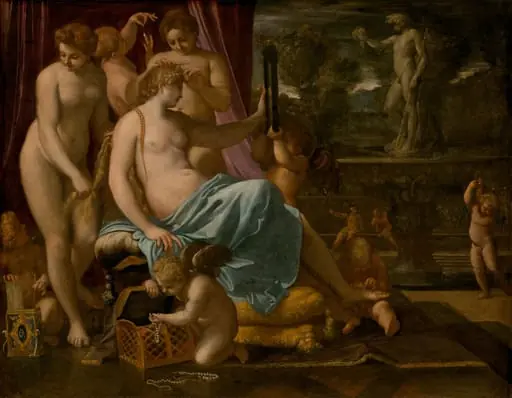
The composition presents a reclining female figure, identified as Venus by her classical pose and the modest white drapery covering her hips, lying on a red cloth. Behind her, a horned satyr with a beard reaches toward her, suggesting a moment of erotic tension linked to the mythic theme of divine beauty confronting rustic desire.
Technique & Style
Carracci employs a restrained chiaroscuro that models the bodies against a dark, indistinct background, allowing the flesh tones to emerge with a palpable sense of volume. The palette is dominated by earth tones, and the muted colors emphasize the tactile quality of the fabrics and skin while maintaining a calm, balanced atmosphere.
History & Provenance
Created in 1569, the painting reflects Carracci’s early synthesis of classical compositional principles with the emerging Baroque dynamism. It entered the Spanish royal collection in the 18th century and was later transferred to the Museo del Prado, where it has remained on public display since the museum’s reorganization of its Italian paintings.
Own this work as a print
Artist & collection

Artist
Annibale Carracci ( kə-RAH-chee, UK also kə-RATCH-ee, Italian: ; November 3, 1560 – July 15, 1609) was an Italian painter and instructor, active in Bologna and later in Rome.