Artwork
Composition florale avec grappes et épis, projets de broderies de gilet, XVIIIème siècle
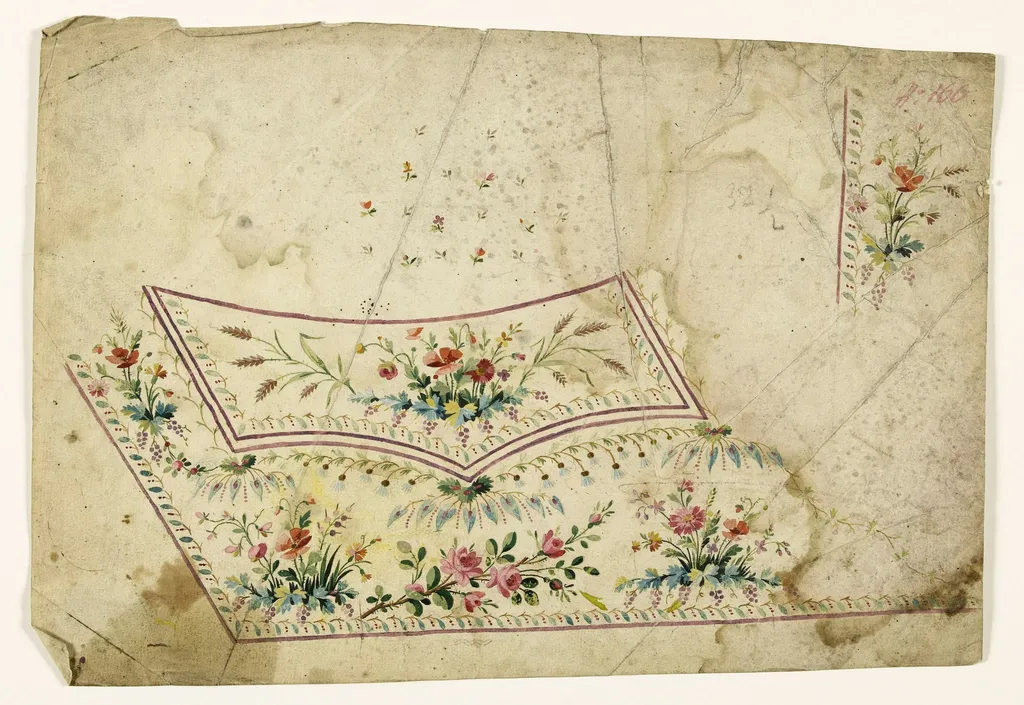
Composition florale avec grappes et épis, projets de broderies de gilet, XVIIIème siècle is a drawing by Anonyme. It dates from 1750 and is held in the collection of the Palais Galliera - Musée de la Mode de la Ville de Paris. This undated paper sketch, likely from around 1750, presents a floral motif intended as a pattern for embroidery on a waistcoat.
About this work
Overview
The paper shows signs of age—tears, stains, and fading—suggesting it was handled and used in a working context rather than preserved as a finished piece.
This undated paper sketch, likely from around 1750, presents a floral motif intended as a pattern for embroidery on a waistcoat. Created by an unknown artisan, it features a central diamond-shaped field filled with clustered blossoms, wheat ears, and foliage. The design is rendered in soft washes of red, pink, yellow, and green, with a faint purple outline. The paper shows signs of age—tears, stains, and fading—suggesting it was handled and used in a working context rather than preserved as a finished piece.
Subject & Meaning
The motif combines cultivated flowers with wild wheat, blending ornamental and agricultural symbolism. Such combinations were common in 18th-century textile design, reflecting both aesthetic ideals and the cultural value placed on nature’s bounty. The diamond format may have been chosen for its suitability to garment construction, allowing the pattern to align with seams or panels. The inclusion of wheat suggests a connection to fertility, harvest, or rural life, subtly grounding the decoration in everyday experience.
Technique & Style
The design was executed in watercolor or gouache on paper, with delicate brushwork and minimal shading. Colors are applied thinly, creating a translucent effect that enhances the lightness of the composition. The background is stippled with tiny dots, a technique used to suggest depth and texture without heavy detail. Outlines are faint, not rigid, indicating a spontaneous, hand-drawn approach typical of working patterns rather than formal illustrations.
History & Provenance
The sketch resides in the Museum of Ethnography, where it is cataloged as a textile design prototype. Its condition—worn, stained, and partially torn—implies practical use, possibly by a seamstress or embroiderer in a workshop. It likely belonged to a collection of pattern sheets used to guide hand embroidery on garments, preserved after its utility ended. Its survival is unusual, as such working documents were often discarded after use.
Context
In mid-18th-century Europe, embroidered waistcoats were fashionable among the middle and upper classes, requiring detailed patterns for skilled artisans. Designers often compiled sheets like this one, drawing from botanical studies and popular motifs. This piece reflects the intersection of domestic craft and commercial fashion, where nature-inspired designs were adapted for wearable art. Similar patterns appear in surviving embroidery manuals and textile archives from France and England.
Legacy
Though unsigned and unremarkable in its original context, this sketch now serves as a quiet testament to the labor of anonymous craftswomen and designers. It preserves a moment in textile history when ornamentation was intimately tied to handwork and regional aesthetics. Its preservation in an ethnographic collection underscores the value now placed on utilitarian art, shifting focus from the artist’s fame to the cultural function of the object.
Artist & collection
Artist
A French designer from the 1700s made delicate flower drawings meant to decorate vests.
Museum
Palais Galliera - Musée de la Mode de la Ville de Paris
Continue through works from the same source collection.
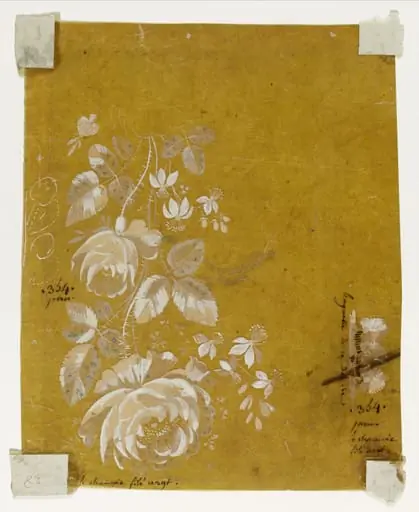 Bouquet de roses blanches pour étoffe, projets de broderies de gilet, XVIIIème siècle
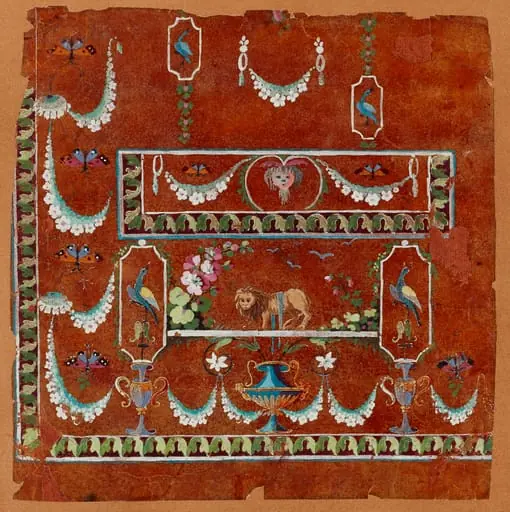 Gilet décor à grotesques, projets de broderies de gilet, XVIIIeme siècle
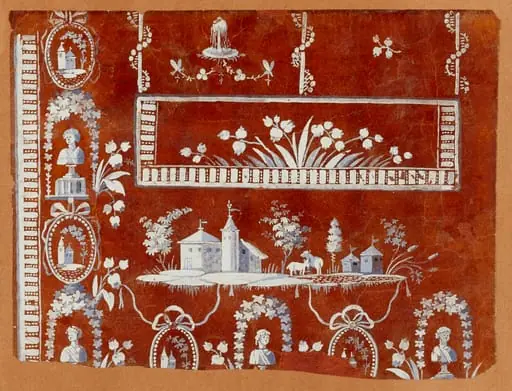 Gilet décor architectures rurales, projets de broderies de gilet, XVIIIème siècle
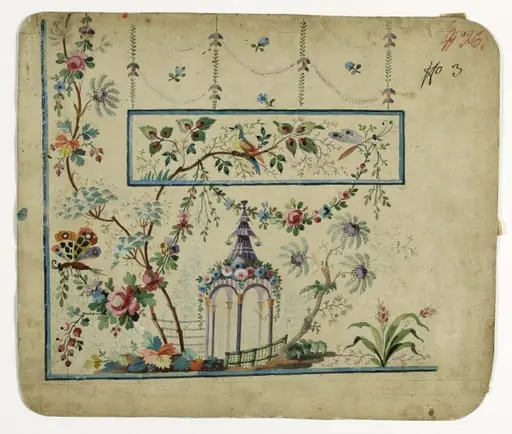 Gilet décor pagode, projets de broderies de gilet, XVIIIème siècle
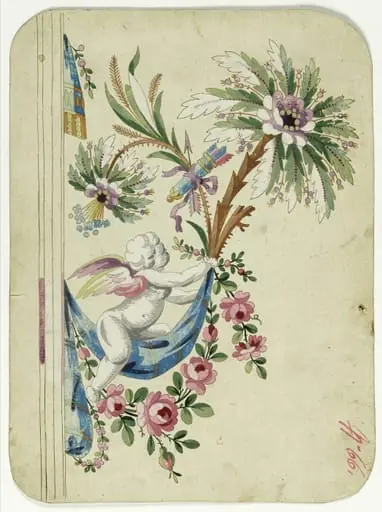 Décor de putti sur palmier, projets de broderies de gilet, XVIIIème siècle
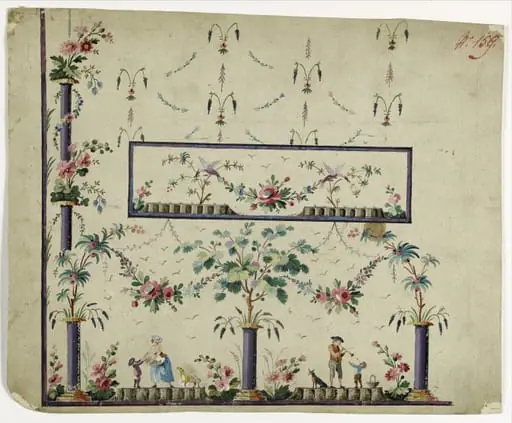 Gilet décor couple avec enfants, projets de broderies de gilet, XVIIIème siècle
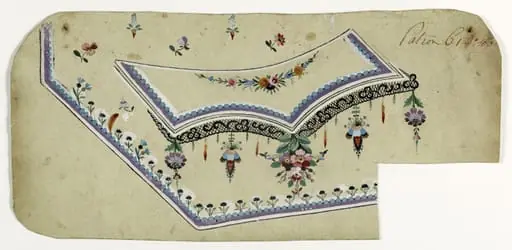 Gilet à la dentelle noire, projets de broderies de gilet, XVIIIème siècle
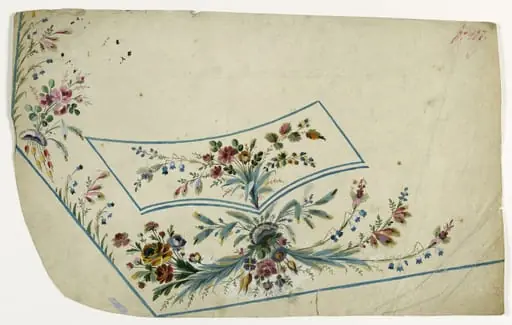 Gilet aux feuilles bleu-gris, projets de broderies de gilet, XVIIIème siècle
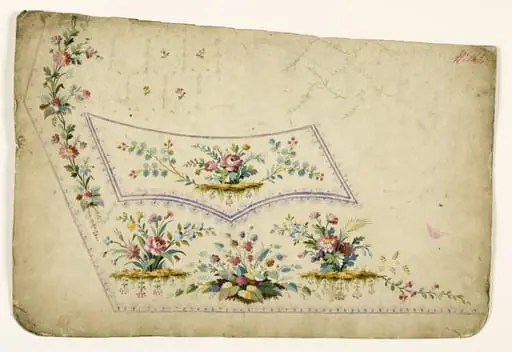 Compositions florales sur tertre et guirlandes de fleurs, projets de broderies de gilet, XVIIIème siècle
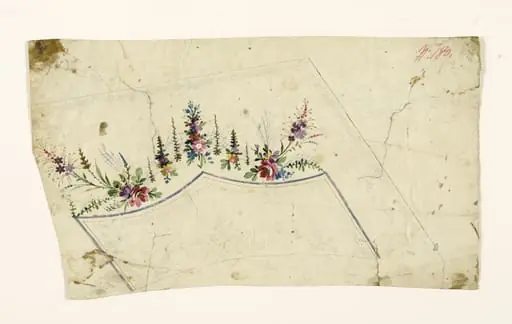 Composition florale en guirlandes et grappes, filet lavande, projets de broderies de gilet, XVIIIème siècle
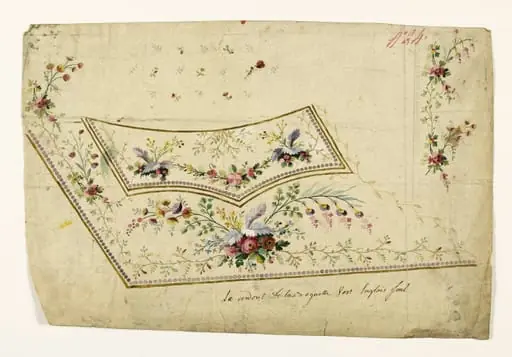 Composition avec bouquets de fleurs et branches fleuries avec grappes, frises de perles couleur glycine, projets de broderies de gilet, XVIIIème siècle
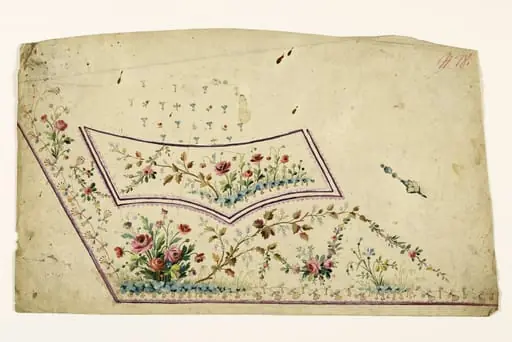 Composition avec bouquet et guirlandes de fleurs et branches de feuilles et de baies bleues, projets de broderies de gilet, XVIIIème siècle
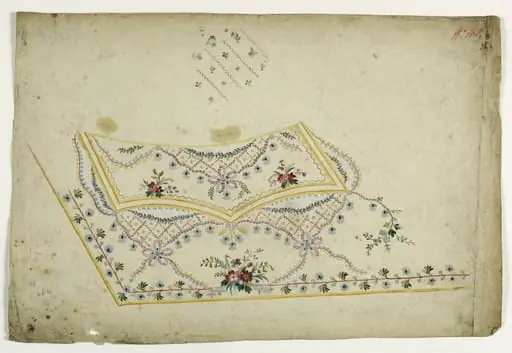 Gilet bouquets et noeuds, projets de broderies de gilet, XVIIIème siècle
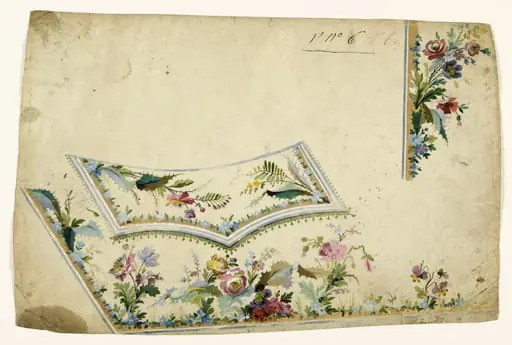 Composition florale aux bleuets, projets de broderies de gilet, XVIIIème siècle
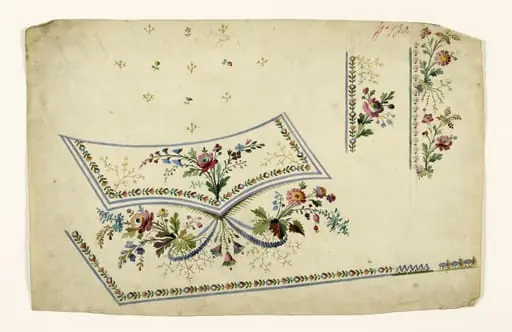 Composition florale avec bouquets et frises de fleurs stylisées, projets de broderies de gilet, XVIIIème siècle
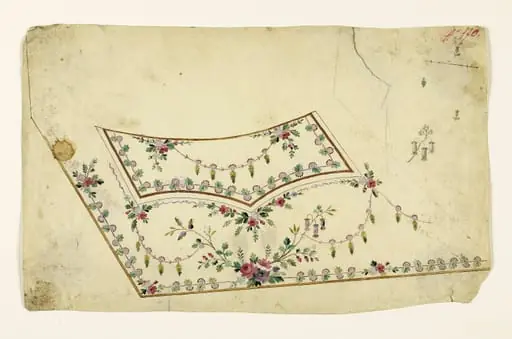 Composition avec bouquet de fleurs, guirlandes et frises de feuilles et de fleurs stylisées, projets de broderies de gilet, XVIIIème siècle
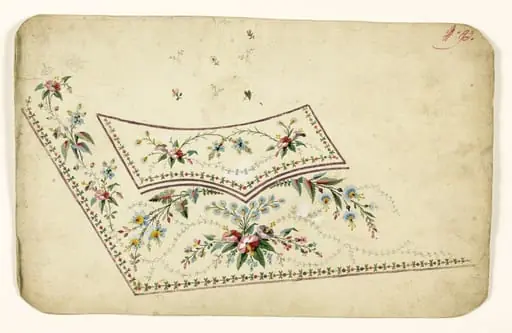 Composition de bouquets de fleurs et chardons, projets de broderies de gilet, XVIIIème siècle