Artwork
Barbara Villiers, Duchess of Cleveland
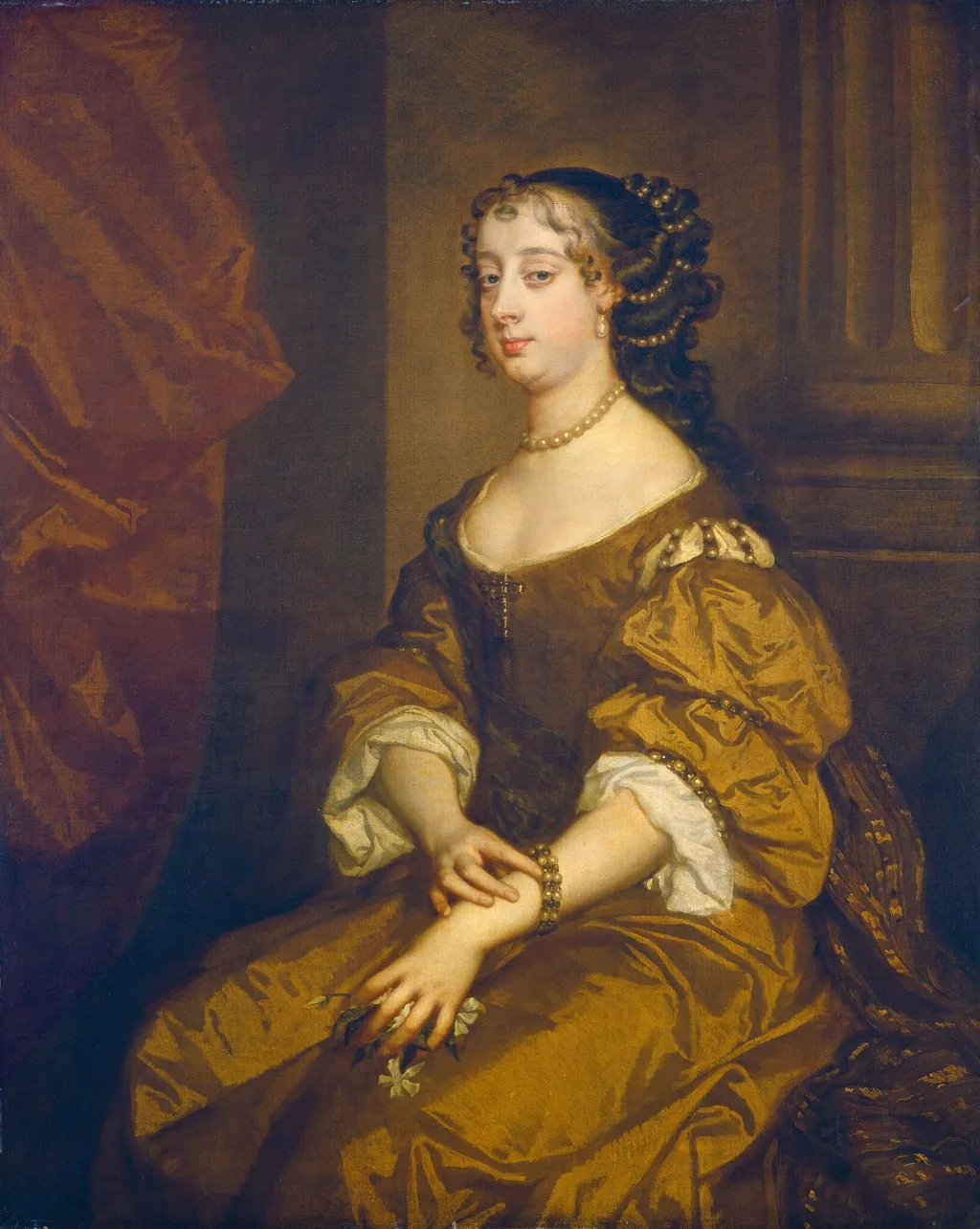
Barbara Villiers, Duchess of Cleveland is an oil painting. It dates from 1663 and is held in the collection of the National Gallery of Art.
About this work
Overview
The portrait depicts Barbara Villiers, Duchess of Cleveland, rendered in oil on canvas. She is presented in a sumptuous gold gown with ruffled sleeves, a white lace cuff, and a pearl necklace and bracelet. A fan rests in her hand, and her hair is styled in curls pinned atop her head, set against a dark, neutral background that isolates the figure.
Subject & Meaning
Barbara Villies, a prominent figure in the English court of the 17th century, is portrayed with symbols of status and refinement. The luxurious attire, pearls, and fan allude to her aristocratic rank and fashionable sensibility, while the composed pose conveys confidence and poise typical of high‑society portraiture of the era.
Technique & Style
The artist employs a pronounced chiaroscuro, using strong contrasts of light and shadow to model the subject’s face and garments. This dramatic illumination, characteristic of mid‑17th‑century European painting, emphasizes texture—particularly the sheen of silk and the delicate lace—while the dark backdrop enhances the three‑dimensional effect.
History & Provenance
The work dates from the 1600s, a period when portraiture served both personal commemoration and political display. Though specific details of its commission and subsequent ownership are scarce, the painting has been documented in collections of English aristocratic portraiture and is now held in a public museum collection.
Context
Created during the Restoration era, the portrait reflects the renewed courtly culture following the English Commonwealth. Portraits of courtiers like the Duchess of Cleveland were often used to assert loyalty to the monarchy and to showcase the renewed opulence of the royal court.
Artist & collection