Artwork
Portrait of Amalia van Solms (1602-75)
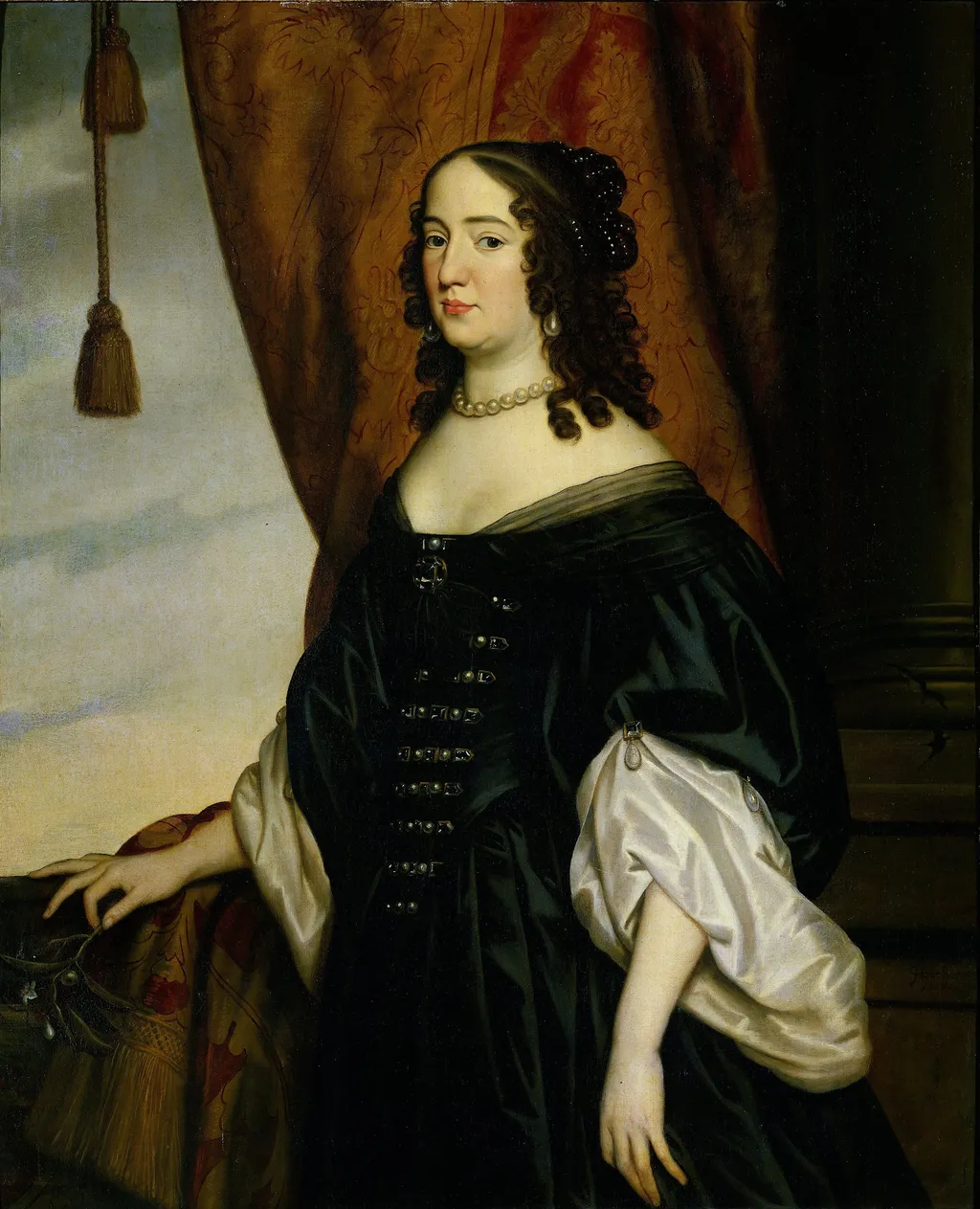
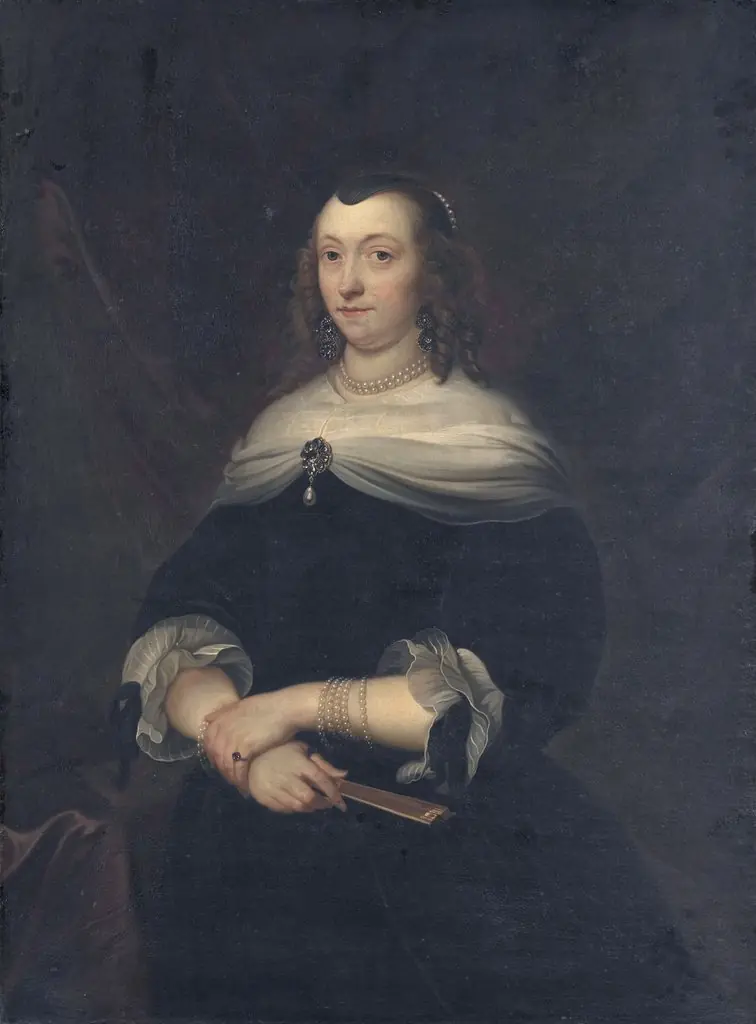
Portrait of Amalia van Solms (1602-75) is an oil painting. It dates from 1650 and is held in the collection of the Rijksmuseum. The work is an oil painting portraying a seated woman, Amalia van Solms (1602‑1775).
About this work
Overview
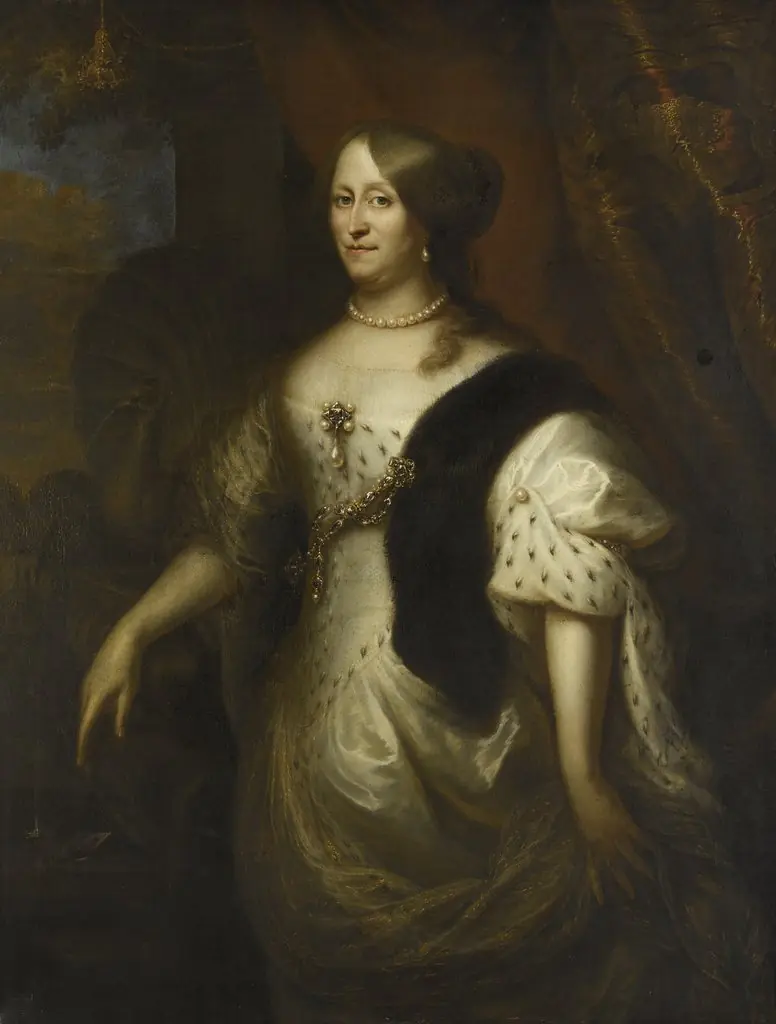
The work is an oil painting portraying a seated woman, Amalia van Solms (1602‑1775). She is positioned beside a table, one hand resting upon it, and is dressed in a dark, front‑buttoned gown complemented by a pearl necklace and a black hat whose curls frame her face. A richly patterned red‑and‑gold curtain forms the backdrop, while a feather duster rests near the edge of the composition.
Subject & Meaning
Amalia van Solms, a member of the Dutch aristocracy, is presented with a poised yet relaxed demeanor, suggesting familiarity with public display. The careful placement of her hand and the modest attire convey a sense of decorum, while the inclusion of domestic objects such as the feather duster hints at her household role and the genteel lifestyle of her class.
Technique & Style
The painter employs chiaroscuro, using a dark background to isolate the sitter’s face and hands, thereby intensifying their visual impact. Subtle modeling of light across the velvet dress and the glossy pearls creates a three‑dimensional effect, while the textured curtain adds depth and a hint of opulence without detracting from the central figure.
Context
Created during the Dutch Golden Age, the portrait reflects contemporary conventions of elite portraiture, where status was conveyed through clothing, accessories, and controlled lighting. The combination of luxurious fabrics, jewelry, and a modest domestic setting aligns with the period’s emphasis on both wealth and moral propriety in the representation of noble women.
Artist & collection