Artwork
Brawl in an Inn
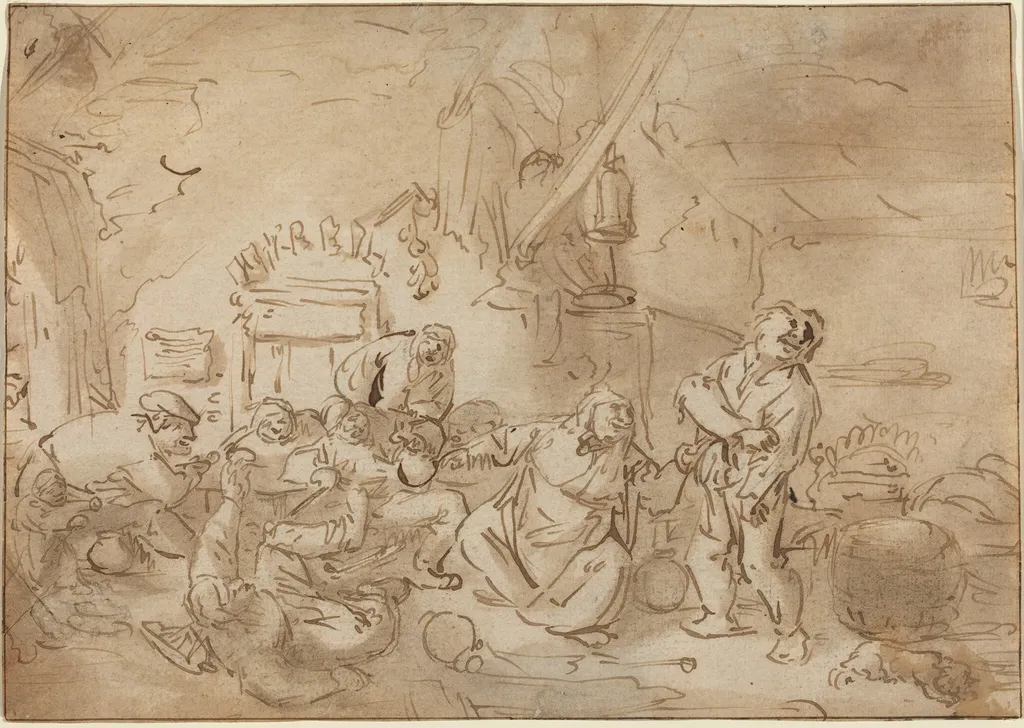
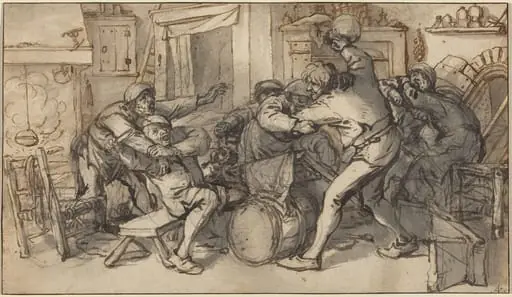
Brawl in an Inn is an ink drawing by the Baroque artist Unknown. It dates from 1635 and is held in the collection of the National Gallery of Art. This ink and wash drawing captures a moment of disorder within a dim interior, likely an inn or tavern.
About this work
Overview
The artist employed brown ink, wash, and minimal black chalk to suggest figures in motion, avoiding detailed rendering in favor of expressive immediacy.
This ink and wash drawing captures a moment of disorder within a dim interior, likely an inn or tavern. Executed with rapid, fluid strokes, the composition conveys motion and tension through loose, unrefined lines. The artist employed brown ink, wash, and minimal black chalk to suggest figures in motion, avoiding detailed rendering in favor of expressive immediacy. The work functions as a dynamic study of human interaction under strain.
Subject & Meaning
The scene depicts a violent scuffle among a group of individuals in a confined space. Figures are entangled—some fallen, others lunging or clutching vessels—suggesting a sudden outbreak of conflict. The presence of a barrel and lantern implies a communal setting, possibly a drinking establishment. The drawing does not idealize the scene; instead, it records raw, unfiltered human behavior, emphasizing chaos over narrative clarity.
Technique & Style
The artist used quick pen lines and diluted brown wash to define forms without outlining them, allowing the paper’s texture to contribute to the sense of dim lighting and movement. Cross-hatching and layered strokes build shadow and volume, while areas of bare paper suggest light sources. The sketchy quality reflects spontaneity, as if the scene was observed and recorded in real time, prioritizing energy over precision.
History & Provenance
The drawing’s origin is undocumented, but its style aligns with 17th-century Northern European draftsmanship, particularly among artists who recorded everyday scenes. It likely served as a preparatory study or personal observation, not a commissioned work. Its survival suggests it was valued for its expressive power, though its early ownership remains unknown.
Context
During the 17th century, artists in the Low Countries increasingly turned to genre scenes depicting common life, including tavern brawls and street incidents. This drawing reflects a broader interest in capturing transient, unidealized moments. Such works often drew from direct observation, contrasting with the grand narratives favored in academic painting at the time.
Legacy
This drawing exemplifies how sketching could serve as a tool for recording fleeting human behavior with emotional honesty. Its informal style influenced later artists interested in realism and movement, particularly those who valued the immediacy of the sketch over polished finish. It remains a quiet testament to the power of rapid observation in drawing.
Artist & collection

 Domestic Scene
 Giacomo and Cardinal Marco, investing Andrea, Abbot of San Zeno, with his Benefice
 The Nymph of Fontainebleau
 Portrait of a Woman
 Madonna and Child with Saints in the Enclosed Garden
 Venus and Minerva
 Family Group of Four on Sofa
 Wall painting from Room H of the Villa of P. Fannius Synistor at Boscoreale
 Birth Scene
 A Convivial Gathering with a Man Playing a Hurdy-Gurdy
 A Tired Woman with Two Children
![The Adoration of the Magi [recto], by Donato Creti](https://artifactworldgallery.com/img/donato-creti--the-adoration-of-the-magi-recto--2cfd5d76b55e821e-w320.webp) The Adoration of the Magi [recto]
The Adoration of the Magi [recto]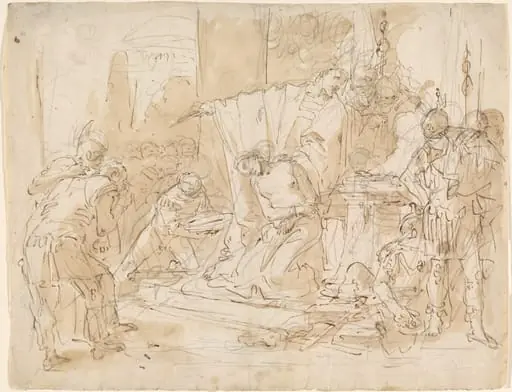 The Sacrifice of Iphigenia (recto) / Study of a Male Nude (verso)
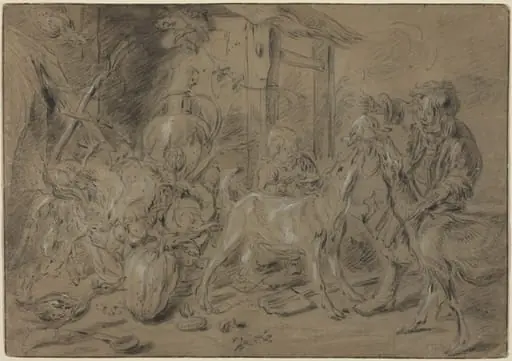 Still Life with Two Children Feeding Goats
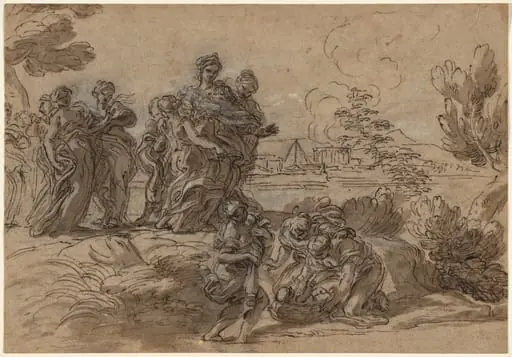 The Finding of Moses
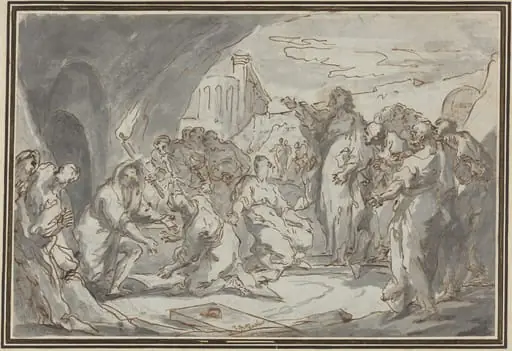 The Raising of Lazarus
 The March of Silenus
 An Allegory of Truth and Falsehood (verso)
 Flight into Egypt: The Embarkment of the Holy Family
 Peasants Fighting in a Tavern