Artwork
Flight into Egypt: The Embarkment of the Holy Family
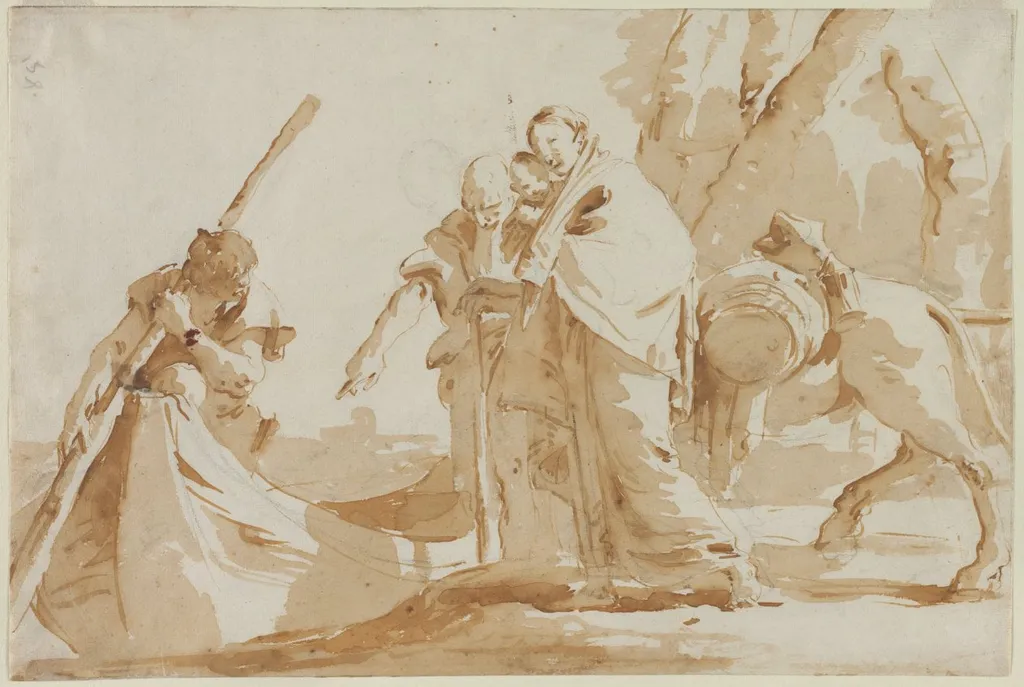
Flight into Egypt: The Embarkment of the Holy Family is a drawing by the Baroque artist Giovanni Battista Tiepolo. It dates from 1735 and is held in the collection of the Cleveland Museum of Art. This ink and wash drawing, dated around 1735, depicts a moment from the biblical Flight into Egypt.
About this work
Overview
Attributed to Giovanni Battista Tiepolo, it captures the Holy Family’s departure by sea, rendered with rapid, expressive strokes.
This ink and wash drawing, dated around 1735, depicts a moment from the biblical Flight into Egypt. Attributed to Giovanni Battista Tiepolo, it captures the Holy Family’s departure by sea, rendered with rapid, expressive strokes. Executed as a preparatory study, it emphasizes movement over finish, reflecting the artist’s working method. The piece resides in The Cleveland Museum of Art, where it is valued for its dynamic composition and spontaneous handling.
Subject & Meaning
The scene illustrates the Holy Family’s escape from Herod’s threat, as described in the Gospel of Matthew. Joseph leads the way with a staff, Mary carries the infant Jesus aboard a small boat, and a second vessel with a round shield suggests accompanying travelers or guards. The urgency of their journey is conveyed through their postures and the turbulent water, underscoring themes of displacement and divine protection.
Technique & Style
Tiepolo employed fluid ink and diluted washes to suggest form and motion with minimal detail. Figures are rendered in loose, energetic lines; facial features are omitted, focusing attention on gesture and drapery. The water is indicated by swift, overlapping strokes, and the boats are simplified, emphasizing rhythm over realism. This sketch-like quality reflects the artist’s practice of capturing movement quickly before final compositions.
History & Provenance
Created during Tiepolo’s early career in Venice, the drawing likely served as a study for a larger altarpiece or ceiling fresco. It entered The Cleveland Museum of Art’s collection in the 20th century, acquired as part of a broader effort to expand holdings of Italian Renaissance and Baroque works. Its preservation as a standalone work highlights its artistic merit beyond its preparatory function.
Context
In early 18th-century Venice, religious subjects remained central to artistic commissions, even as decorative grandeur gained prominence. Tiepolo’s rapid sketches like this one reveal how artists translated narrative urgency into visual energy. The drawing aligns with Baroque tendencies toward dynamism and emotional immediacy, though its informality distinguishes it from finished altarpieces of the period.
Legacy
This drawing exemplifies Tiepolo’s ability to convey narrative tension through economy of means. It has influenced later studies of preparatory methods in Venetian art and remains a key example of how sketching functioned as a tool for compositional experimentation. Its presence in a major museum affirms the value placed on working drawings as expressions of artistic thought.
Artist & collection

Artist
Giovanni Battista Tiepolo, also known as Giambattista Tiepolo, was an Italian painter and printmaker from the Republic of Venice who painted in the Rococo style, considered an important member of the 18th-century Venetian school.

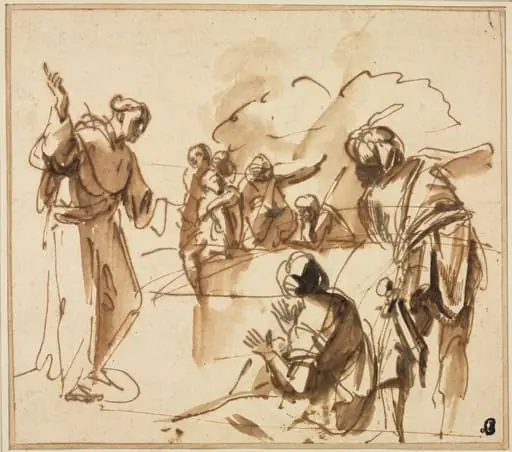 A Monk Preaching
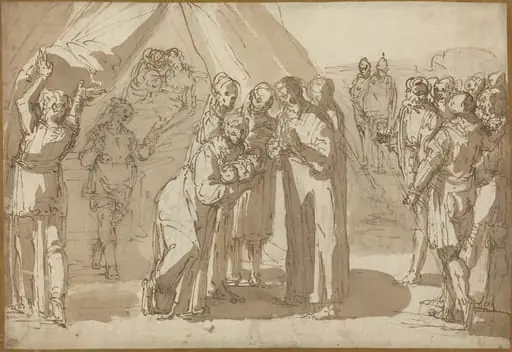 Birth Scene
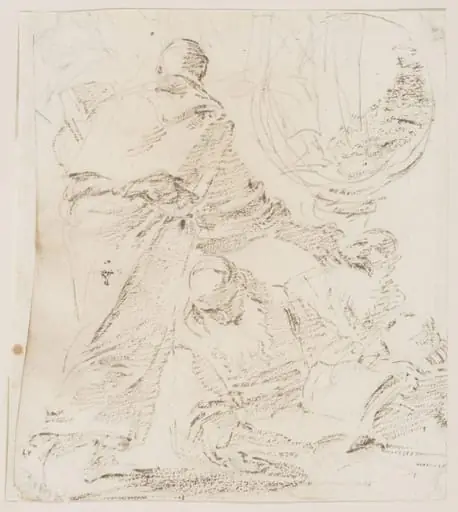 Recto: Three monks; verso: Slight sketch of a woman reclining, above: The lower portion of another figure
![Figures Deciphering an Inscription, with Two Women Seated [Study for Oeuvres de Bossuet, IV], by Giovanni Battista Piazzetta](https://artifactworldgallery.com/img/giovanni-battista-piazzetta--figures-deciphering-an-inscription-with-two-women-seated-stu--24638de2183fad9c-w320.webp) Figures Deciphering an Inscription, with Two Women Seated [Study for Oeuvres de Bossuet, IV]
Figures Deciphering an Inscription, with Two Women Seated [Study for Oeuvres de Bossuet, IV]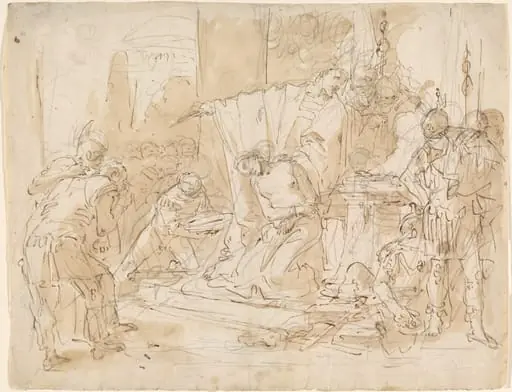 The Sacrifice of Iphigenia (recto) / Study of a Male Nude (verso)
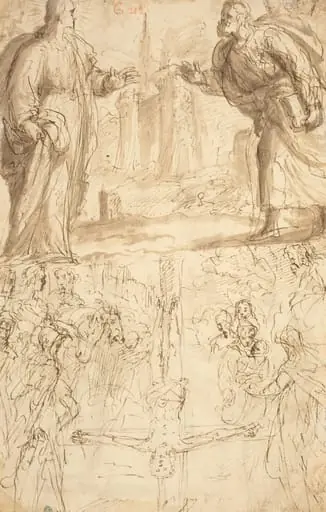 Crucifixion of Saint Peter
![The Adoration of the Magi [recto], by Donato Creti](https://artifactworldgallery.com/img/donato-creti--the-adoration-of-the-magi-recto--2cfd5d76b55e821e-w320.webp) The Adoration of the Magi [recto]
The Adoration of the Magi [recto]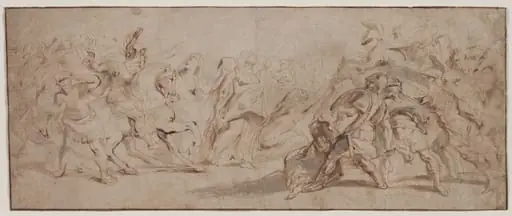 Reconciliation of the Romans and the Sabines (recto)
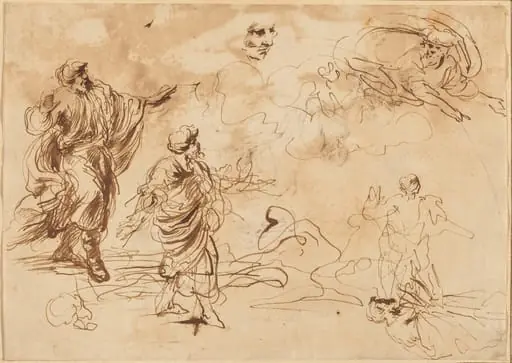 Studies for a Biblical Scene with God the Father Appearing to a Bearded Male Figure
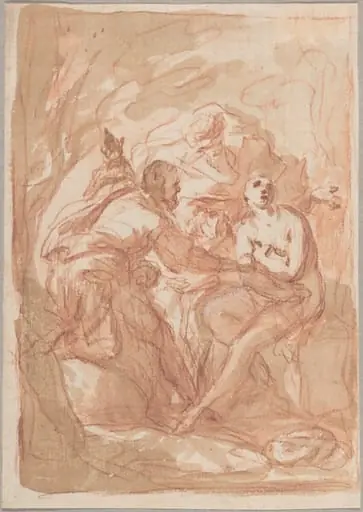 Susanna and the Elders
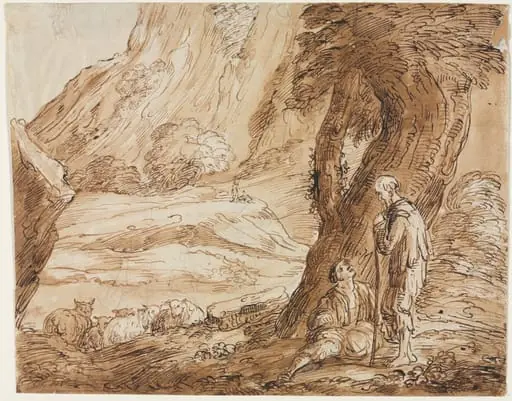 Landscape with Sheep and Two Shepherds
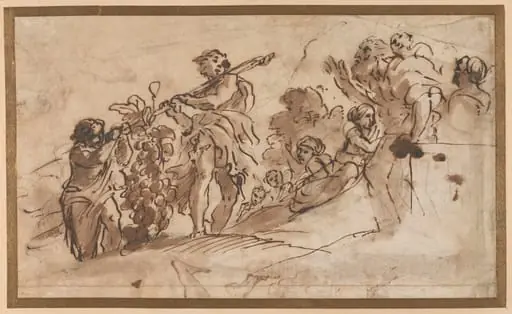 The Return of the Spies from the Promised Land