Artwork
Long-Tailed Weasel
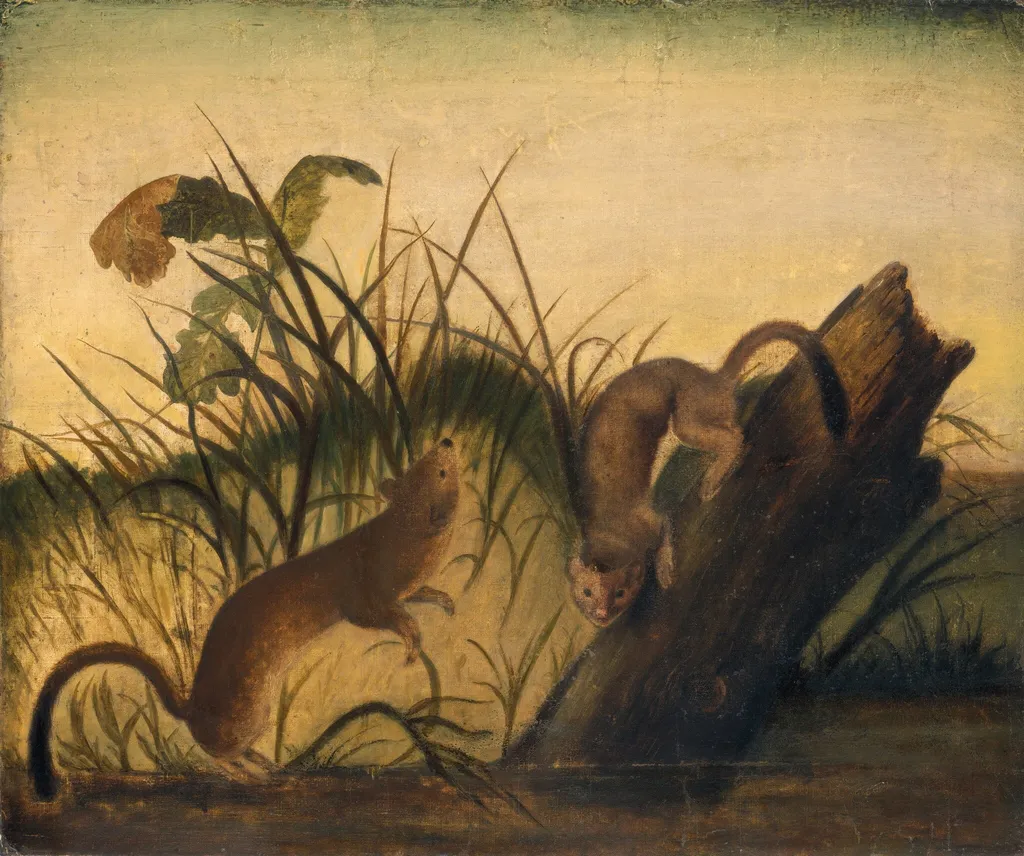
Long-Tailed Weasel is an oil painting. It dates from 1845 and is held in the collection of the National Gallery of Art. The work is an oil painting on canvas depicting a pair of long‑tailed weasels positioned among tall grasses.
About this work
This was made around 1845, when artists often painted animals to show nature’s beauty.
This painting shows two long-tailed weasels in tall grass. One sits upright, looking alert, while the other leans forward with its head down. The background is soft greens and yellows, with a few dead leaves scattered around.
The artist focused on small details like the fur texture and the way the grass sways. This was made around 1845, when artists often painted animals to show nature’s beauty.
Next, look up Romanticism to see how artists used nature to express emotion.
Overview
The work is an oil painting on canvas depicting a pair of long‑tailed weasels positioned among tall grasses. One animal sits upright, its posture alert, while the second leans forward with its head lowered. The surrounding landscape is rendered in muted greens and yellows, punctuated by scattered dead leaves, creating a quiet natural setting.
Subject & Meaning
The composition centers on the two weasels, emphasizing their contrasting attitudes—vigilance versus contemplation. By placing the creatures within a modest, almost pastoral environment, the artist invites viewers to observe the subtle behaviors of wildlife, reflecting a 19th‑century interest in portraying nature’s intimate moments.
Technique & Style
Executed in oil, the painting demonstrates careful attention to surface detail, particularly in the rendering of fur texture and the movement of grass blades. The palette of soft greens and yellows, together with delicate brushwork, aligns with mid‑1800s animal painting trends that favored realistic observation over idealization.
History & Provenance
Created circa 1845, the piece belongs to a period when European painters frequently chose animal subjects to celebrate natural beauty. No further ownership records are provided, indicating that the work’s provenance beyond its date of execution remains undocumented in the available sources.
Artist & collection