Artwork
Black-Footed Ferret
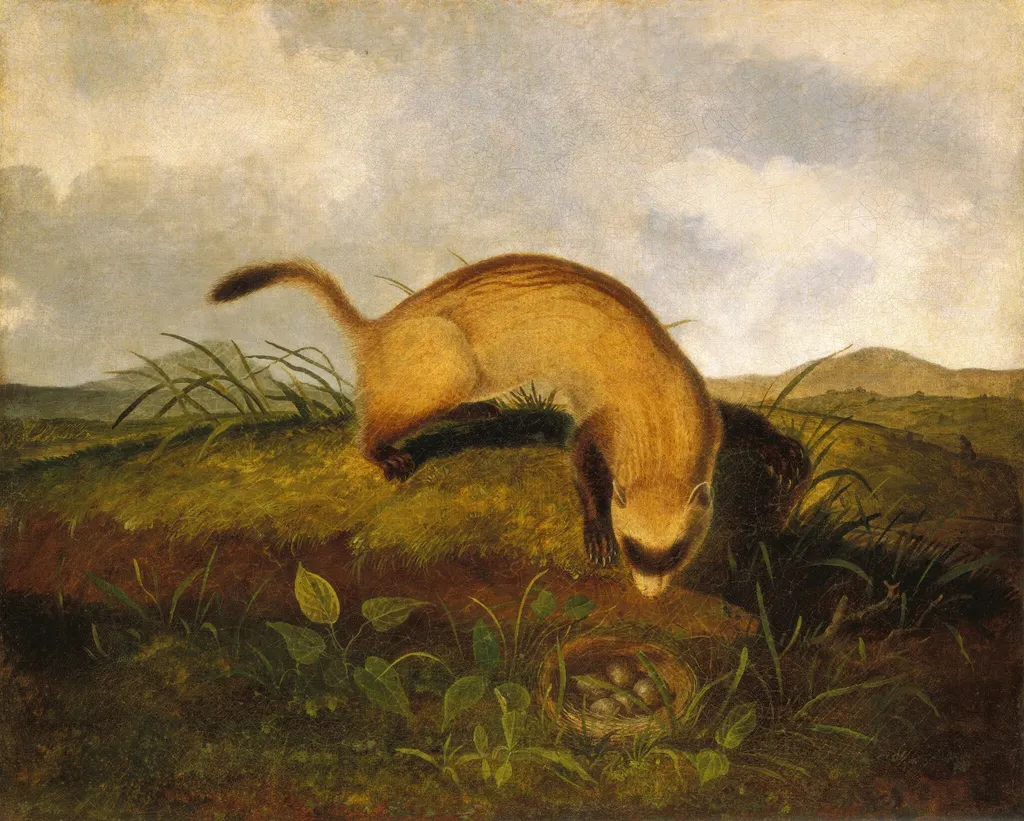
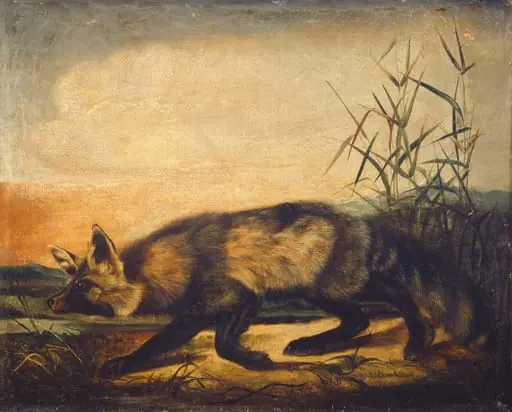
Black-Footed Ferret is an oil painting by the American Folk Art artist John Woodhouse Audubon. It dates from 1843 and is held in the collection of the National Gallery of Art.
About this work
Overview
John Woodhouse Audubon’s oil on canvas from 1843 portrays a solitary black‑footed ferret poised on a grassy rise. The animal, rendered in tan and black fur with a long, bushy tail, lowers its head as if sniffing or feeding among the blades, while a backdrop of rolling hills and a cloud‑filled sky extends behind it.
Subject & Meaning
The work focuses on the ferret, a North American species noted for its elusive nature. By placing the creature in an open, natural setting, the painting emphasizes the animal’s connection to its habitat and invites contemplation of wildlife’s quiet moments within the broader landscape.
Technique & Style
Audubon employs a realistic approach, detailing the texture of the ferret’s coat and the subtle musculature of its posture. Visible brushstrokes in the surrounding hills and sky create atmospheric depth, aligning the piece with Romantic sensibilities that prioritize emotive engagement with nature.
History & Provenance
Completed in 1843, the painting belongs to Audubon’s early period of naturalistic studies. Documentation traces its ownership through private collections before entering a museum holding focused on 19th‑century American art, where it remains part of the displayed works on fauna.
Context
Created during a time when American artists were documenting native wildlife, the painting reflects contemporary scientific interest and the Romantic movement’s fascination with the untamed frontier. Audubon’s dedication to accurate animal portrayal aligns with his broader contributions to natural history illustration.
Own this work as a print
Artist & collection

Artist
John Woodhouse Audubon (November 30, 1812 – February 21, 1862) was an American painter who was the second son of the ornithologist and painter John James Audubon.