Artwork
Marine
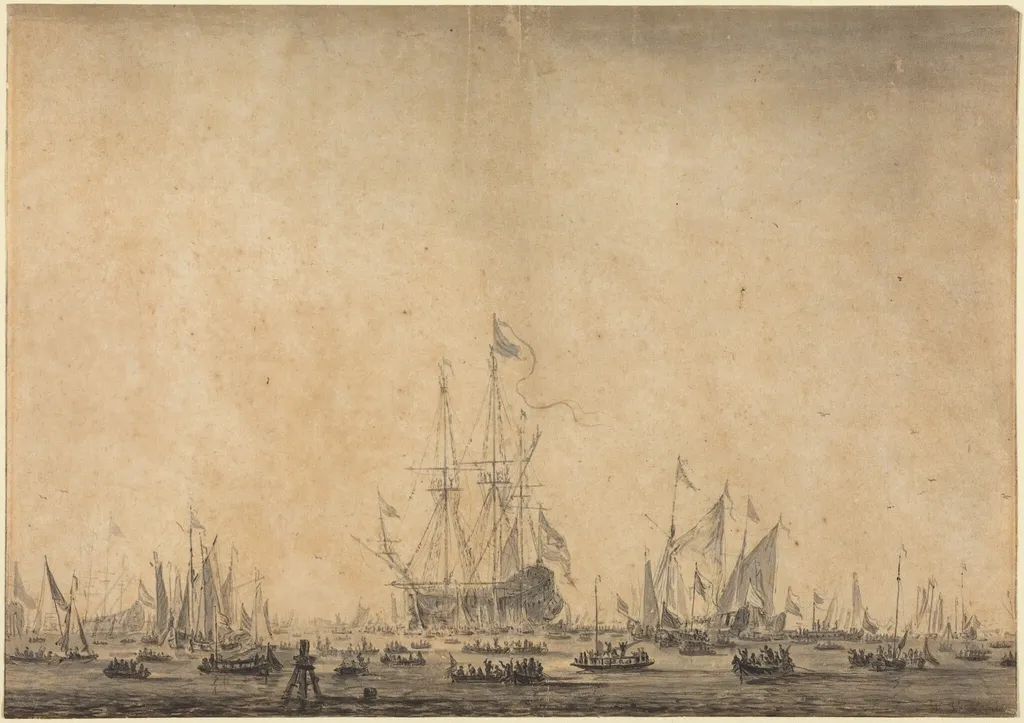
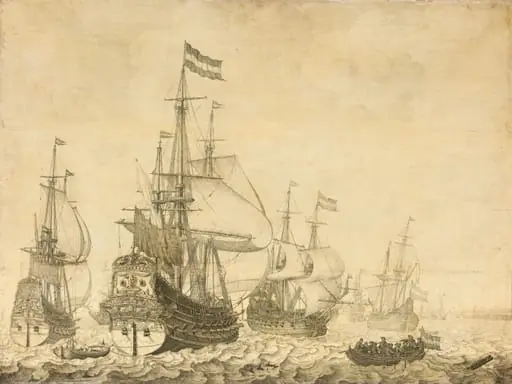
Marine is an ink drawing by the Baroque artist Unknown. It dates from 1670 and is held in the collection of the National Gallery of Art. This ink and wash drawing captures a bustling harbor scene on laid paper.
About this work
Overview
The work reads as a rapid observational study, prioritizing motion and spatial suggestion over precision.
This ink and wash drawing captures a bustling harbor scene on laid paper. Executed with fluid pen lines and subtle gray tonal washes, it depicts a dense assembly of sailing ships, from large multi-masted vessels to smaller craft, all anchored in calm waters. The coastline recedes softly in the background, suggesting distance without detailed rendering. The work reads as a rapid observational study, prioritizing motion and spatial suggestion over precision.
Subject & Meaning
The scene presents a working harbor teeming with maritime activity, though without overt narrative or drama. Ships of varying sizes imply trade, transport, or naval presence, while the quiet atmosphere suggests a pause between departures or arrivals. The absence of human figures in detail shifts focus to the vessels themselves, emphasizing the harbor as a functional, lived-in space rather than a stage for events.
Technique & Style
The artist employed loose, confident pen strokes to outline forms, complemented by diluted gray washes to suggest volume and atmosphere. Light hatching and minimal shading convey depth without heavy modeling. The washes blend softly, creating atmospheric perspective, while the paper’s texture subtly interacts with the ink, enhancing the sense of spontaneity. The technique reflects a direct, on-site approach, valuing immediacy over finish.
History & Provenance
The drawing’s origin and early ownership are undocumented. Its medium and style align with 17th- or 18th-century maritime sketches made by artists or navigators recording port activity. No known exhibition or collector history precedes its current record, suggesting it may have been a private study or preparatory work, preserved for its observational value rather than artistic fame.
Context
During the period when such drawings were common, harbors were vital nodes of commerce and military logistics. Artists and surveyors often sketched ports to document ship types, arrangements, and coastal features. This piece fits within that tradition — not as a finished composition, but as a visual record of maritime infrastructure, made with the efficiency suited to field observation.
Legacy
Though unsigned and unattributed, the drawing exemplifies the quiet utility of observational drawing in pre-photographic eras. Its value lies in its unembellished record of maritime life, offering insight into vessel design and harbor dynamics. It remains a quiet testament to the role of sketching as a tool for understanding the world through direct engagement.
Artist & collection

 Domestic Scene
 Giacomo and Cardinal Marco, investing Andrea, Abbot of San Zeno, with his Benefice
 The Nymph of Fontainebleau
 Portrait of a Woman
 Madonna and Child with Saints in the Enclosed Garden
 Venus and Minerva
 Family Group of Four on Sofa
 Wall painting from Room H of the Villa of P. Fannius Synistor at Boscoreale
 Harbor Scene
 The prince's yacht and the sate yacht leaving Moerdijk with Charles II of England on board, 1660
 Group of Ships
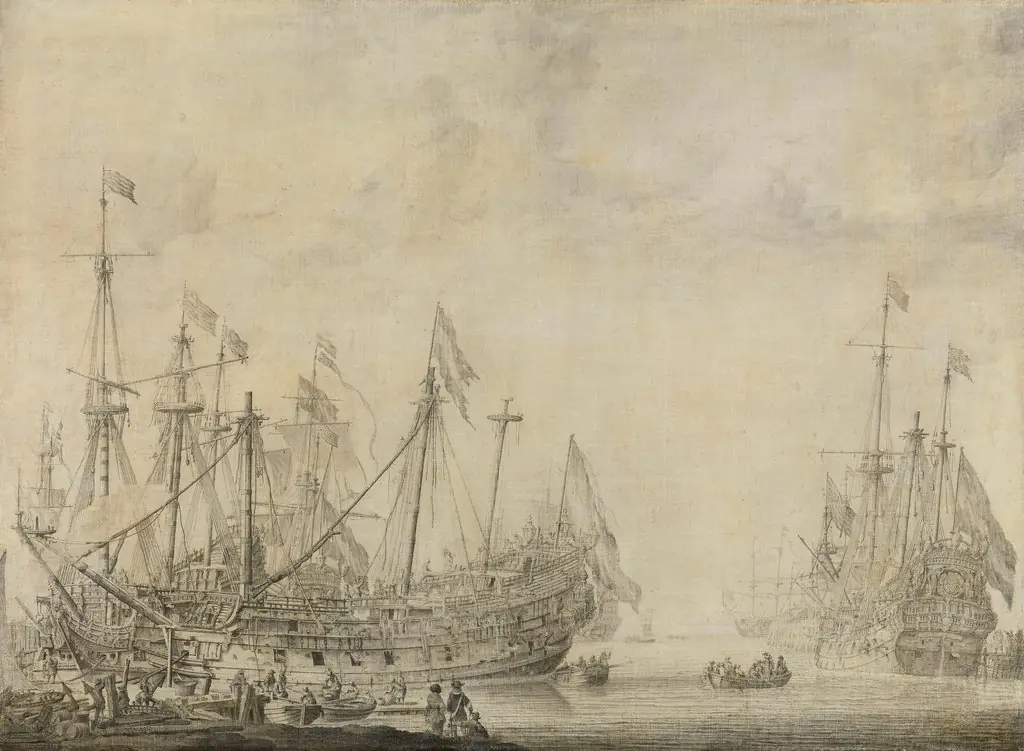 Ships after a battle
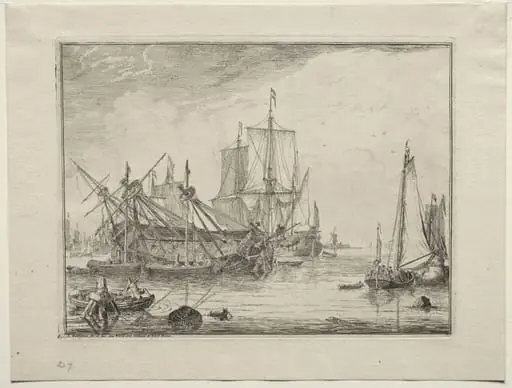 Ships Under Repair
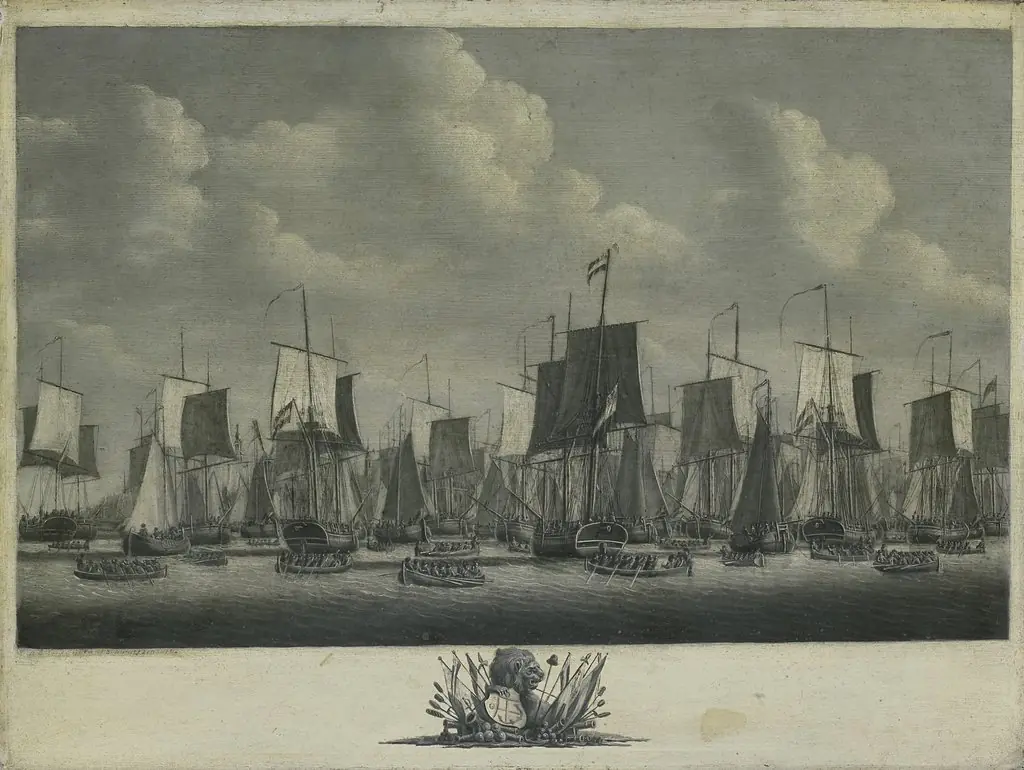 The Fleet Leaving the Port of Flushing, 1804
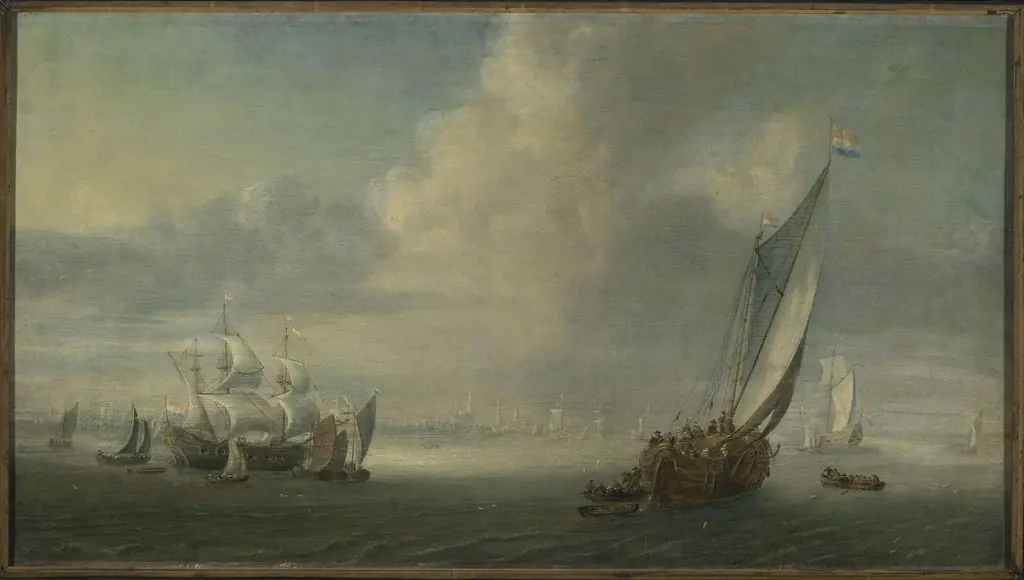 Marine view with a port in the background
 "Seascape with the Dutch Men-of-War including the "Drenthe" and the "Prince Frederick-Henry""
 Untitled