Artwork
Untitled
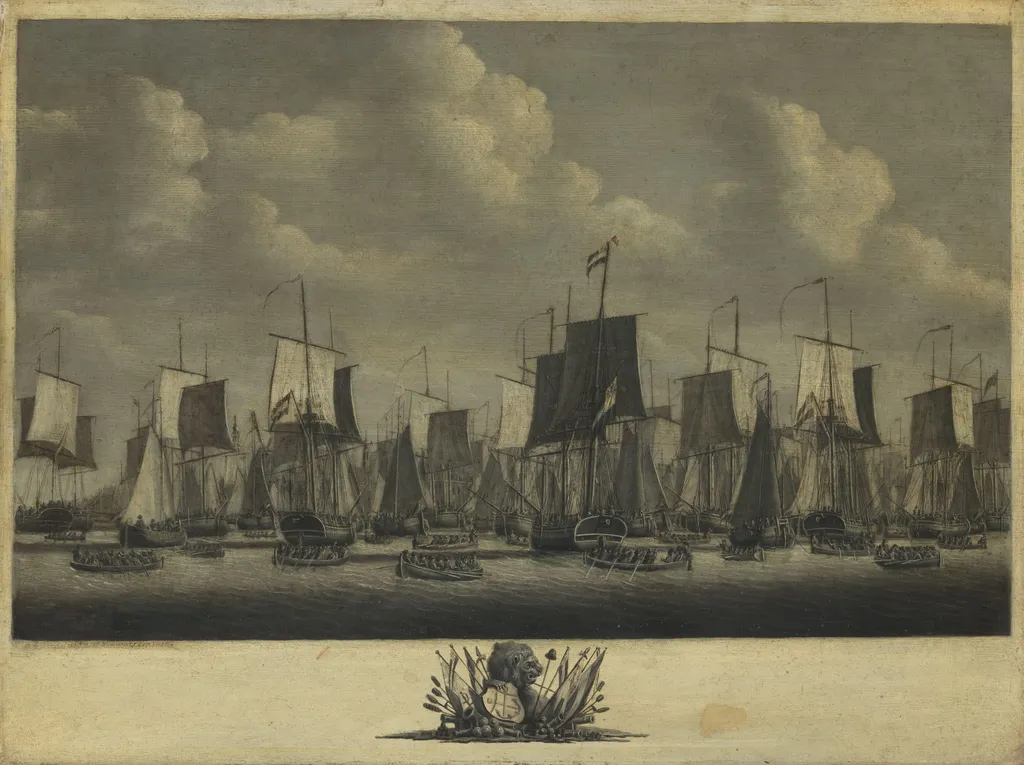
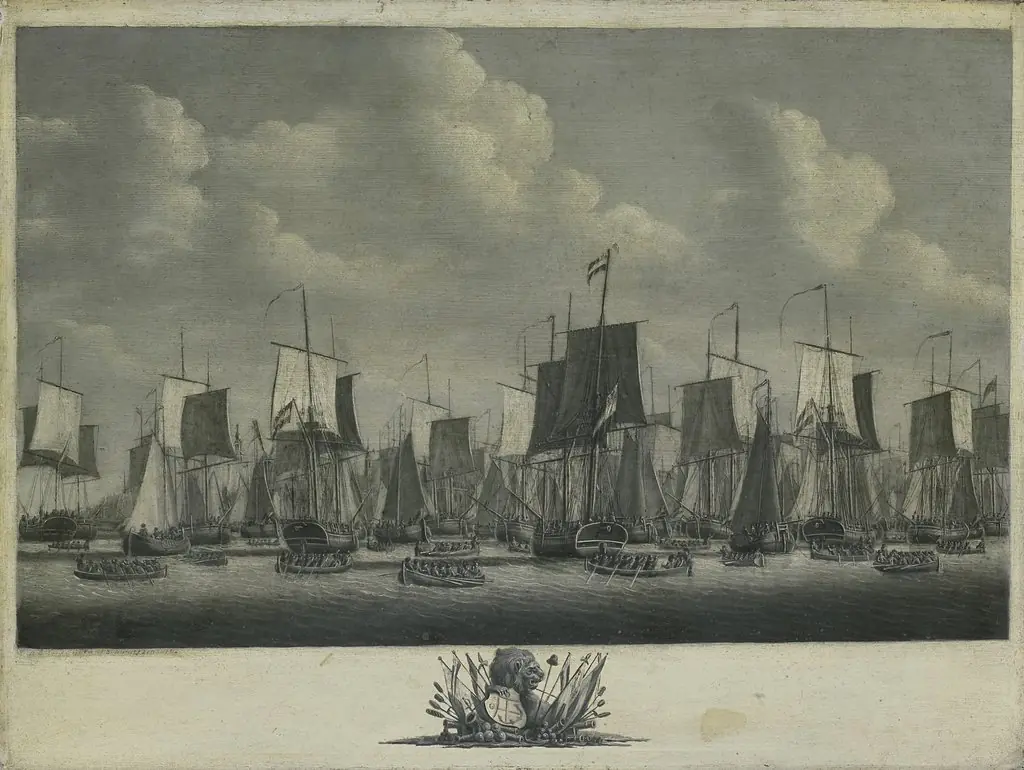
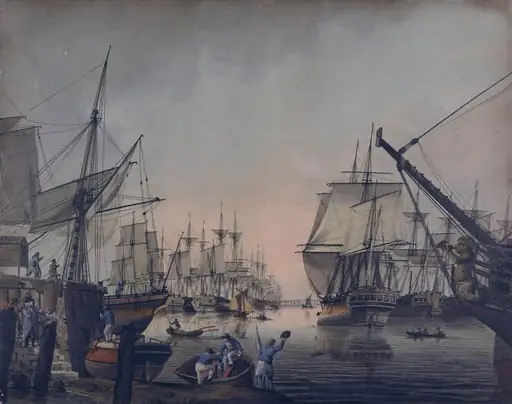
Untitled is an unspecified painting by the Dutch Golden Age artist Engel Hoogerheyden. It dates from 1804 and is held in the collection of the Rijksmuseum. A maritime scene from 1804 depicts the Dutch fleet assembling at Flushing harbor, bound for Boulogne-sur-Mer in France.
About this work
You see a busy harbor at dusk: dozens of ships with tall masts, tiny flags, and crews scurrying on deck.
You see a busy harbor at dusk: dozens of ships with tall masts, tiny flags, and crews scurrying on deck.
This painting was made in 1804, when the Dutch navy sailed to France to help Napoleon invade England. The invasion never happened, but the scene still shows the quiet moment before a big plan. The artist left no name, so the work feels like a snapshot of history, not a famous face.
To see more ships from this time, look up the Rijksmuseum.
Overview
A maritime scene from 1804 depicts the Dutch fleet assembling at Flushing harbor, bound for Boulogne-sur-Mer in France. The painting captures the logistical preparation for Napoleon’s planned invasion of Britain, a campaign that was ultimately abandoned. Though unsigned, the work records a moment of military coordination between the Batavian Republic and France, preserving the scale and urgency of naval mobilization without overt heroism or commentary.
Subject & Meaning
The painting shows a fleet of Dutch warships preparing to join French forces at Boulogne, part of Napoleon’s broader strategy to cross the English Channel. The absence of battle or triumph underscores the anticipation and uncertainty of the moment. The scene’s quiet activity—sailors moving on deck, flags fluttering—suggests a pause before action, highlighting the fragility of grand political plans that never materialized.
Technique & Style
Rendered in a detailed, observational style, the painting uses muted twilight tones to convey the hour of departure. Ships are rendered with precise rigging and hull forms, while figures are minimized to dots of color, emphasizing scale over individual narrative. The composition arranges vessels in layered rows, guiding the eye toward the harbor’s horizon, reinforcing the sense of collective movement without dramatic focal points.
History & Provenance
Commissioned during the Batavian Republic’s alliance with France, the work likely served as a documentary record of naval cooperation. Its anonymous authorship suggests it was produced for institutional or military use rather than public display. The painting remained in regional collections, eventually entering public holdings where its historical context, rather than artistic fame, defines its significance.
Context
In 1804, the Batavian Republic, a French client state, supplied ships and sailors to support Napoleon’s invasion preparations. The fleet’s presence at Boulogne was one of many elements in a plan that faltered due to British naval superiority and logistical challenges. This painting reflects a brief window of continental unity against Britain, before the alliance’s ambitions unraveled.
Legacy
The painting endures as a quiet testament to a military endeavor that never reached combat. It contributes to historical understanding of Dutch-French naval collaboration and the scale of preparations for the failed invasion. Its anonymity allows it to function as an unembellished record, valued more for its evidentiary clarity than for stylistic innovation.
Artist & collection

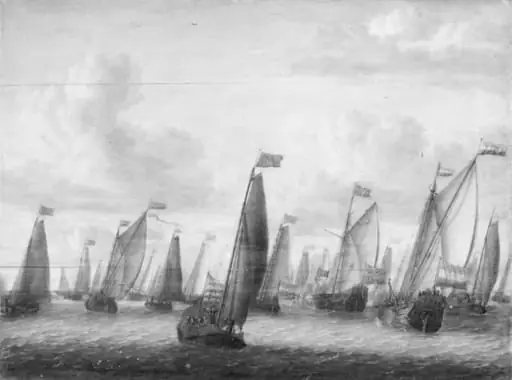 The so-called Admiral Race on the Amstel River
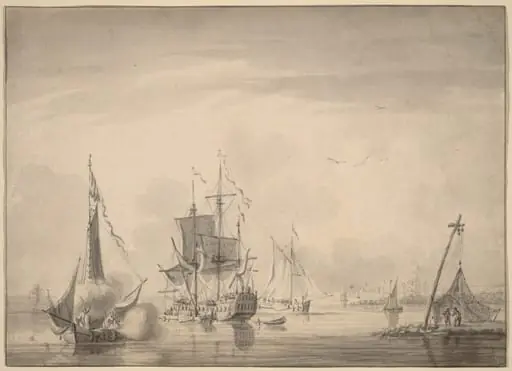 Harbor Scene
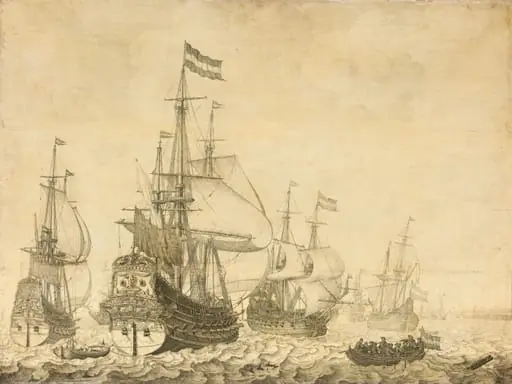 "Seascape with the Dutch Men-of-War including the "Drenthe" and the "Prince Frederick-Henry""
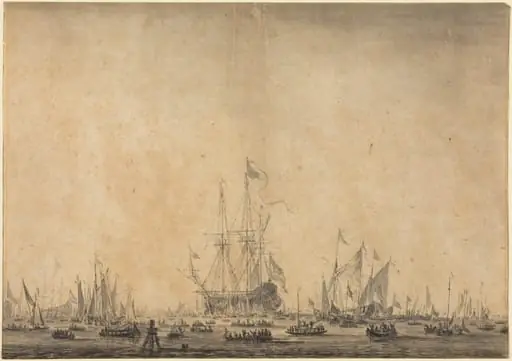 Marine
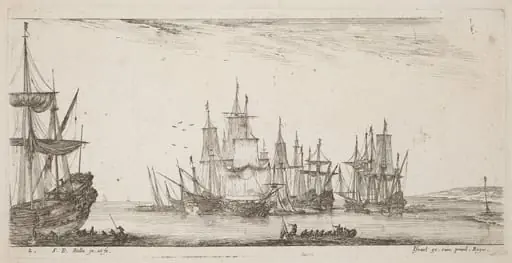 Group of Ships
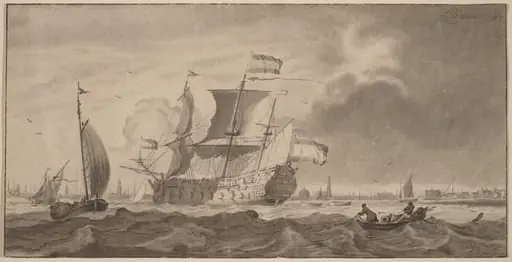 War Vessel in the Y
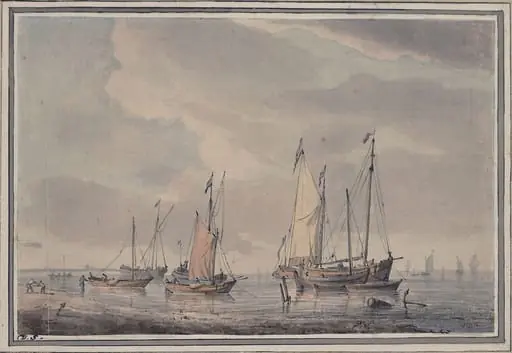 Seashore with fishing vessels at anchor
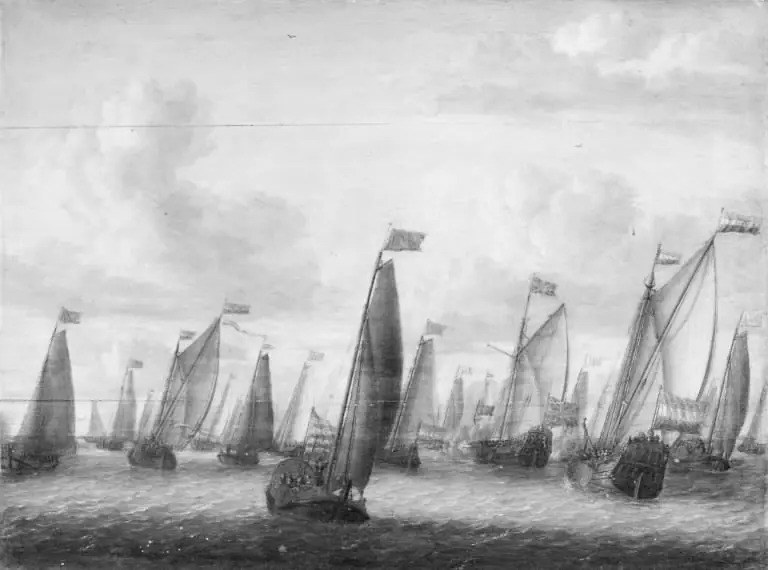 The so-called Admiral Race on the Amstel River
 A view of the Pool, below London Bridge.
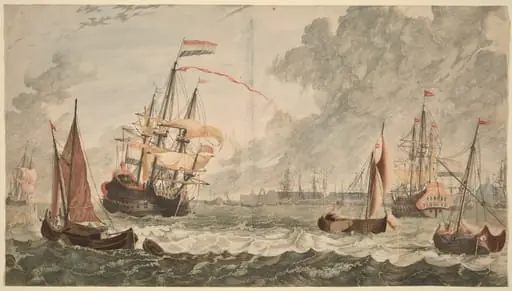 Amsterdam, Ships at the IJ on Choppy Waters