Artwork
Interior of a Church Built in the Late-Renaissance Style
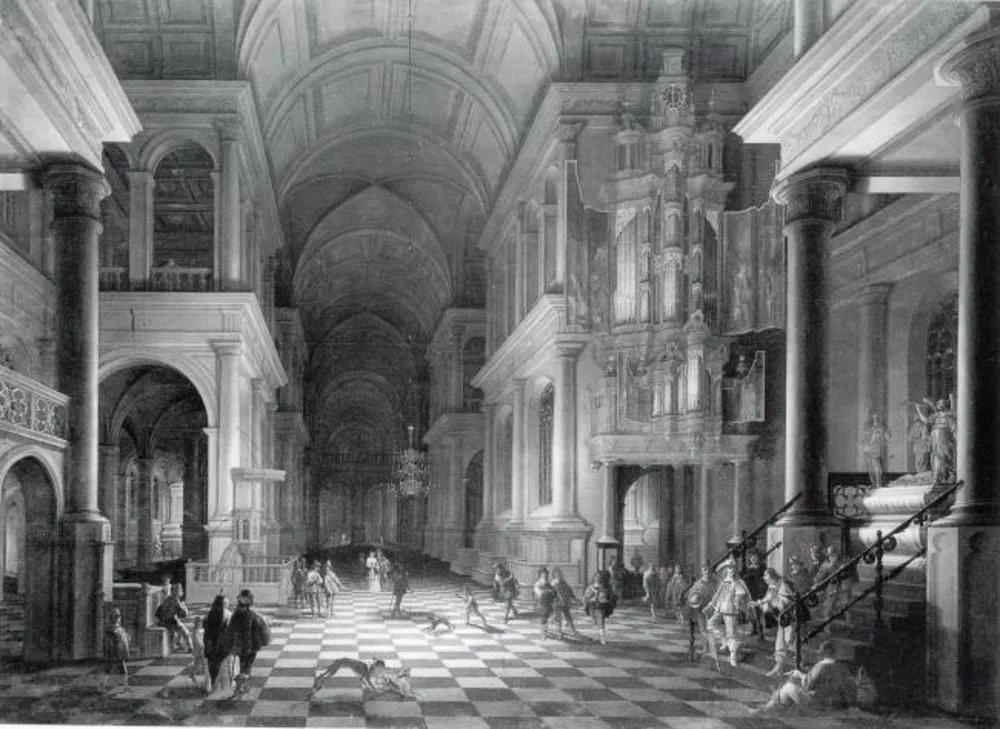
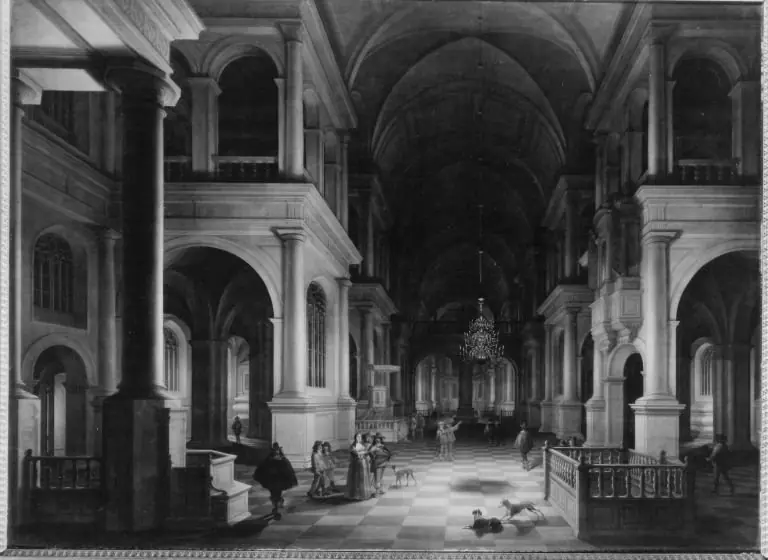
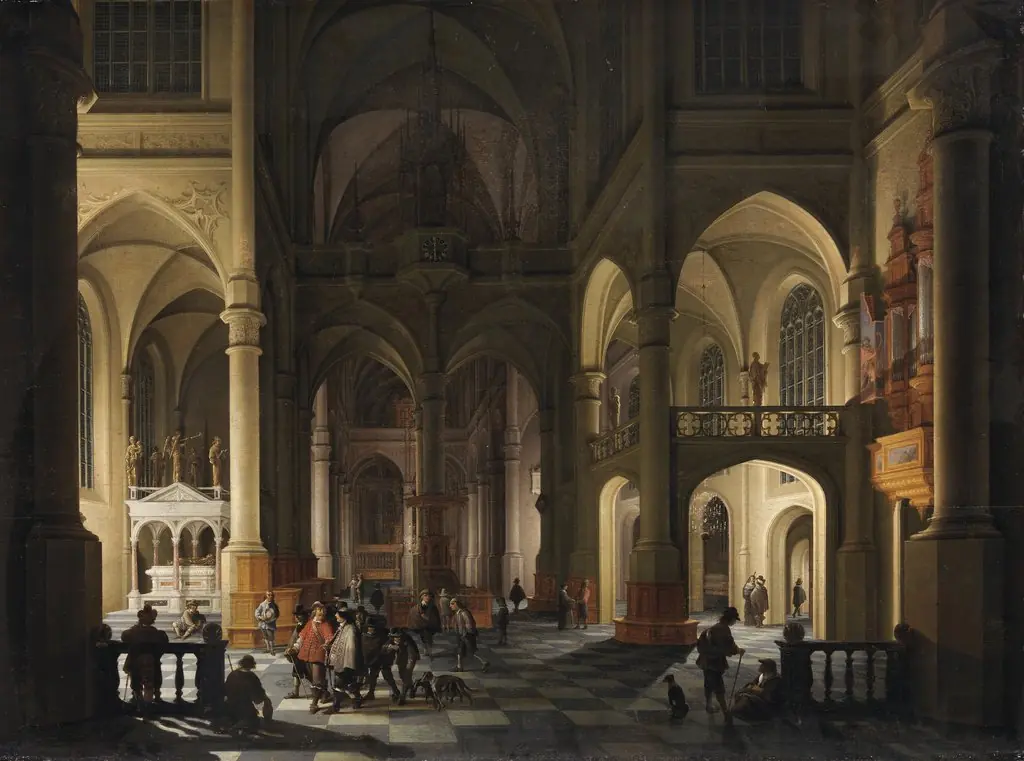
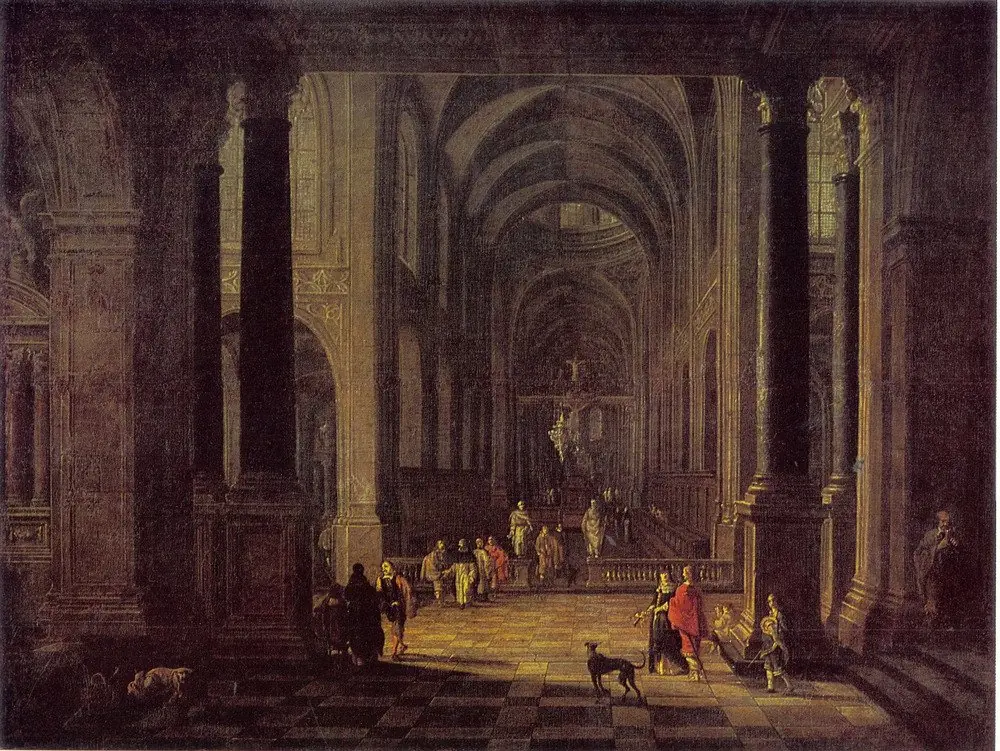
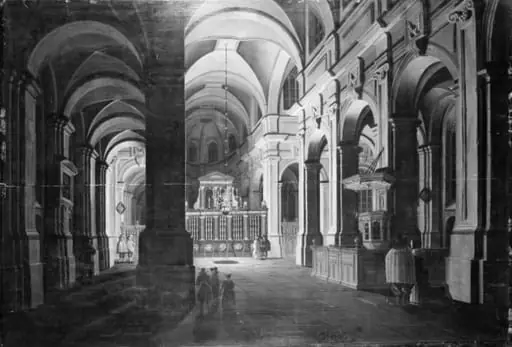
Interior of a Church Built in the Late-Renaissance Style is an oil painting by the Dutch Golden Age artist Anthonie de Lorme. It dates from 1646 and is held in the collection of the Städel Museum.
About this work
Overview
Though de Lorme rendered the structure, figures within the scene were added by other artists, a common practice among specialists of the period.
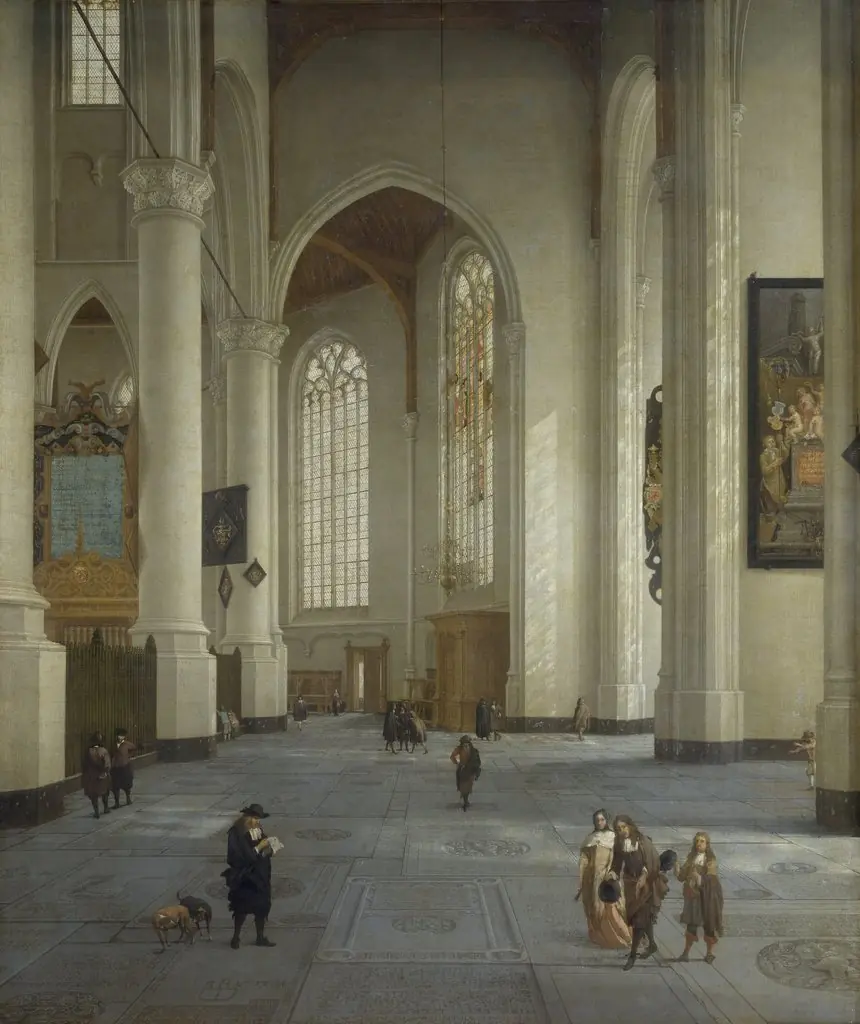
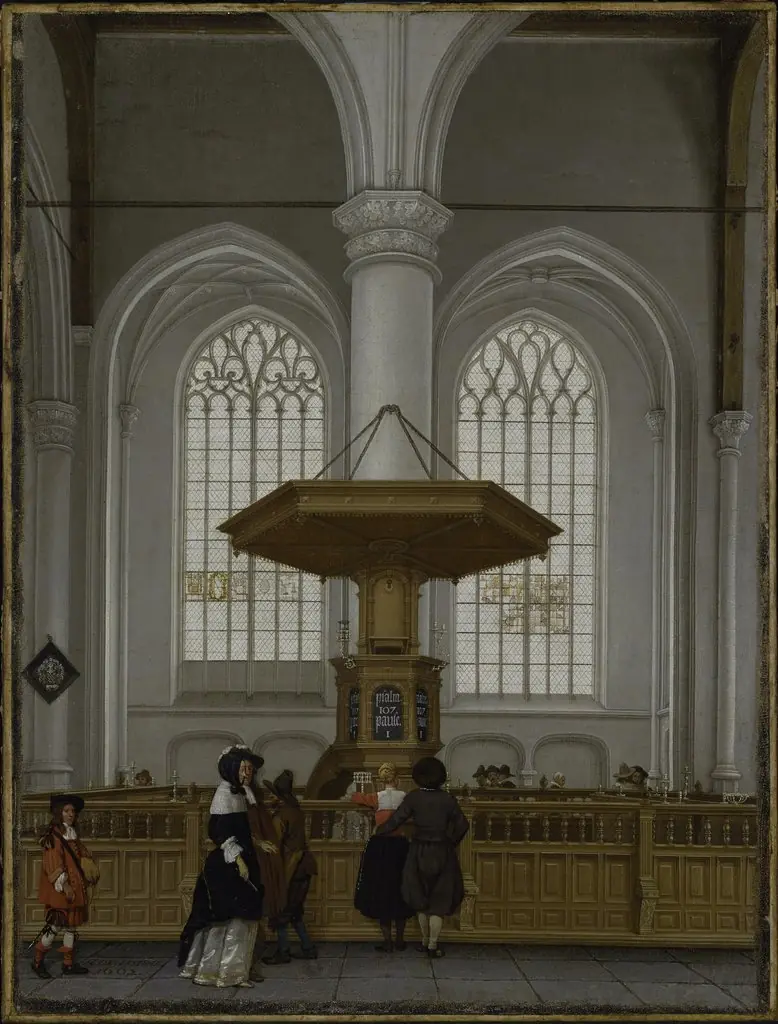
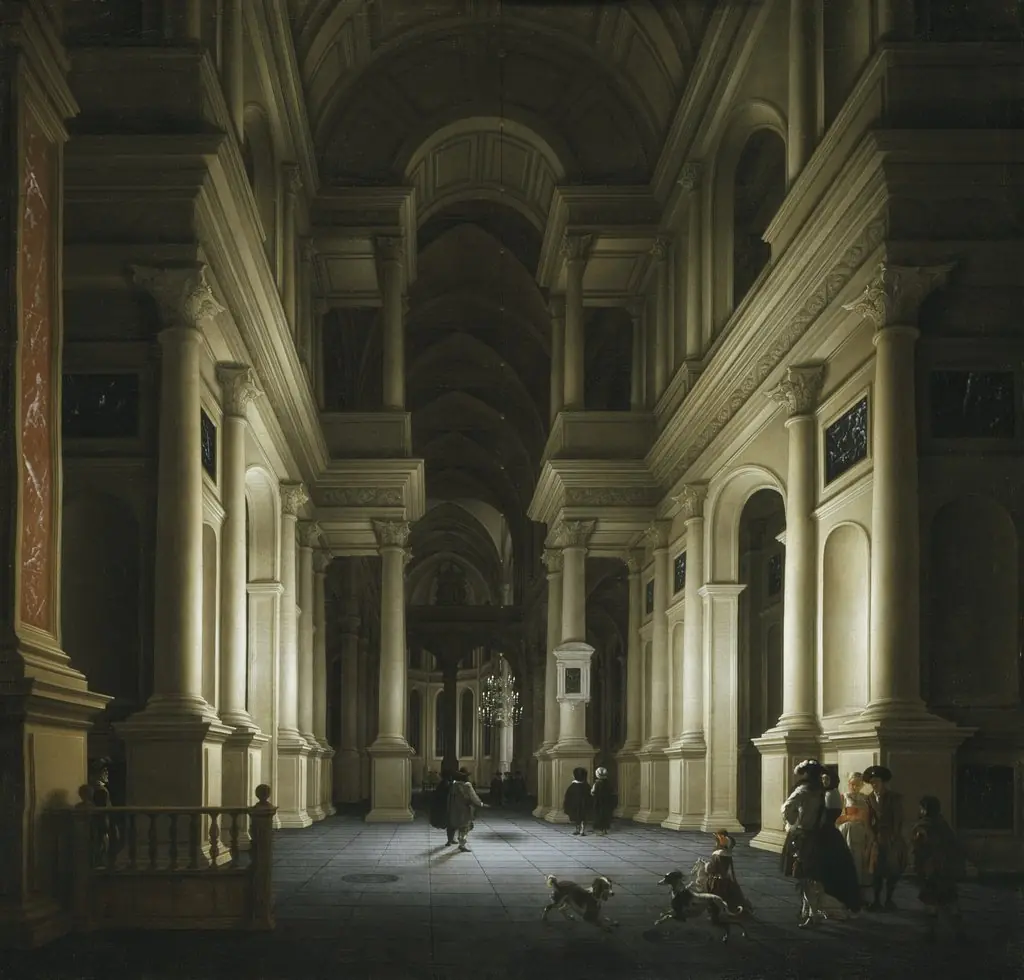
Anthonie de Lorme, a painter active in the Dutch Republic during the 17th century, focused on architectural interiors, particularly churches. This 1646 oil painting captures the spatial complexity of a late-Renaissance ecclesiastical building. Though de Lorme rendered the structure, figures within the scene were added by other artists, a common practice among specialists of the period. The work resides today in the Städel Museum, Frankfurt.
Subject & Meaning
The painting portrays a bustling church interior during a weekday service or gathering. Figures in varied attire—some in elaborate garments, others in modest dress—move through the space, suggesting social diversity. A central group gathers near a man reading or speaking, implying a moment of communal attention. The scene avoids overt religious symbolism, instead emphasizing the church as a social and architectural presence in daily life.
Technique & Style
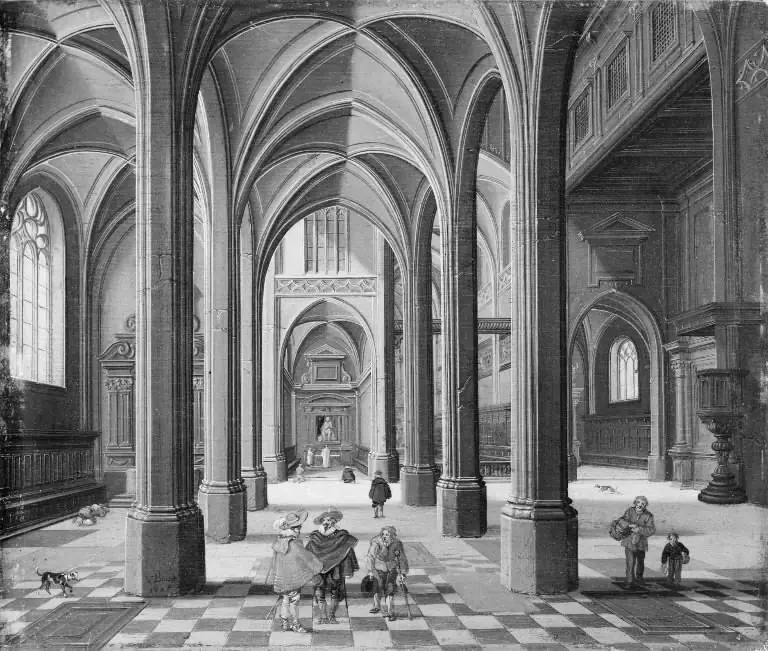
De Lorme employed precise linear perspective to convey the church’s vaulted ceiling and receding columns. Chiaroscuro models the stone surfaces and architectural details, enhancing depth without dramatic theatricality. The black-and-white tiled floor reinforces spatial recession. Figures, painted by collaborators, are rendered with subtle naturalism, integrating seamlessly into the architectural framework without dominating it.
History & Provenance
Created in 1646, the painting reflects the Dutch Golden Age’s interest in secularized sacred spaces. De Lorme’s specialization in church interiors aligned with a growing market for topographical and architectural views. The work entered the Städel Museum’s collection in the 19th century, where it remains as part of a broader European tradition of architectural painting.
Context
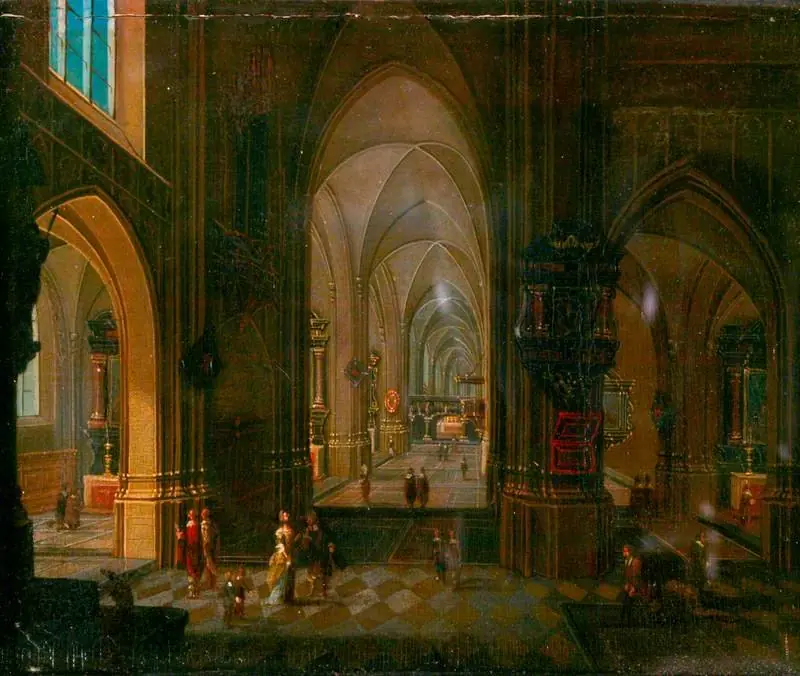
During the mid-17th century, Dutch artists increasingly depicted churches not as sites of worship alone, but as civic monuments. With Protestant reforms minimizing religious imagery, interiors became vehicles for exploring light, space, and social order. De Lorme’s work fits within this trend, presenting architecture as both structure and stage for human activity.
Legacy
De Lorme’s approach influenced later Dutch architectural painters by demonstrating how collaboration could enhance realism without compromising structural accuracy. His careful rendering of perspective and material texture set a standard for the genre. Though less celebrated than contemporaries like Vermeer, his work contributed to a sustained interest in the quiet grandeur of sacred architecture.
Artist & collection
Artist
Anthonie de Lorme (Tournai 1610 or between 1600 and 1605 – Rotterdam, 1673) was a painter known for his depictions of interiors of existing or imaginary churches.