Artwork
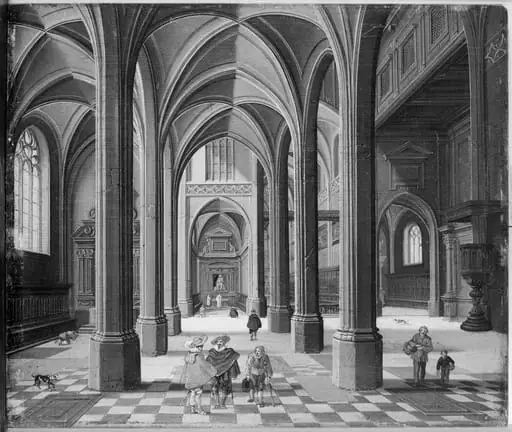
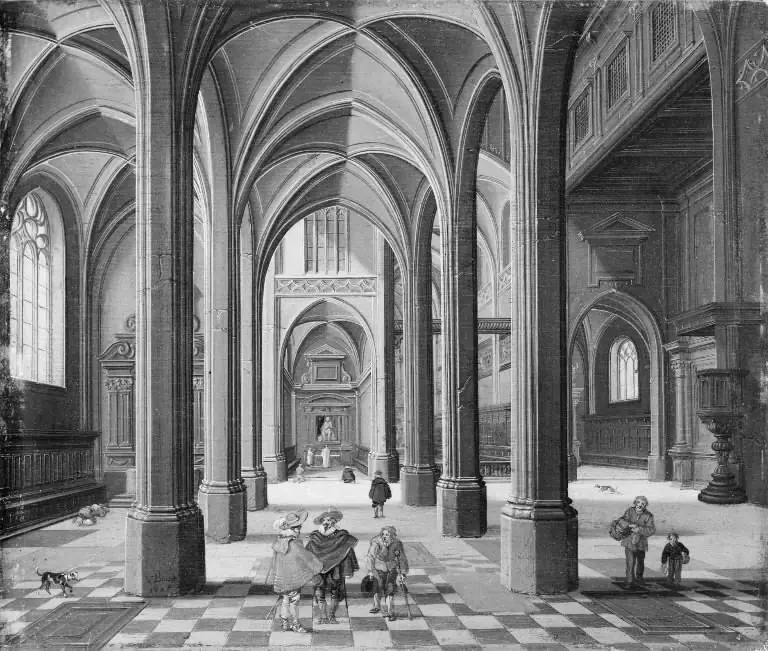
Interior of a Church
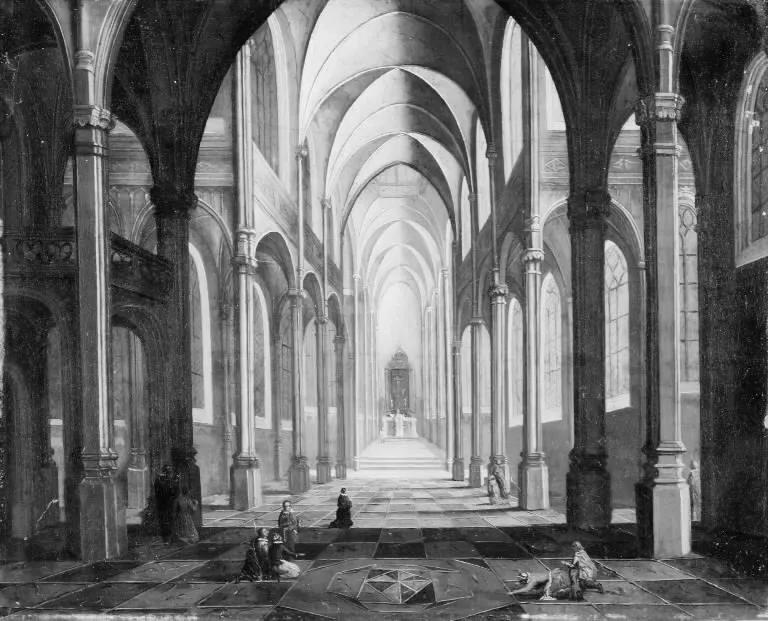
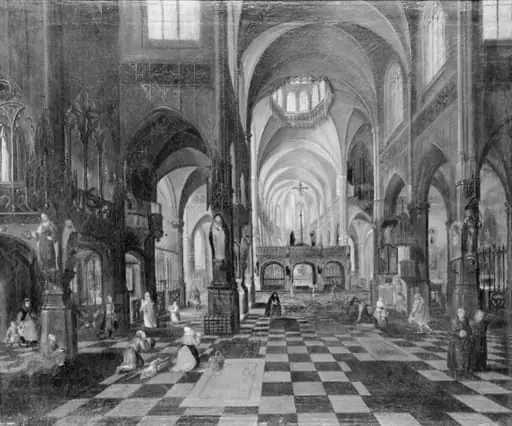
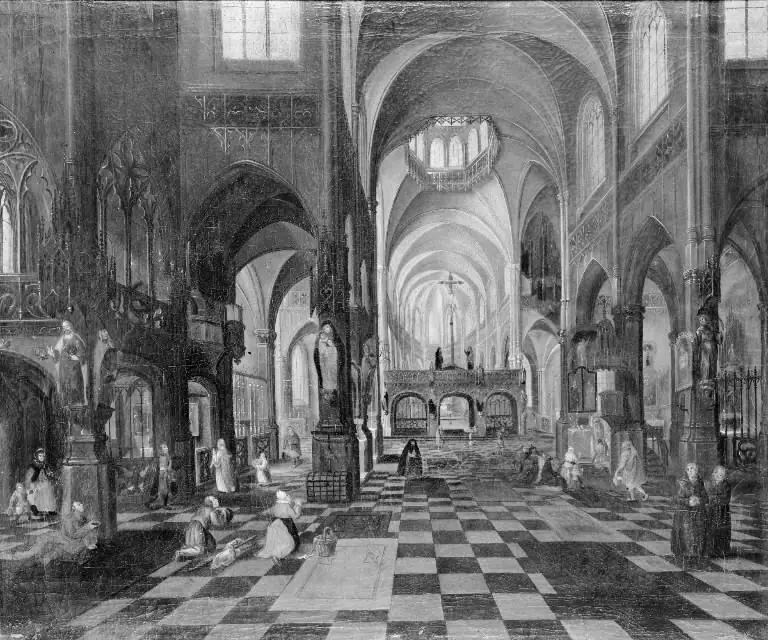
Interior of a Church is an unspecified painting by the Rococo painting artist Johann Peter Neef. It dates from 1792 and is held in the collection of the Statens Museum for Kunst.
About this work
Overview
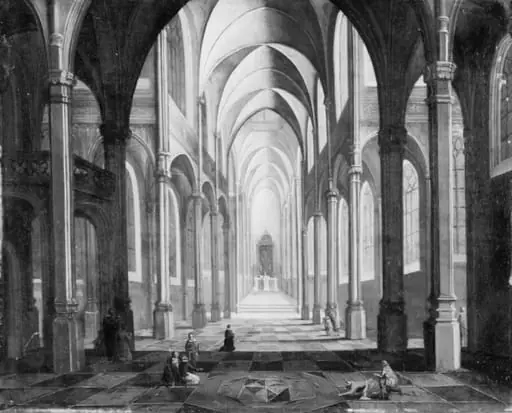
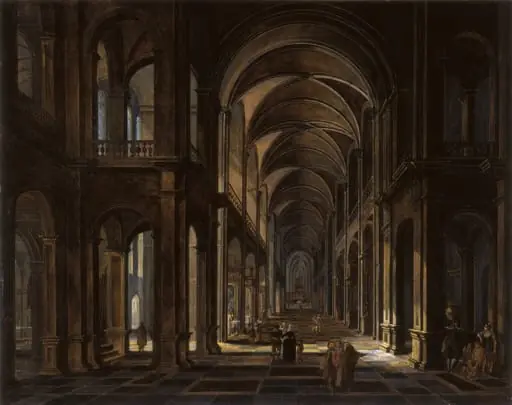
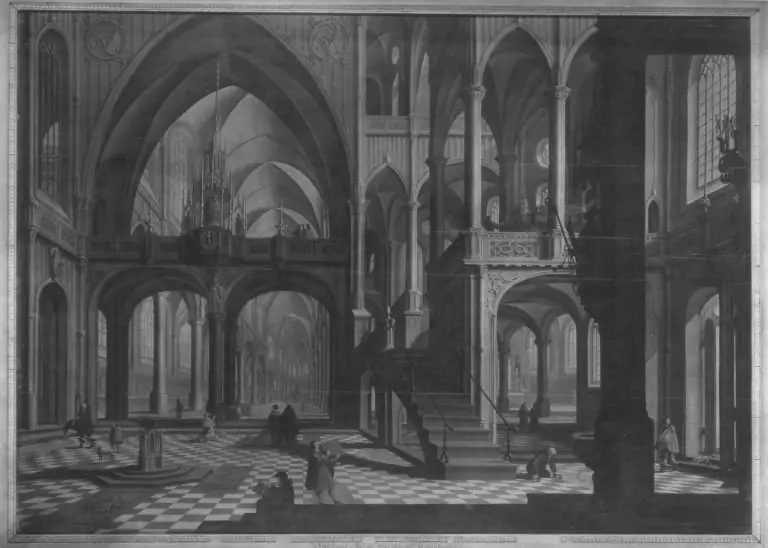
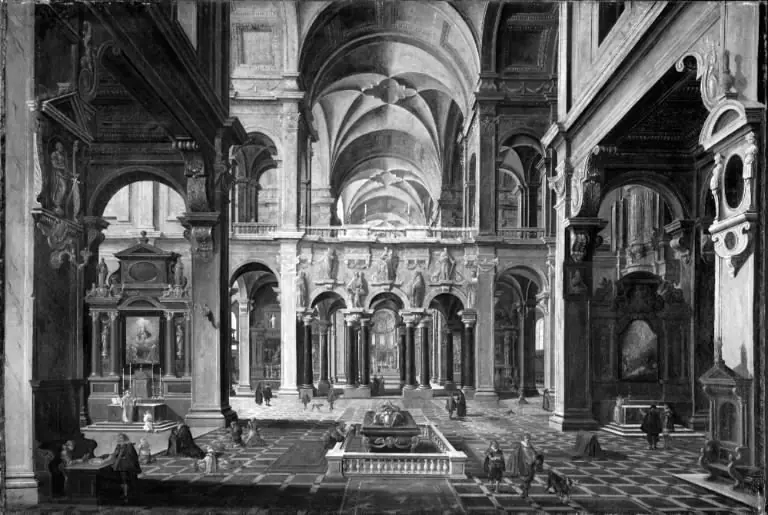
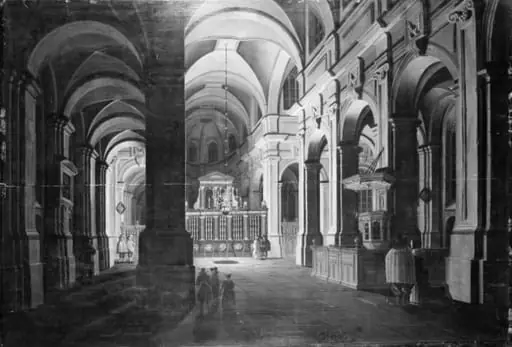
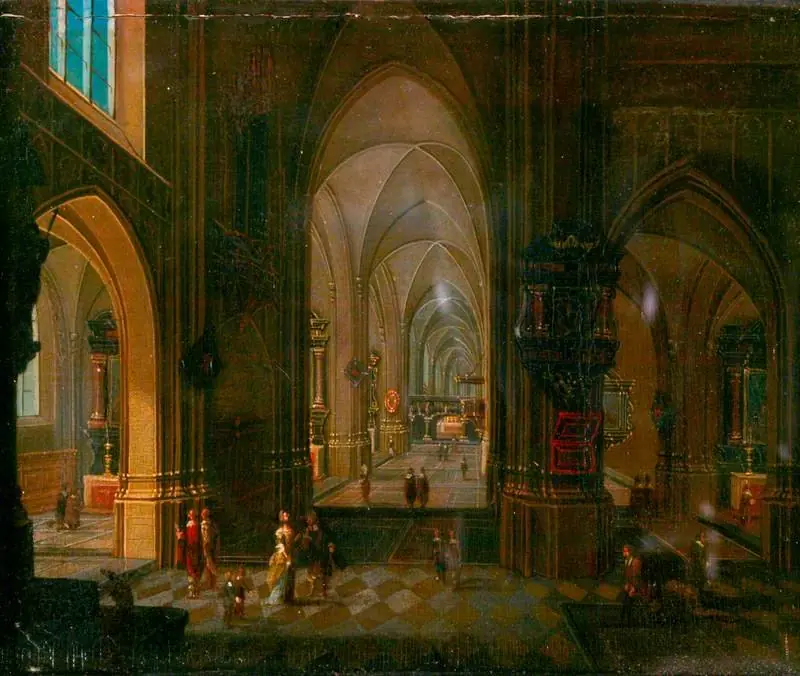
Johann Peter Neef’s 1792 oil painting titled *Interior of a Church* presents a spacious nave rendered with a calm, luminous quality. The composition leads the eye down a vaulted aisle framed by arches and columns, while a patterned stone floor and tall windows admit abundant daylight, creating a tranquil atmosphere that invites quiet contemplation.
Subject & Meaning
The work captures a moment of communal gathering within a sacred space, showing figures both seated and standing along the nave. Their presence suggests a liturgical or social function, emphasizing the church as a place of shared experience. The orderly architecture and balanced light reinforce themes of order, reverence, and the spiritual calm associated with ecclesiastical interiors.
Technique & Style
Neef employs chiaroscuro to model the interior’s depth, contrasting the bright illumination from the windows with the shadowed recesses of the arches. The precise rendering of stone tiles and the geometric floor pattern demonstrate a careful attention to perspective, while the soft transitions of light convey a realistic yet idealized atmosphere typical of late‑18th‑century academic painting.
History & Provenance
Completed in 1792, the painting entered the collection of Denmark’s national gallery, Statens Museum for Kunst, where it remains on display. Its acquisition reflects the museum’s interest in documenting Northern European religious architecture and the work of lesser‑known Danish artists of the period.
Context
Created during a time when neoclassical ideals were influencing Scandinavian art, Neef’s depiction aligns with contemporary interests in architectural precision and the study of light. The painting also mirrors a broader European fascination with interior church views, which served both as studies of perspective and as visual meditations on sacred space.
Artist & collection