Artwork
Still life with a copy of De Waere Mercurius, a broadsheet with the news of Tromp's victory over three English ships on 28 June 1639, and a poem telling the story of Apelles and the cobbler
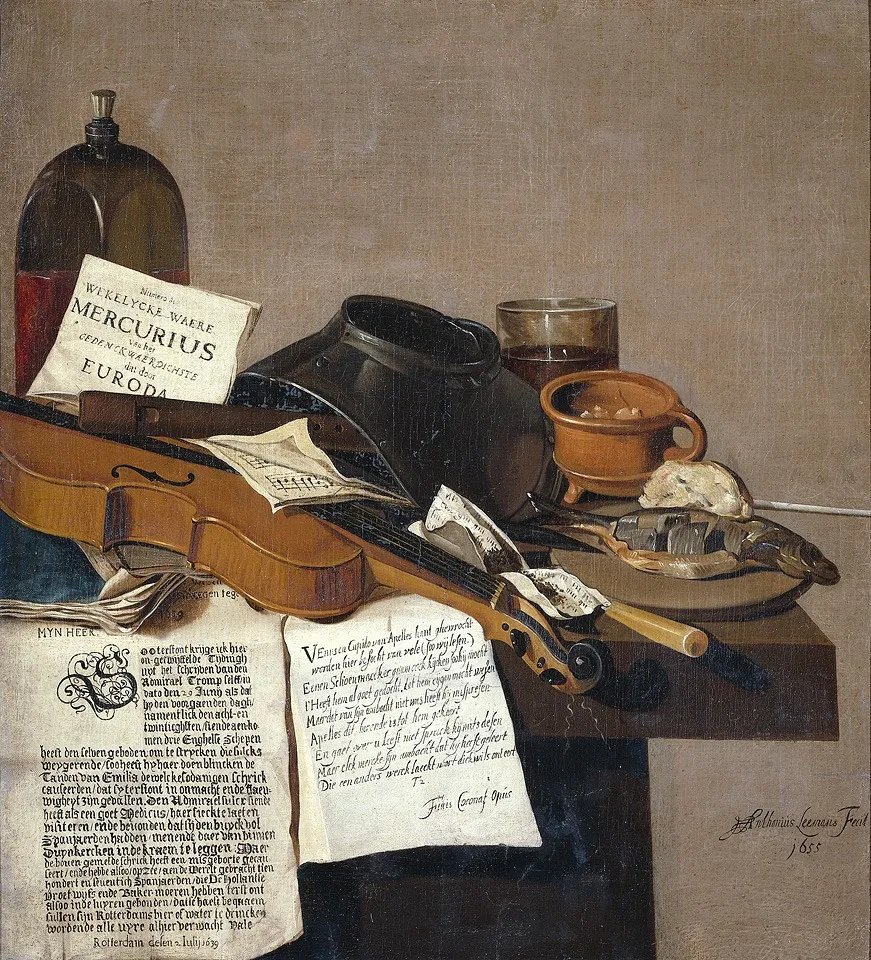
Still life with a copy of De Waere Mercurius, a broadsheet with the news of Tromp's victory over three English ships on 28 June 1639, and a poem telling the story of Apelles and the cobbler is an oil painting by the Dutch Golden Age artist Anthonie Leemans. It dates from 1655 and is held in the collection of the Rijksmuseum.
About this work
Overview
An oil painting executed in 1655 by Dutch artist Anthonie Leemans, this still‑life assembles a variety of quotidian items on a cluttered tabletop. The work is part of the Rijksmuseum’s collection and presents a carefully arranged scene that blends domestic objects with printed material, offering a snapshot of mid‑seventeenth‑century visual culture.
Subject & Meaning
At the centre of the composition lies a copy of the newspaper De Waere Mercurius, reporting Admiral Maarten Tromp’s triumph over three English vessels on 28 June 1639, alongside a poem recounting the legend of the painter Apelles and a cobbler. The inclusion of current news and literary reference suggests an interest in linking everyday life with contemporary events and classical anecdotes.
Technique & Style
Leemans employs a restrained palette of earth tones and muted greens, punctuated by bright accents such as a half‑eaten lemon. The arrangement of objects—violin, bottle, cup, spoon, boots, hat, jug, and mug—creates a sense of abundance. Subtle chiaroscuro models the forms, using light to highlight textures while deep shadows give the scene depth and three‑dimensionality.
History & Provenance
Painted in the mid‑1650s, the work entered the Rijksmuseum’s holdings through acquisition in the early twentieth century, though earlier ownership records are sparse. Its survival in good condition allows contemporary viewers to examine Leemans’s handling of both painted and printed elements.
Context
Dutch still‑life in the 1650s often incorporated symbolic objects and references to current affairs, reflecting a market‑driven society attentive to news and commerce. By embedding a broadsheet about a naval victory, Leemans aligns his genre scene with the broader cultural practice of documenting triumphs within domestic settings.
Artist & collection

 Still Life with Violin
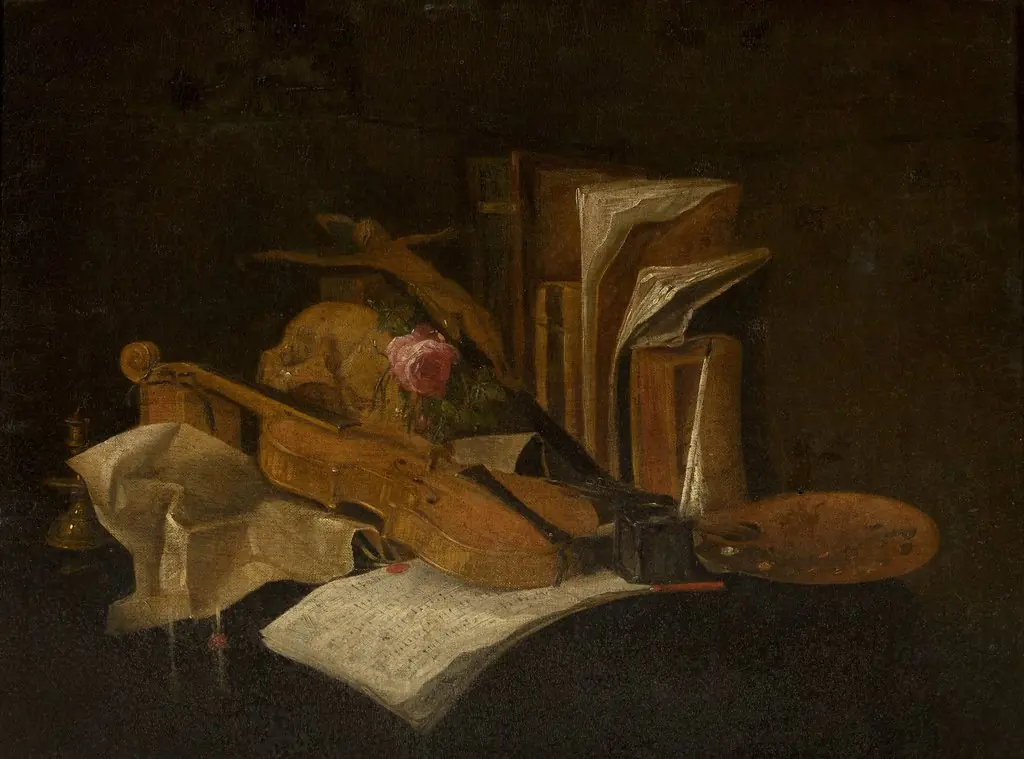 Vanitas
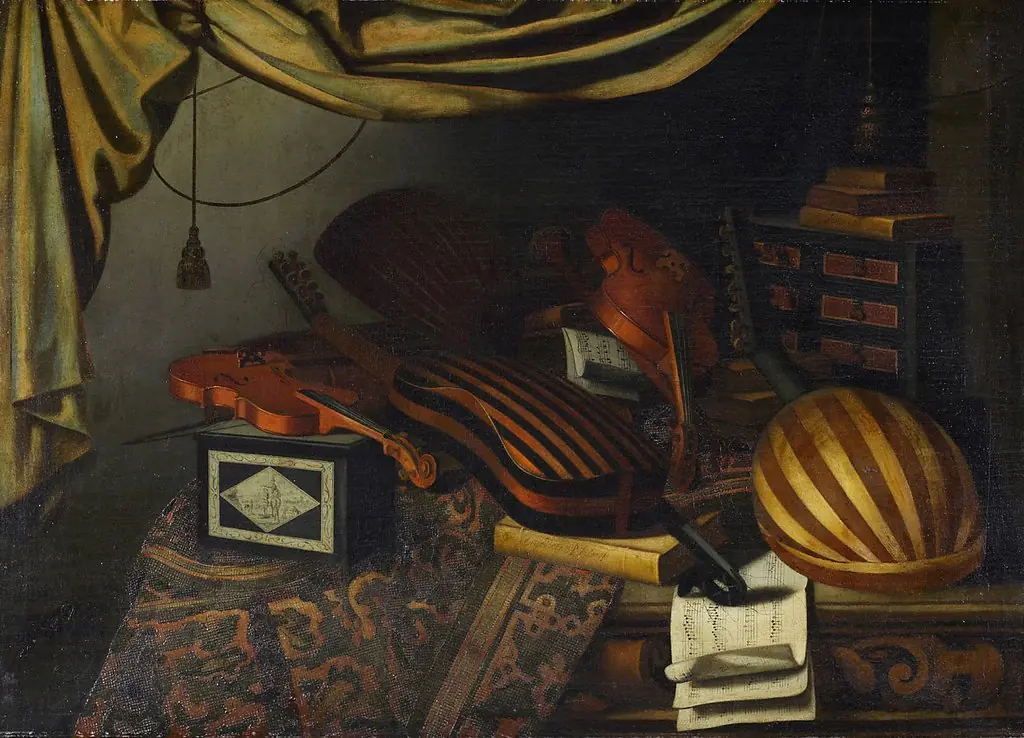 Stilleben mit Musikinstrumenten, Notenblättern und Büchern
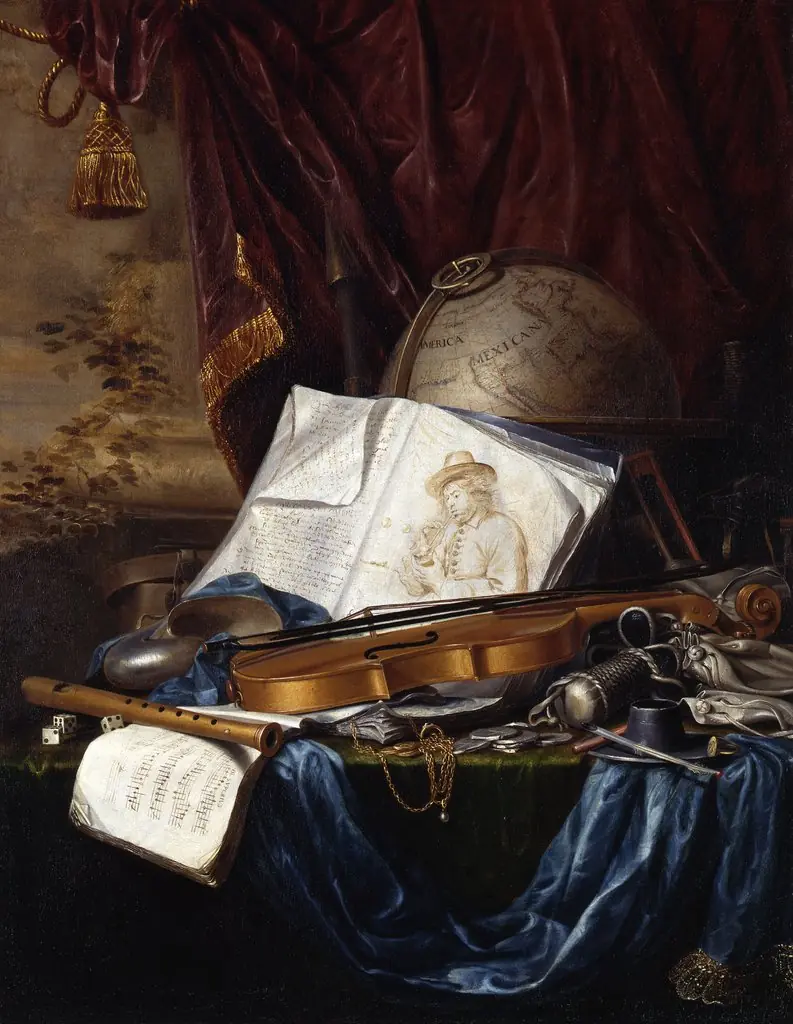 Still Life with Musical Instruments
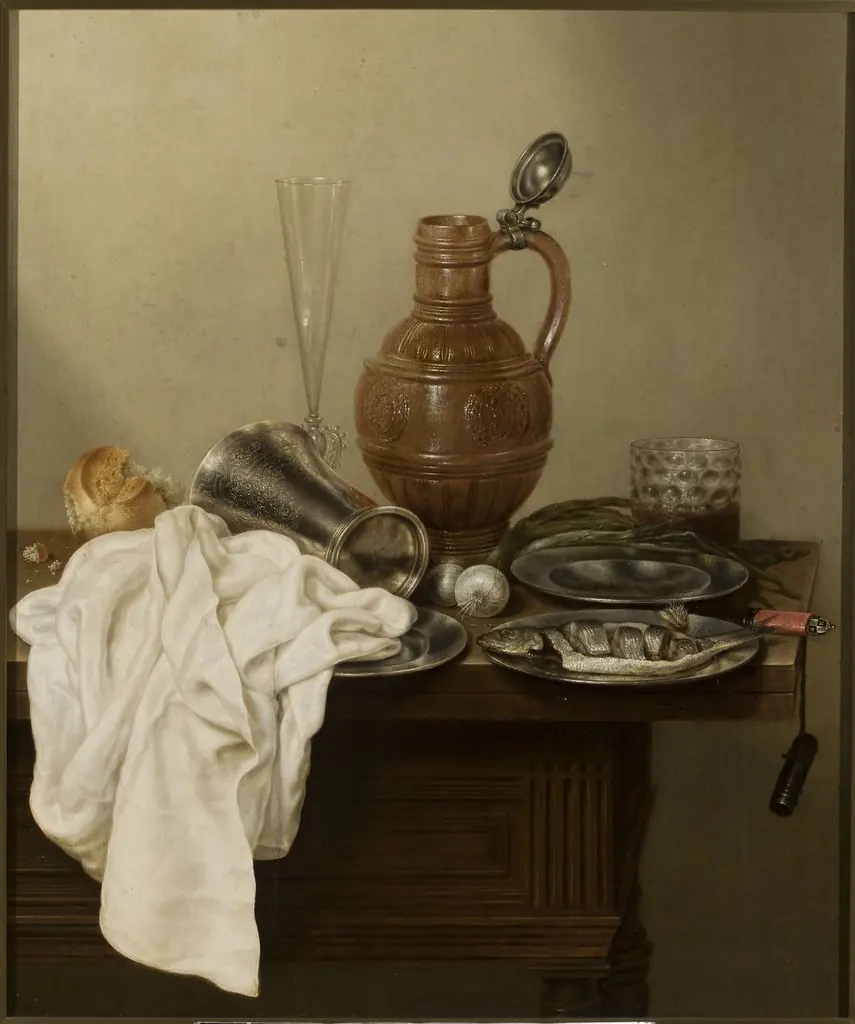 Still life with a herring
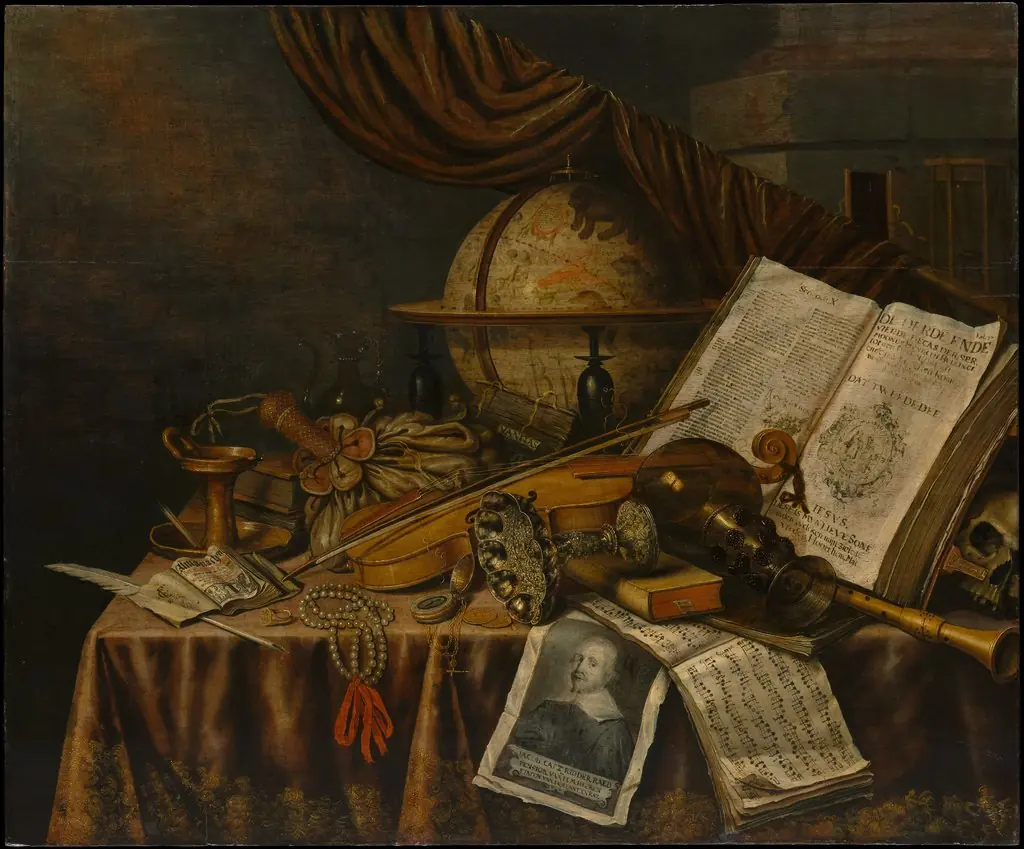 Vanitas Still Life
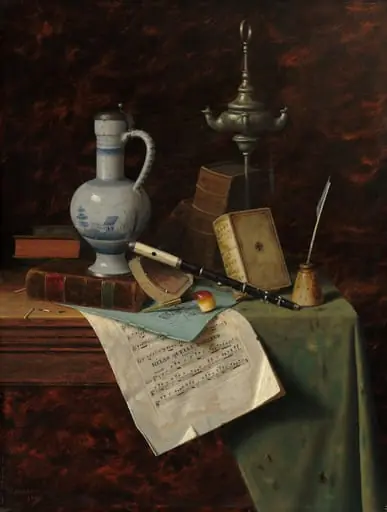 My Gems
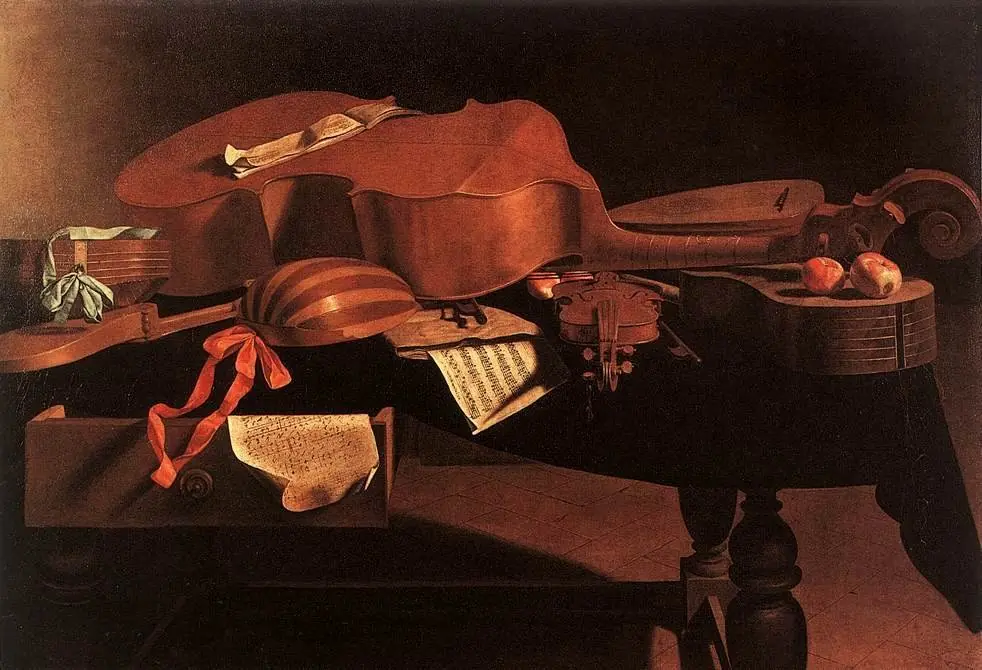 Musical instruments
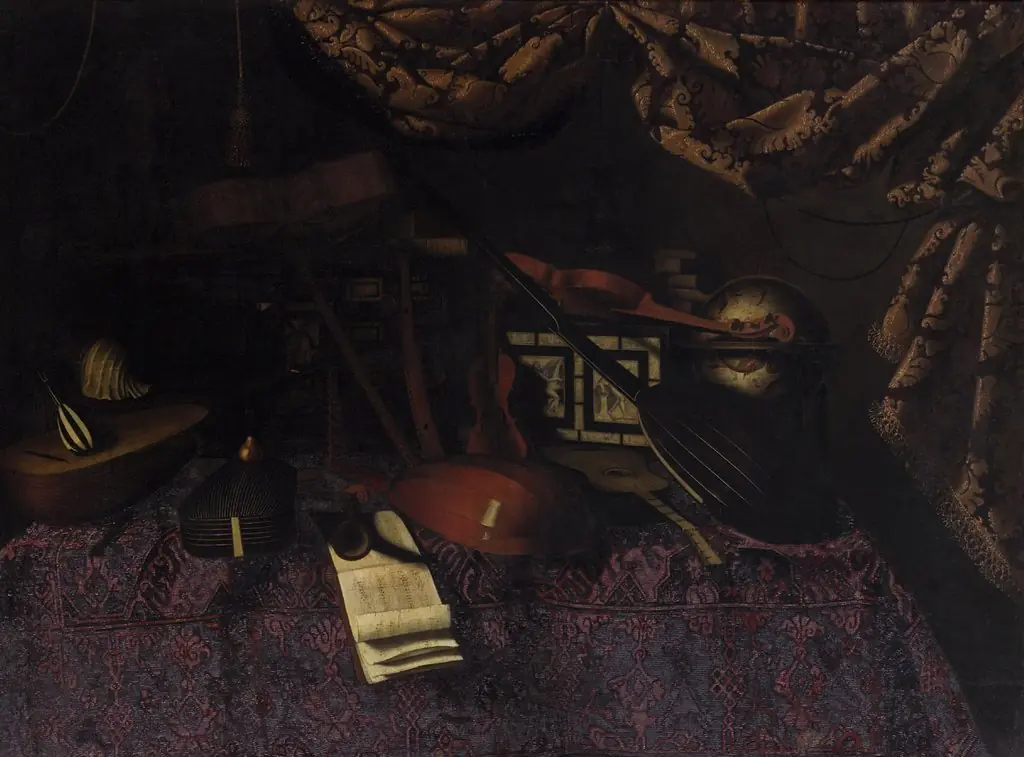 Stilleben mit Musikinstrumenten, Notenblättern, Himmelsglobus und Muschel
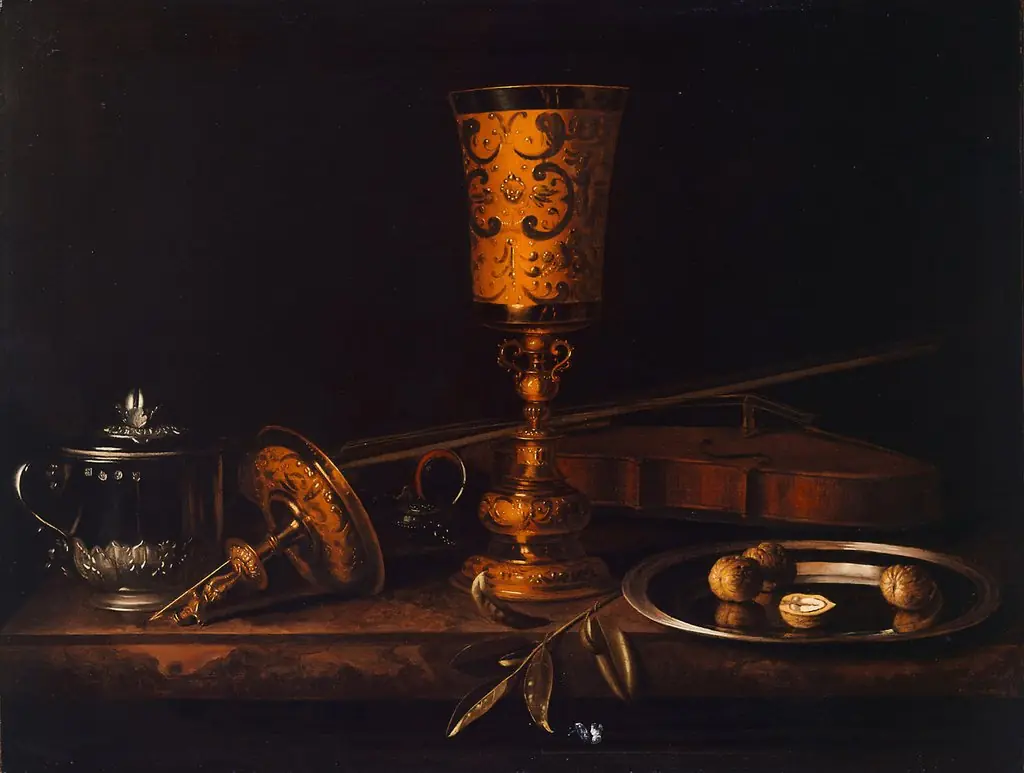 Vanitas-Stilleben
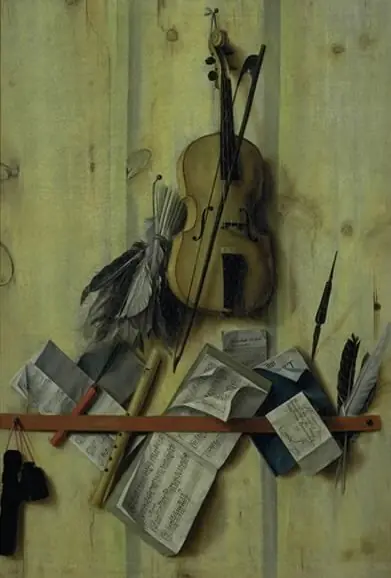 Trompe l'oeil with Violin, Music Book and Recorder