Artwork
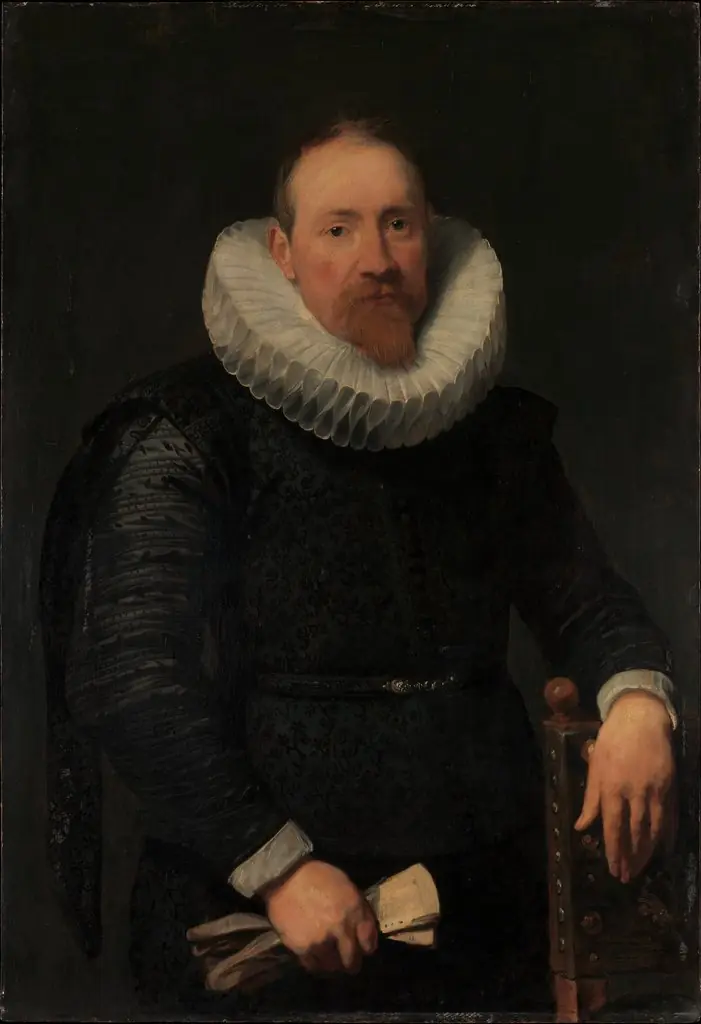
Portrait of a Man
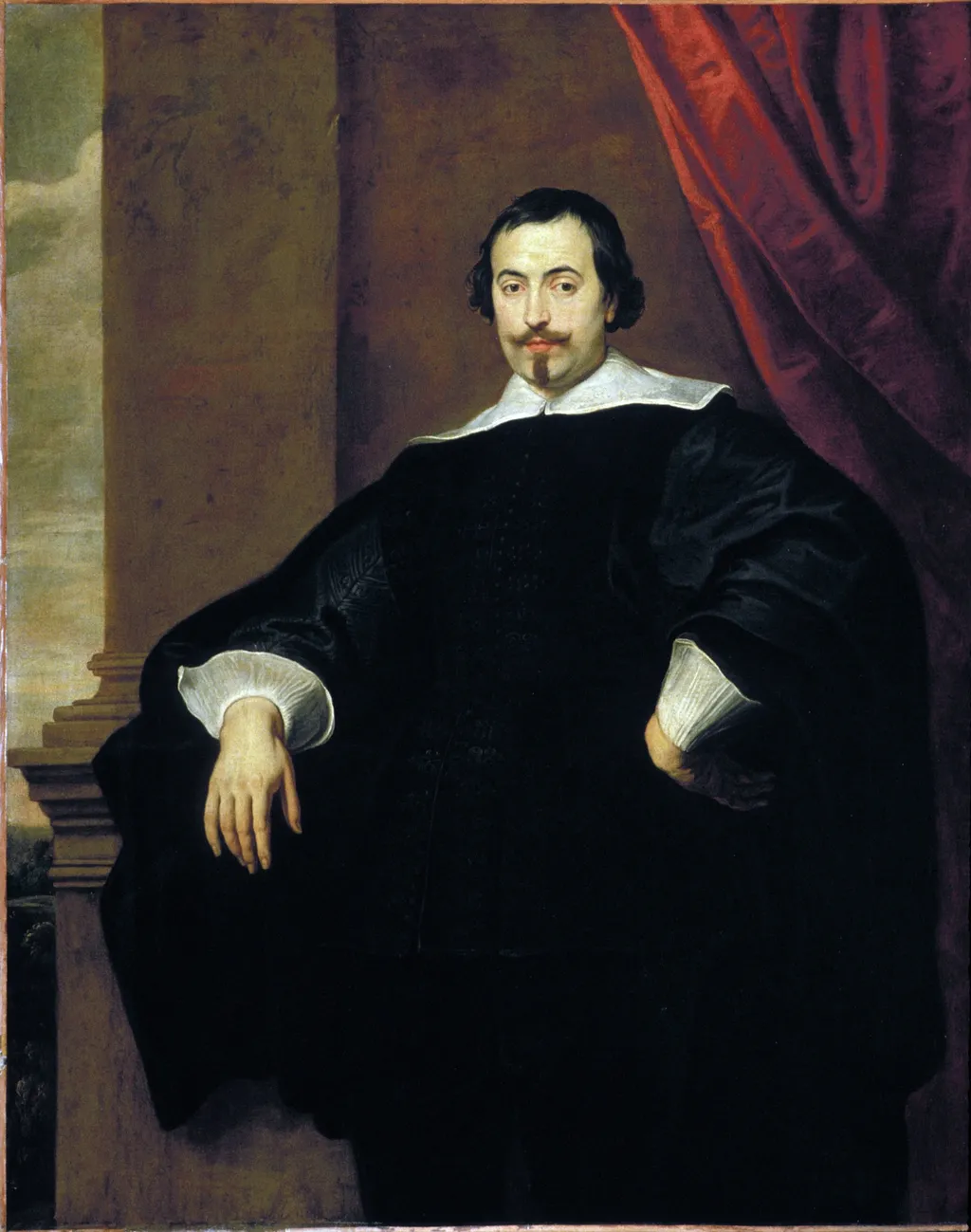
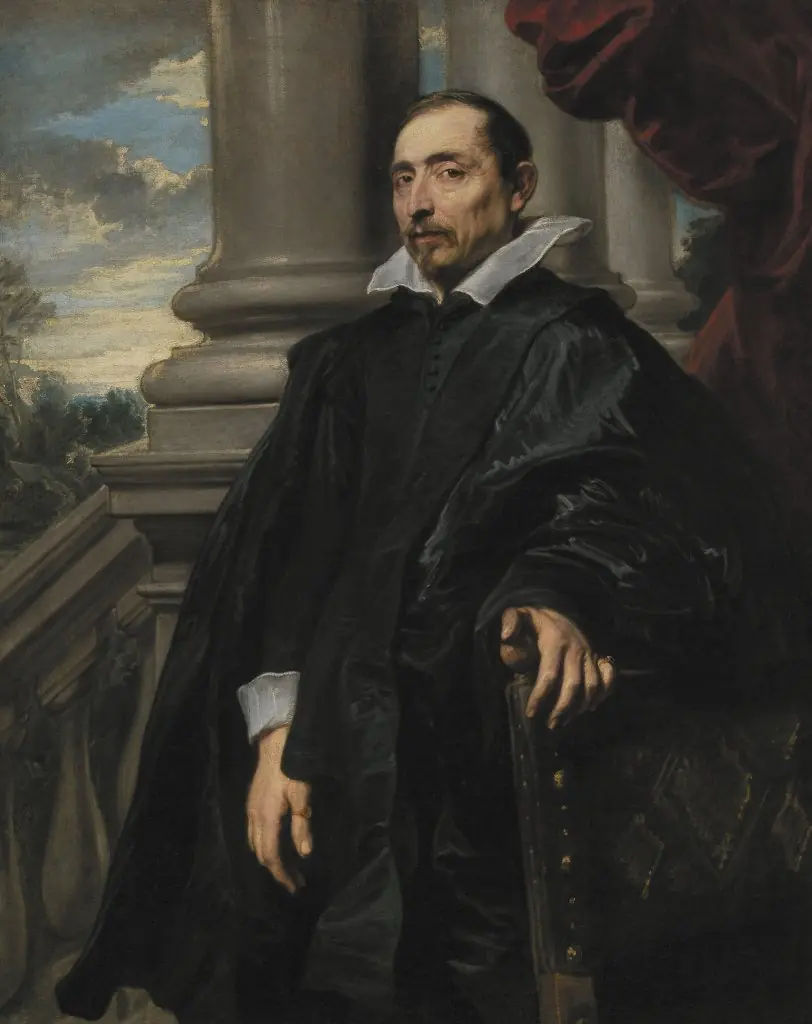
Portrait of a Man is an oil painting by the Flemish Baroque painting artist Anthony van Dyck. It dates from 1630 and is held in the collection of the Detroit Institute of Arts.
About this work
Overview
Anthony van Dyck’s *Portrait of a Man* (1630) is an oil painting that presents a solitary figure in a restrained, formal pose. The sitter is shown seated against a muted brown wall, a red curtain draped to the right, and is dressed in black with a contrasting white collar and cuffs. The work is part of the collection of the Detroit Institute of Arts.
Subject & Meaning
The portrait depicts an unidentified gentleman, rendered with a dignified bearing. His posture—right arm resting on a ledge, left hand placed in his lap—conveys composure and status, while the dark attire and simple background focus attention on his facial expression and the subtle play of light across his features.
Technique & Style
Van Dyck employs chiaroscuro to model the figure, using strong contrasts between illuminated areas and deep shadows to suggest volume. The brushwork is smooth and refined, characteristic of his early Baroque period, and the limited palette of blacks, whites, and earthy tones reinforces the painting’s sober, courtly aesthetic.
History & Provenance
Created during van Dyck’s early career after his apprenticeship with Peter Paul Rubens, the painting later entered the Detroit Institute of Arts. Its provenance traces back to private collections before being acquired by the museum, where it remains on display as an example of the artist’s portraiture before his appointment as court painter in England.
Artist & collection
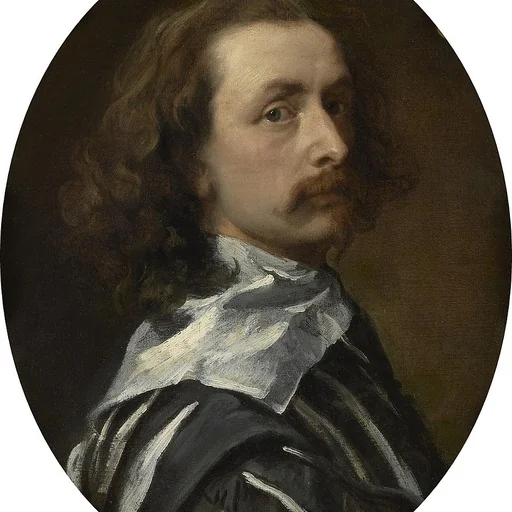
Artist
Sir Anthony van Dyck (; Dutch: Antoon van Dijck ; 22 March 1599 – 9 December 1641) was a Flemish Baroque artist, who became the leading court painter in England after success in the Spanish Netherlands and Italy.

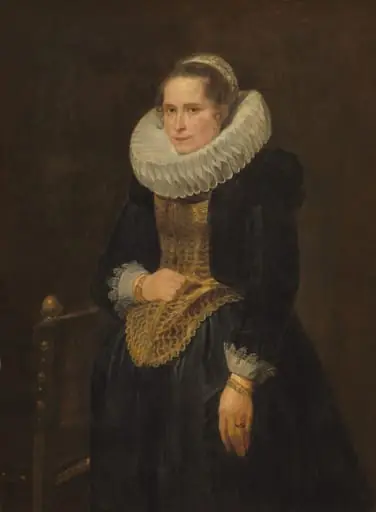
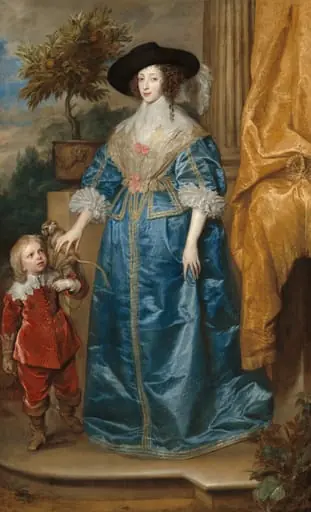
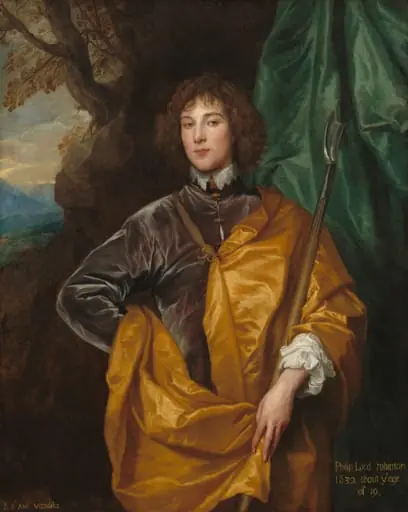
 Portrait of a Man, ca. 1620-1621
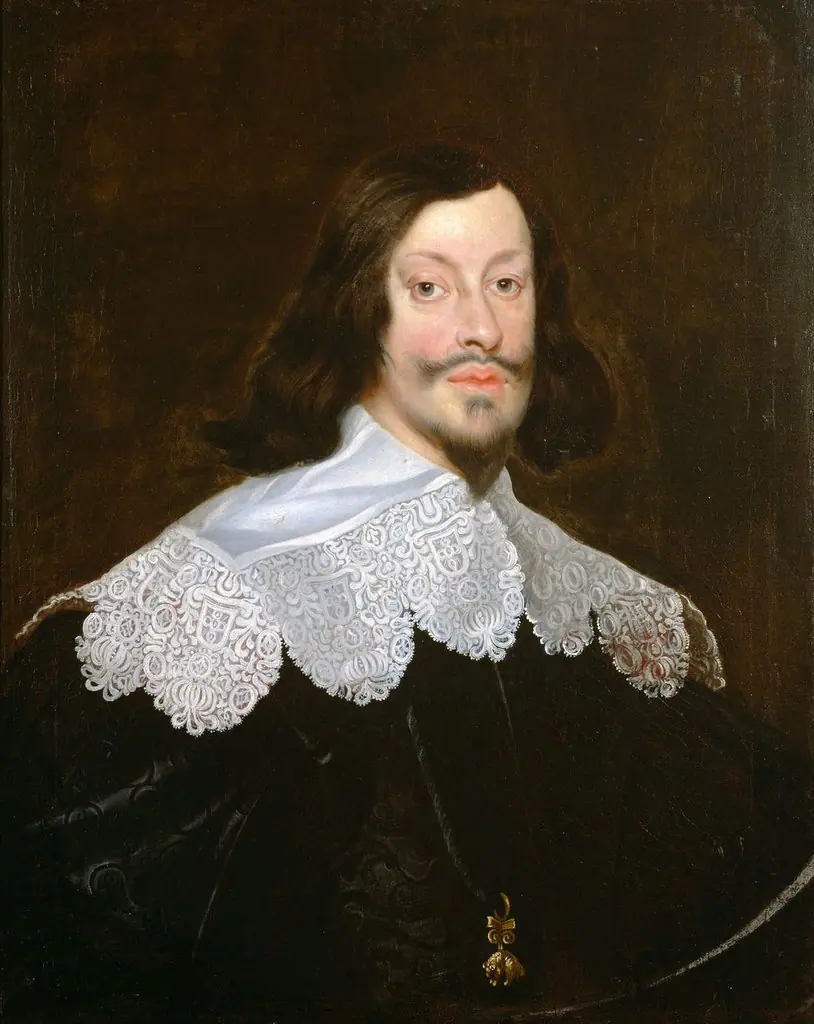 Kaiser Ferdinand III. (1608-1657), Brustbild
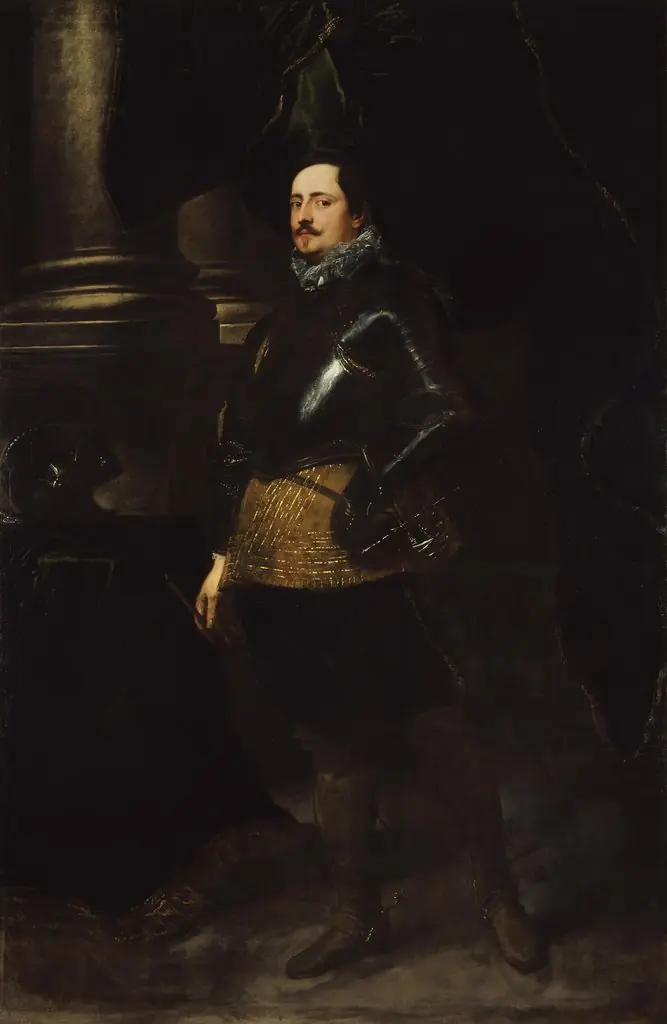 An Italian Noble
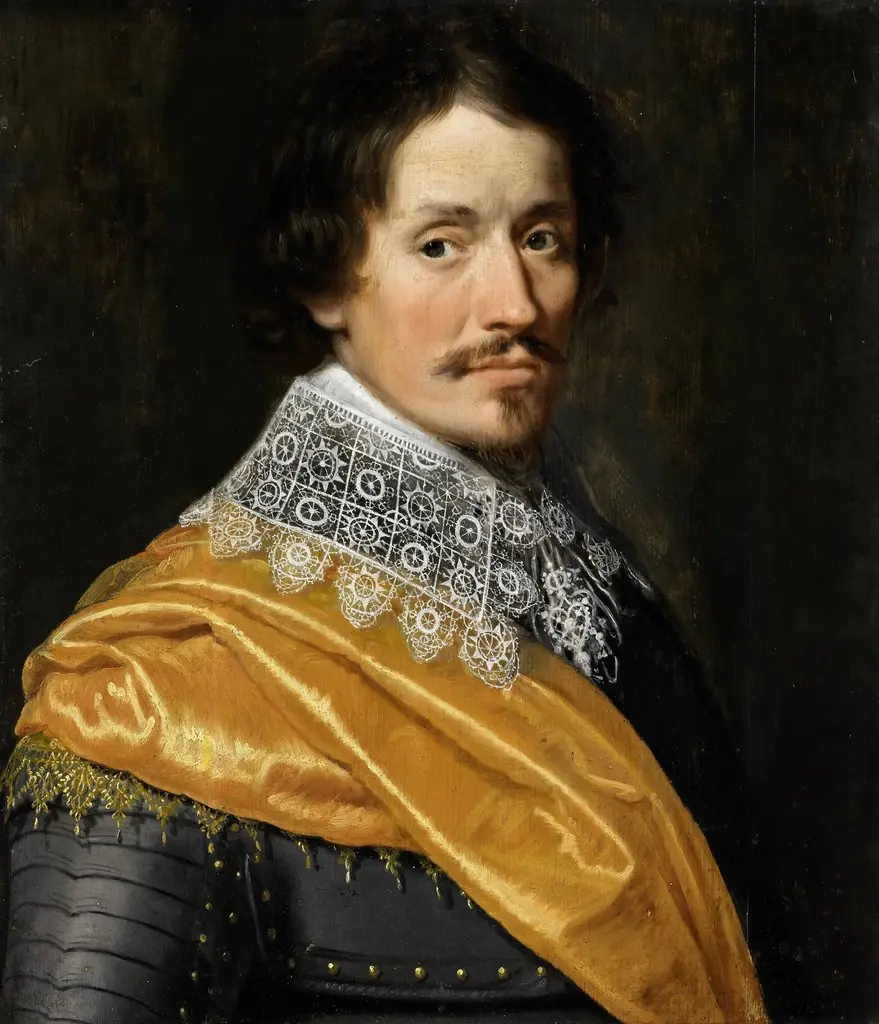 Portrait of an officer
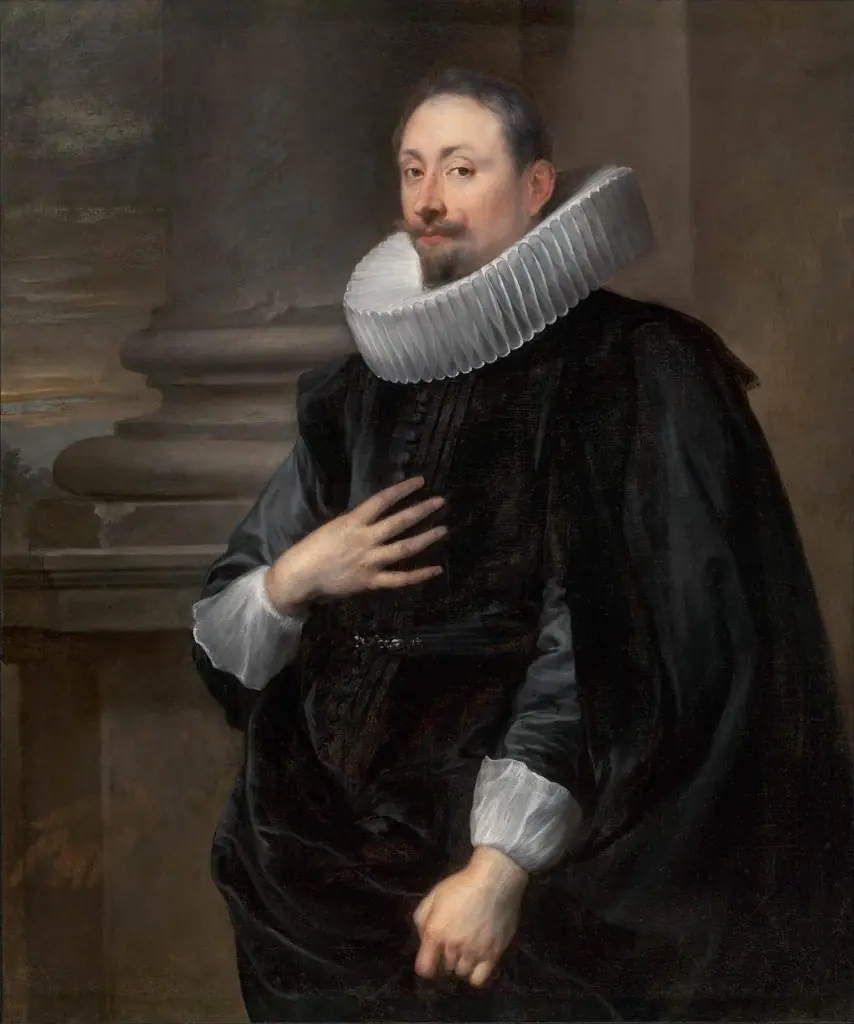 Peeter Symons
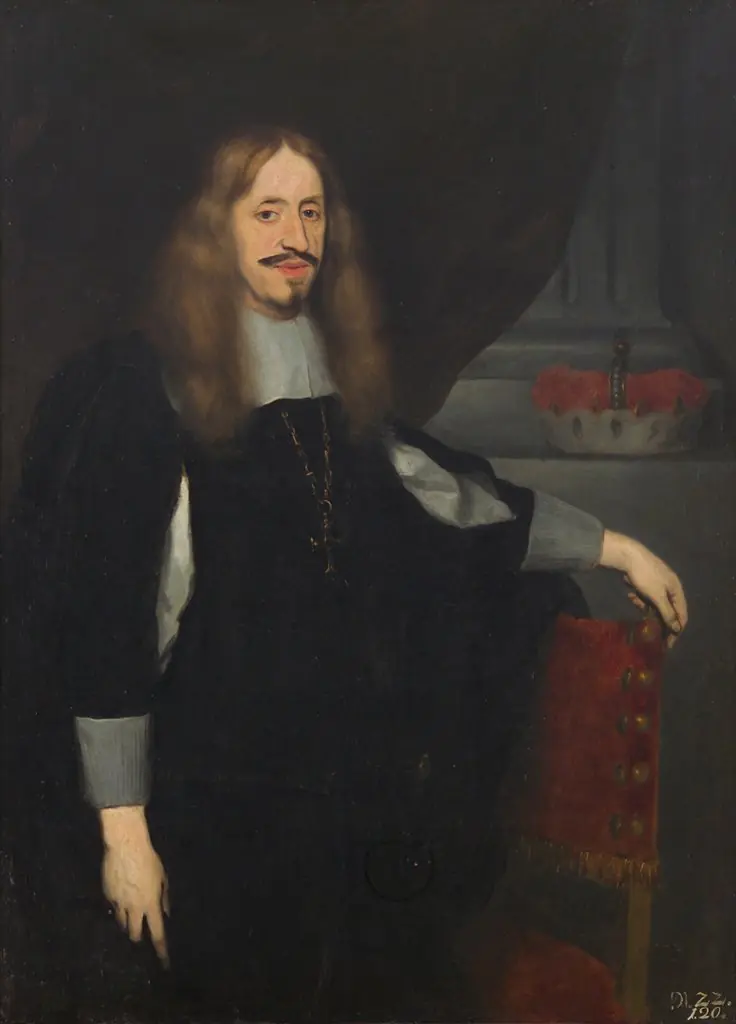 Portrait of archduke Leopold Wilhelm (1614-1662)
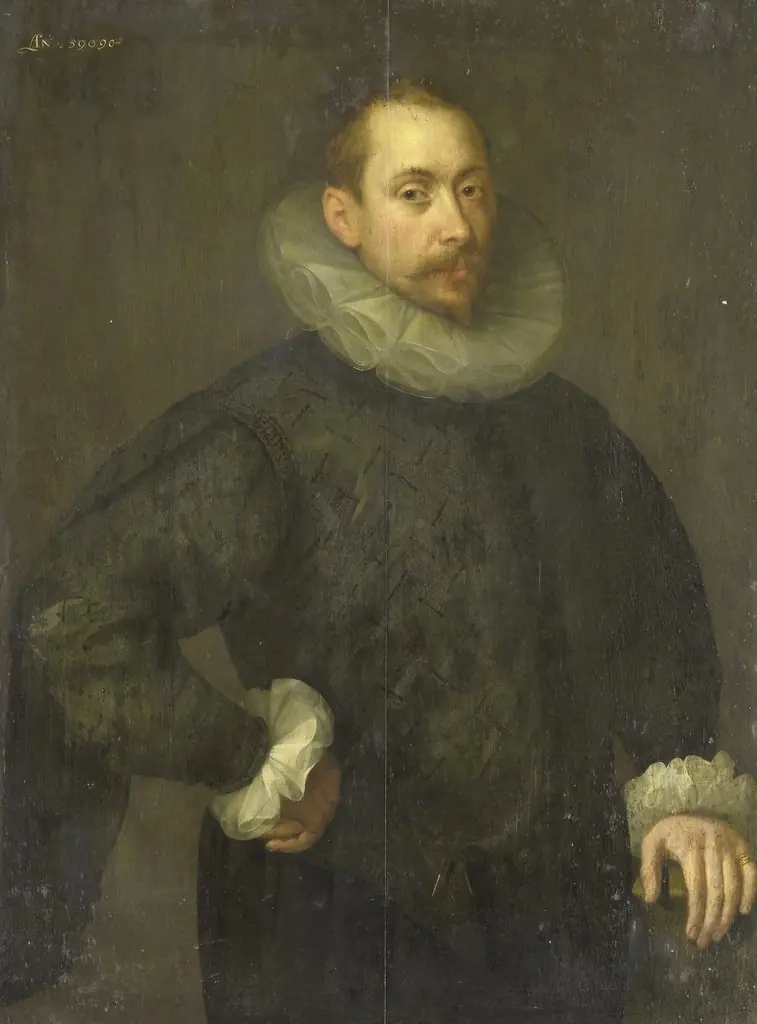 Portrait of Jean Fourmenois
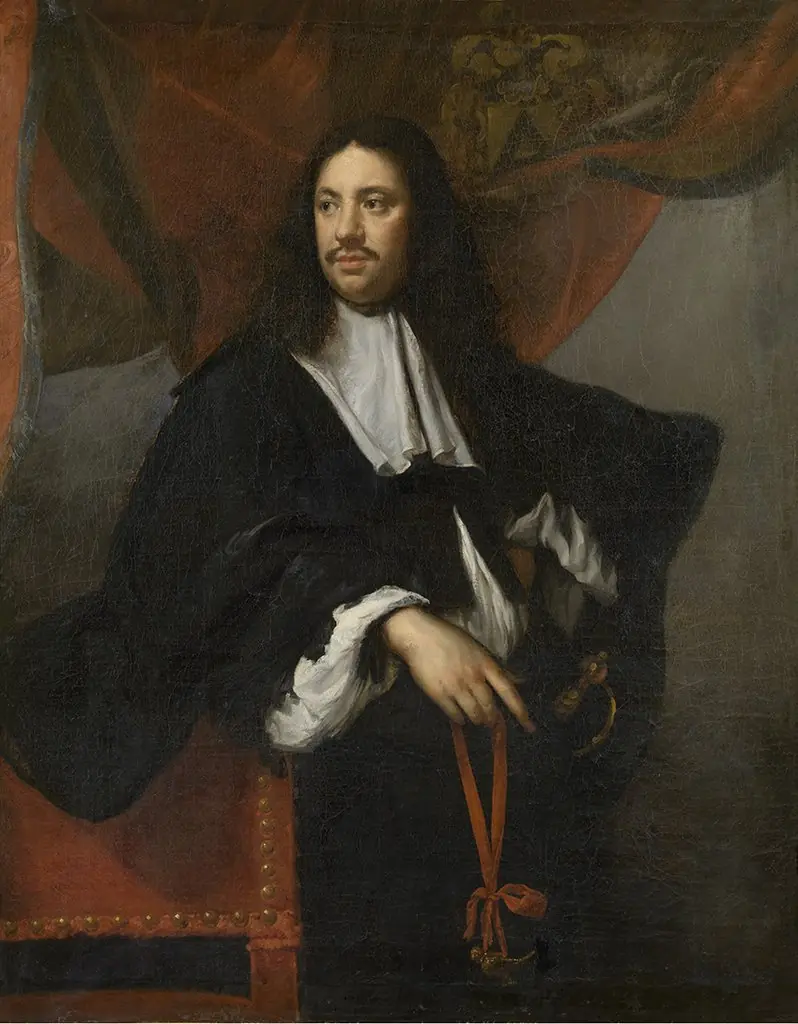 Portrait of Jan-Filips van Boonem, Dean of the Guild of St. George in Bruges
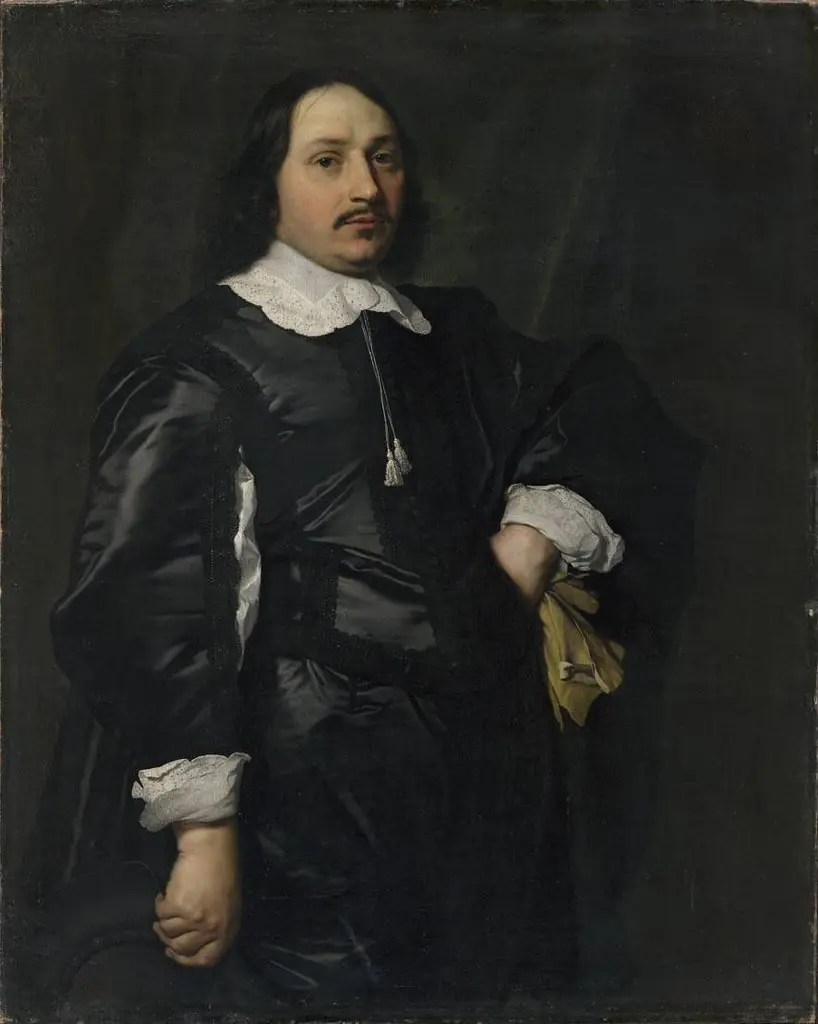 Portrait of a Man in Black
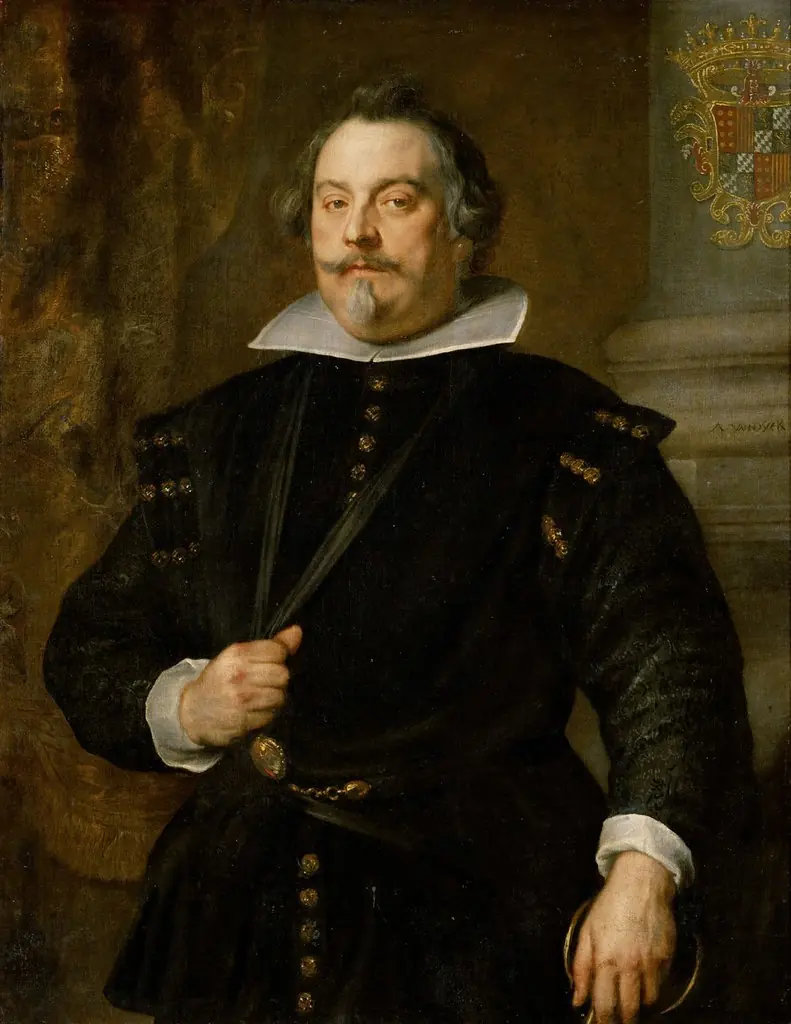 Portrait of Francisco de Moncada, Marqués de Aytona
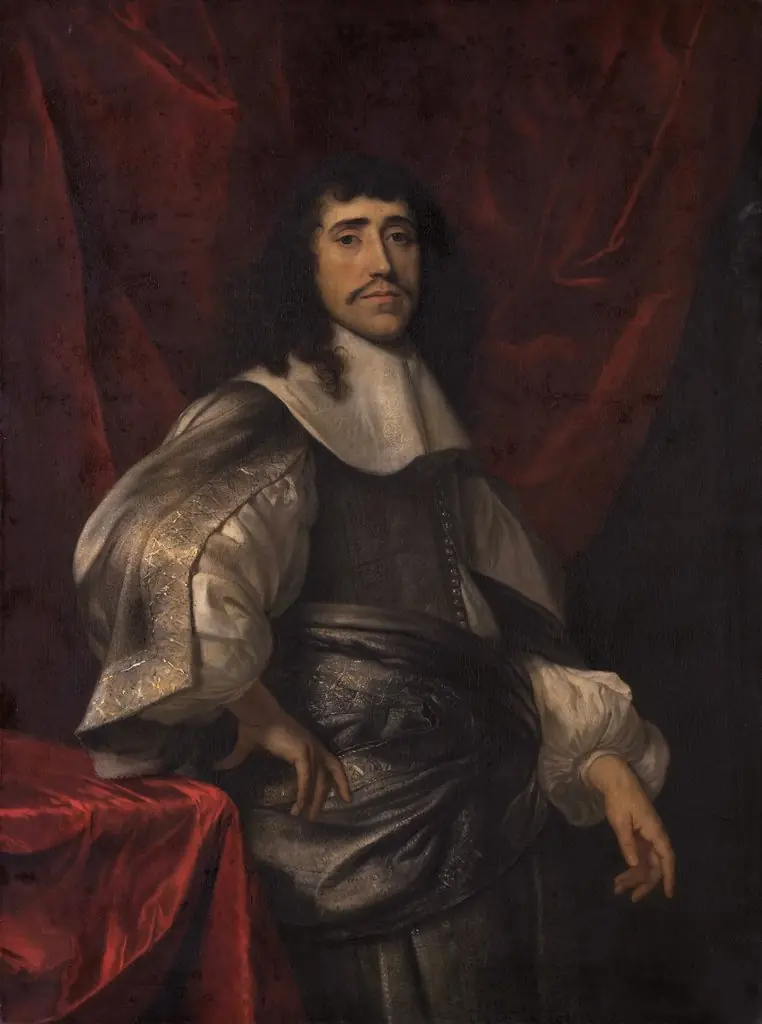 Portrait of a man, thought to be Christoffel van Gangelt
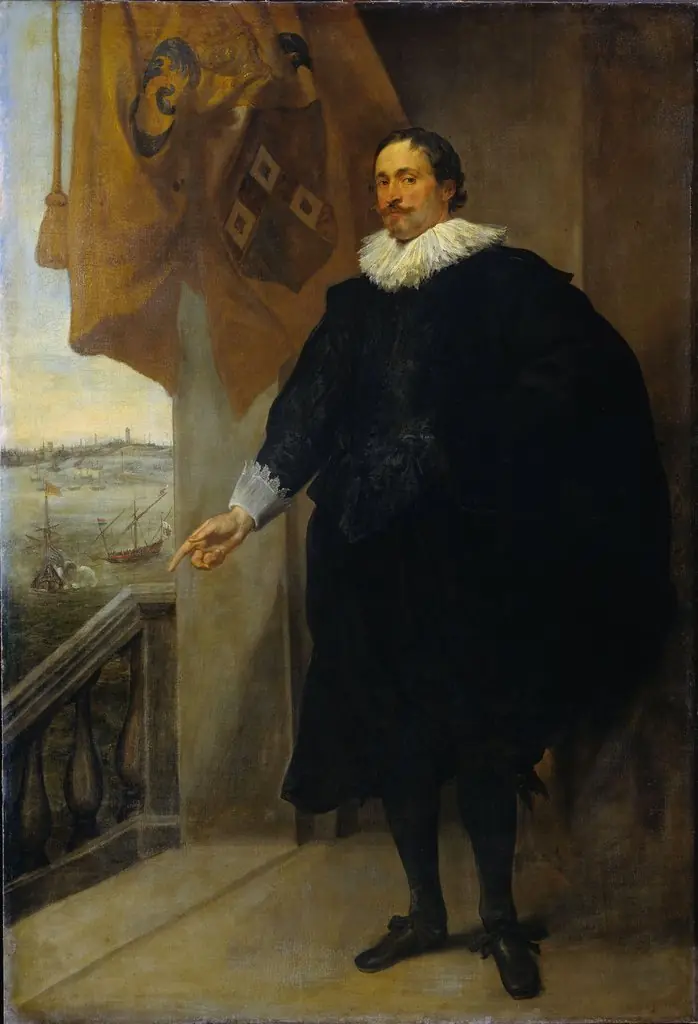 Portrait of Nicolaes van der Borght. Merchant of Antwerp