Artwork
Saint Francis of Assisi
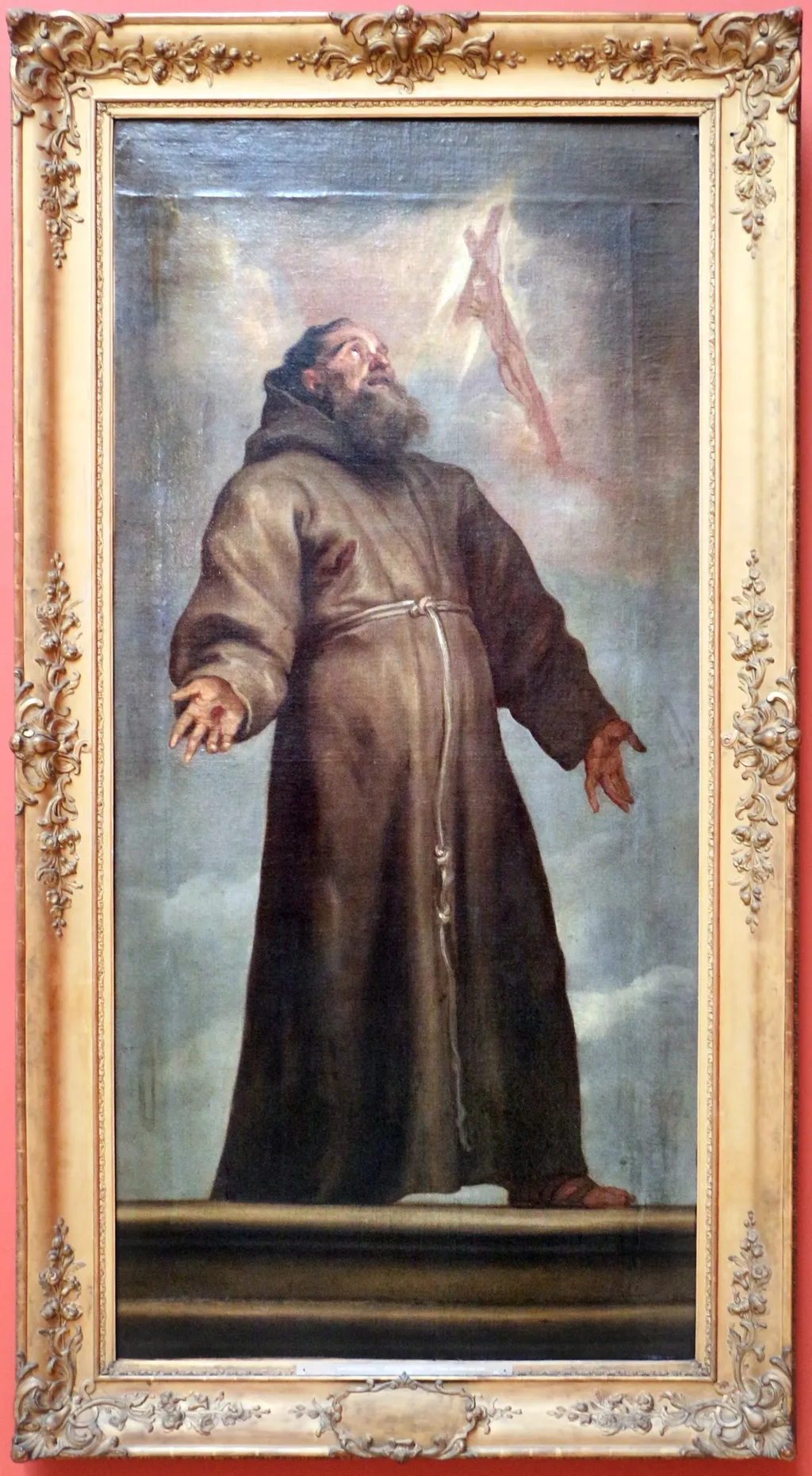
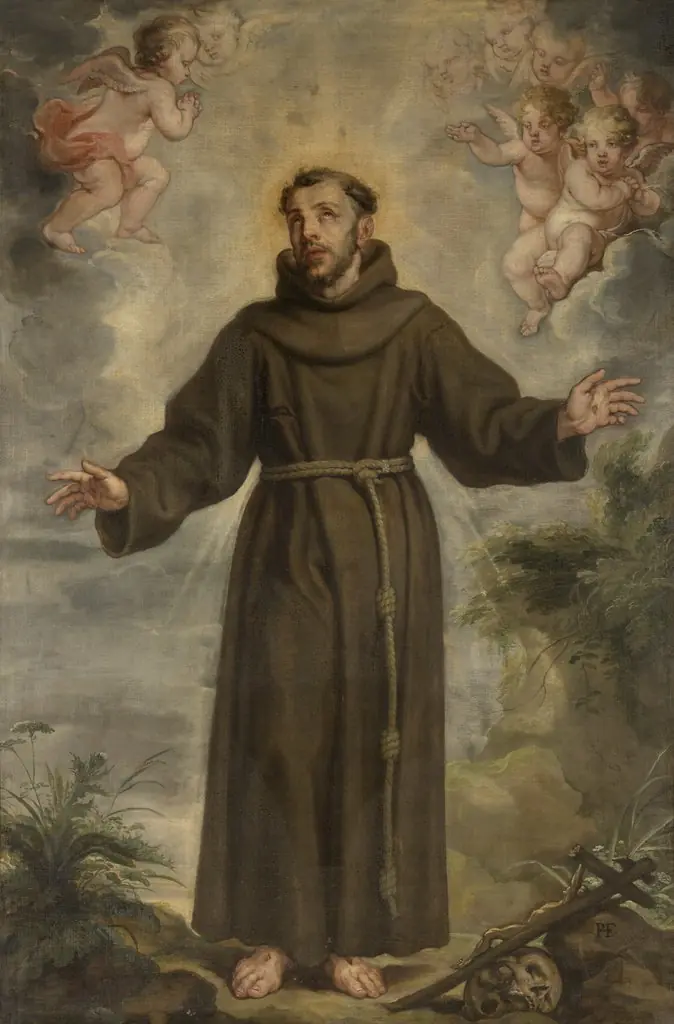
Saint Francis of Assisi is an oil painting by the Flemish Baroque painting artist Anthony van Dyck. It dates from 1632 and is held in the collection of the Royal Museums of Fine Arts of Belgium.
About this work
Overview
It resides today in the Royal Museums of Fine Arts of Belgium, part of a broader corpus of religious imagery produced during his career.
Painted in 1632 by Anthony van Dyck, this oil-on-canvas work portrays Saint Francis of Assisi in a moment of spiritual rapture. Van Dyck, a Flemish artist trained under Peter Paul Rubens, developed a refined style marked by elegance and emotional nuance. The painting reflects his mature period, following his time in Italy and before his move to the English court. It resides today in the Royal Museums of Fine Arts of Belgium, part of a broader corpus of religious imagery produced during his career.
Subject & Meaning
The figure of Saint Francis stands on a ledge, arms raised, palms open to the heavens, his face contorted in an expression that blends anguish and transcendence. He wears the simple brown habit of his order, cinched with a knotted rope belt, symbolizing humility and renunciation. Above him, a luminous cross emerges from the clouds, suggesting divine revelation. The scene captures a moment of mystical union, aligning with Franciscan ideals of suffering as a path to spiritual closeness with Christ.
Technique & Style
Van Dyck employs oil paint with subtle gradations of light and shadow to model the saint’s form, lending it a tangible volume. The thick fabric of the robe is rendered through layered brushwork, while the sky behind is softly blurred, enhancing the sense of ethereal space. The contrast between the dark, grounded figure and the radiant cross above creates a dramatic focal point. His handling of texture and tone reflects the influence of Rubens, yet with a more restrained, introspective tone characteristic of his later work.
History & Provenance
Commissioned during van Dyck’s years in the Spanish Netherlands, the painting entered the collection of the Royal Museums of Fine Arts of Belgium in the 19th century. It was likely created for private devotion or a religious institution, though no specific patron is documented. Its survival through centuries of political and religious upheaval underscores its enduring presence in Flemish ecclesiastical art. The work has remained largely unaltered since its completion, preserving van Dyck’s original composition and palette.
Context
In the early 17th century, Catholic Europe saw a revival of devotional imagery following the Council of Trent, emphasizing emotional engagement with sacred figures. Van Dyck’s depiction of Saint Francis aligns with this Counter-Reformation impulse, offering a humanized vision of sanctity. While Italian artists often portrayed Francis with stigmata, van Dyck focuses on inner experience, reflecting his exposure to Italian mysticism and his own evolving spiritual sensibility.
Legacy
This painting exemplifies van Dyck’s ability to merge portraiture’s psychological depth with religious symbolism. Though less famous than his royal portraits, works like this influenced later generations of Flemish and British painters seeking to convey spiritual intensity through restrained gesture and luminous atmosphere. Its quiet power continues to inform interpretations of saintly experience in Western art, distinct from theatrical Baroque extremes.
Artist & collection
Artist
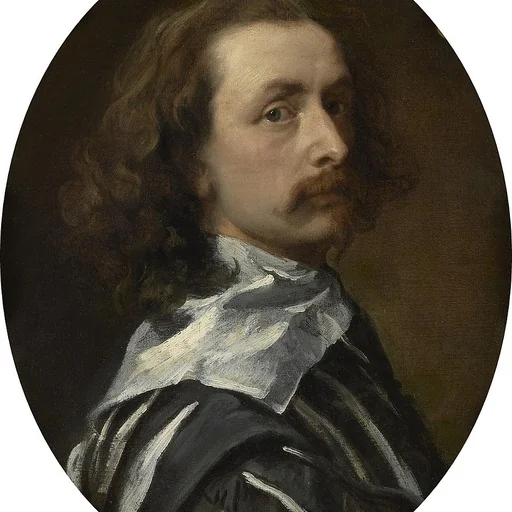
Sir Anthony van Dyck (; Dutch: Antoon van Dijck ; 22 March 1599 – 9 December 1641) was a Flemish Baroque artist, who became the leading court painter in England after success in the Spanish Netherlands and Italy.

Museum
Royal Museums of Fine Arts of Belgium
Continue through works from the same source collection.