Artwork
St Augustine in Ecstasy
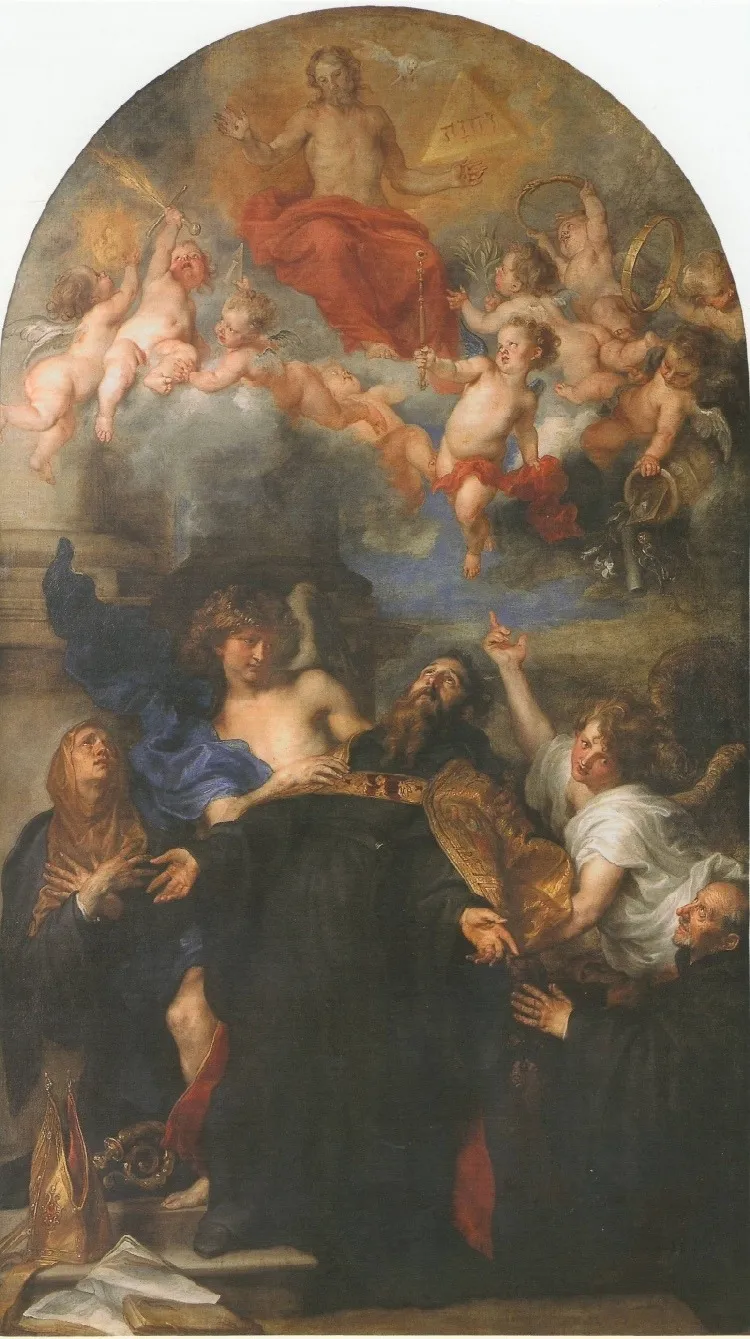
St Augustine in Ecstasy is an oil painting by the Flemish Baroque painting artist Anthony van Dyck. It dates from 1628 and is held in the collection of the Sint-Augustinuskerk.
About this work
Overview
Van Dyck, trained in Antwerp under Peter Paul Rubens, was already gaining recognition as a portraitist and religious painter before his move to England.
Painted in 1628 by Anthony van Dyck, this oil work portrays Saint Augustine of Hippo in a moment of divine rapture. Van Dyck, trained in Antwerp under Peter Paul Rubens, was already gaining recognition as a portraitist and religious painter before his move to England. The painting reflects his early Baroque style, marked by emotional intensity and refined technique, and is now part of the Louvre’s collection.
Subject & Meaning
The painting captures Augustine, the influential Church Father, in a state of spiritual transcendence. His eyes are closed, mouth slightly open, and hand raised as if receiving revelation. Surrounding him, angels and cherubs play instruments and hold symbolic objects, suggesting heavenly communion. The scene conveys the inner experience of divine inspiration, a theme central to Counter-Reformation spirituality that emphasized personal devotion and mystical encounter.
Technique & Style
Van Dyck employs chiaroscuro to model the figures with dramatic lighting, enhancing the emotional weight of the scene. The dark, indistinct background isolates Augustine and the celestial figures, drawing focus to their luminous forms. Brushwork is fluid yet precise, particularly in the rendering of fabric, skin, and angelic wings. The composition is dynamic but balanced, with diagonal lines guiding the eye upward toward the divine light.
History & Provenance
Commissioned during van Dyck’s formative years in Italy, the painting was likely created for a religious patron or institution. It entered the French royal collection in the 18th century and was later transferred to the Louvre. Its survival through political upheavals and its consistent attribution to van Dyck reflect its recognized importance within his early oeuvre, though it was never widely exhibited until the 19th century.
Context
Created during the height of the Counter-Reformation, the image aligns with Catholic efforts to inspire devotion through emotionally charged religious imagery. Van Dyck’s approach echoes Rubens’ influence but shows a more intimate, psychological focus. The depiction of Augustine—a theologian associated with grace and inner revelation—resonated with contemporary spiritual ideals, particularly among Jesuit and Augustinian circles.
Legacy
Though less known than van Dyck’s later royal portraits, this work demonstrates his early mastery of religious narrative and emotional expression. It influenced subsequent depictions of saints in Northern European art, particularly in the blending of theatricality with psychological depth. The painting remains a key example of how Flemish Baroque artists translated theological concepts into visually compelling human experiences.
Artist & collection
Artist
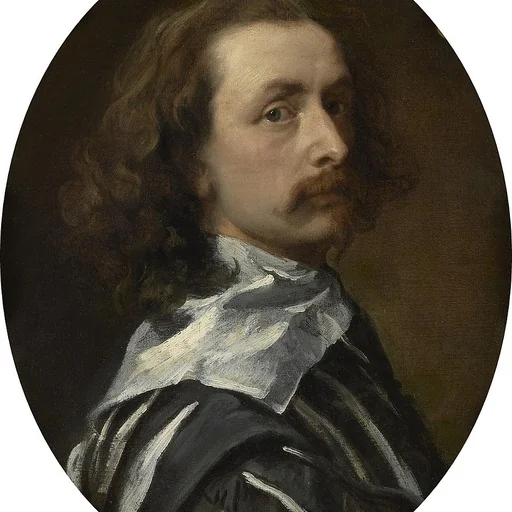
Sir Anthony van Dyck (; Dutch: Antoon van Dijck ; 22 March 1599 – 9 December 1641) was a Flemish Baroque artist, who became the leading court painter in England after success in the Spanish Netherlands and Italy.

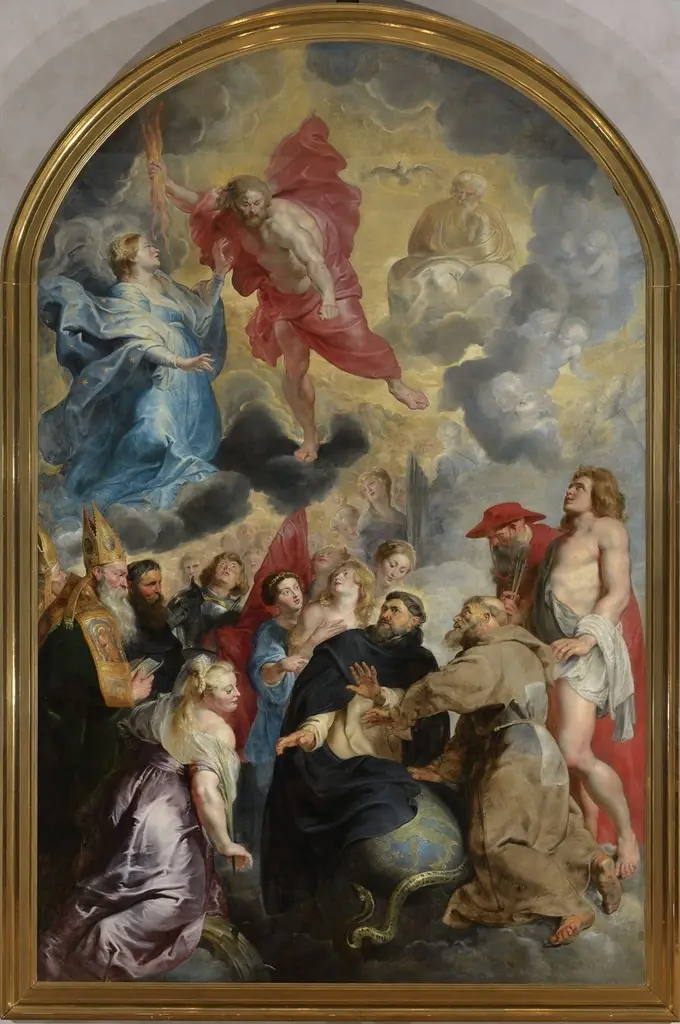 Saint Dominic and Saint Francis Protecting the World from the Wrath of Christ
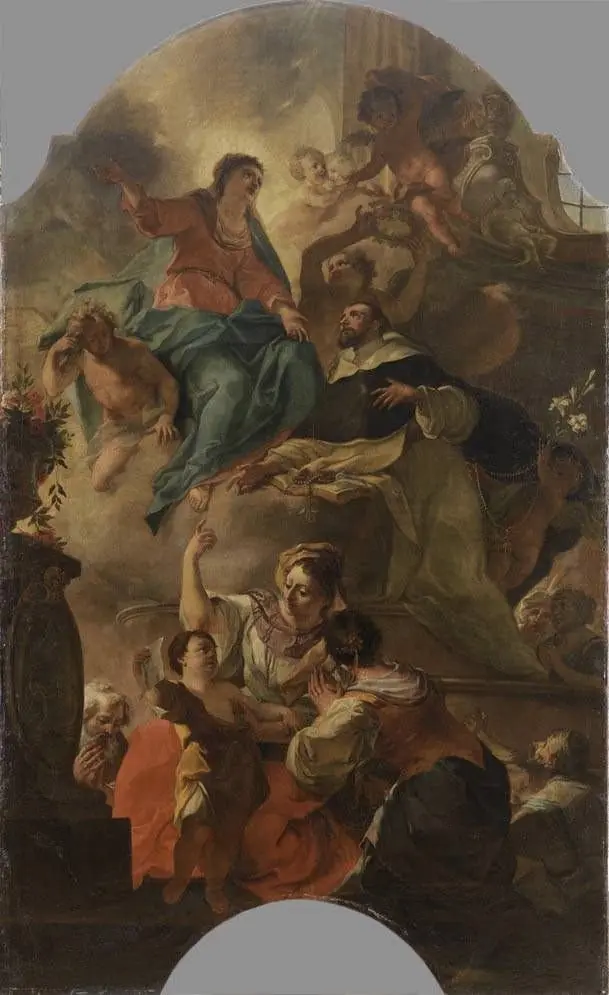 Hl. Dominikus als Fürbitter bei Maria
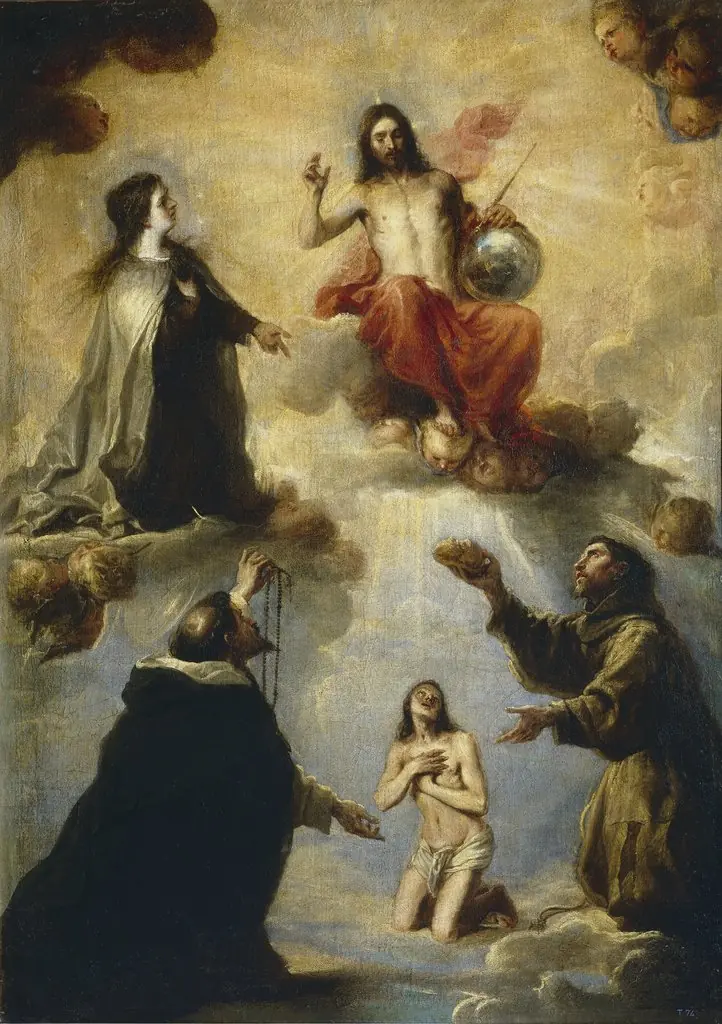 The Judgement of a Soul
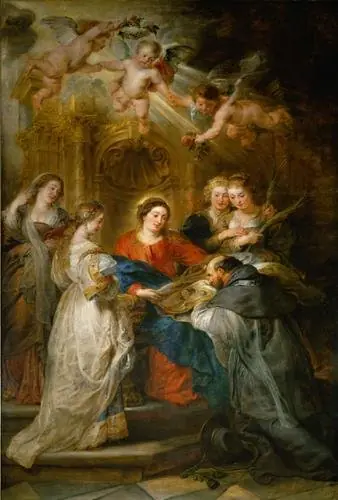 Ildefonso Altarpiece (central panel)
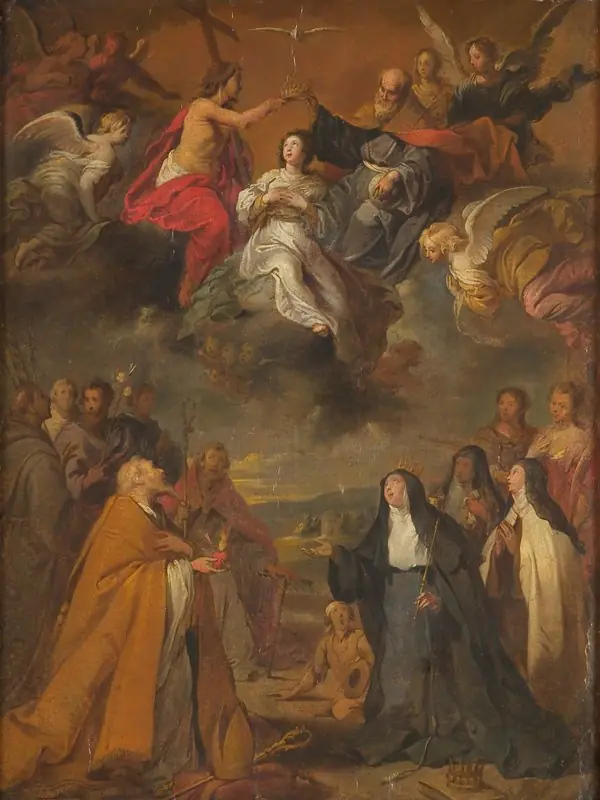 The Coronation of the Virgin
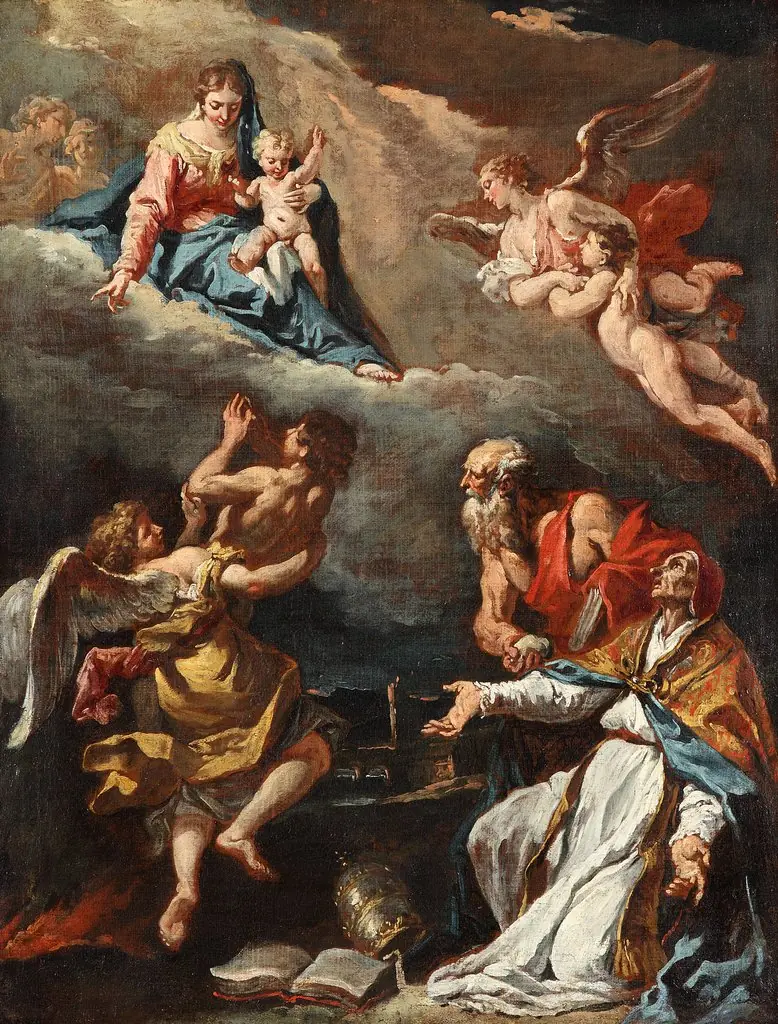 Die Fürbitte des Heiligen Gregor für die Seelen im Fegefeuer
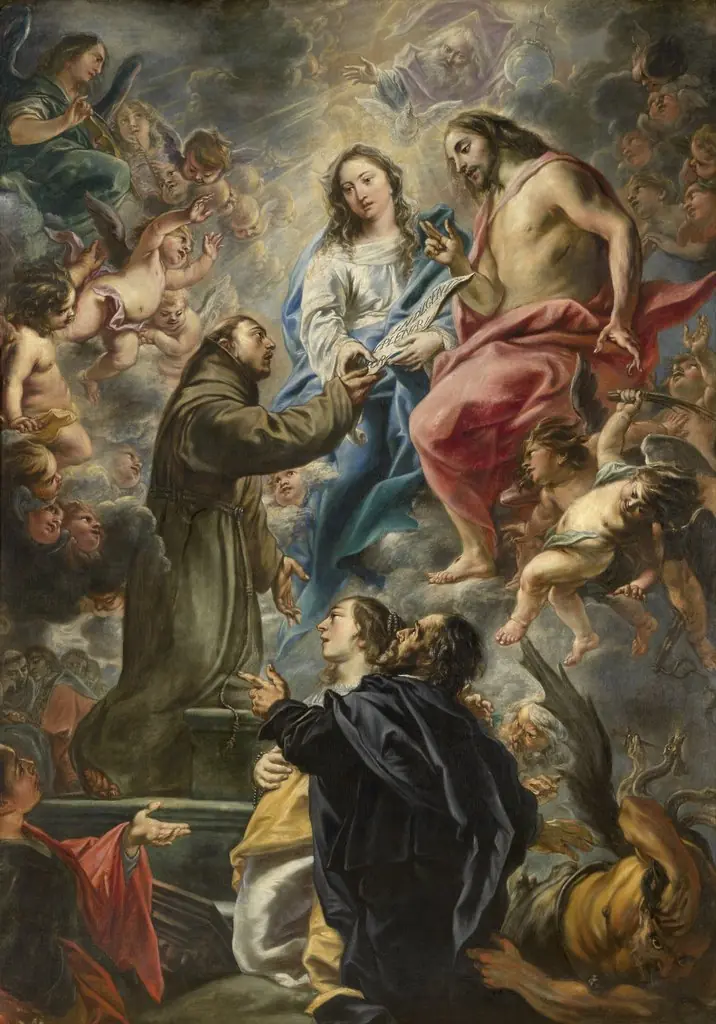 Portiuncula
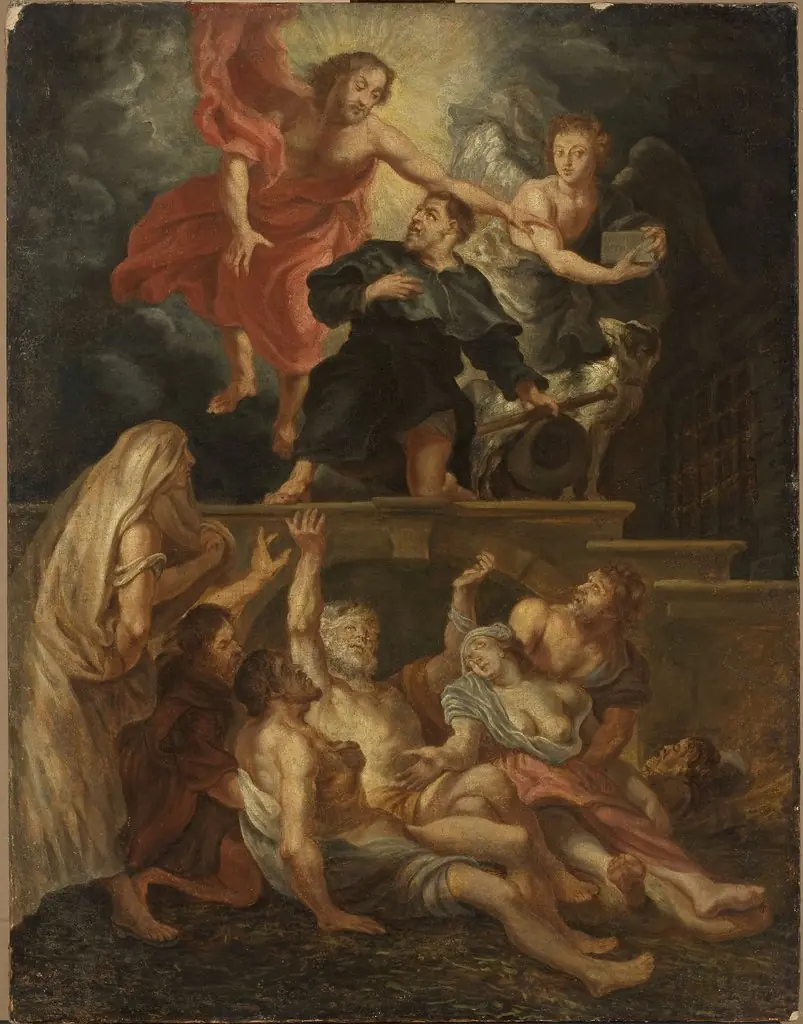 Religious scene
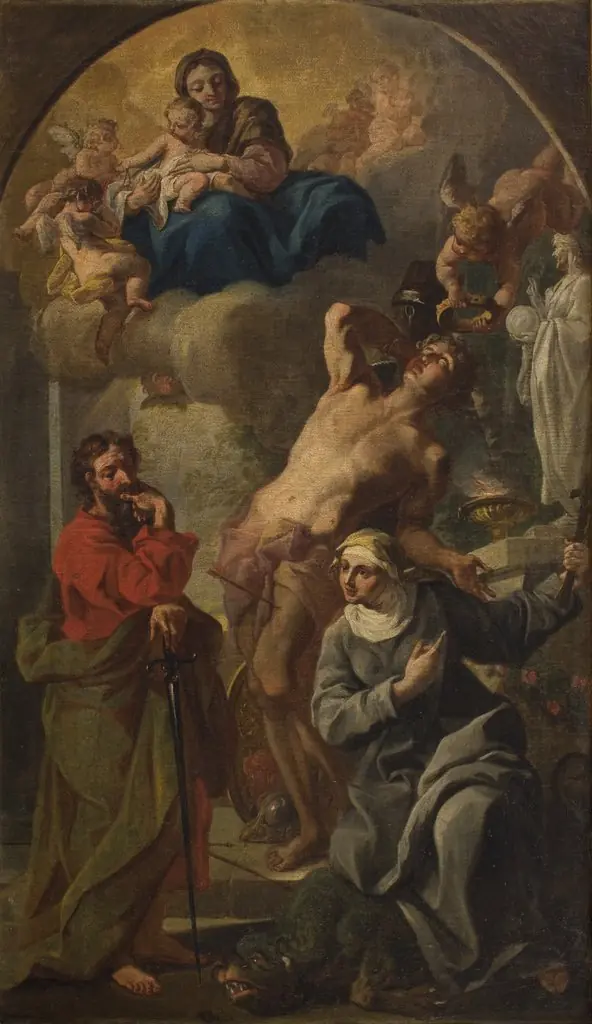 Madonna and Child with Saints Sebastian, Paul and Martha (Acceptance of Saint Sebastian Into the Group of Holy Martyrs)
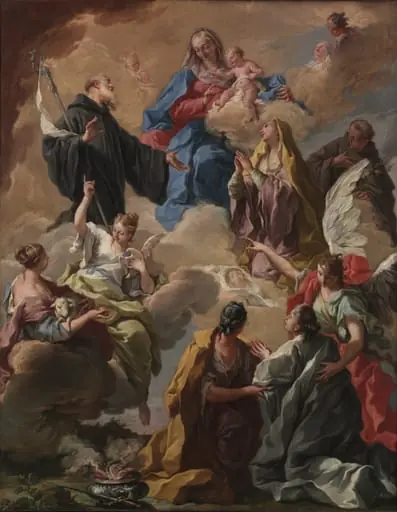 Saints Presenting a Devout Woman to the Virgin and Child
 The Glorification of Saint Odile
 Portiuncula