Artwork
Saint Dominic and Saint Francis Protecting the World from the Wrath of Christ
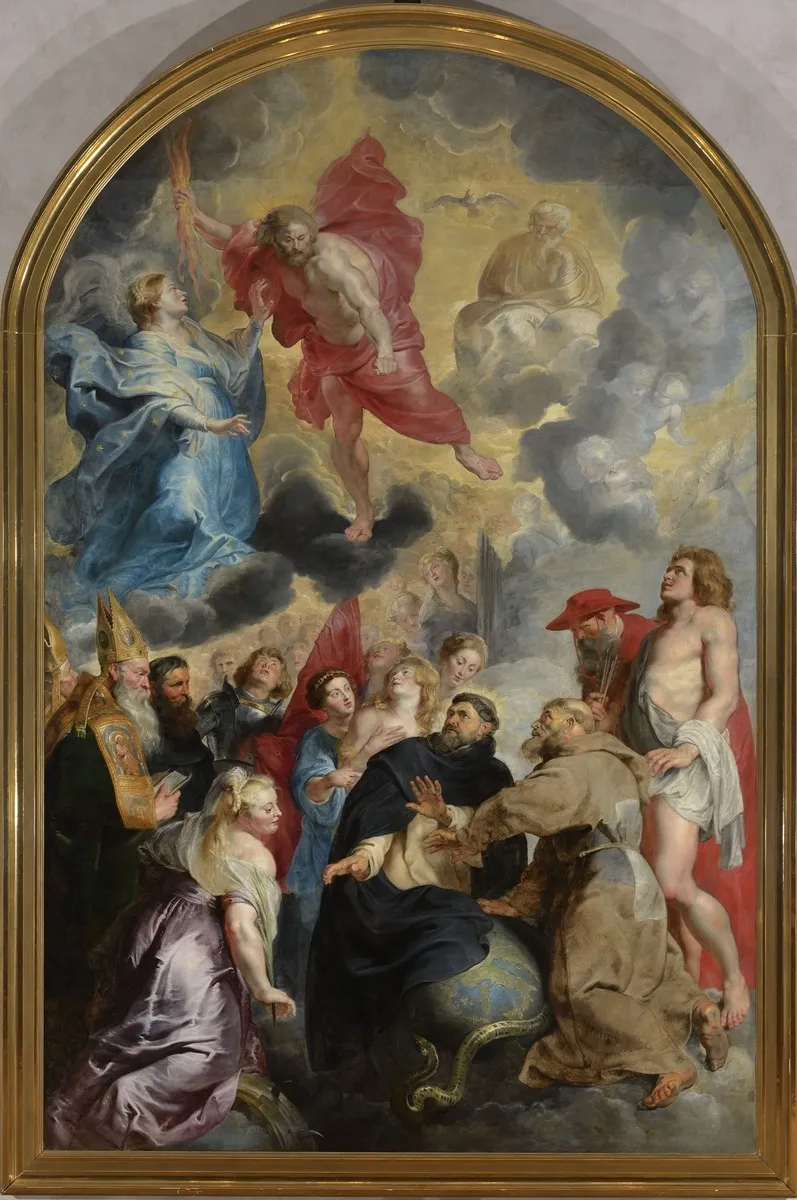
Saint Dominic and Saint Francis Protecting the World from the Wrath of Christ is an oil painting by the Flemish Baroque painting artist Peter Paul Rubens. It dates from 1620 and is held in the collection of the Museum of Fine Arts of Lyon.
About this work
This painting is titled Saint Dominic and Saint Francis Protecting the World from the Wrath of Christ.
This painting is titled Saint Dominic and Saint Francis Protecting the World from the Wrath of Christ.
It was created by Peter Paul Rubens in 1620 using oil paint.
The artist's use of oil paint allowed for rich and detailed scenes, which was typical of his time.
The painting is now held at the Louvre Museum, where many other notable works are displayed.
You can learn more about this style by looking up the work of Peter Paul Rubens.
Overview
Painted in 1620 by Peter Paul Rubens, this oil-on-canvas work depicts Saint Dominic and Saint Francis interceding before a wrathful Christ to spare humanity. Created during Rubens’s mature period, it reflects his engagement with Counter-Reformation themes and his mastery of dynamic composition. The painting is part of a pair of related compositions, one featuring the Virgin Mary instead of Saint Dominic, both addressing divine mercy and intercession.
Subject & Meaning
The scene portrays two founding saints of mendicant orders shielding the world from Christ’s judgment, a visual metaphor for the power of prayer and intercession in Christian theology. Their gestures of supplication contrast with the looming figure of Christ in anger, emphasizing the role of saints as mediators between divine justice and human frailty. This imagery was especially resonant in the context of the Counter-Reformation, which stressed the efficacy of saintly advocacy.
Technique & Style
Rubens employed oil paint to achieve rich textures, luminous skin tones, and dramatic chiaroscuro, characteristic of his Flemish Baroque style. The figures are rendered with muscular vitality and expressive movement, while the celestial backdrop suggests depth through atmospheric perspective. His brushwork balances precision in facial details with energetic, almost theatrical gestures, enhancing the emotional intensity of the scene.
History & Provenance
The painting was commissioned for a religious context in the early 17th century and entered the collection of the Museum of Fine Arts of Lyon in the 19th century. It is not held at the Louvre, as sometimes misstated. A closely related version, featuring the Virgin Mary instead of Saint Dominic, resides in Brussels, suggesting Rubens produced variations to meet different devotional needs or patrons.
Context
Created during the height of the Counter-Reformation, the painting responds to Catholic efforts to reaffirm the role of saints and sacraments against Protestant critiques. Rubens, a devout Catholic and diplomat, often aligned his art with Church doctrine. This work reflects broader theological debates about divine mercy, human sin, and the intercessory power of holy figures in Catholic piety.
Legacy
Rubens’s treatment of this subject influenced later Baroque religious art across Europe, particularly in its fusion of emotional drama with theological clarity. While not widely reproduced today, the painting remains a significant example of how art served doctrinal instruction. Its pairing with the Brussels version underscores Rubens’s practice of revisiting themes to explore subtle variations in sacred narrative.
Artist & collection
Artist
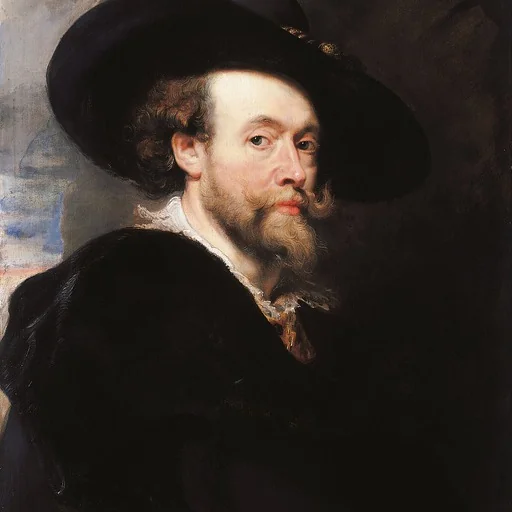
Sir Peter Paul Rubens ( ROO-bənz; Dutch: ; 28 June 1577 – 30 May 1640) was a Flemish artist and diplomat.

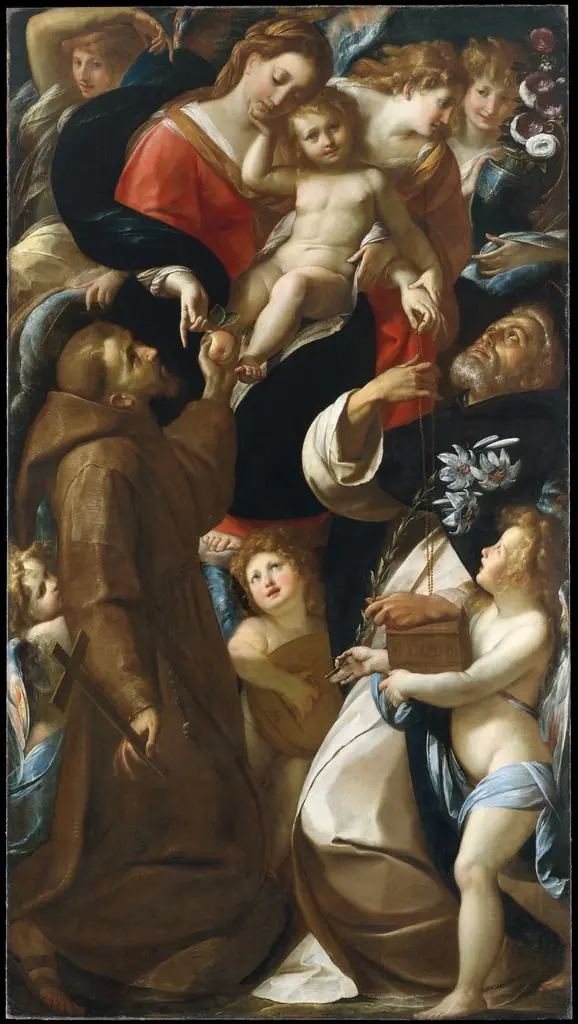 Madonna and Child with Saints Francis and Dominic and Angels
 Portiuncula
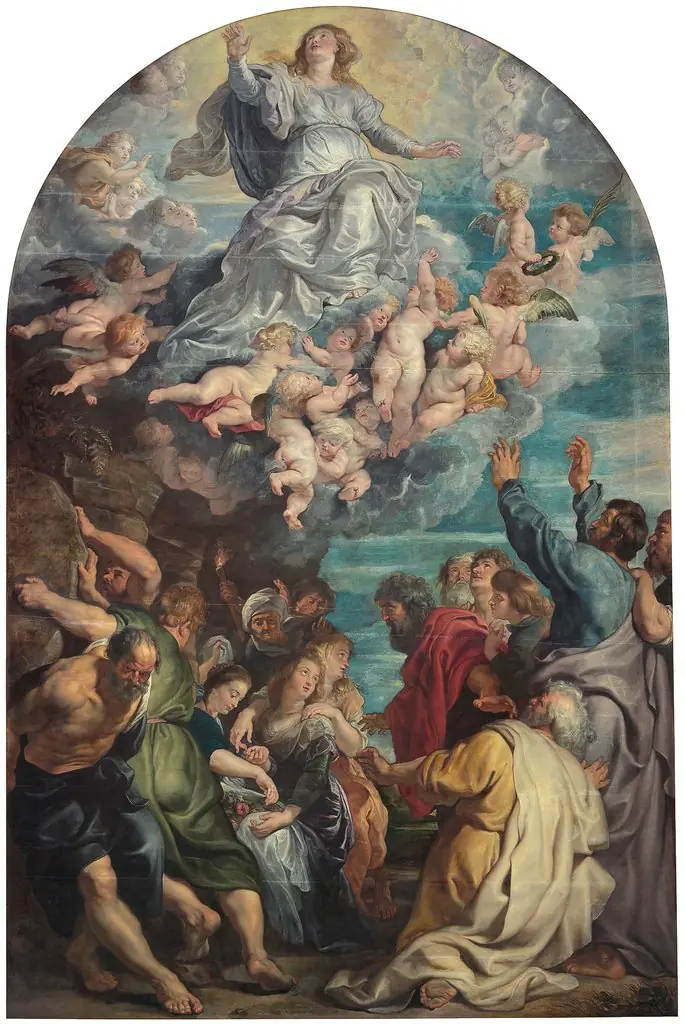 Assumption of Mary
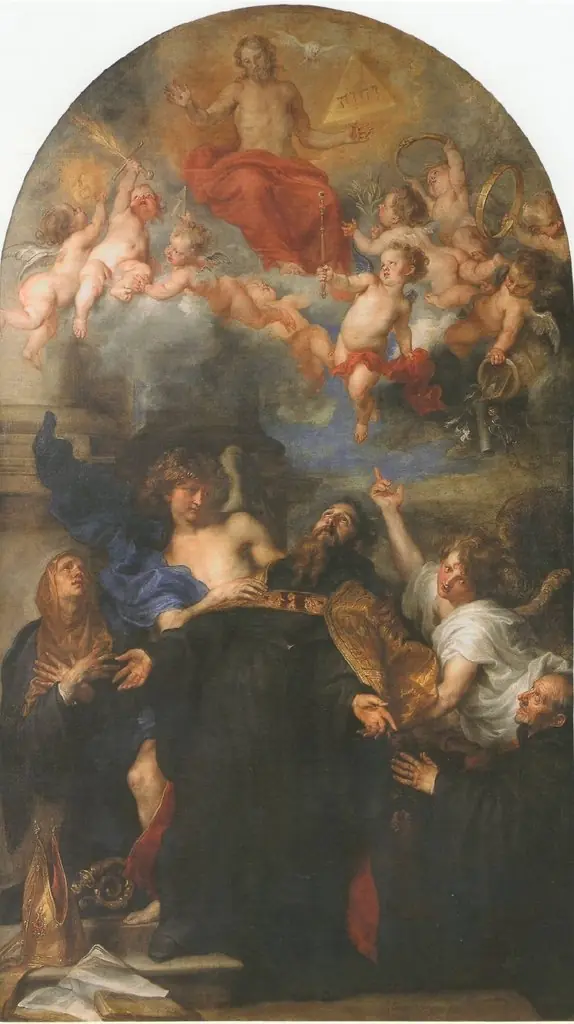 St Augustine in Ecstasy
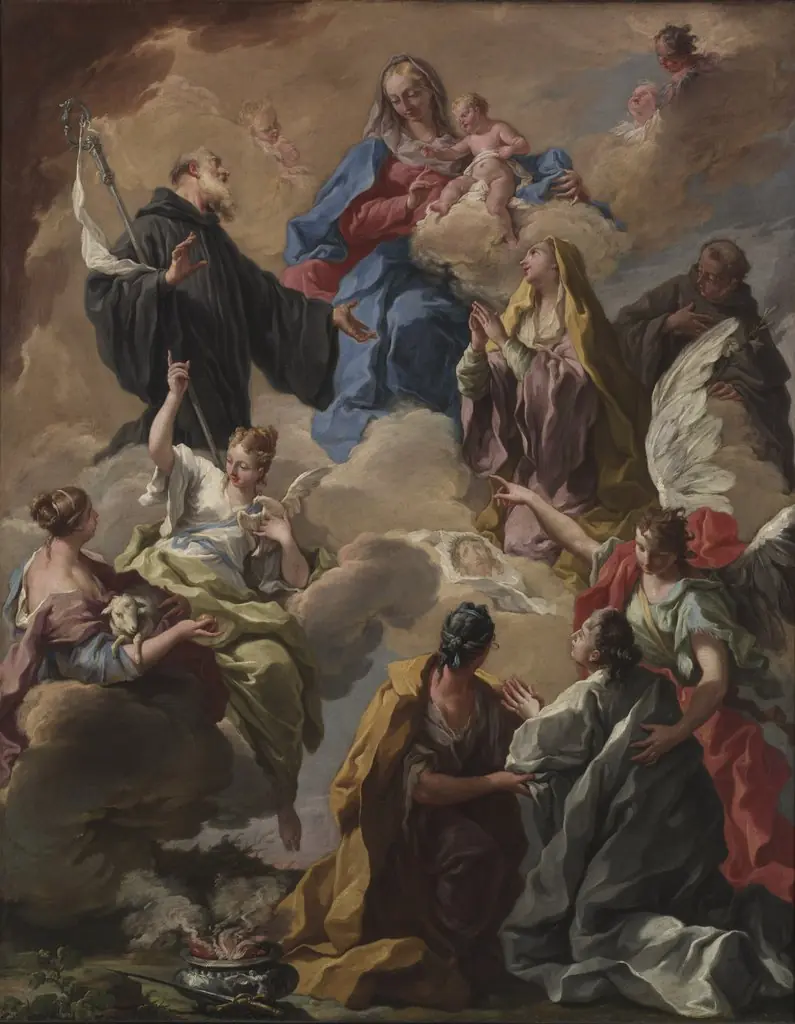 Saints Presenting a Devout Woman to the Virgin and Child
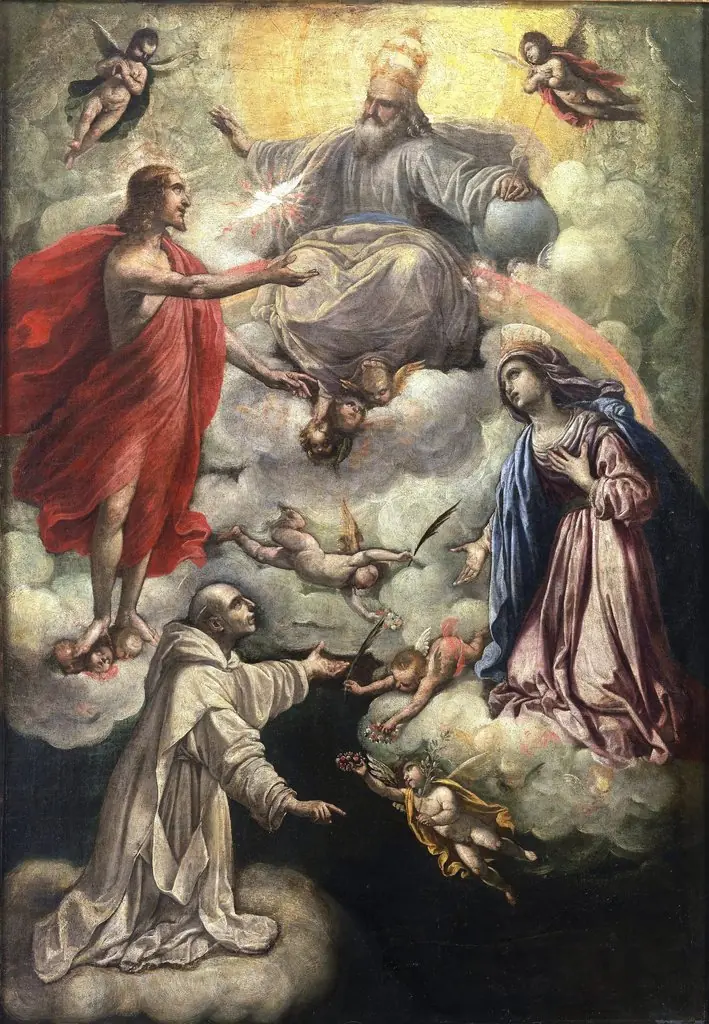 Visión de San Bruno
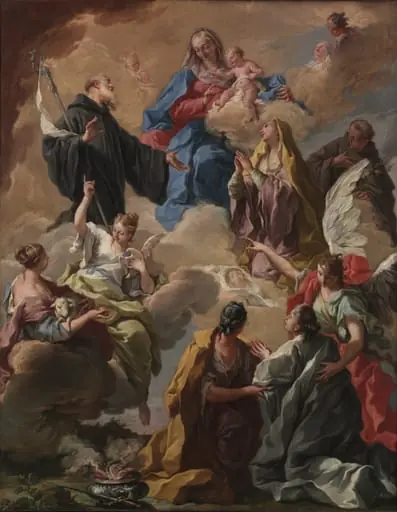 Saints Presenting a Devout Woman to the Virgin and Child
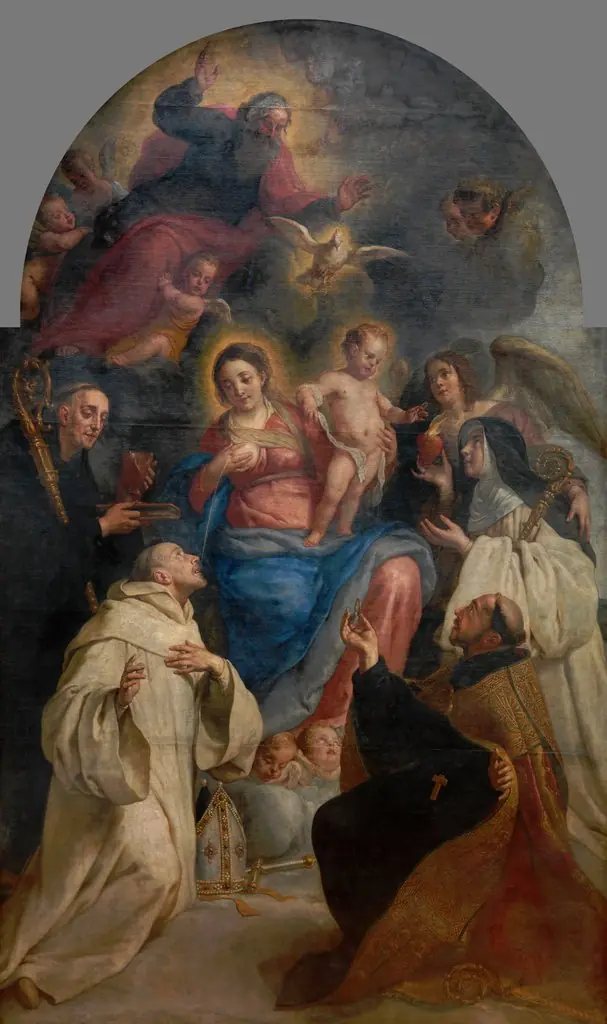 Lactatio of Saint Bernard of Clairvaux
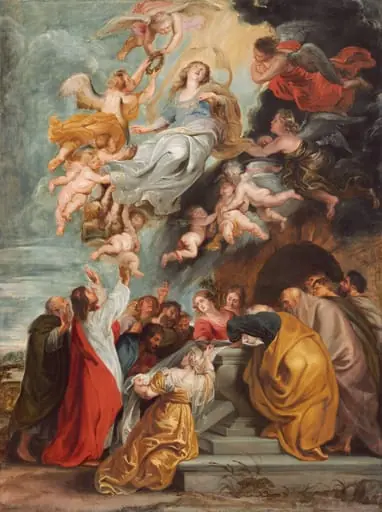 The Assumption of the Virgin
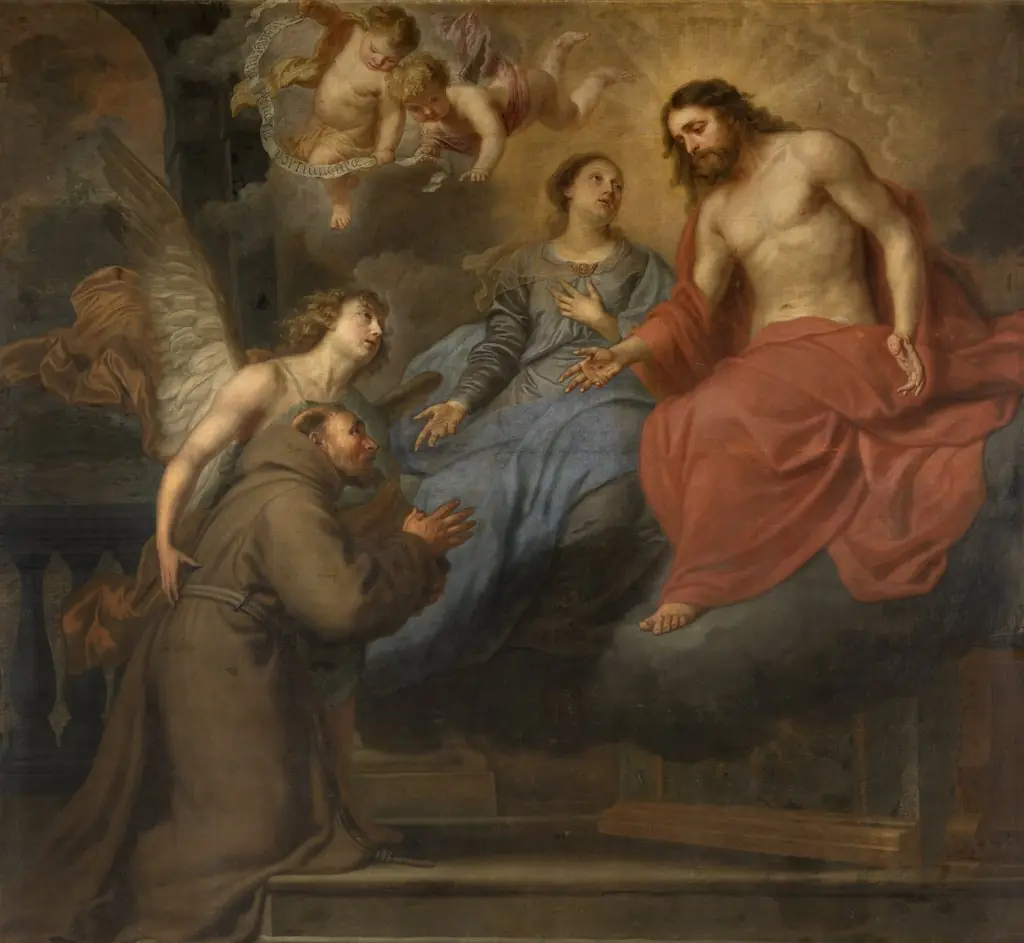 Portiuncula
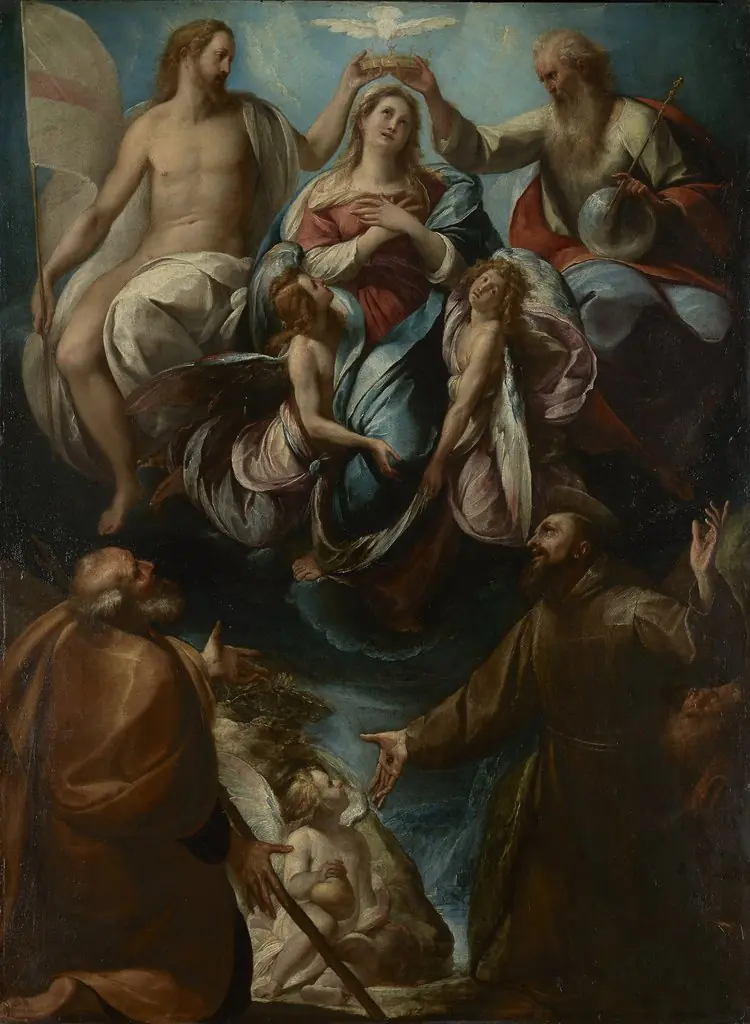 Coronation of the Virgin with Saints Joseph and Francis of Assisi
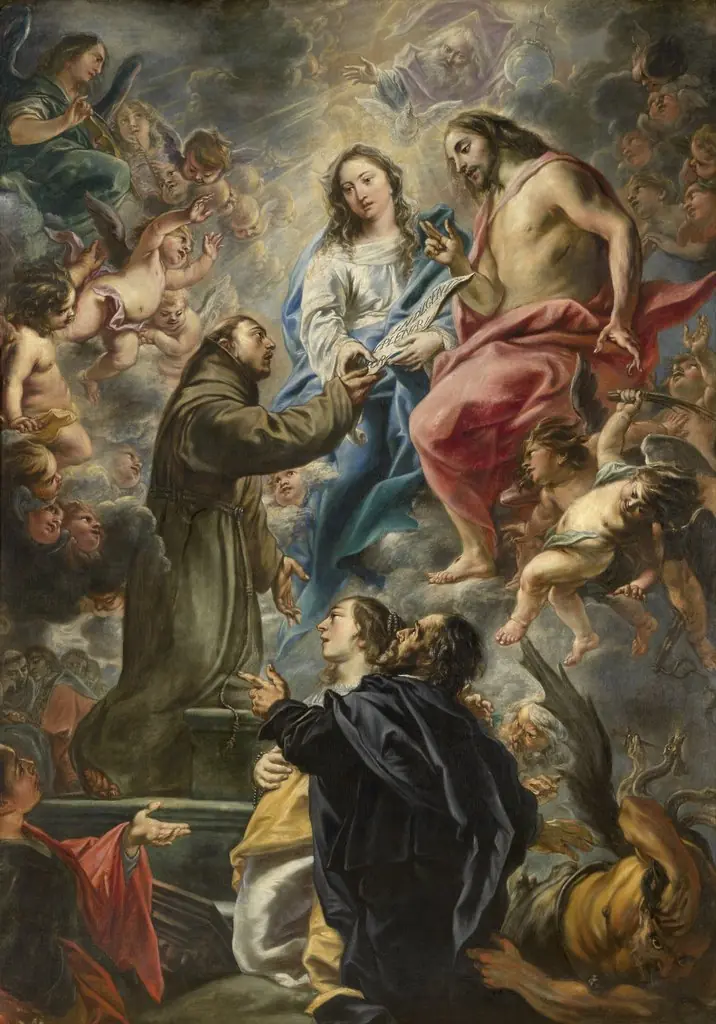
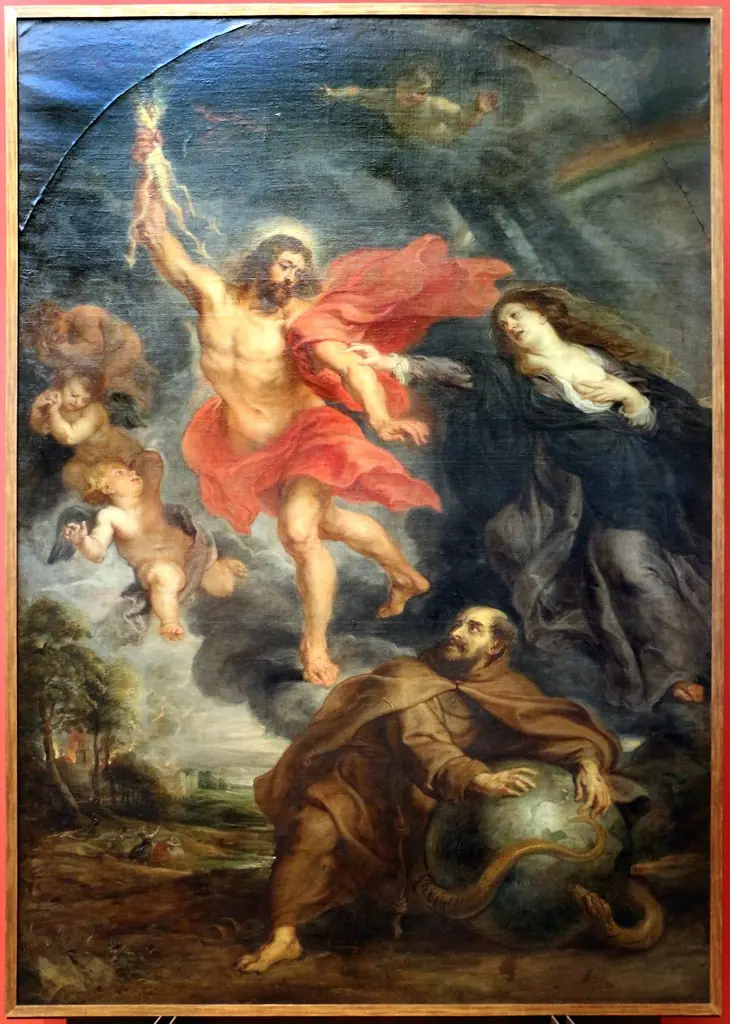 The Virgin Mary and Saint Francis Saving the World from Christ's Anger