Artwork
The Christ Child, Saint John and the Lamb
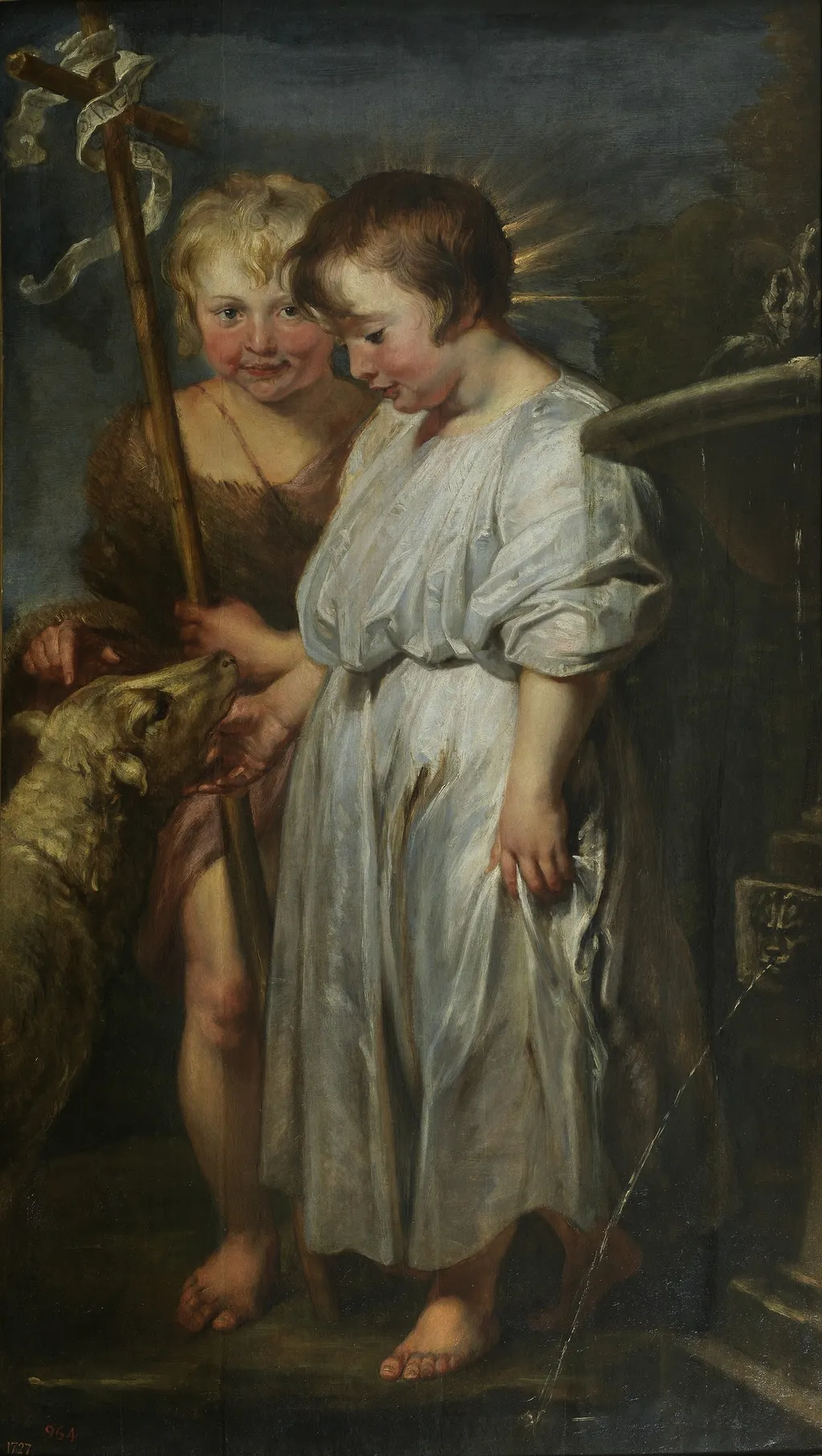
The Christ Child, Saint John and the Lamb is an oil painting by the Flemish Baroque painting artist Anthony van Dyck. It dates from 1618 and is held in the collection of the Museo del Prado.
About this work
Overview
Created in 1618 by the young Anthony van Dyck, this oil painting presents a tender encounter between two children, identified as the Christ Child and the infant Saint John the Baptist, accompanied by a lamb. The work belongs to the Flemish Baroque period and is currently part of the Museo del Prado’s collection.
Subject & Meaning
The central figures are rendered barefoot; the boy on the left clutches a modest wooden cross and is wrapped in a fur mantle, while the girl beside him wears a luminous white robe and cradles a calm lamb. The composition alludes to the biblical symbolism of the lamb as the “Agnus Dei” and the early connection between Christ and John the Baptist.
Technique & Style
Van Dyck employs a pronounced chiaroscuro, allowing the white garment to glow against a dark, indistinct backdrop. The handling of light creates a three‑dimensional presence for the children and the animal, while the soft focus of the surrounding space directs attention to the intimate gesture between the figures.
History & Provenance
At the time of its execution, van Dyck was still working under the direction of Peter Paul Rubens, and the painting reflects Rubens’s compositional dynamism and brushwork. After passing through private collections, it entered the Museo del Prado, where it remains on display.
Context
The work exemplifies the early Flemish Baroque interest in devotional subjects rendered with naturalistic detail. Its intimate scale and focus on infant saints align with contemporary Counter‑Reformation aims to present sacred narratives in a relatable, humanized manner.
Artist & collection
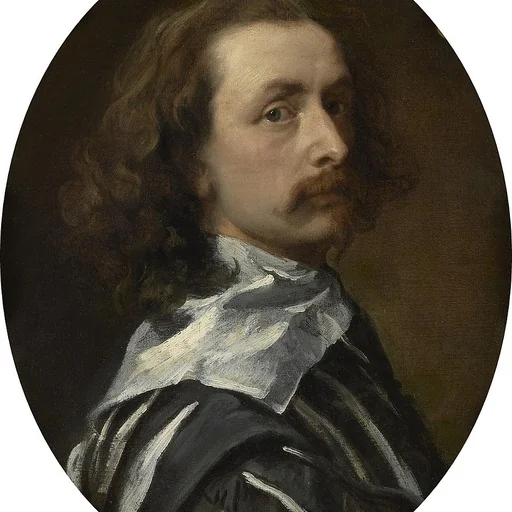
Artist
Sir Anthony van Dyck (; Dutch: Antoon van Dijck ; 22 March 1599 – 9 December 1641) was a Flemish Baroque artist, who became the leading court painter in England after success in the Spanish Netherlands and Italy.