Artwork
De Grote Postweg bij Rajapolah
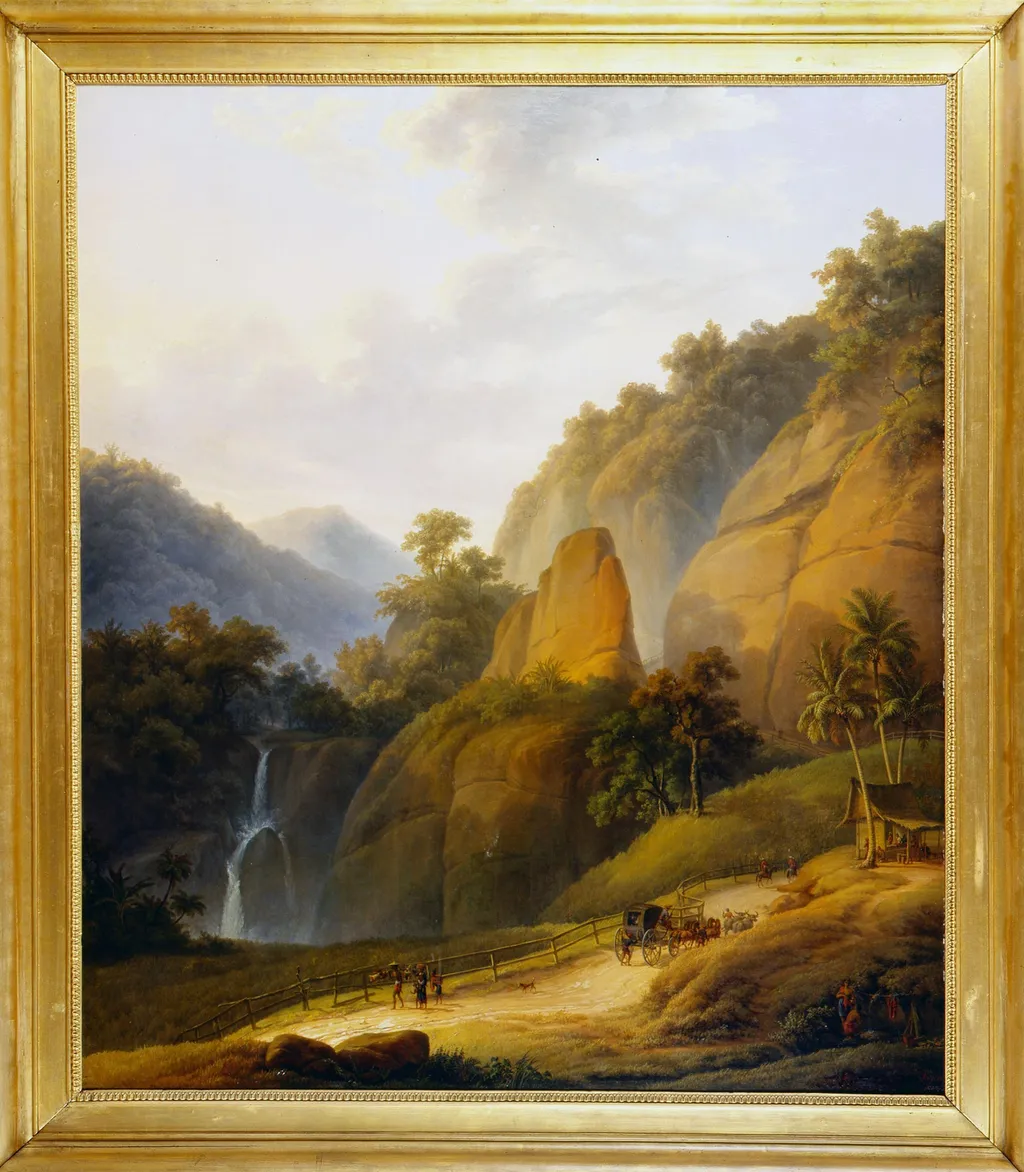
De Grote Postweg bij Rajapolah is an unspecified painting by the Biedermeier artist Antoine Payen. It dates from 1828 and is held in the collection of the Rijksmuseum. The canvas portrays a straight, seemingly endless road slicing through verdant hills under a muted sky.
About this work
Overview
The canvas portrays a straight, seemingly endless road slicing through verdant hills under a muted sky. Scaled figures on foot and horseback traverse the lane, emphasizing its scale against the landscape. The composition conveys a sense of ordered progress set within a tropical environment.
Subject & Meaning
The depicted thoroughfare is the principal east‑west artery of Java, known historically as the Great Post Road. While the scene appears tranquil, the work alludes to the colonial agenda of facilitating rapid troop movement and administrative control across the island.
Technique & Style
Executed in a restrained palette, the painting balances delicate atmospheric perspective with precise linear rendering of the road. Small, almost schematic human and equine forms contrast with the expansive natural backdrop, highlighting the road’s dominance over the terrain.
History & Provenance
The work was commissioned by the Dutch monarch during the early 19th century, shortly after the road’s construction in 1808. It reflects the period’s imperial ambition, documenting an infrastructure project that was completed within a single year through coerced labor.
Context
The Great Post Road was built by thousands of Indonesian laborers under harsh conditions, many of whom perished. The route was reserved for military and official use, excluding ordinary Javanese citizens, thereby reinforcing colonial authority and reshaping the island’s mobility patterns.
Artist & collection
Artist
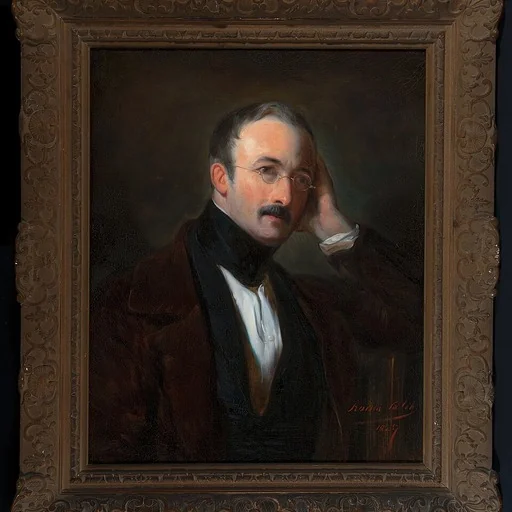
Auguste Antoine Joseph Payen (12 November 1792 – 18 January 1853), also known as Antoine Payen the Younger, was a Belgian painter and naturalist.

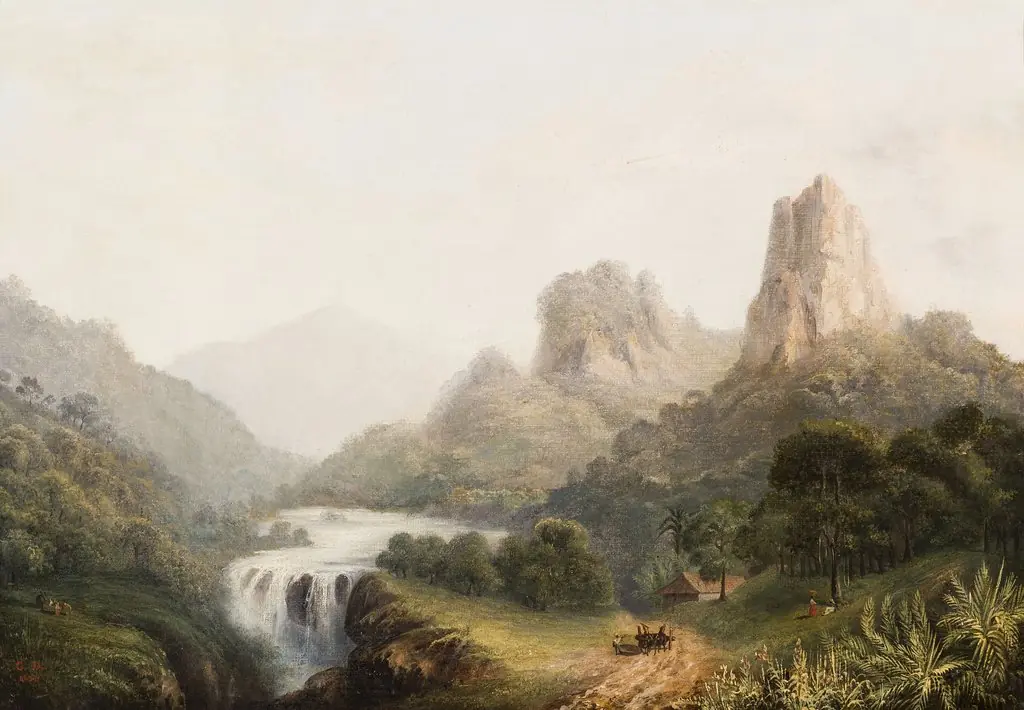 Arredores da Fazenda Mandioca, Rio de Janeiro (atribuído)
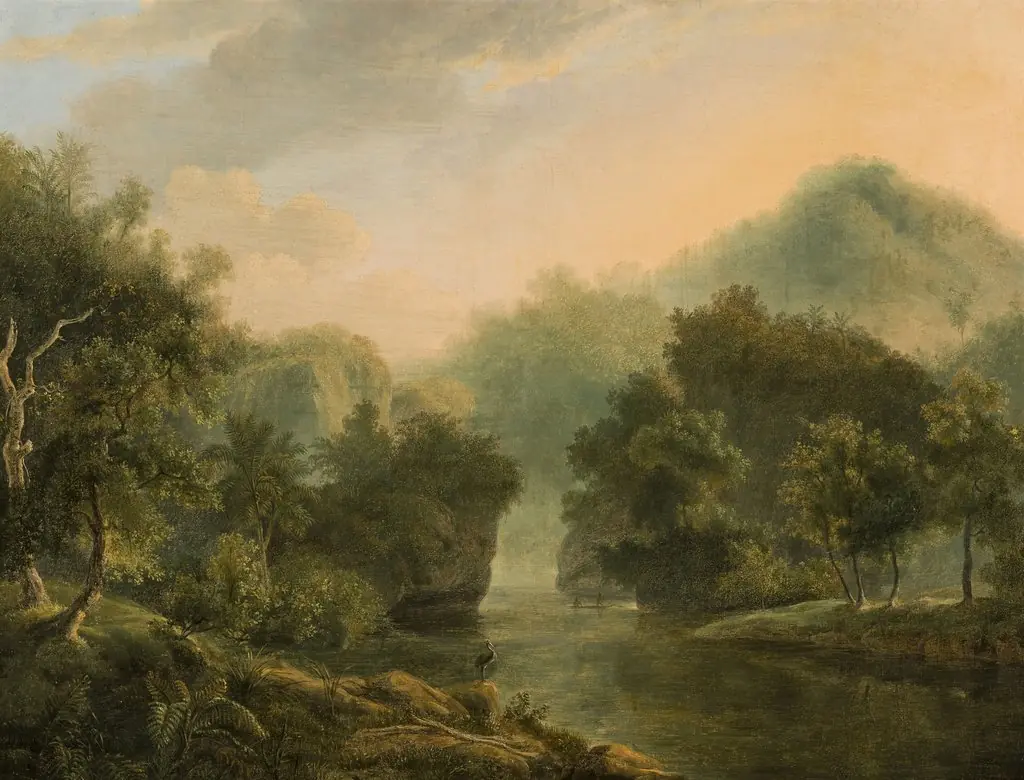 Paisagem com rio e floresta (atribuído)
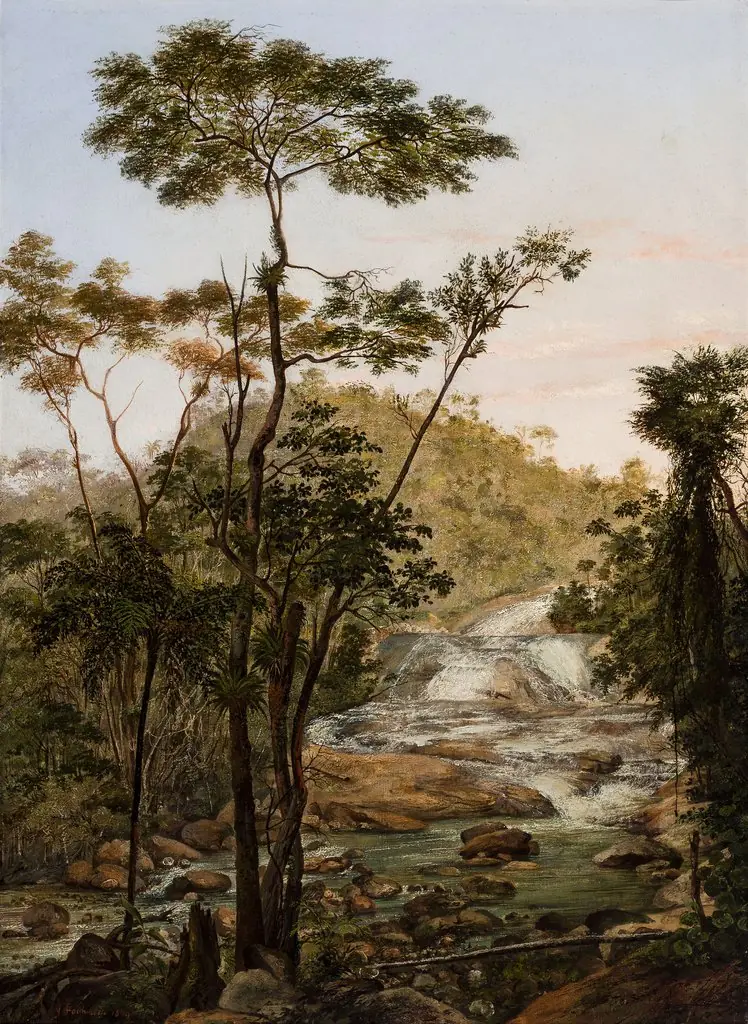 Cascata dos Bulhões (atribuído)
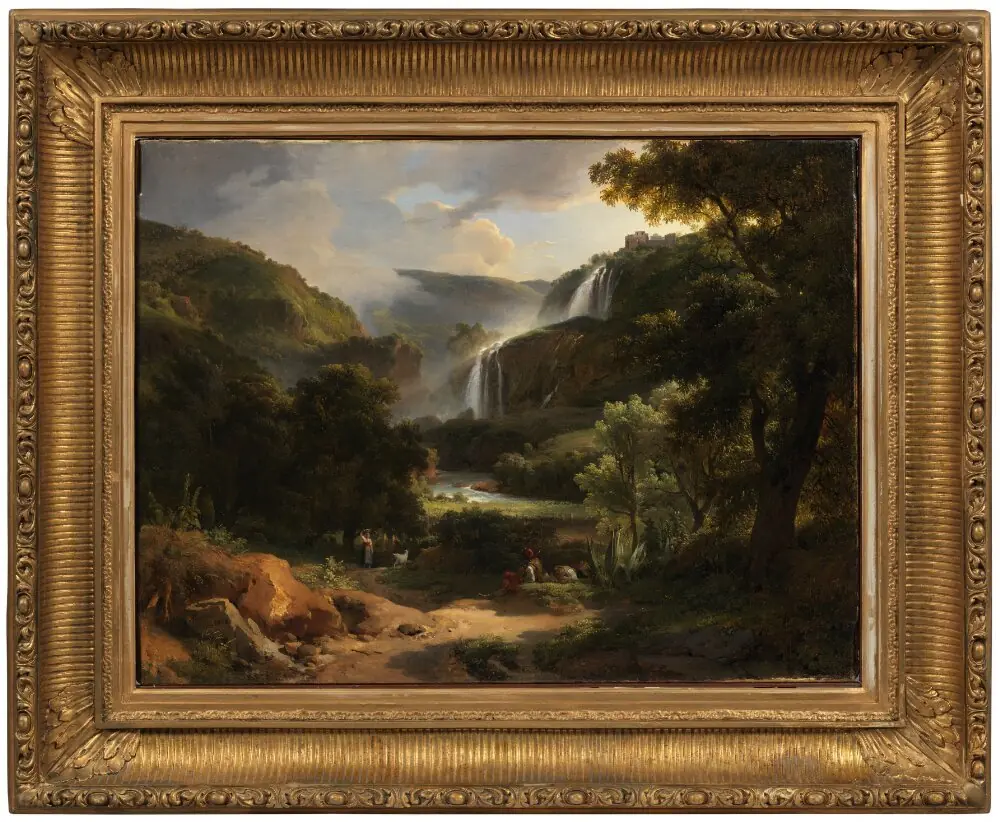 Marmore Falls, Near Terni, Italy
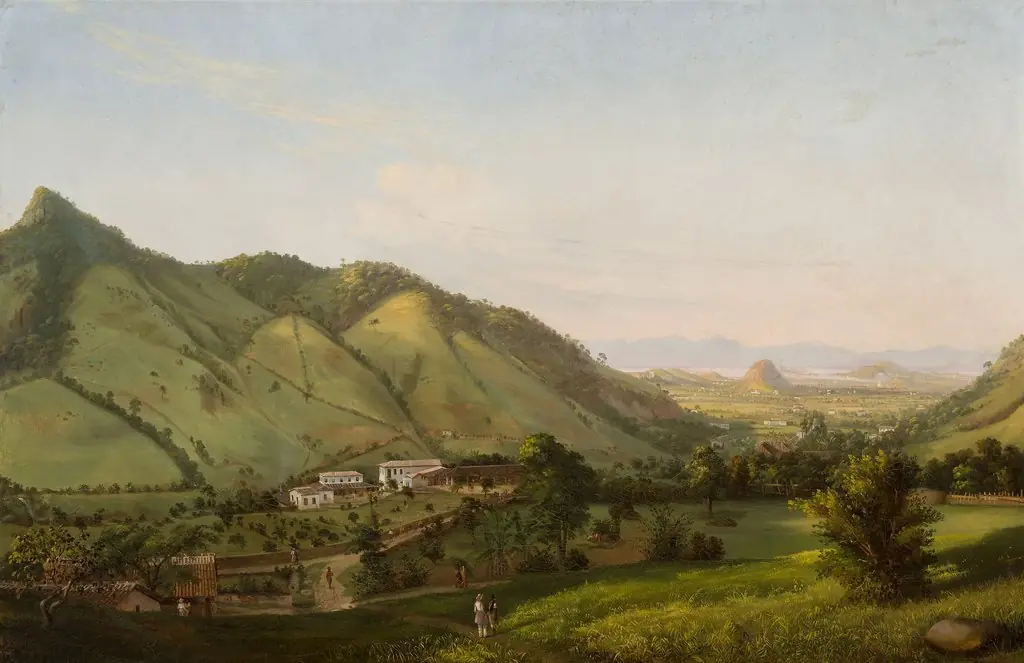 Meuron factory in Andaraí, Río de Janeiro
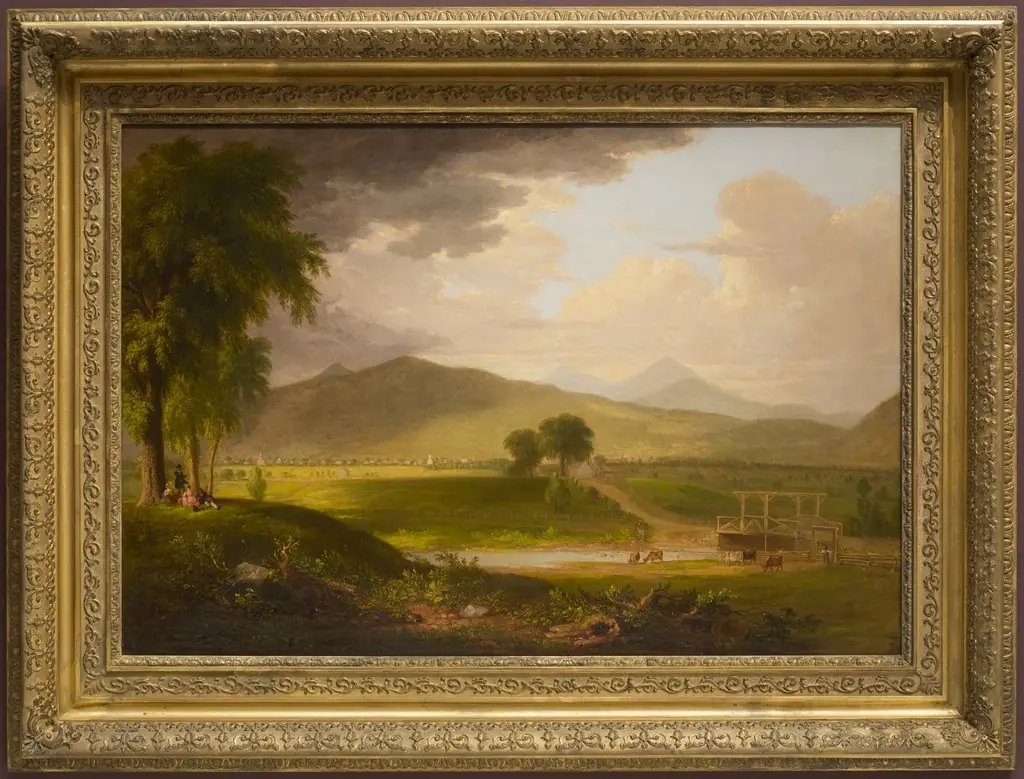 View of Rutland, Vermont
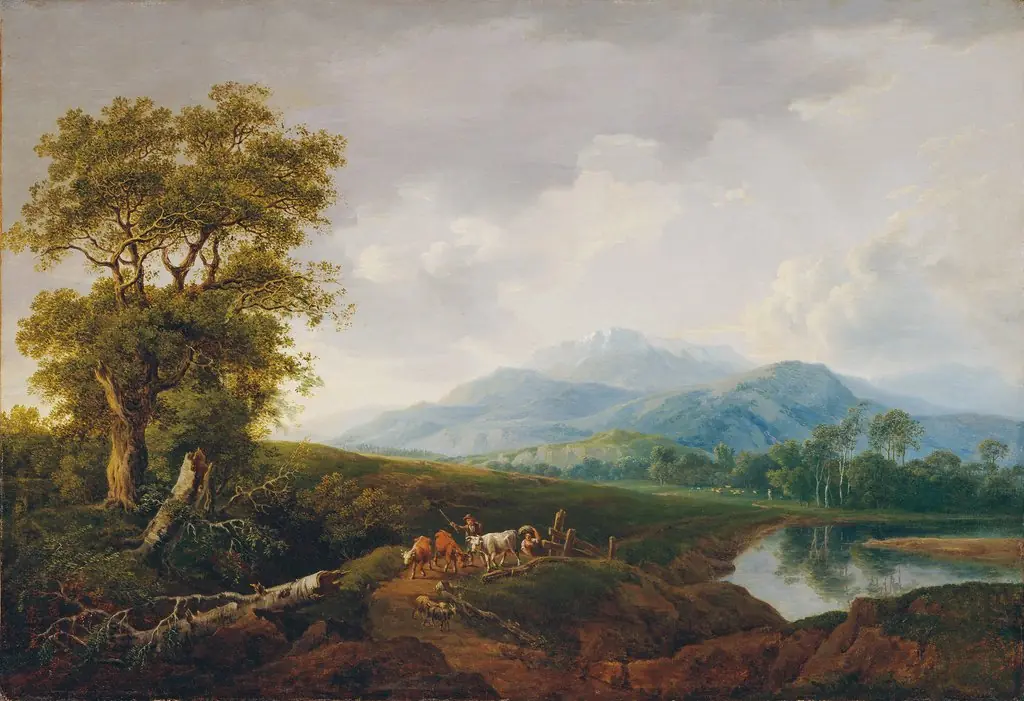 Landscape with snow mountain
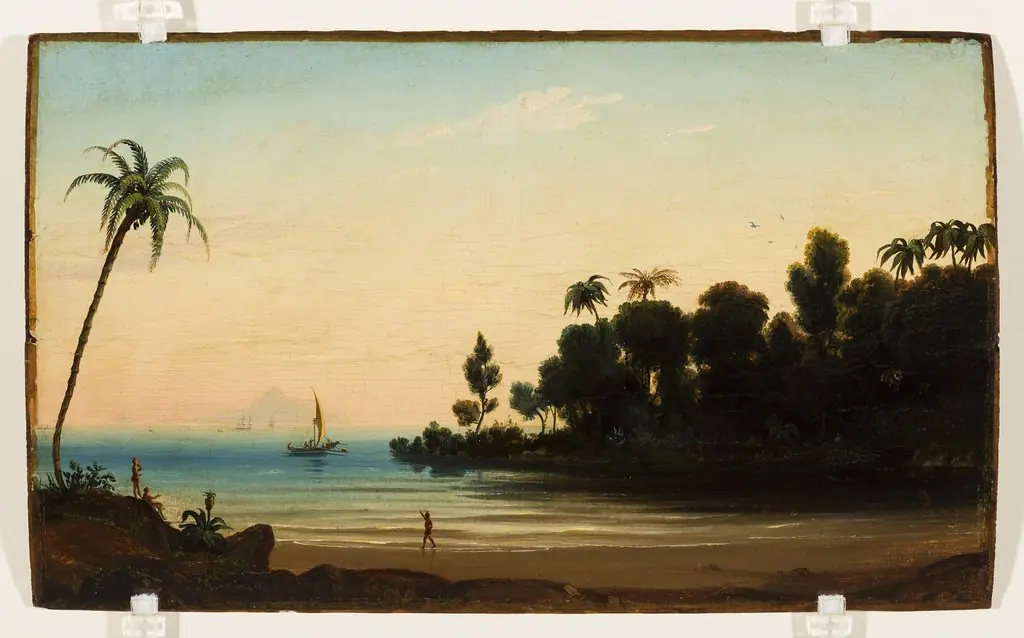 Praia com índios e veleiro (atribuído)
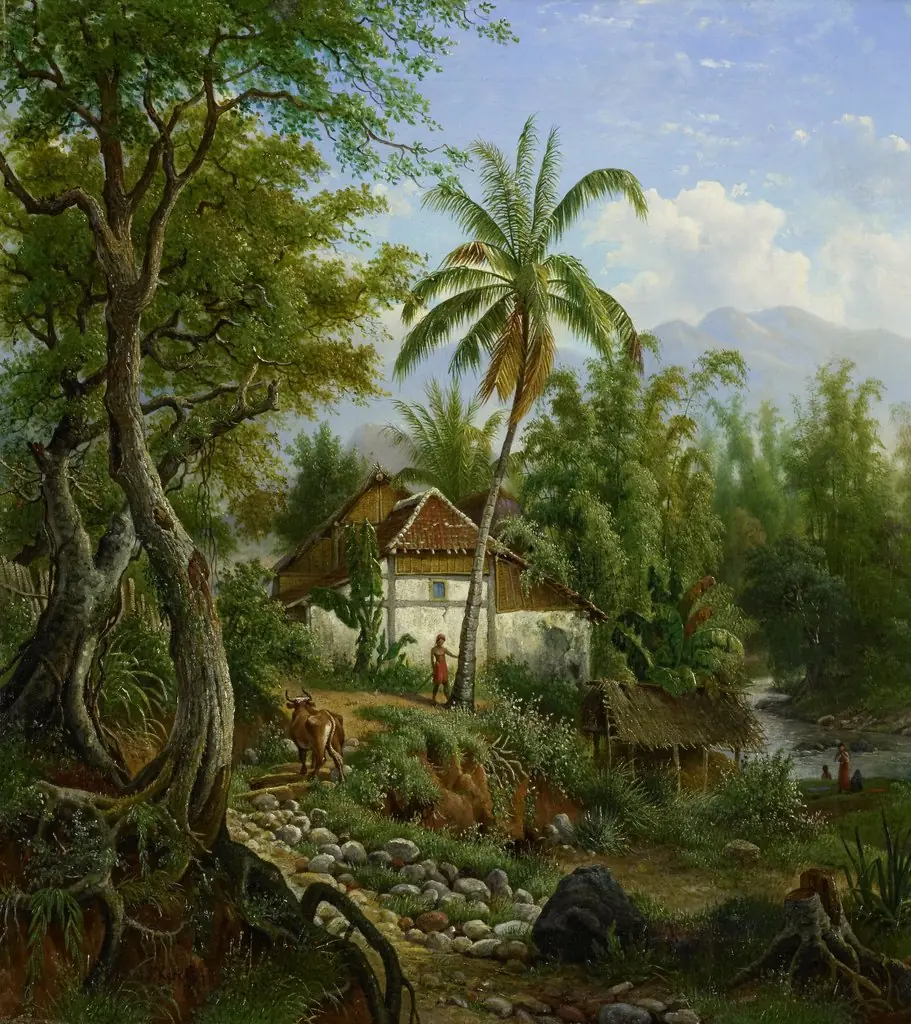 Indisch landschap
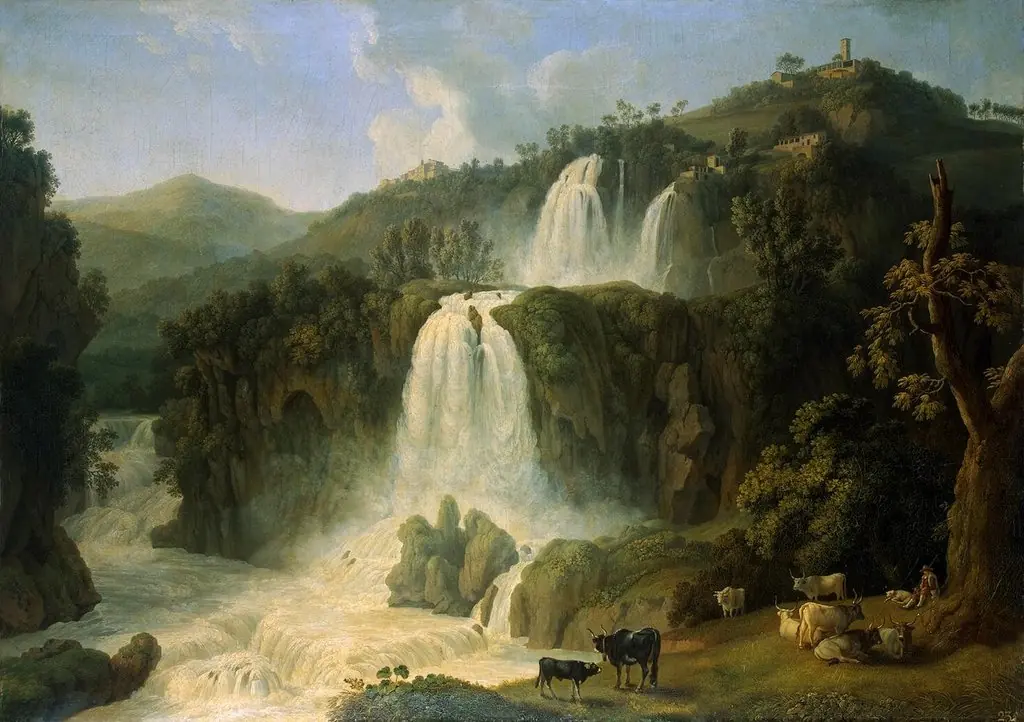 Great Cascades at Tivoli
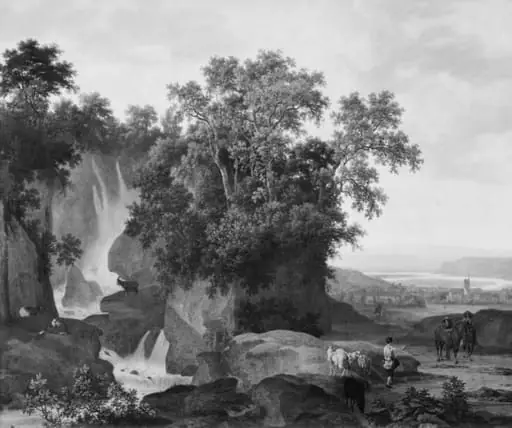 Wood-Clad Rocks with Waterfall
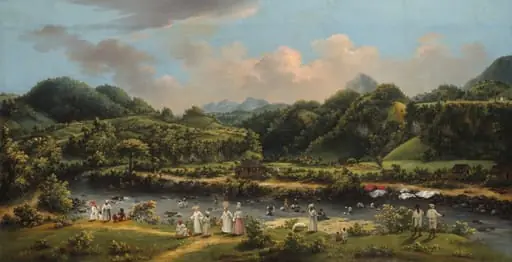 View on the River Roseau, Dominica