Artwork
Praia com índios e veleiro (atribuído)
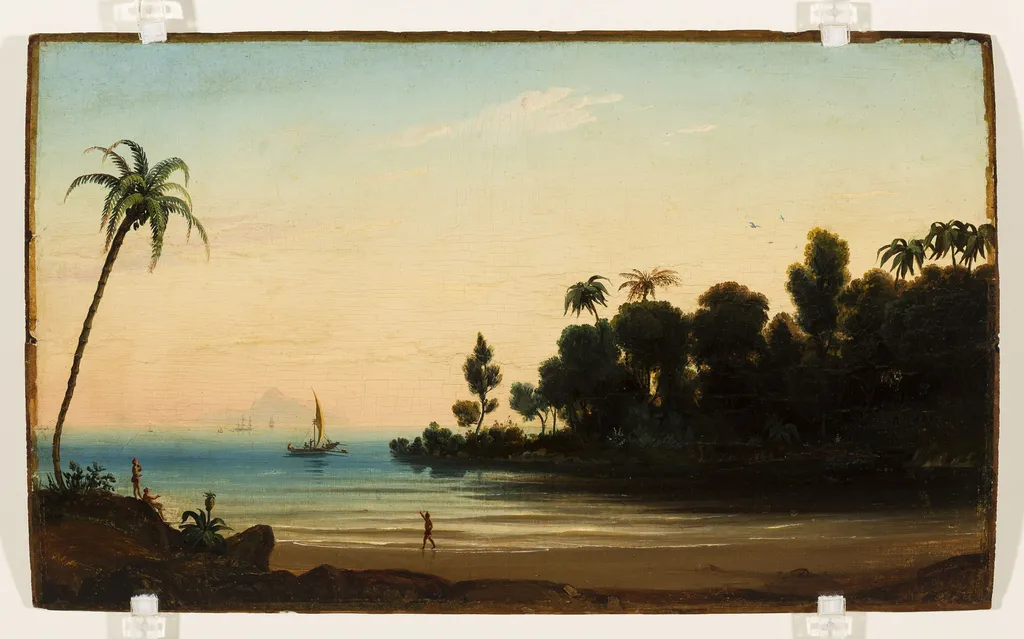
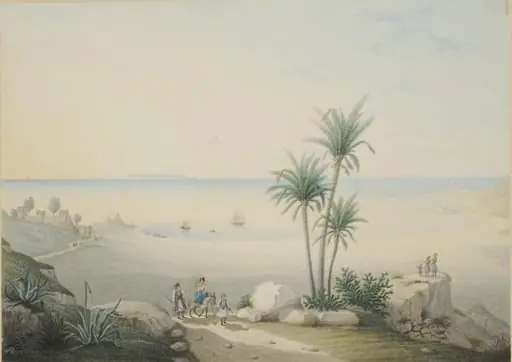
Praia com índios e veleiro (atribuído) is an oil painting by Unknown. It dates from 1801 and is held in the collection of the Pinacoteca de São Paulo. This wooden panel painting depicts a quiet coastal scene, likely from Brazil’s northeastern shore.
About this work
Overview
A distant sailboat and small human figures appear along the shoreline, surrounded by native vegetation and rocky outcrops.
This wooden panel painting depicts a quiet coastal scene, likely from Brazil’s northeastern shore. A distant sailboat and small human figures appear along the shoreline, surrounded by native vegetation and rocky outcrops. The sky, rendered in soft blues and pale yellows, holds scattered clouds. The overall mood is serene, with no dramatic action or focal point, emphasizing stillness over narrative.
Subject & Meaning
The scene presents a tranquil encounter between land, sea, and indigenous figures, though their identities remain ambiguous. The figures are rendered minimally, suggesting observation rather than representation. The absence of European markers or conflict implies a contemplative view of the landscape, possibly reflecting early colonial encounters without overt symbolism or political commentary.
Technique & Style
Painted on wood with visible, uneven brushwork, the piece favors texture over precision. Colors are subdued—olive greens, earthy browns, and muted sky tones—creating a harmonious, low-contrast palette. The figures and foliage are simplified, with forms suggested rather than detailed, indicating a folk or regional approach to representation rather than academic realism.
History & Provenance
Attributed to an unknown hand, the work lacks documented origin or early ownership records. Its wooden support and stylistic traits align with 18th- or early 19th-century Brazilian coastal art, possibly produced by a local artisan or itinerant painter. No exhibition history or collector lineage is established, leaving its creation context largely speculative.
Context
Created during a period of expanding Portuguese colonial presence in Brazil, the painting offers a rare non-religious, non-portrait depiction of the landscape and its inhabitants. Unlike official commissions, this work appears uncommissioned, possibly made for private use. Its focus on natural elements and quiet human presence reflects a regional aesthetic distinct from European artistic norms.
Legacy
Though not widely studied or reproduced, the painting contributes to a growing body of vernacular Brazilian art that captures everyday coastal life. Its preservation offers insight into how non-elite artists interpreted their environment. It remains a quiet testament to early local visual culture, valued for its authenticity rather than its fame.
Artist & collection

 Domestic Scene
 Giacomo and Cardinal Marco, investing Andrea, Abbot of San Zeno, with his Benefice
 The Nymph of Fontainebleau
 Portrait of a Woman
 Madonna and Child with Saints in the Enclosed Garden
 Venus and Minerva
 Family Group of Four on Sofa
 Wall painting from Room H of the Villa of P. Fannius Synistor at Boscoreale