Artwork
Fruits et fleurs dans une corbeille d'osier
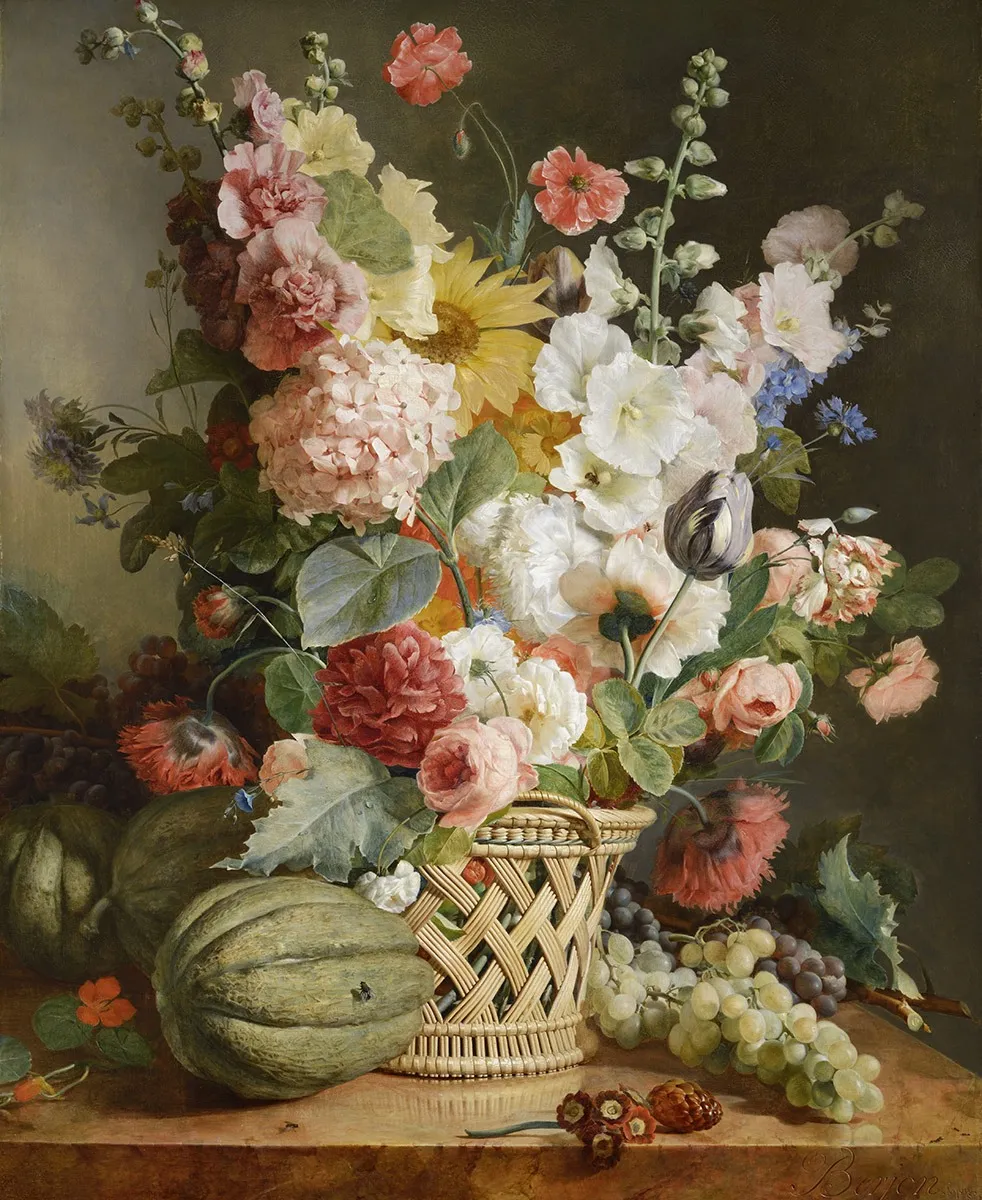
Fruits et fleurs dans une corbeille d'osier is an oil painting by Antoine Berjon. It dates from 1810 and is held in the collection of the Museum of Fine Arts of Lyon.
About this work
Overview
The work resides in the Museum of Fine Arts of Lyon, where it reflects the artist’s sustained engagement with domestic nature.
Painted in 1810 by Antoine Berjon, this oil-on-canvas still life presents a carefully composed arrangement of seasonal produce and blossoms within a woven basket. Berjon, trained initially as a sculptor, turned to floral and fruit subjects with growing precision, establishing a reputation for quiet, observant depictions of natural abundance. The work resides in the Museum of Fine Arts of Lyon, where it reflects the artist’s sustained engagement with domestic nature.
Subject & Meaning
The composition centers on a basket overflowing with pink, white, and yellow flowers, surrounded by tendrils of green foliage. At its base, a melon and clusters of grapes rest on a tabletop, suggesting harvest and abundance. No symbolic allegory is overt; instead, the painting honors the transient beauty of everyday botanical forms, inviting contemplation of their texture, color, and delicate structure without narrative embellishment.
Technique & Style
Berjon employed fine brushwork to render the velvety petals, dewy fruit surfaces, and the intricate weave of the basket. Subtle shifts in light model each form, creating a sense of volume without theatrical contrast. The palette remains restrained yet vivid, emphasizing natural tones over dramatic effects. His approach favors clarity and tactile realism, aligning with early 19th-century French still-life traditions that valued observation over sentiment.
History & Provenance
Created during Berjon’s mature period, the painting reflects his established role in Lyon’s artistic community after training under sculptor Antoine-Michel Perrache. It entered the collection of the Museum of Fine Arts of Lyon in the 19th century, likely through municipal acquisition or donation. Its continued presence there underscores its significance as a representative work of regional still-life painting from the post-Revolutionary era.
Context
In early 19th-century France, still-life painting flourished as a genre separate from grand historical or religious themes. Berjon’s focus on domestic flora and fruit aligned with a broader cultural interest in naturalism and the aesthetics of the everyday. His work stood apart from the more ornate floral compositions of earlier centuries, favoring simplicity and direct observation over decorative excess.
Legacy
Berjon’s careful rendering of botanical subjects influenced later French still-life painters who prioritized quiet realism. While not widely known outside regional circles, his works, including this one, remain important examples of how ordinary natural forms were elevated through attentive technique. The painting continues to serve as a reference for the evolution of still-life in provincial French art during the Napoleonic period.
Artist & collection
Artist
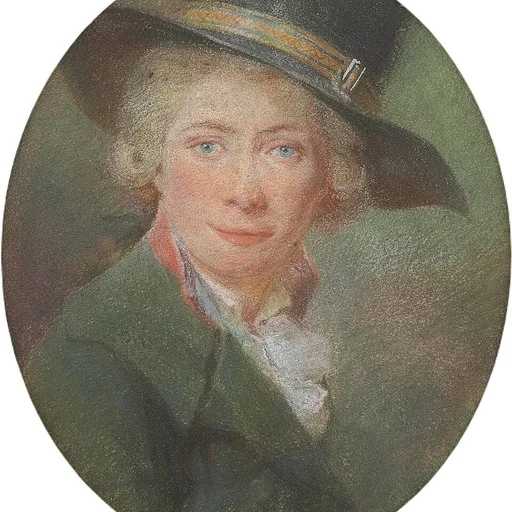
Antoine Berjon (17 May 1754 – 24 October 1843) was a French painter and designer, among the most important flower painters of 19th-century France.

 Flowers
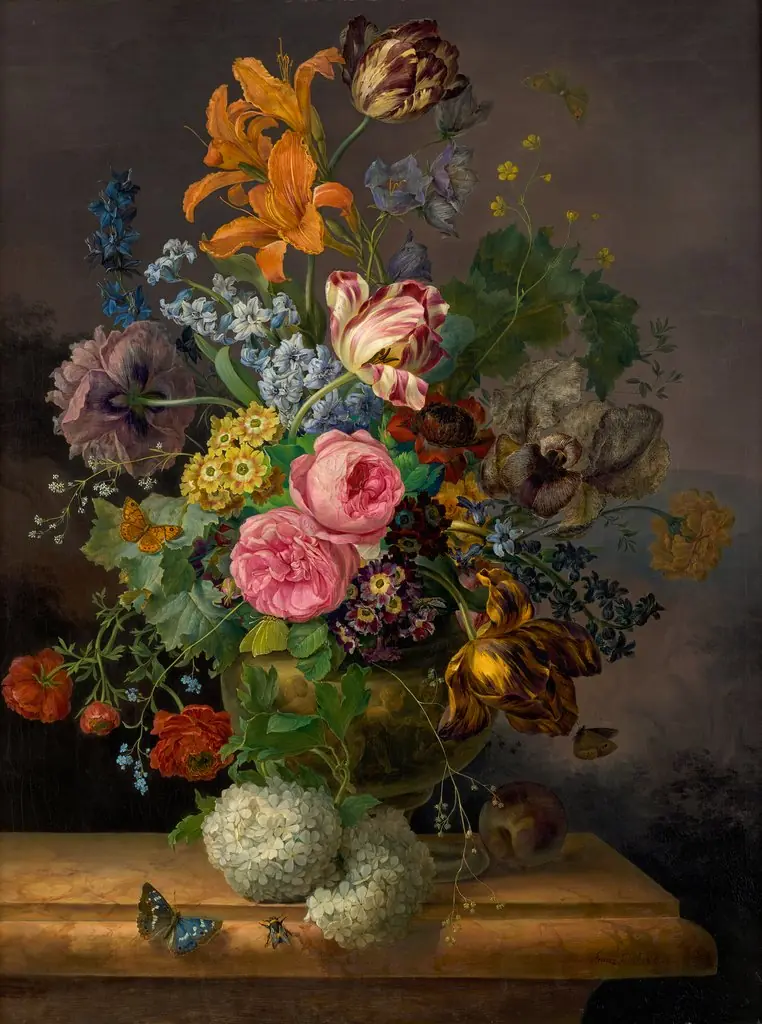 Blumenstück
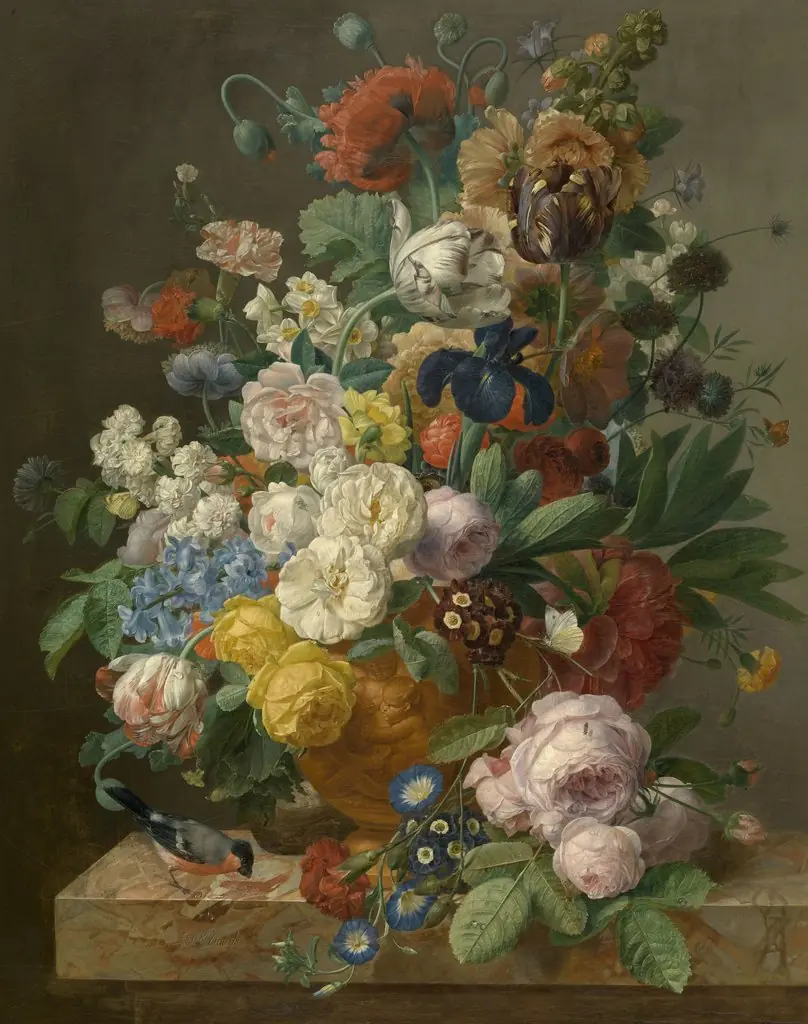 Bouquet of Flowers in a Sculpted Vase
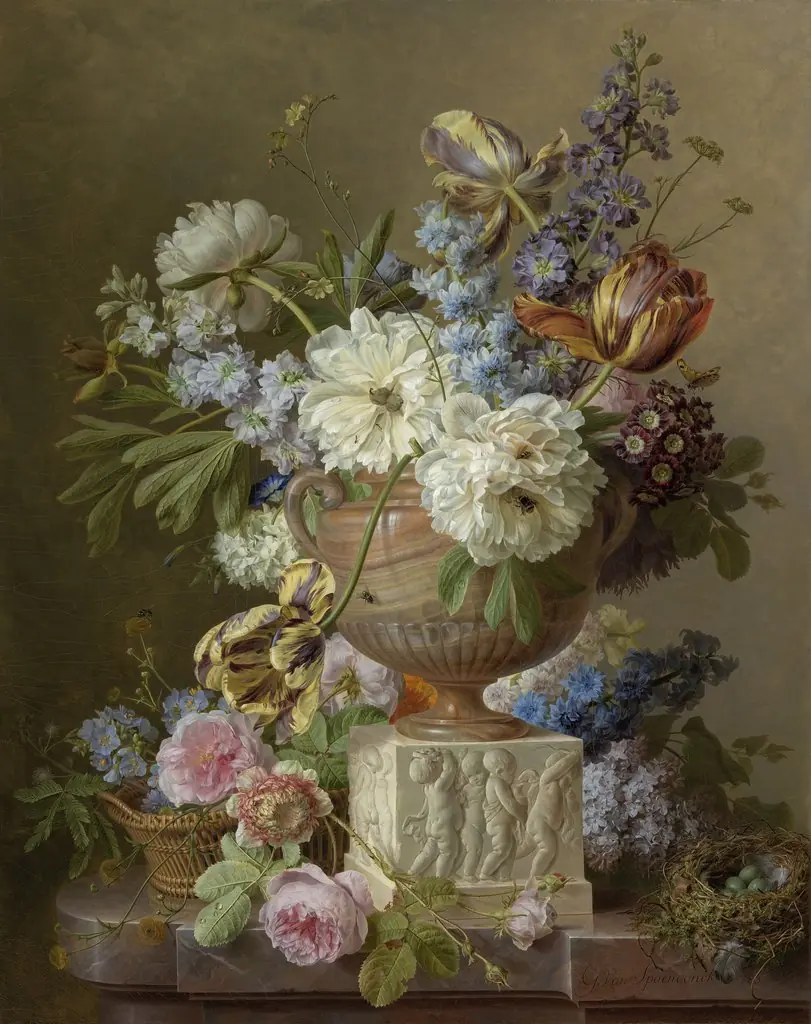 Flower Still-life with an Alabaster Vase
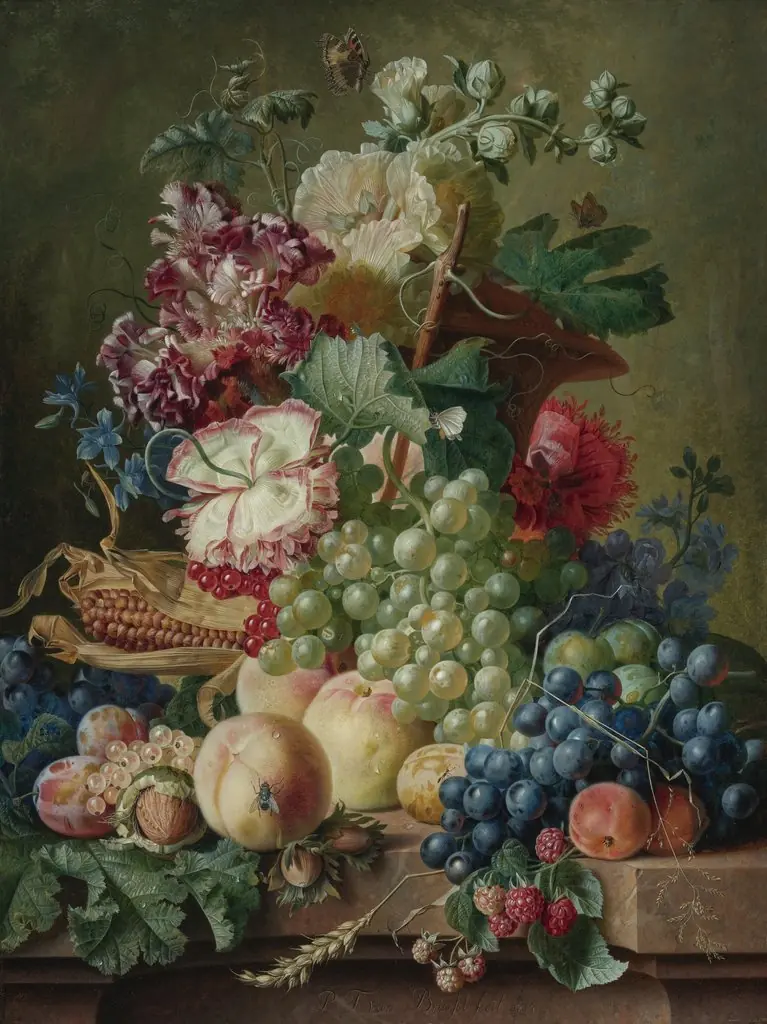 Still life of flowers and fruits on a marble ledge
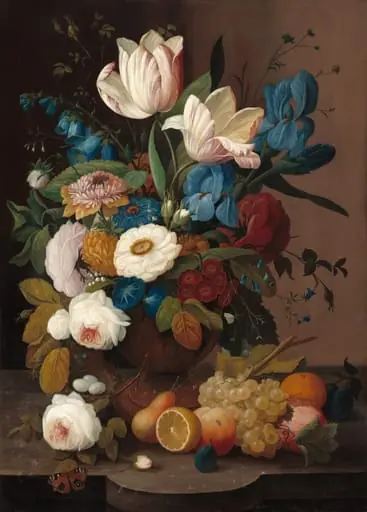 Still Life, Flowers, and Fruit
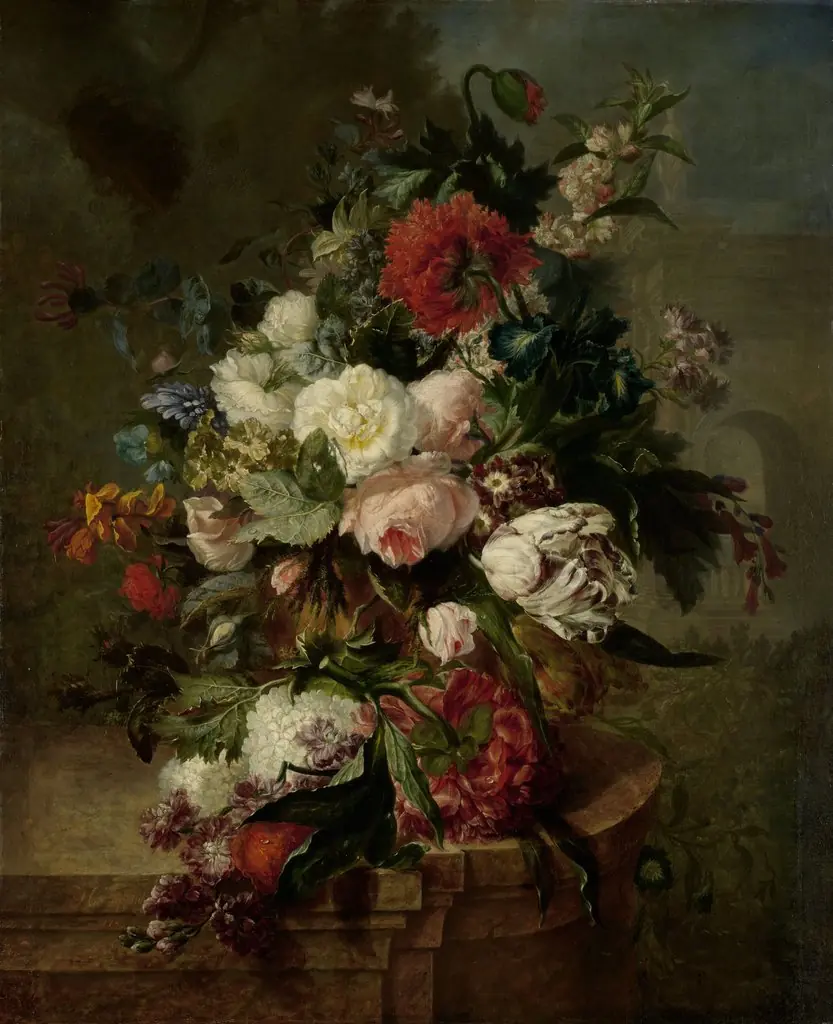 Still Life with Flowers
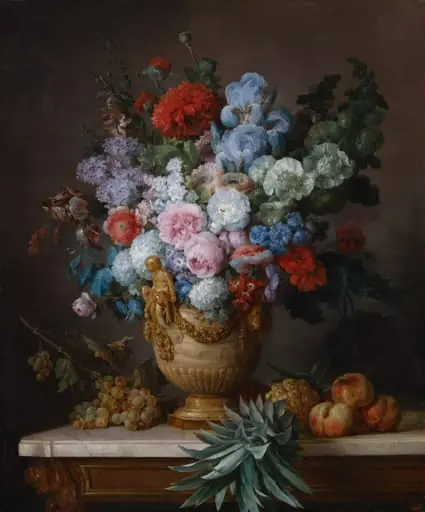 Still Life with Flowers in an Alabaster Vase and Fruit
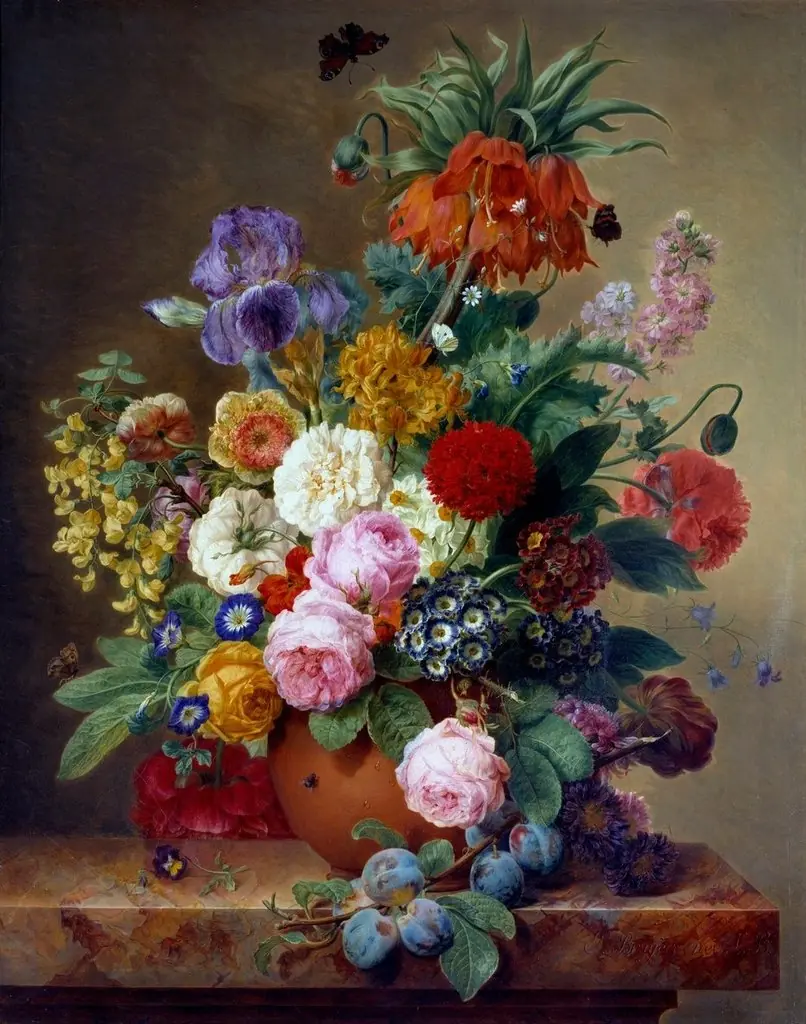 Fleurs dans un vase et branche de prunier sur une tablette de marbre
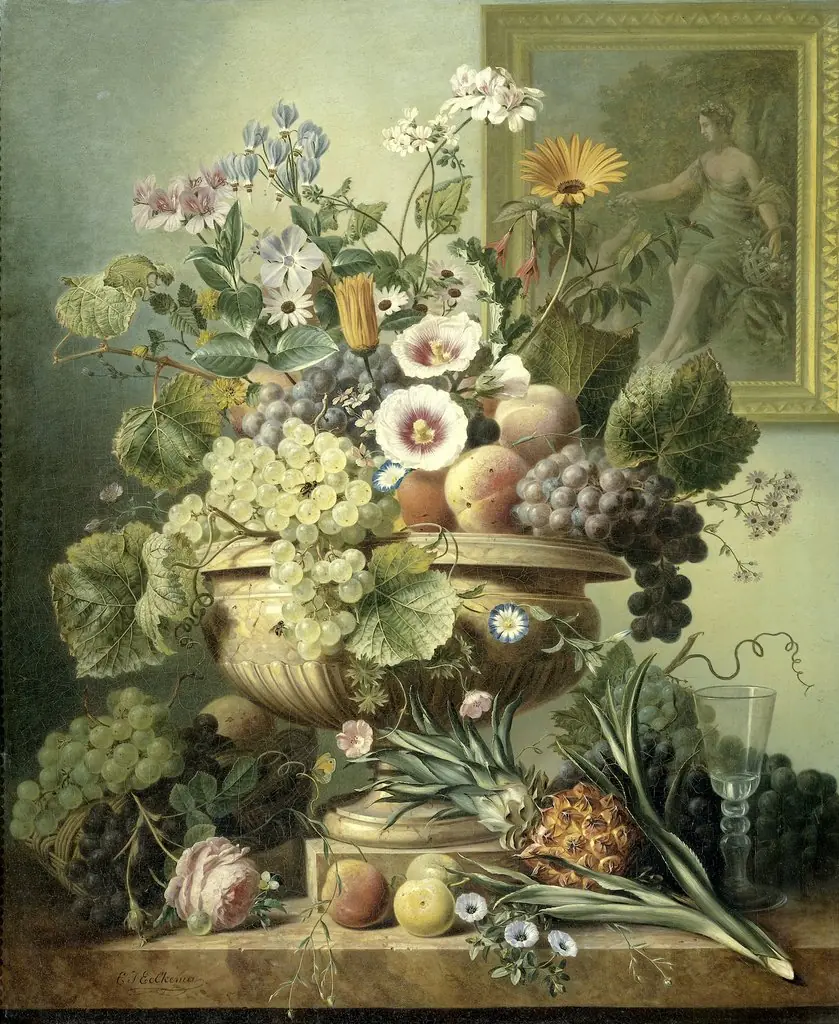 Still-Life with Flowers and Fruit
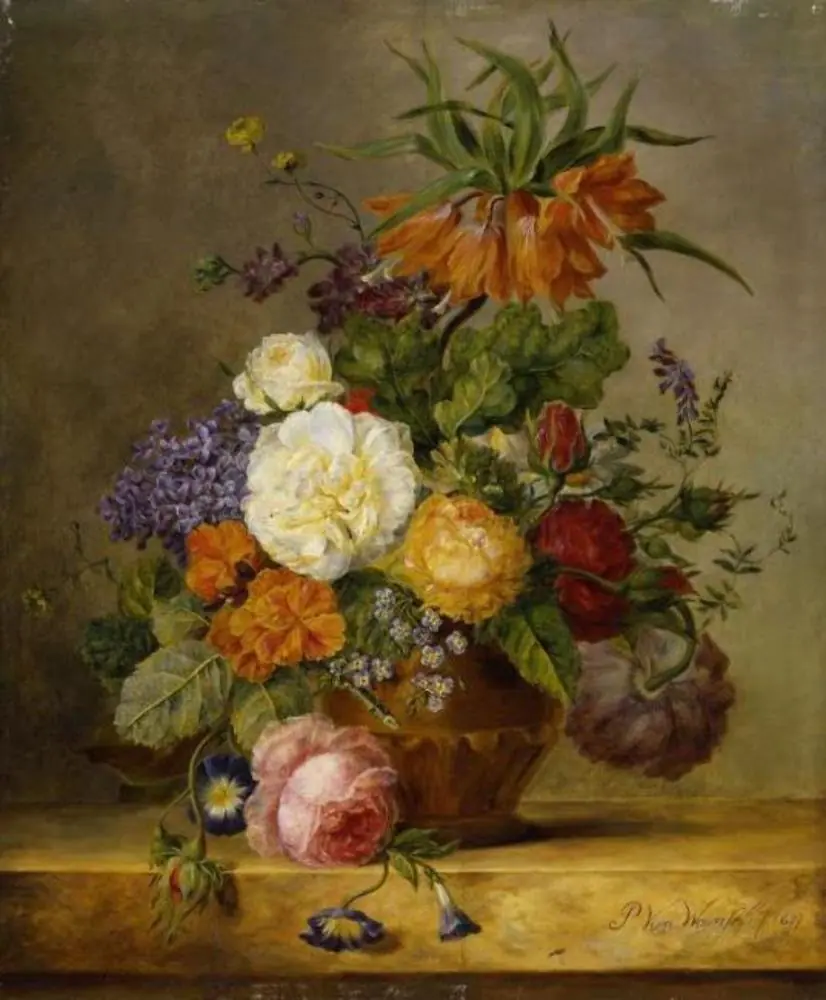 An urn of flowers
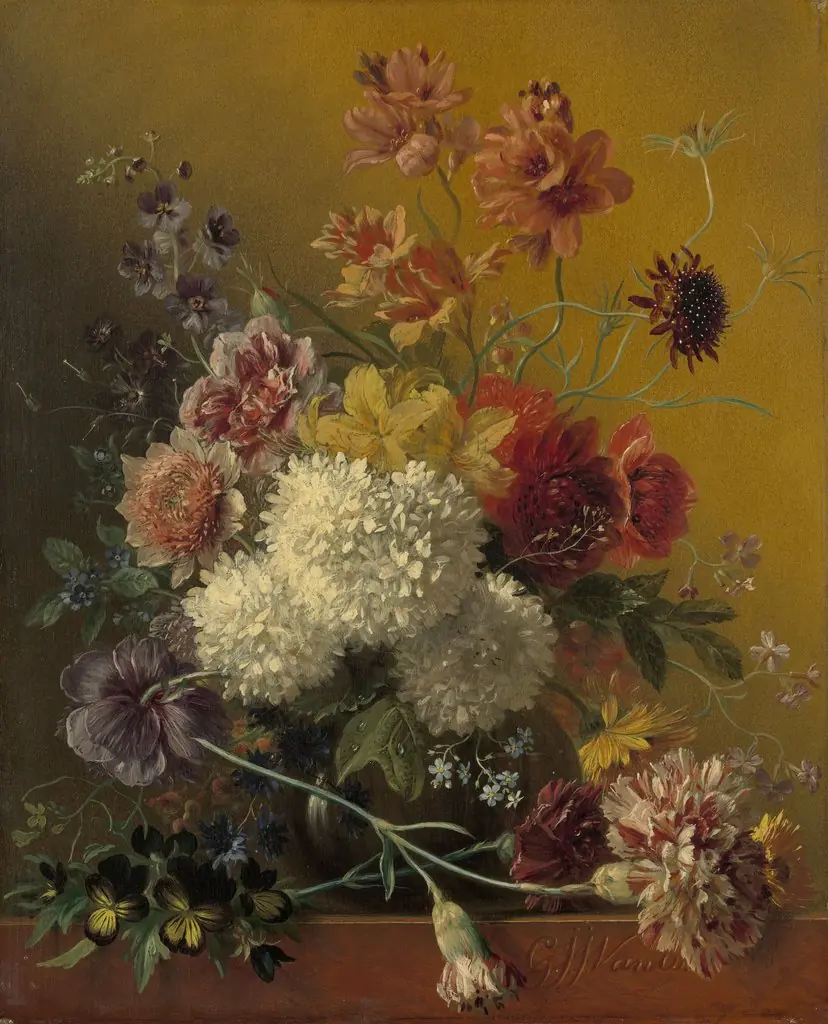 Flower still life