Artwork
Fleurs dans un vase et branche de prunier sur une tablette de marbre
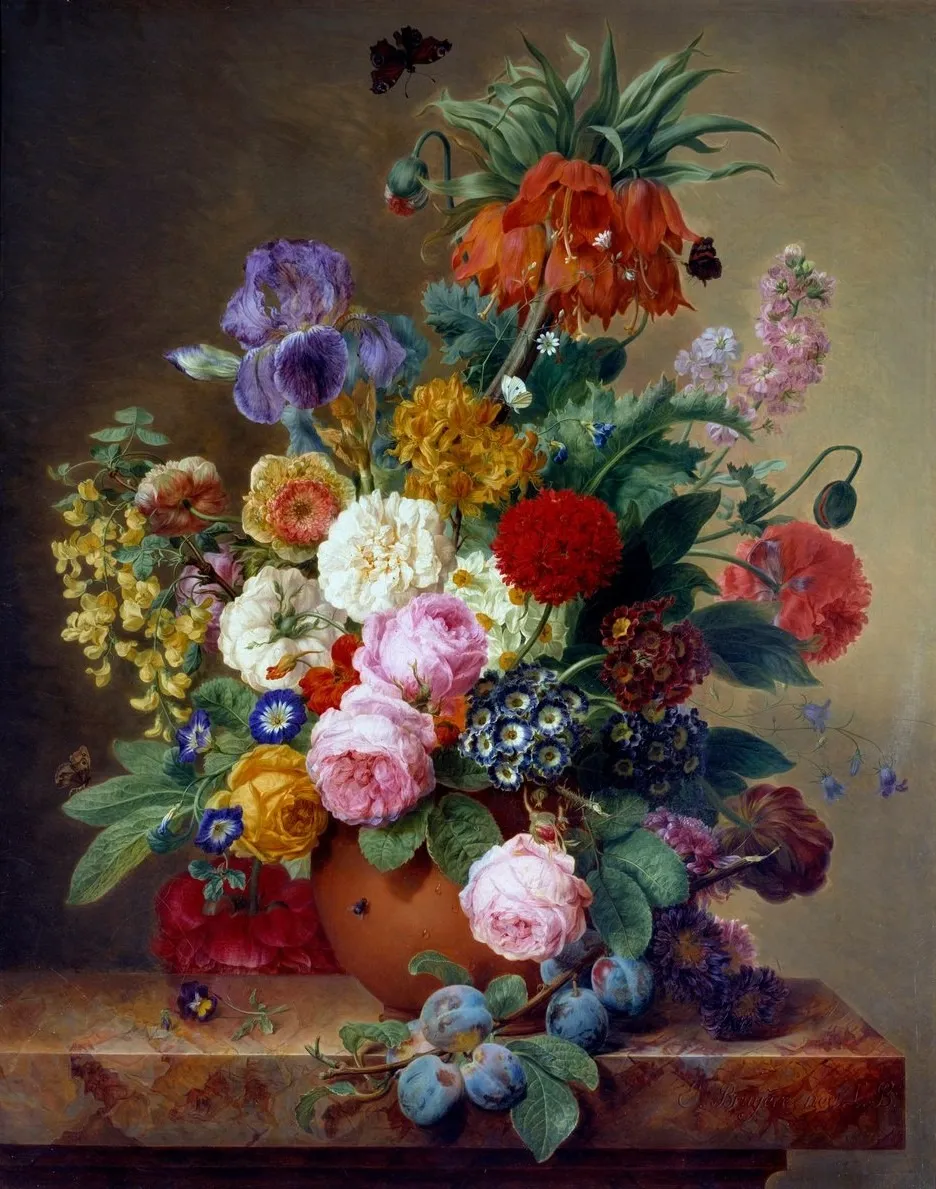
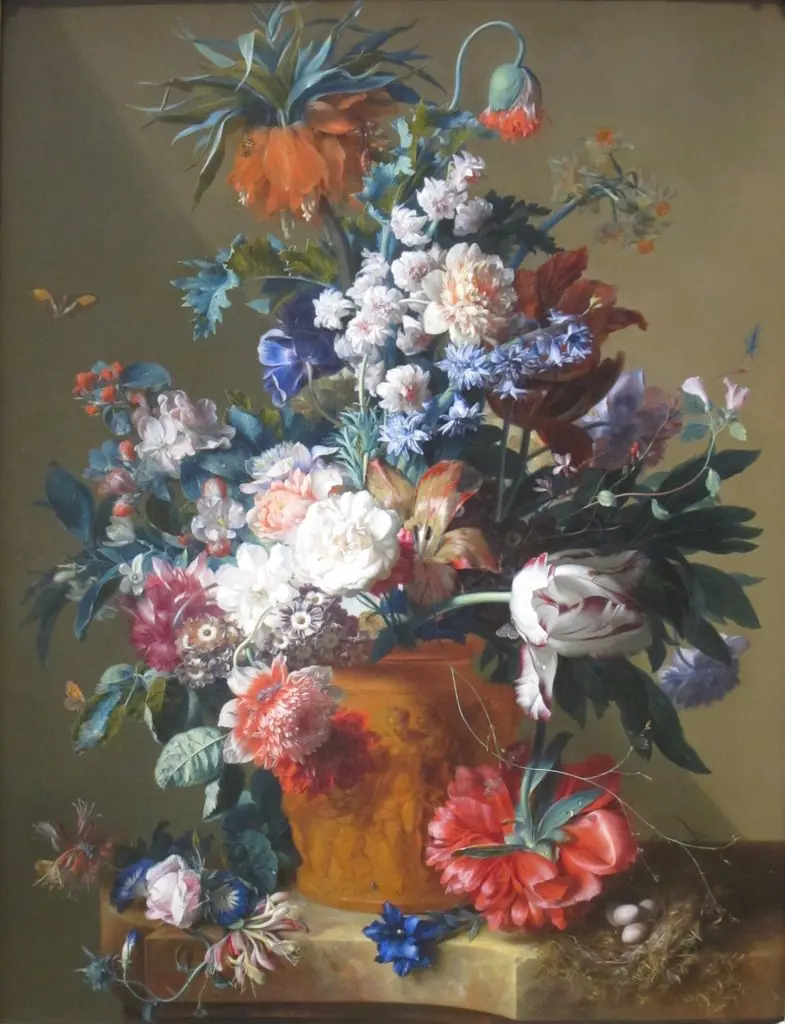
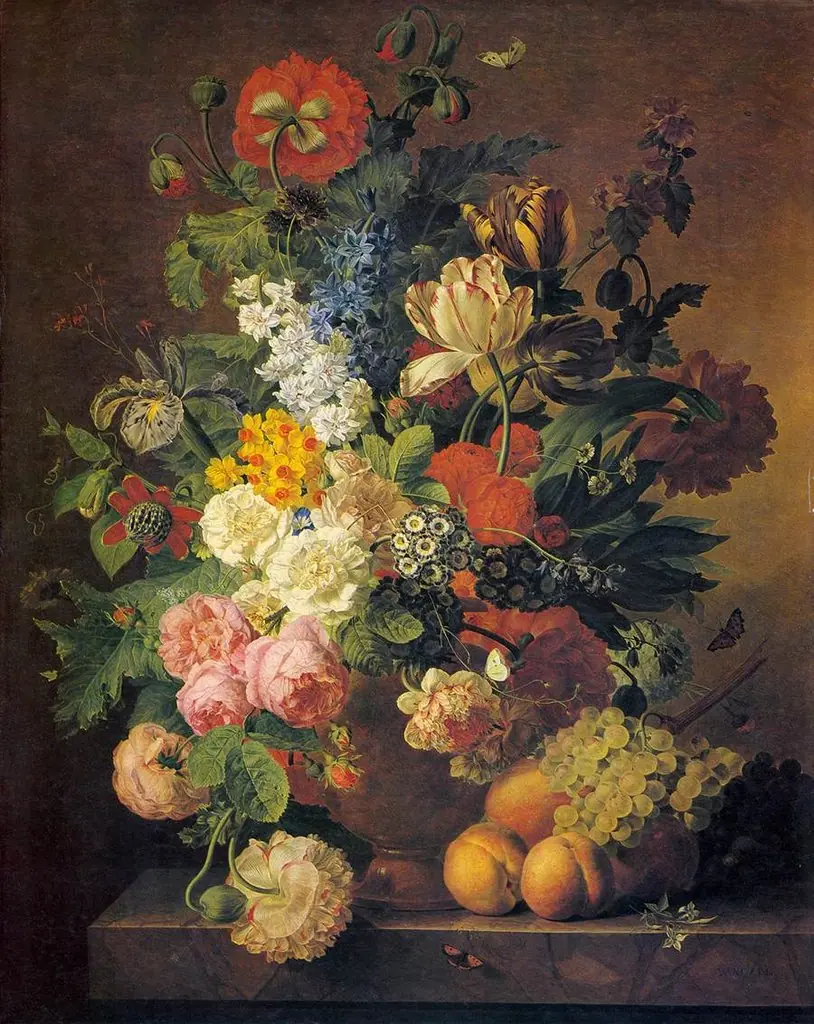
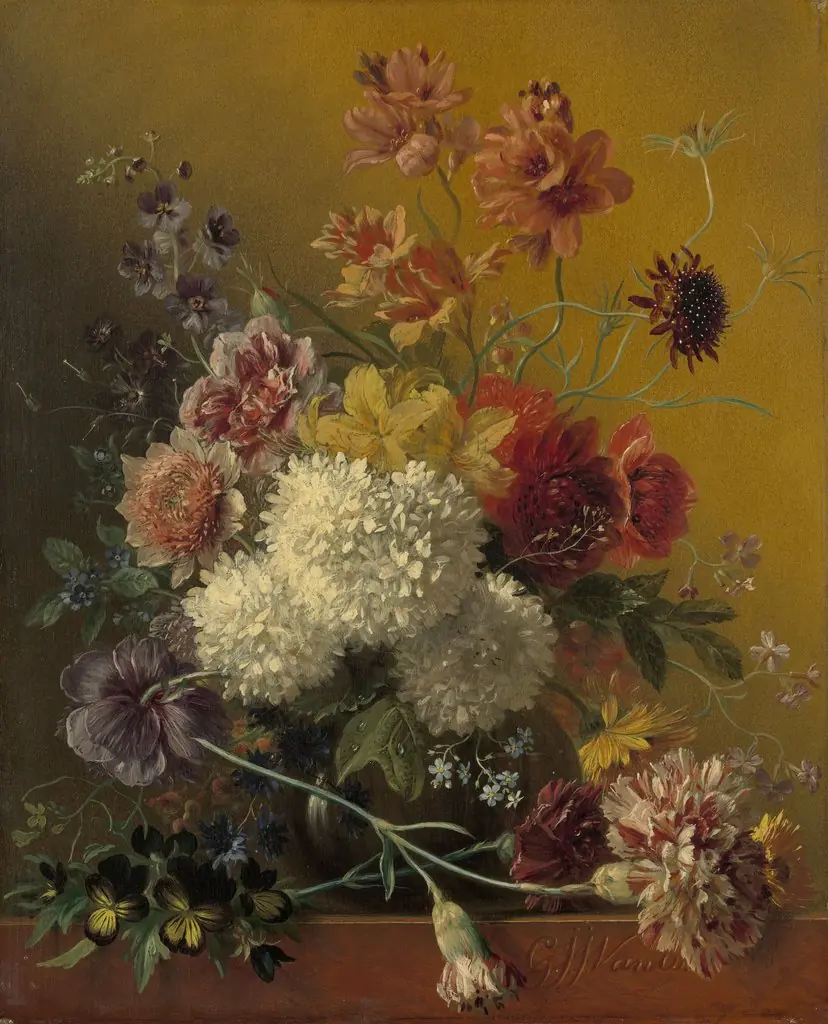
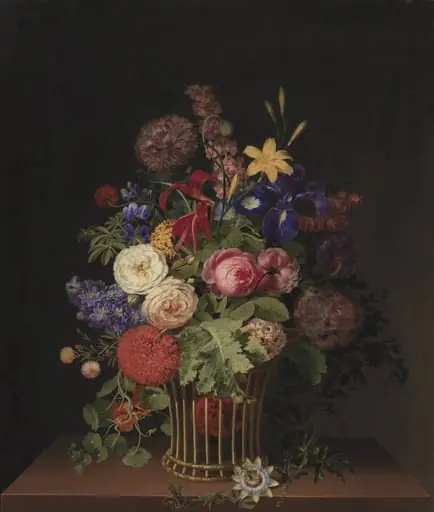
Fleurs dans un vase et branche de prunier sur une tablette de marbre is an oil painting by Élise Bruyère. It dates from 1817 and is held in the collection of the Museum of Fine Arts of Lyon.
About this work
Overview
The work reflects her focus on natural subjects, rendered without theatricality or idealization, grounded in observation rather than ornament.
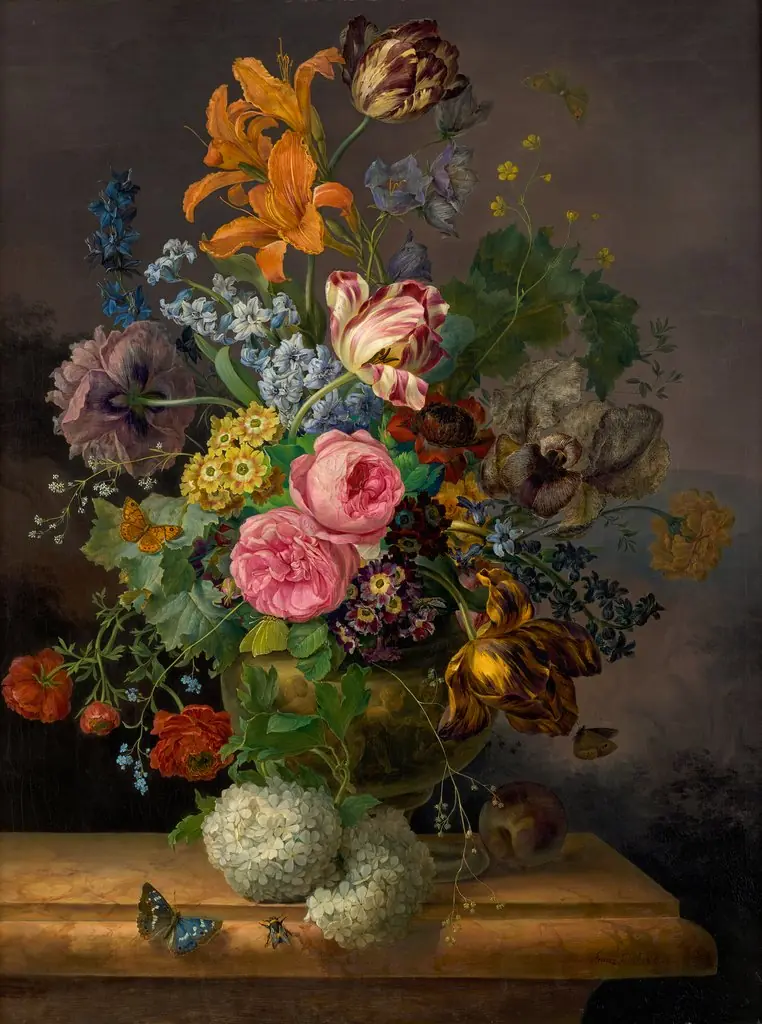
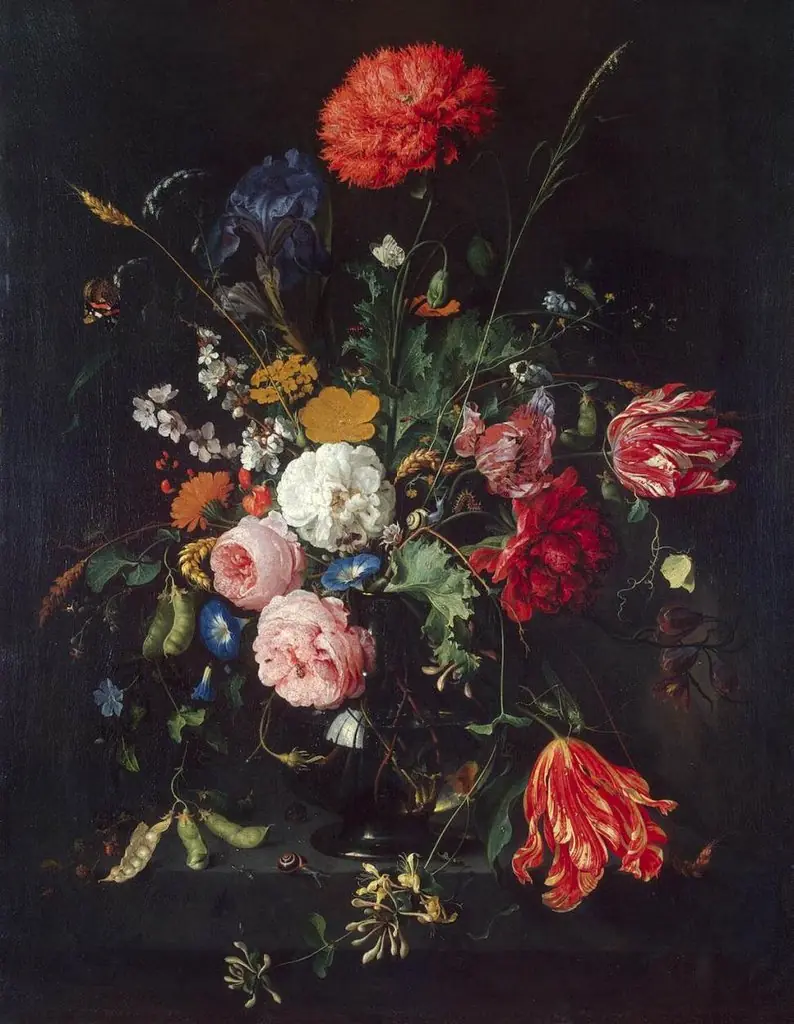
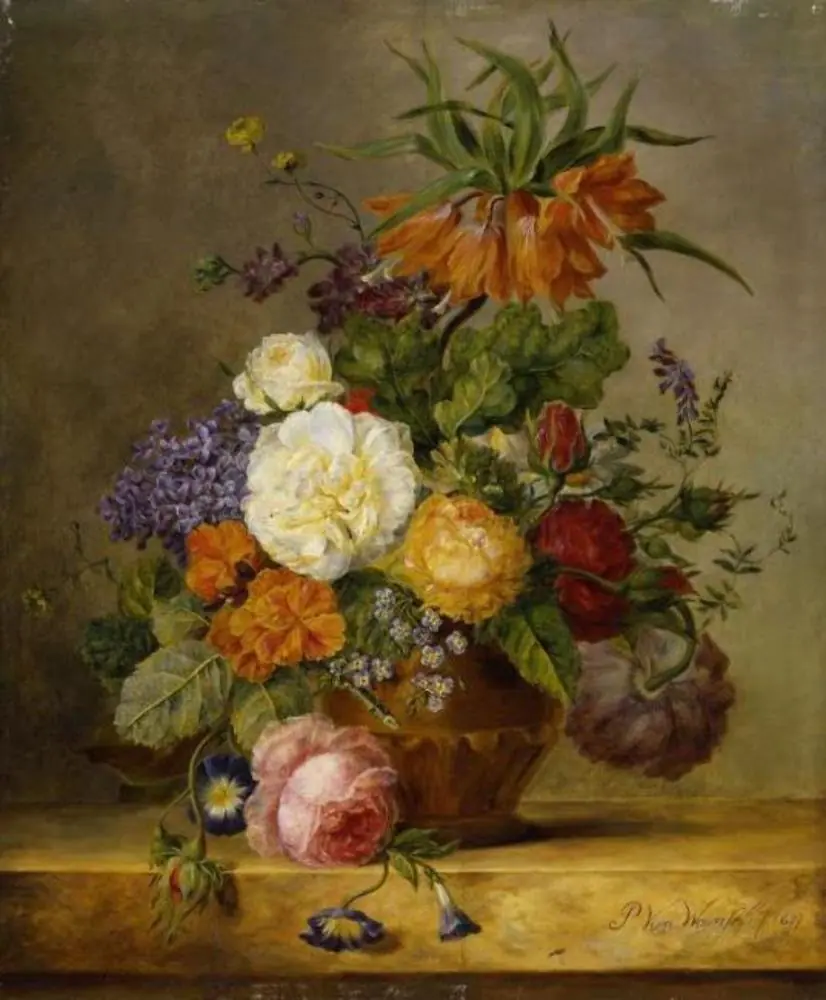
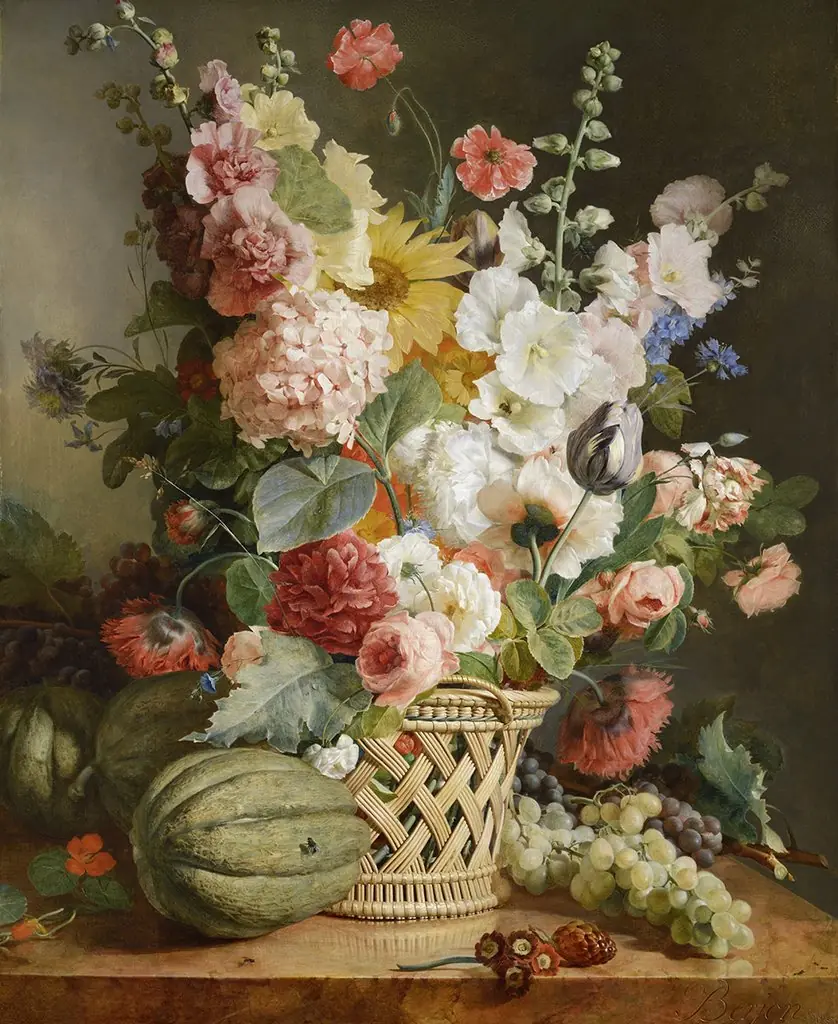
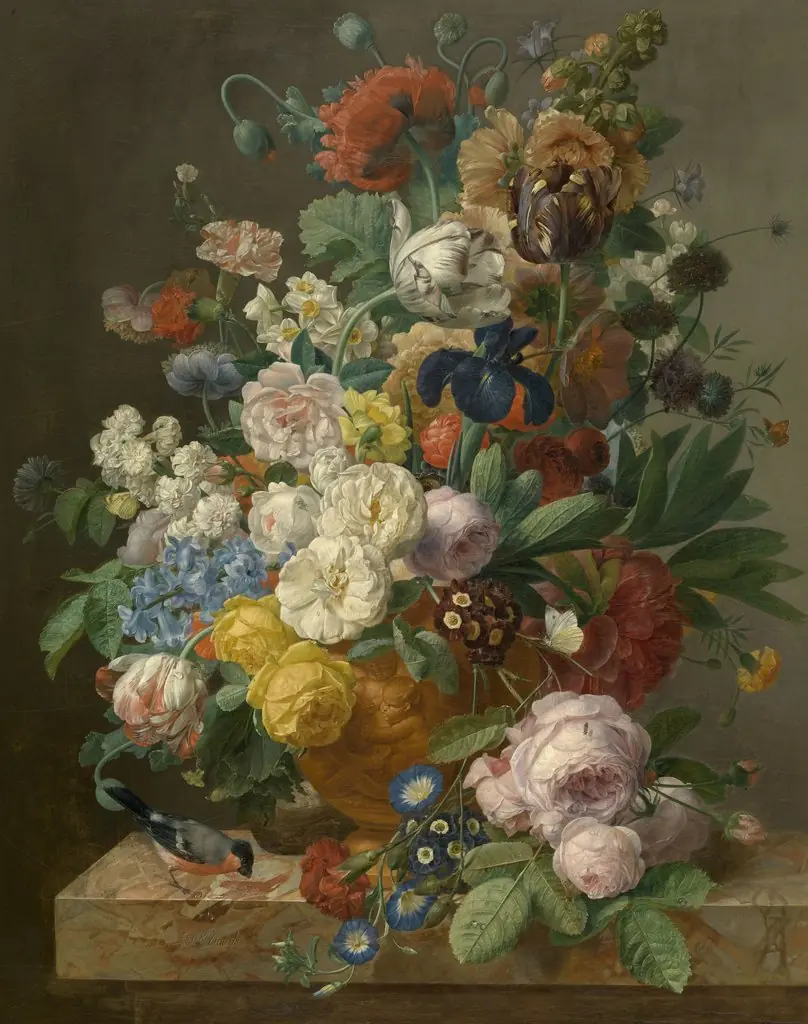
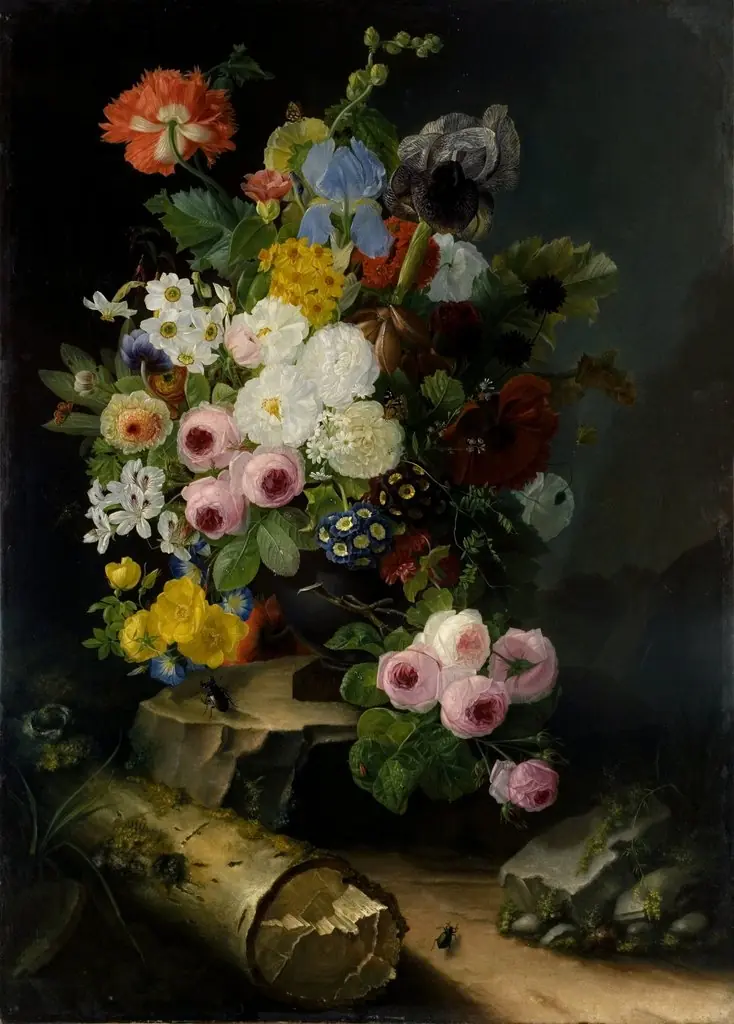
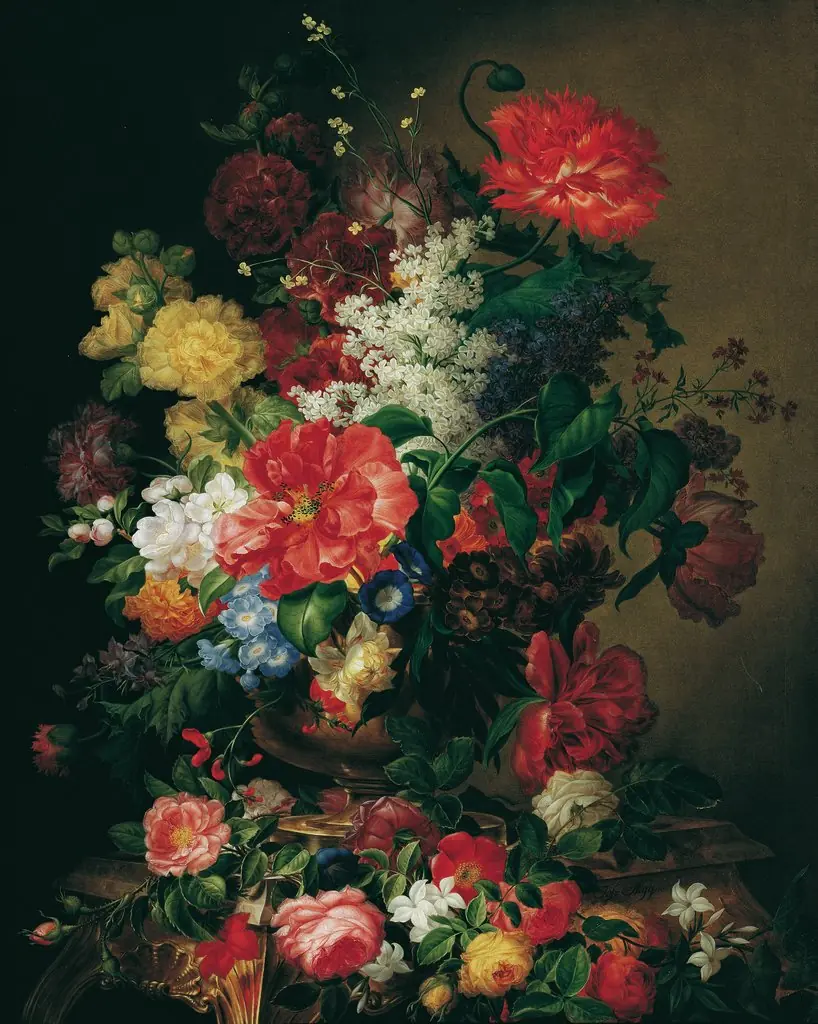
Painted in 1817 by French artist Élise Bruyère, this oil on canvas still life presents a vase of mixed blossoms and a single branch of plum alongside a marble surface. Bruyère, trained in the traditions of botanical precision, captures the quiet arrangement with careful attention to form and texture. The work reflects her focus on natural subjects, rendered without theatricality or idealization, grounded in observation rather than ornament.
Subject & Meaning
The composition centers on a variety of seasonal flowers—red, pink, yellow, and purple—interspersed with green stems and leaves, alongside a slender plum branch. These elements, chosen for their transient beauty, suggest themes of ephemerality and quiet renewal. The marble slab, cool and solid, contrasts with the organic softness of the flora, subtly reinforcing the tension between nature and the human-made environment.
Technique & Style
Bruyère employs fine brushwork to render each petal, leaf, and stem with distinct texture and tonal variation. Light falls softly across the surfaces, creating subtle highlights and shadows that enhance volume without dramatic contrast. The brown ceramic vase and dark background frame the blooms without distraction, allowing the viewer’s attention to remain fixed on the nuanced details of the flora, characteristic of her Realist approach.
History & Provenance
Created in 1817, the painting entered the collection of the Museum of Fine Arts of Lyon, where it remains today. Bruyère, daughter of illustrator Jean-Jacques-François Le Barbier and a student of Jean-Baptiste Jacques Augustin and Jan Frans van Dael, was active in Parisian artistic circles during the early 19th century. Her still lifes were recognized for their technical discipline, though few of her works survive in public collections.
Context
In early 19th-century France, still life painting was often dismissed as minor compared to history or portraiture. Yet artists like Bruyère elevated the genre through meticulous observation, aligning with broader Realist tendencies. Her training under established floral painters and her gender placed her within a small but significant group of women who sustained the tradition of naturalistic still life during a period when institutional recognition remained limited.
Legacy
Bruyère’s work contributes to a quiet but persistent lineage of female artists who refined the depiction of natural forms in the 19th century. While not widely known today, her precision and restraint offer insight into the understated aesthetic values of her time. The survival of this painting in a major French museum underscores its role as a representative example of domestic, observational art from the period.
Artist & collection
Artist
Élise Bruyère (1776–1847) was a French painter who specialized in portraits and floral still lifes.