Artwork
Plowing
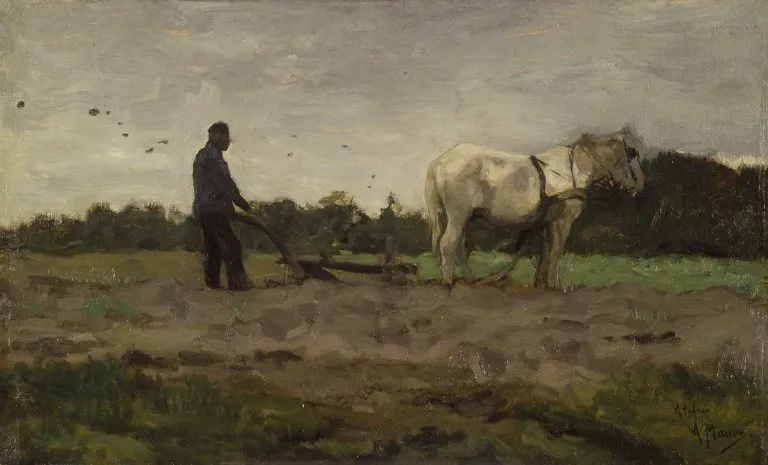
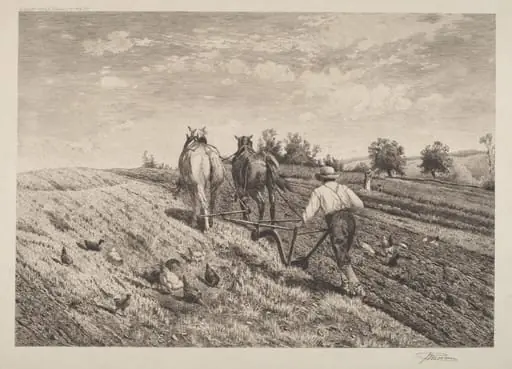
Plowing is an oil painting by the Impressionist artist Anton Mauve. It is held in the collection of the Brooklyn Museum.
About this work
Overview
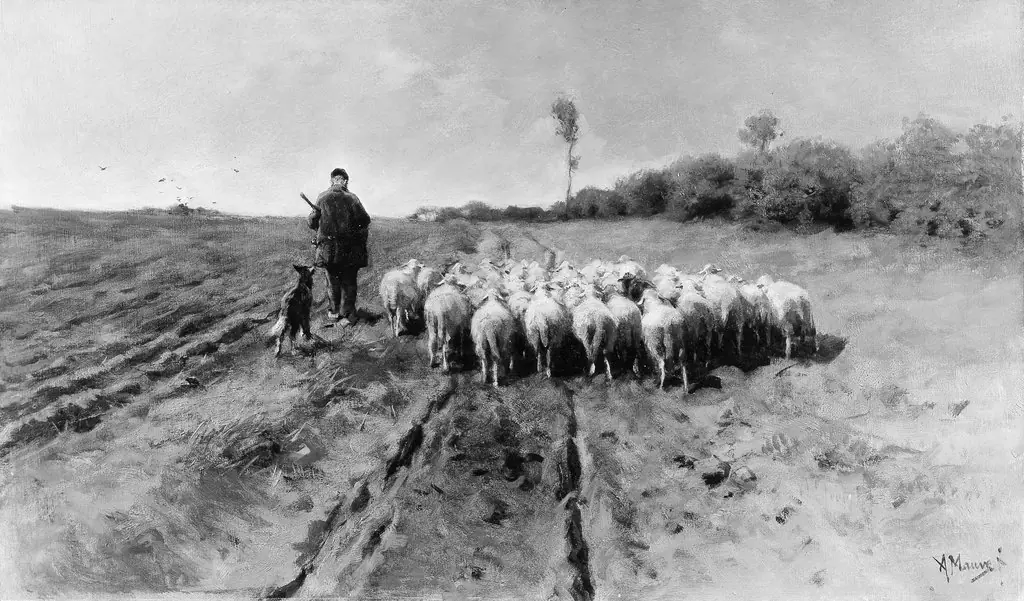
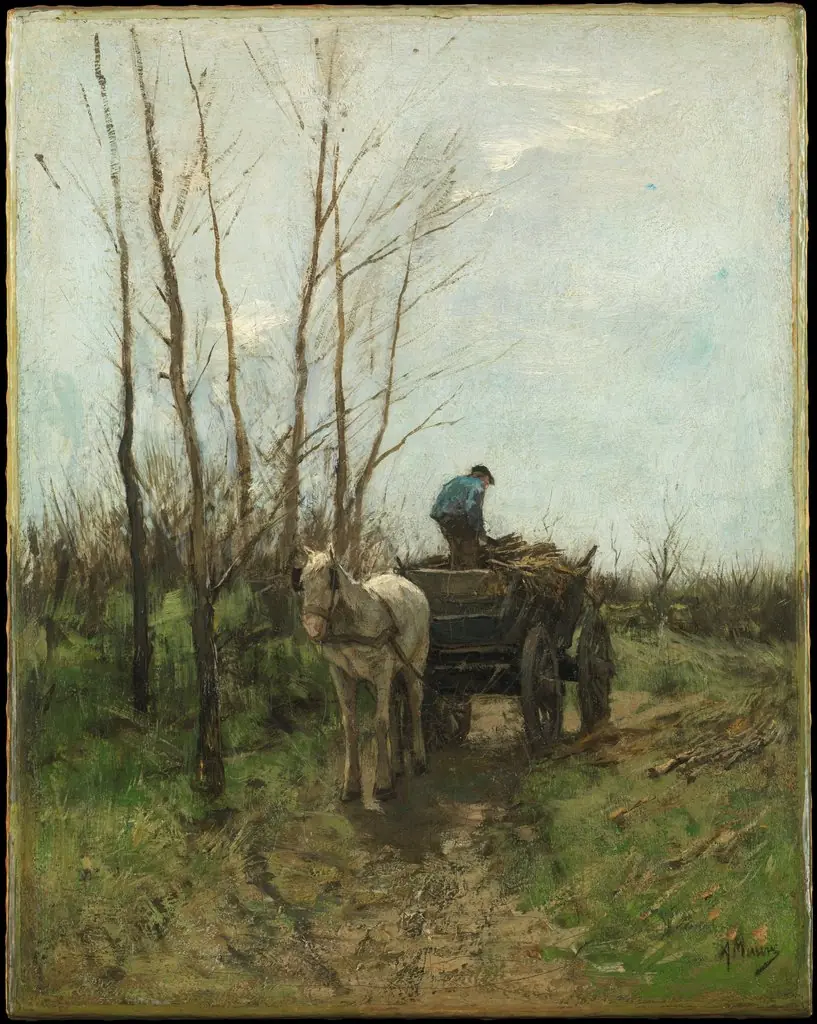
Created in 1893, *Plowing* is an oil painting by Anton Mauve, a prominent figure of the Dutch Hague School known for his realist approach to countryside scenes. The work portrays a solitary farmer guiding a plow drawn by a white horse across a brown field, set beneath a muted sky and a line of distant trees.
Subject & Meaning
The composition centers on a laborer in dark attire, his posture emphasizing the physical effort of tilling the land. By focusing on the act of plowing, Mauve highlights the dignity of agricultural work and the intimate connection between farmer and animal, reflecting the everyday reality of rural Dutch life in the late nineteenth century.
Technique & Style
Mauve employs a restrained palette of grays, browns, and subdued greens, lending the scene a somber atmosphere. Loose, fluid brushstrokes convey movement in the horse’s harness and the freshly turned soil, while the softened edges of the background trees suggest a fleeting, atmospheric quality characteristic of his landscape practice.
History & Provenance
After its completion, the painting entered the market for American collectors who favored Mauve’s depictions of agrarian subjects. It eventually became part of the Brooklyn Museum’s collection, where it remains on display as an example of the artist’s contribution to realist depictions of labor and his influence on contemporaries such as his cousin‑in‑law, Vincent van Gogh.
Artist & collection
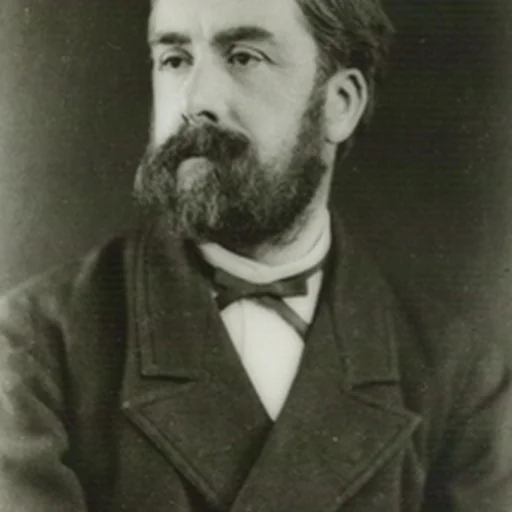
Artist
Anthonij "Anton" Rudolf Mauve (Dutch pronunciation: ; 18 September 1838 – 5 February 1888) was a Dutch realist painter who was a leading member of the Hague School.