Artwork
Return of the Flock
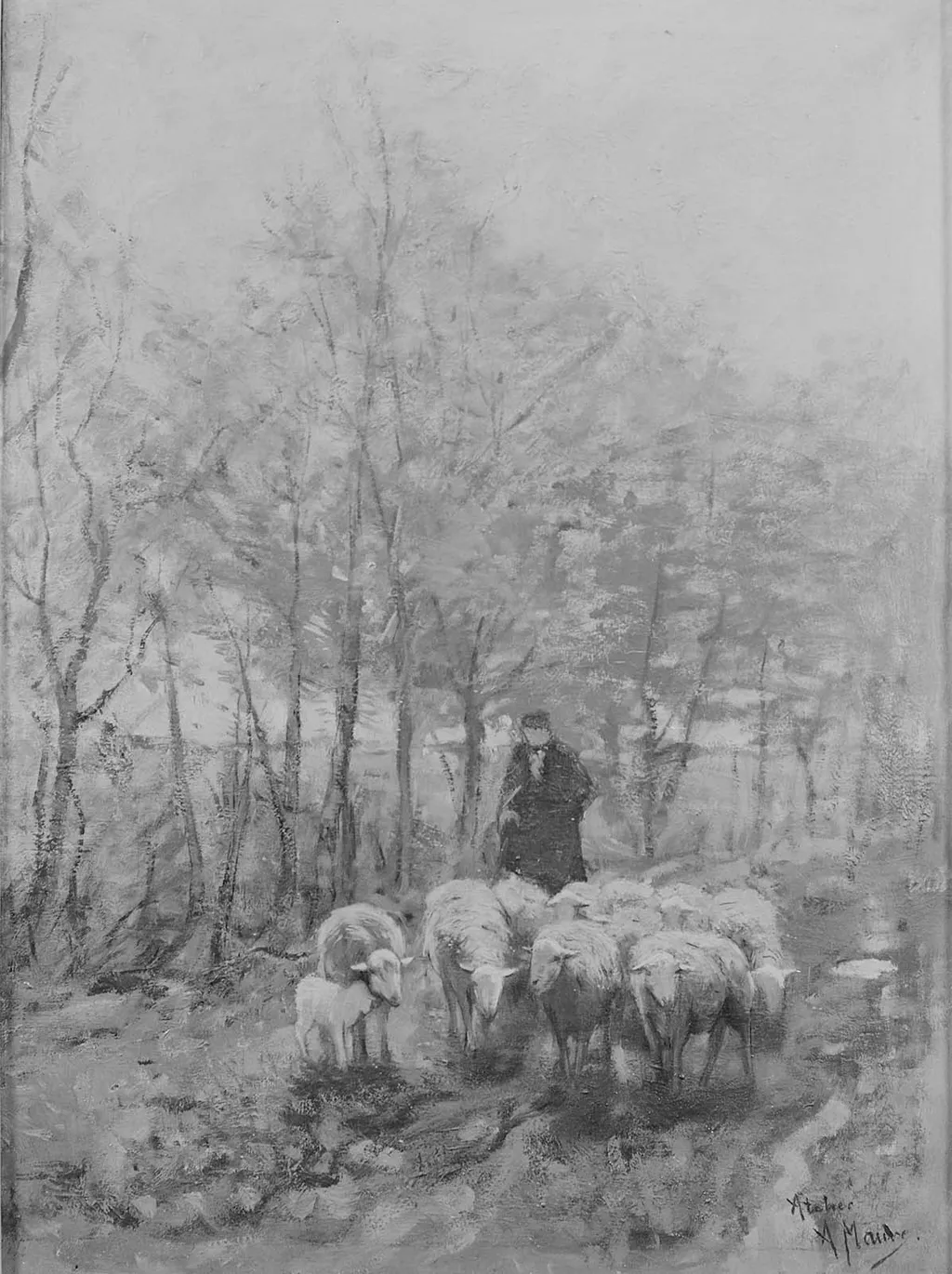
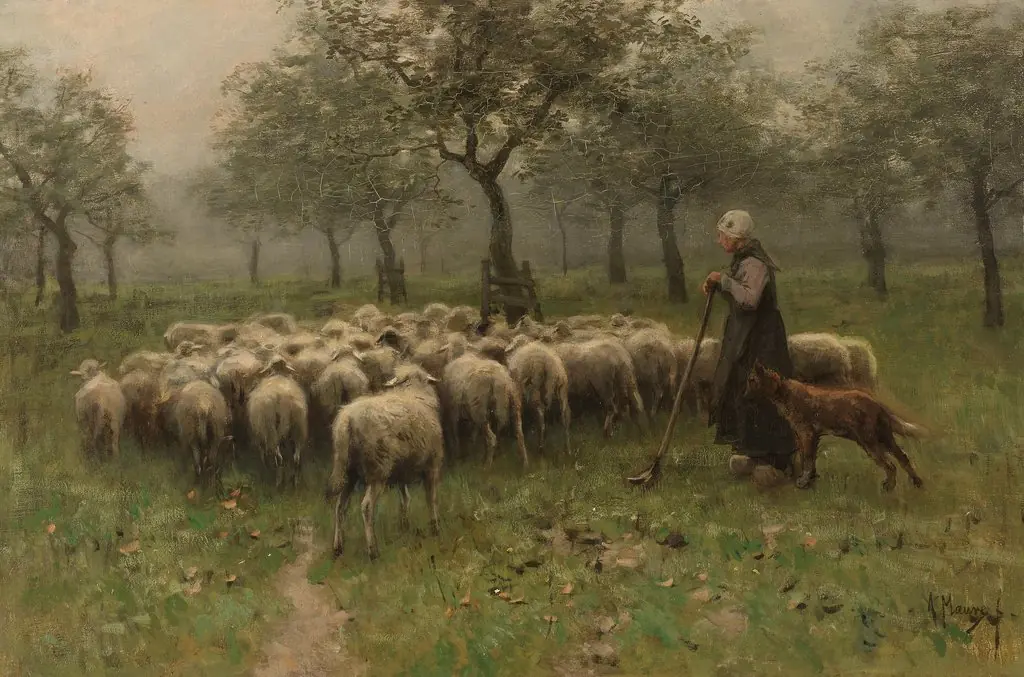
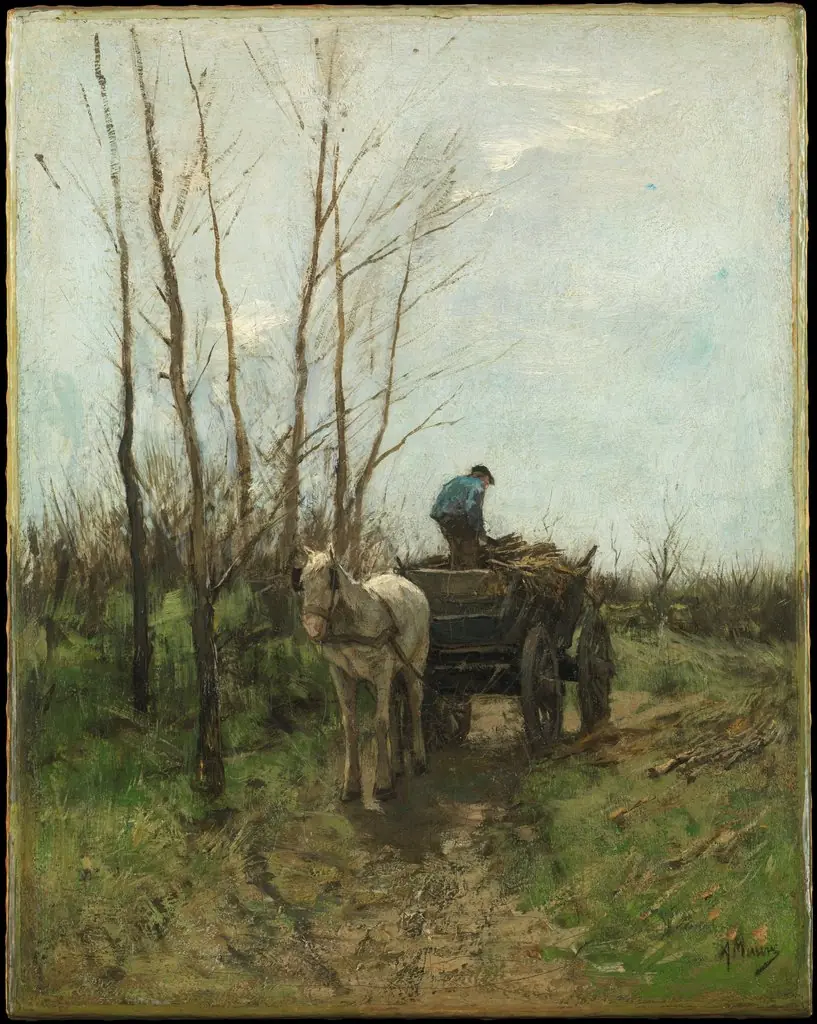
Return of the Flock is an oil painting by the Hague School Movement artist Anton Mauve. It dates from 1873 and is held in the collection of the Museum of Fine Arts Boston.
About this work
Overview
As a central figure in the Hague School, Mauve focused on ordinary scenes rendered with sensitivity to natural light and seasonal atmosphere.
Anton Mauve painted *Return of the Flock* circa 1873 in oil, capturing a quiet moment of rural life in the Dutch countryside. As a central figure in the Hague School, Mauve focused on ordinary scenes rendered with sensitivity to natural light and seasonal atmosphere. The work exemplifies his commitment to depicting labor and landscape without idealization, reflecting a broader 19th-century interest in authentic, unembellished rural existence.
Subject & Meaning
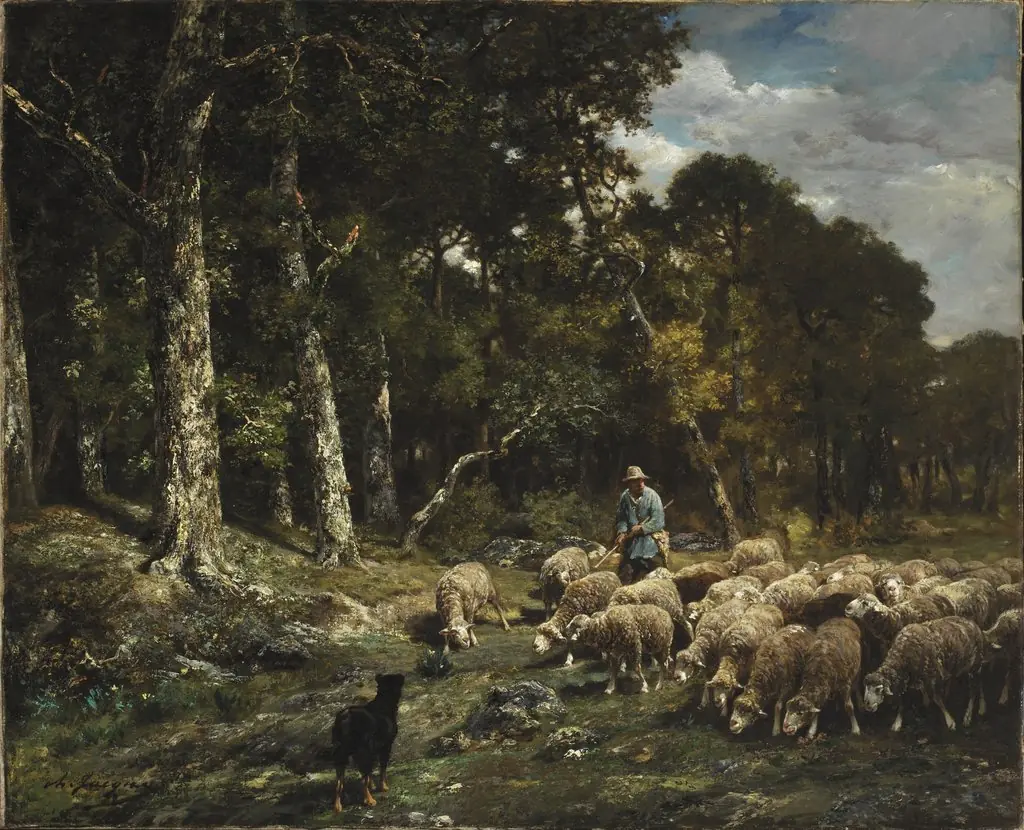
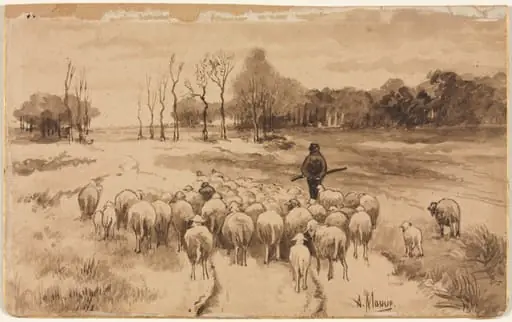
The painting portrays a shepherd in a dark coat guiding a flock of sheep through a wooded path. The figures are modest and unremarkable, emphasizing the quiet dignity of daily labor. The sheep, clustered in the foreground, suggest movement and group cohesion, while the man, slightly distant, blends into the environment. The scene conveys no narrative drama—only the steady rhythm of pastoral life, grounded in observation rather than symbolism.
Technique & Style
Mauve employed thick, textured brushwork—impasto—to render wool, earth, and foliage, giving the surface a tactile quality. His palette favors muted grays, browns, and soft greens, harmonizing with the overcast light of a northern autumn. The composition directs attention to the flock while allowing the forest to frame and contain the scene, reinforcing the Hague School’s interest in atmospheric unity and subtle tonal variation over dramatic contrast.
History & Provenance
Created during Mauve’s mature period, the painting was likely acquired by an American collector in the late 19th century, a time when Dutch realist works gained popularity abroad. It entered the Museum of Fine Arts, Boston’s collection through established channels of European art acquisition. Its presence there reflects the transatlantic appreciation for Hague School artists, whose quiet realism resonated with American audiences seeking authenticity in art.
Context
In the 1870s, Dutch artists of the Hague School turned away from academic idealism, favoring landscapes and peasant life observed directly from nature. Mauve’s focus on sheep and shepherds aligned with this movement, as rural laborers became symbols of national identity and moral simplicity. The painting’s subdued tones and open composition mirror contemporary shifts in European painting toward plein air practice and emotional restraint.
Legacy
Though less celebrated today than some of his contemporaries, Mauve’s influence endured through his teaching and his commitment to naturalism. *Return of the Flock* remains a representative example of how Hague School painters transformed mundane rural moments into quiet, enduring studies of light, texture, and place. Its preservation in a major American institution underscores its role in shaping international perceptions of Dutch realism.
Artist & collection
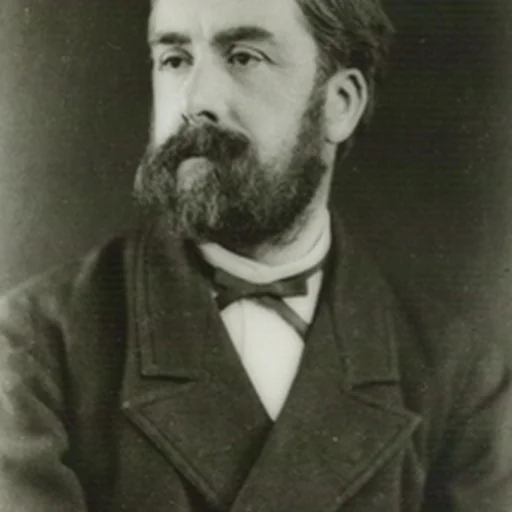
Artist
Anthonij "Anton" Rudolf Mauve (Dutch pronunciation: ; 18 September 1838 – 5 February 1888) was a Dutch realist painter who was a leading member of the Hague School.