Artwork
Shepherd with His Flock
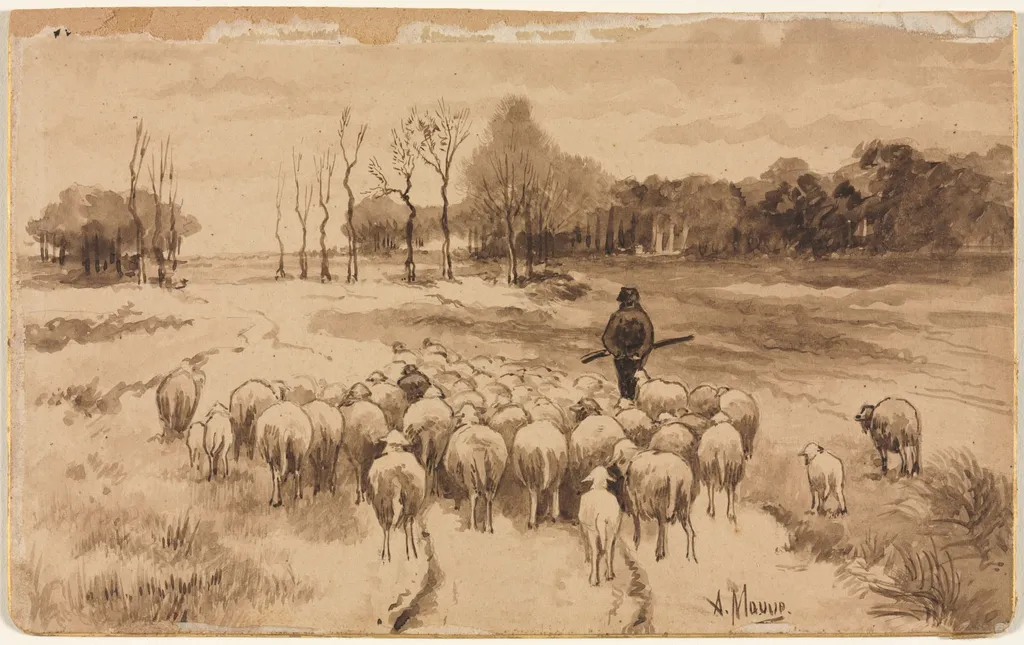
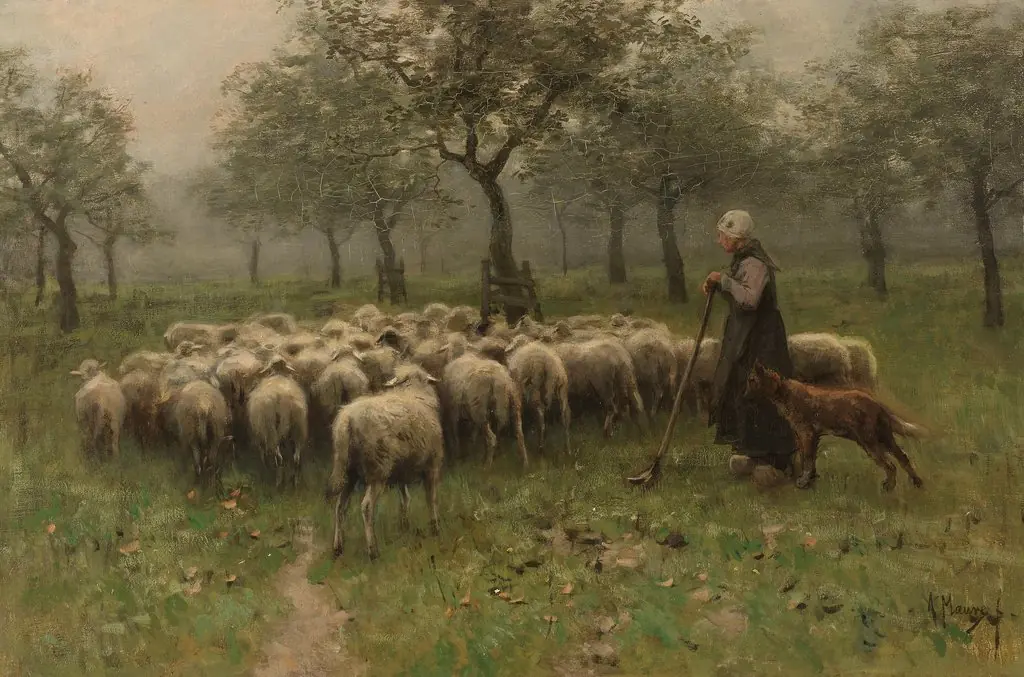
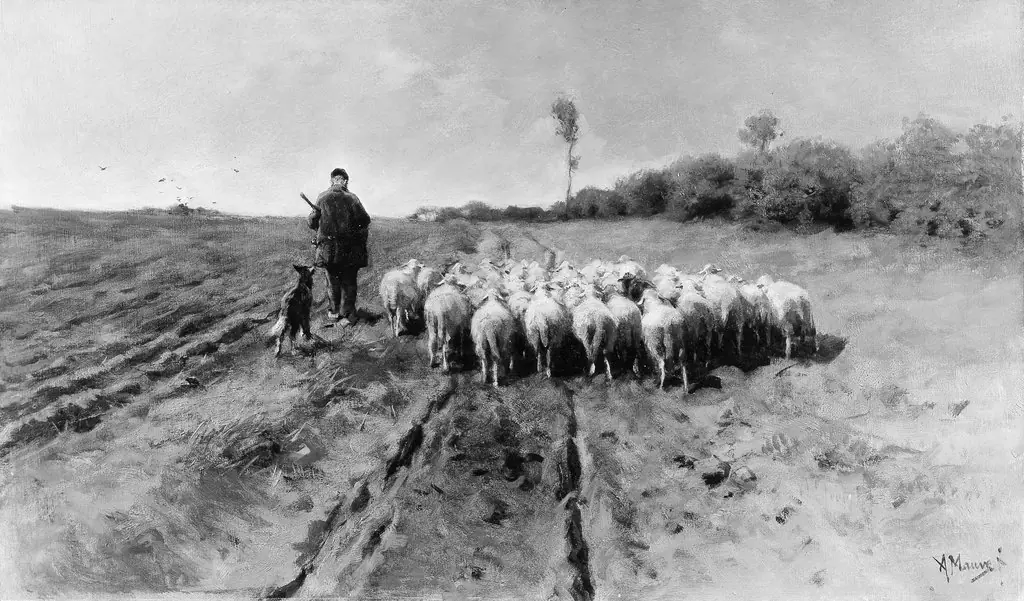
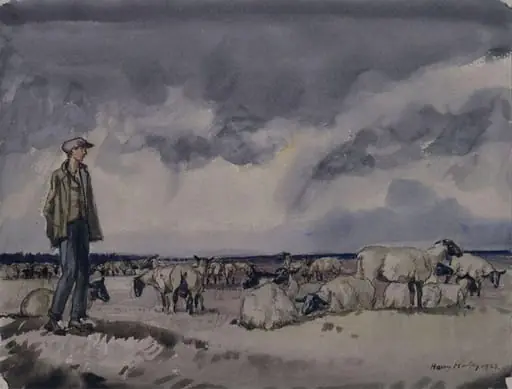
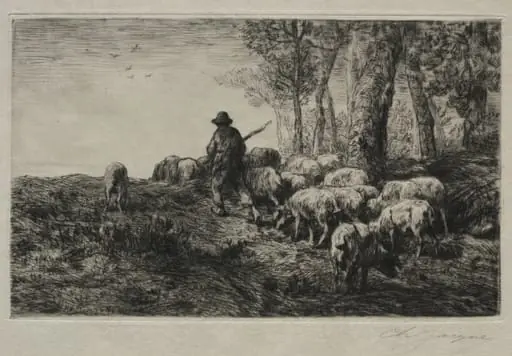
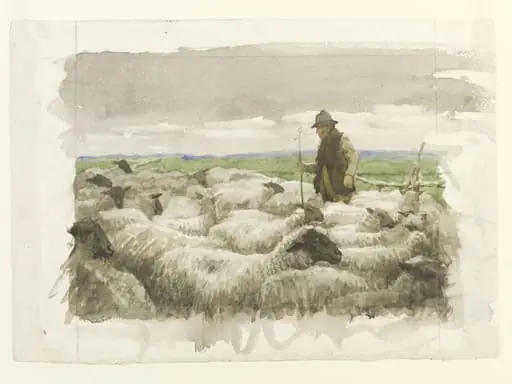
Shepherd with His Flock is a drawing by the Impressionist artist Anton Mauve. It dates from 1870 and is held in the collection of the Cleveland Museum of Art.
About this work
Overview
The work is a study in restraint, using minimal lines and muted tones to convey the stillness of a shepherd tending his flock in an open landscape.
Created around 1870, this drawing by Anton Mauve captures a quiet moment in rural Holland. As a central figure in the Hague School, Mauve focused on ordinary life with unembellished observation. The work is a study in restraint, using minimal lines and muted tones to convey the stillness of a shepherd tending his flock in an open landscape. Its modest scale and intimate subject reflect the artist’s commitment to realism over theatricality.
Subject & Meaning
The drawing portrays a solitary shepherd, staff in hand, standing among a group of sheep in a bare field. There is no narrative drama—only the quiet rhythm of daily labor. The absence of human interaction or dramatic lighting emphasizes the dignity of routine work. The scene suggests harmony between human and animal, grounded in the rhythms of nature rather than idealized pastoral fantasy.
Technique & Style
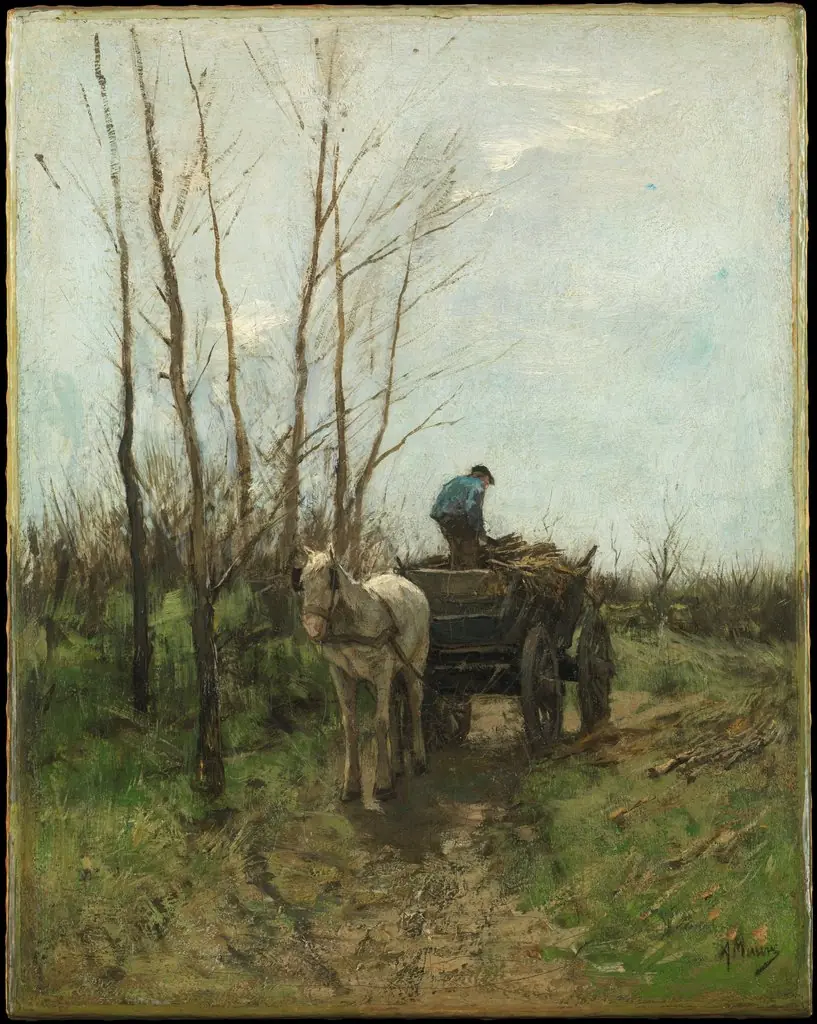
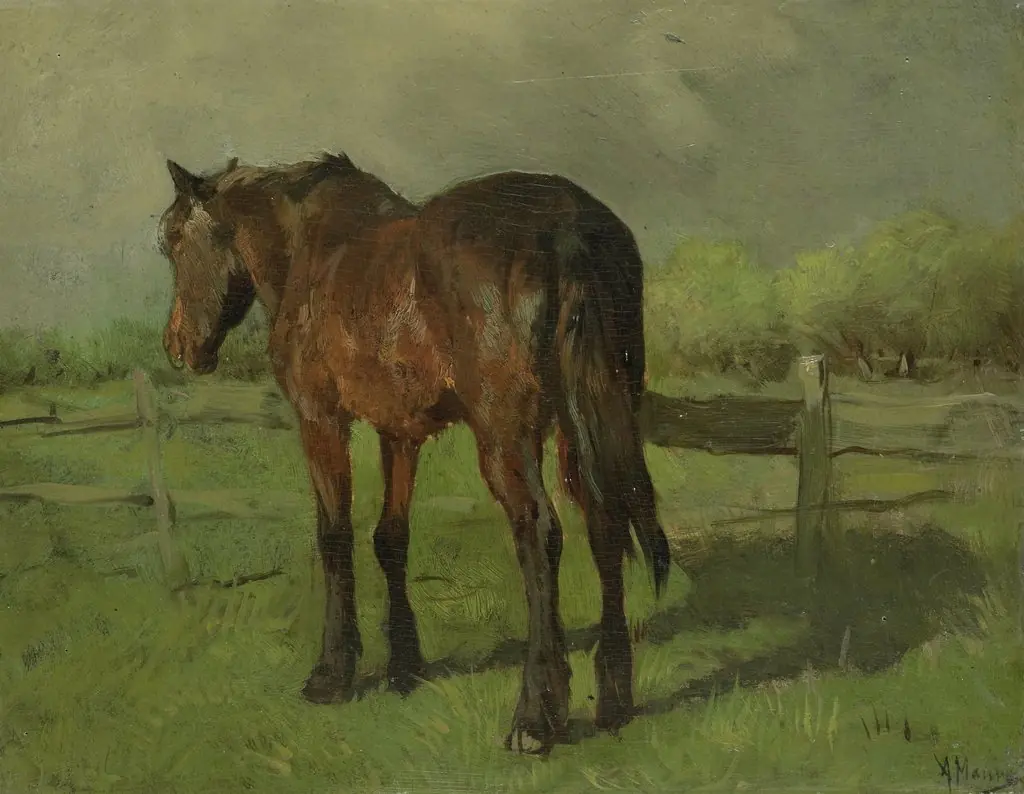
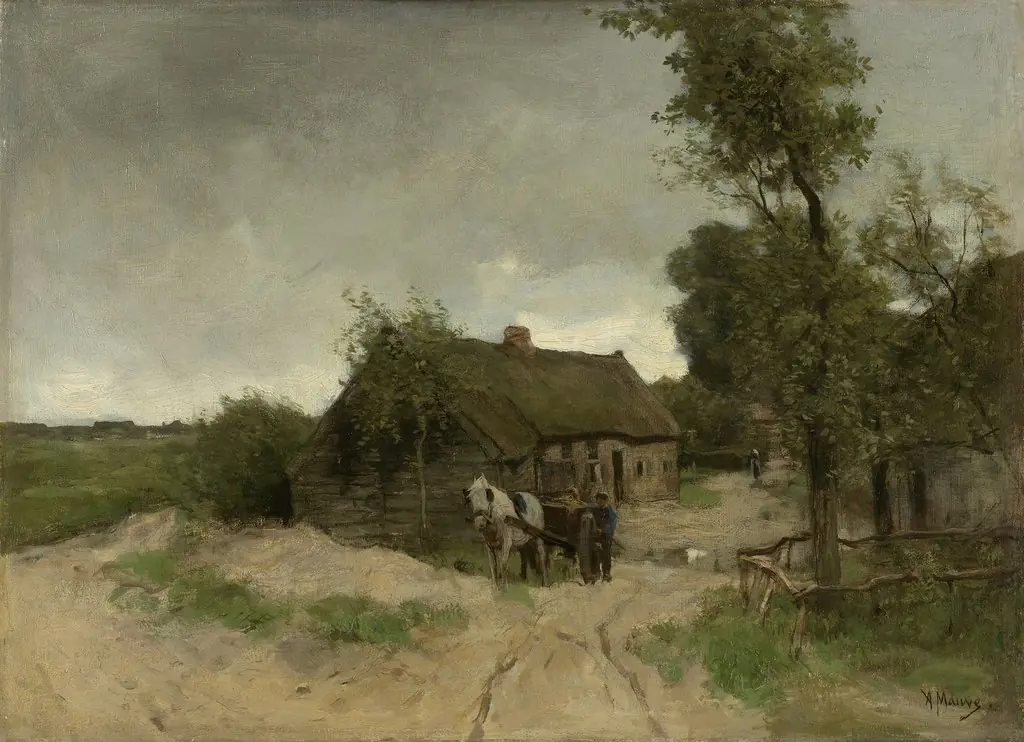
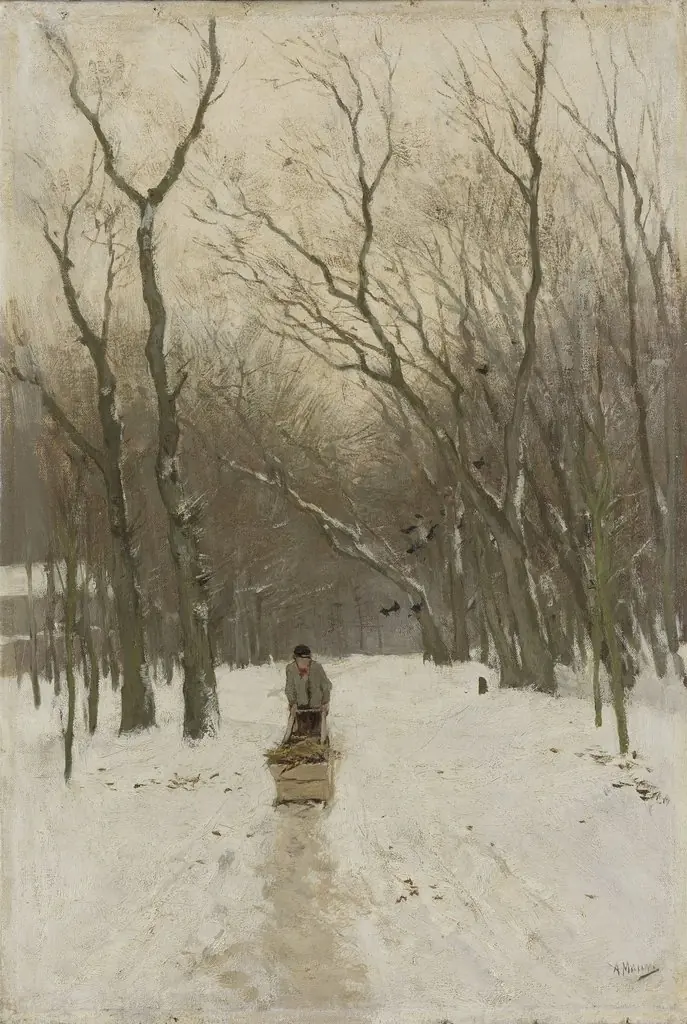
Mauve employed a restrained palette of browns, grays, and soft washes to evoke the muted tones of the Dutch countryside. The sketchlike quality, with light pencil and subtle ink lines, suggests immediacy and direct observation. The trees in the background are rendered with minimal detail, and the sky is hinted at with faint washes, reinforcing the work’s atmospheric simplicity and focus on texture over finish.
History & Provenance
The drawing dates from Mauve’s most productive period, when he was deeply engaged with rural subjects. While the exact provenance of this specific work is not documented, similar drawings from this era were collected by American patrons drawn to the Hague School’s unpretentious depictions of peasant life. Its survival as a standalone sketch indicates it was valued for its authenticity rather than as a preparatory study.
Context
In the late 19th century, Dutch artists like Mauve turned away from urban and historical themes to document the lives of rural laborers. This shift aligned with broader European movements toward realism and social observation. Mauve’s focus on shepherds and sheep reflected both regional traditions and a growing interest in the dignity of agricultural work, distinct from romanticized rural imagery of earlier generations.
Legacy
Mauve’s drawings, including this one, helped define the aesthetic of the Hague School—quiet, observational, and rooted in place. Though less celebrated than his paintings, his sketches reveal the foundation of his approach: patience, attention to light and texture, and respect for the unremarkable. His influence extended to younger artists, including Vincent van Gogh, who admired his truthful rendering of the natural world.
Own this work as a print
Artist & collection
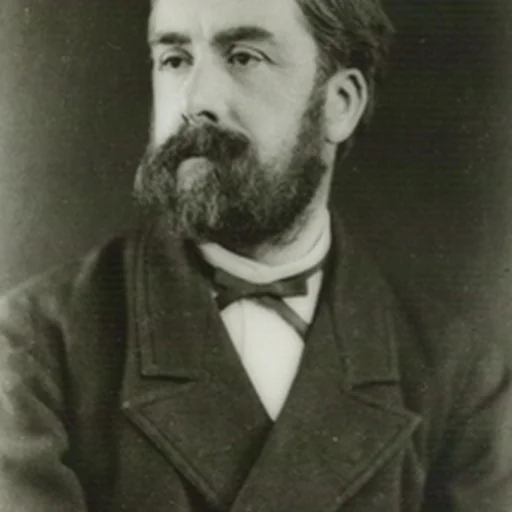
Artist
Anthonij "Anton" Rudolf Mauve (Dutch pronunciation: ; 18 September 1838 – 5 February 1888) was a Dutch realist painter who was a leading member of the Hague School.