Artwork
The Tow-path: No. 1
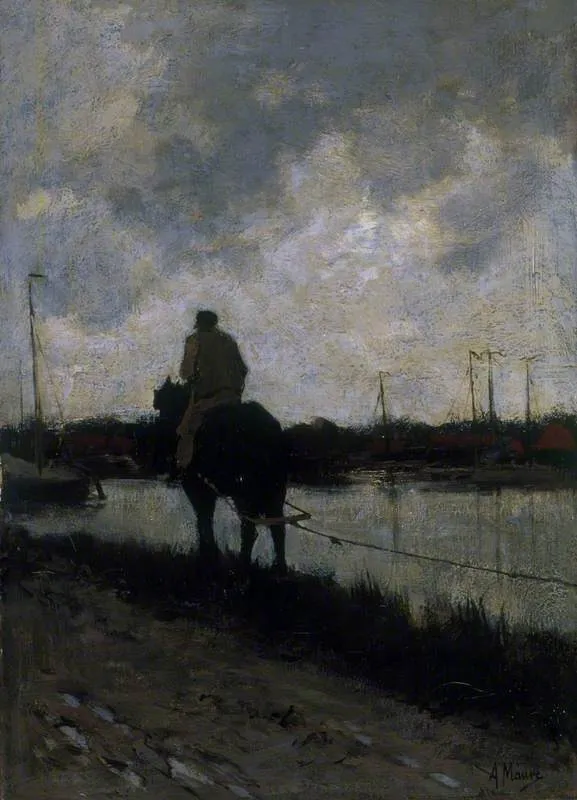
The Tow-path: No. 1 is an oil painting by the Impressionist artist Anton Mauve. It dates from 1873 and is held in the collection of the National Galleries Scotland. The Tow-path: No.
About this work
Overview
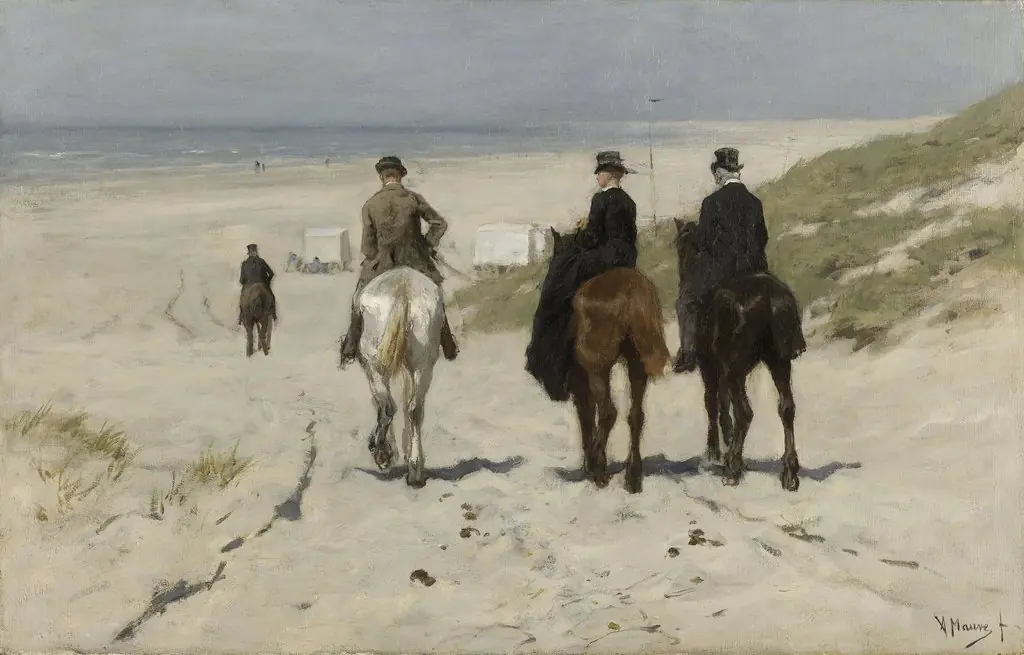
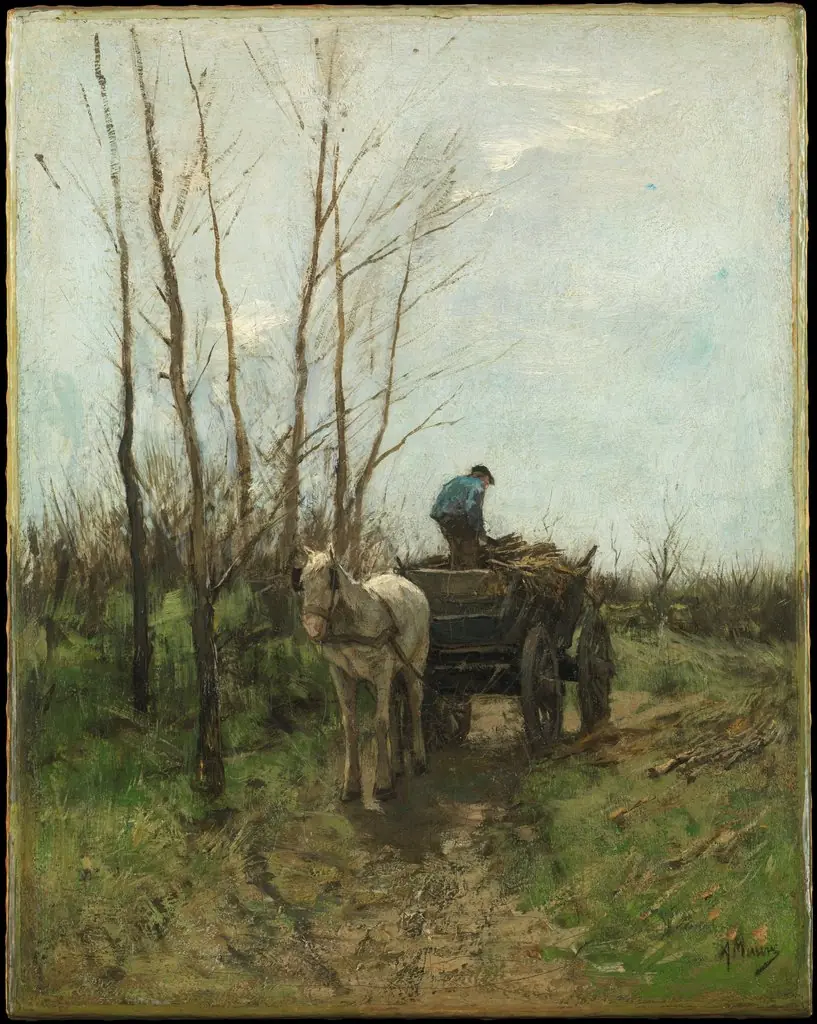
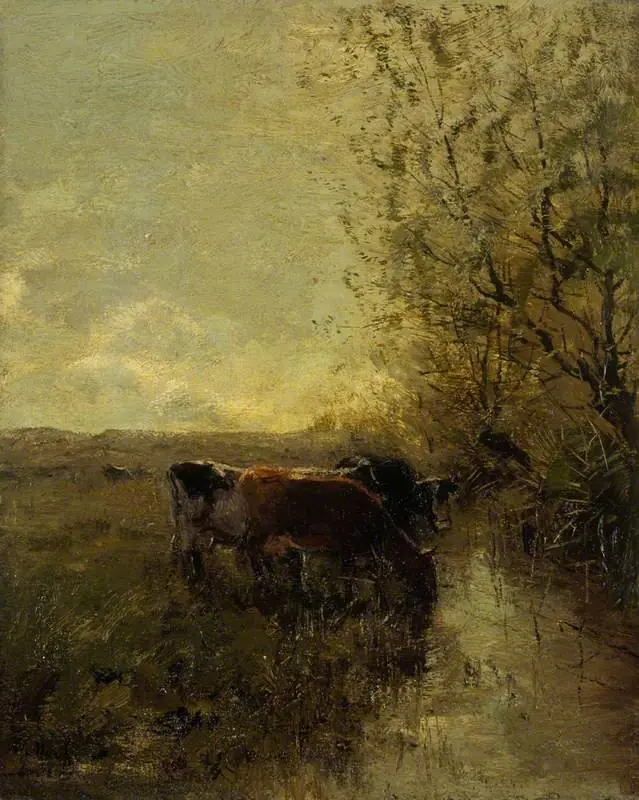
The Tow-path: No. 1 is an 1873 oil painting by Anton Mauve, a prominent Dutch realist and Hague School member. The serene scene depicts a man in a light-colored jacket and hat riding a dark horse along a towpath, set against a backdrop of trees and a cloudy sky.
Subject & Meaning
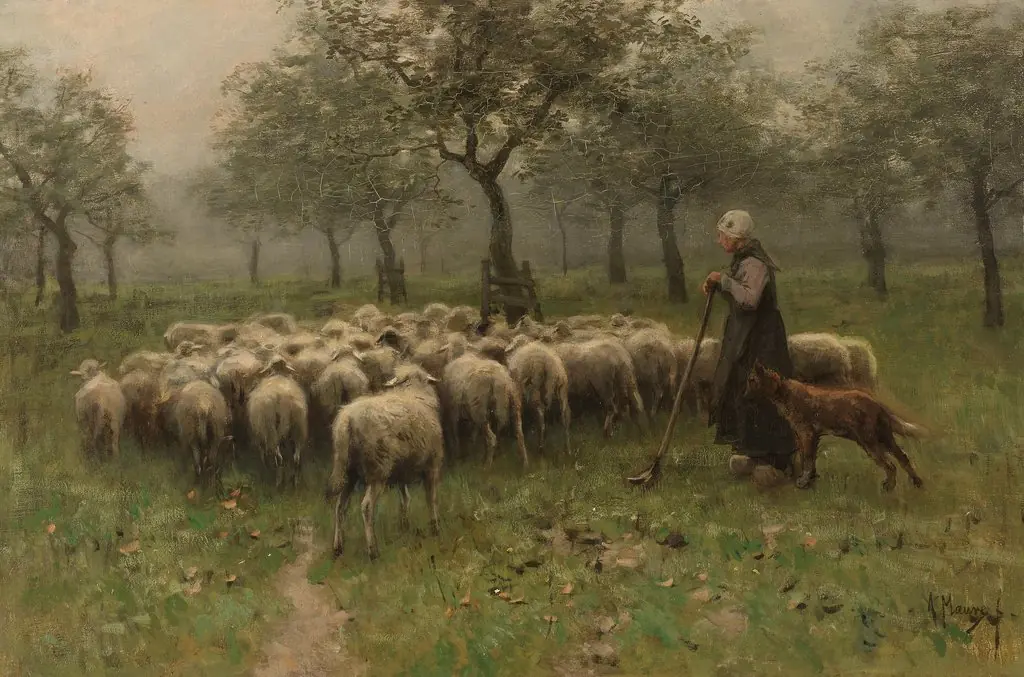
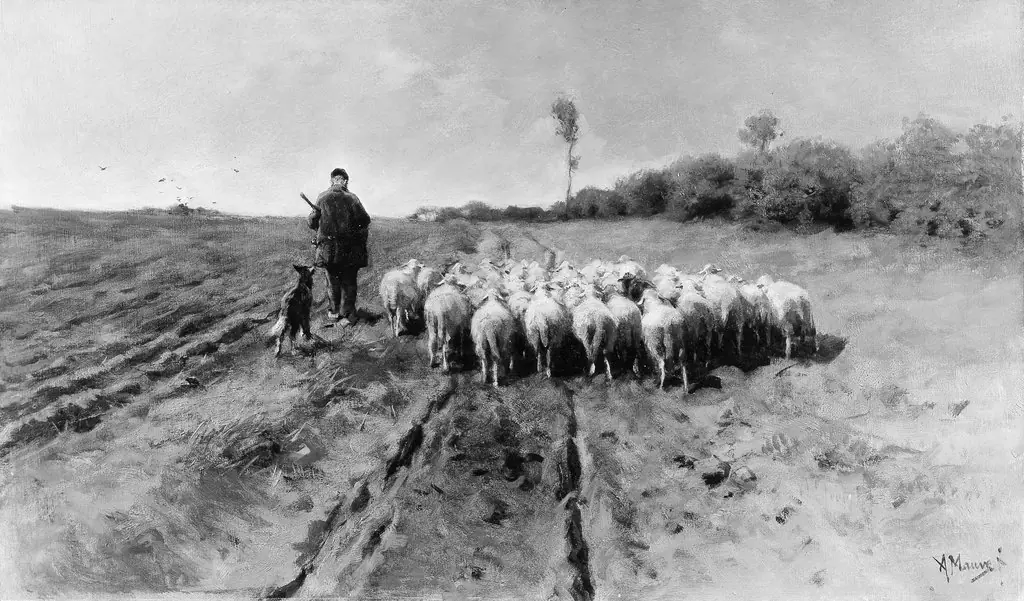
The painting focuses on an everyday rural subject, emphasizing the artist's interest in depicting laborers and pastoral life. The tranquil atmosphere reflects Mauve's ability to capture natural light and subtle, mundane moments.
Technique & Style
Mauve employed muted colors and soft brushstrokes to create a calm ambiance. The composition highlights the horse and rider, with the background subtly receding into the distance, showcasing his realist approach with nuanced light handling.
History & Provenance
Created in 1873, the painting aligns with the broader impressionist movement's emphasis on natural light, despite Mauve's realist classification. Notably, Mauve's work influenced his cousin-in-law, Vincent van Gogh.
Context
The Tow-path: No. 1 fits within Mauve's oeuvre of rural labor and pastoral themes, which were particularly popular among American collectors, especially his sheep paintings.
Legacy
While specific legacy details of this work are not highlighted, Mauve's overall influence on Dutch realist painting and his impact on Van Gogh contribute to the painting's historical significance.
Artist & collection
Artist
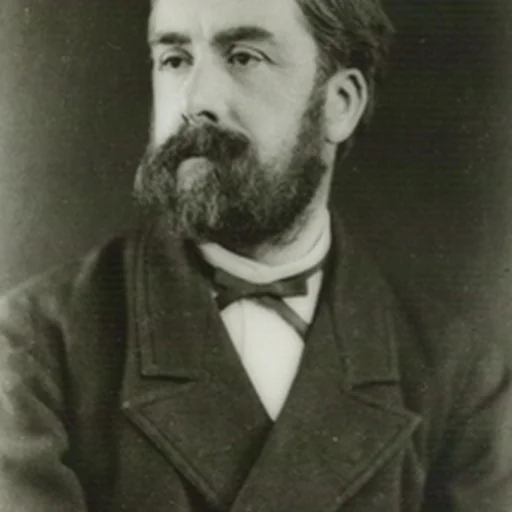
Anthonij "Anton" Rudolf Mauve (Dutch pronunciation: ; 18 September 1838 – 5 February 1888) was a Dutch realist painter who was a leading member of the Hague School.