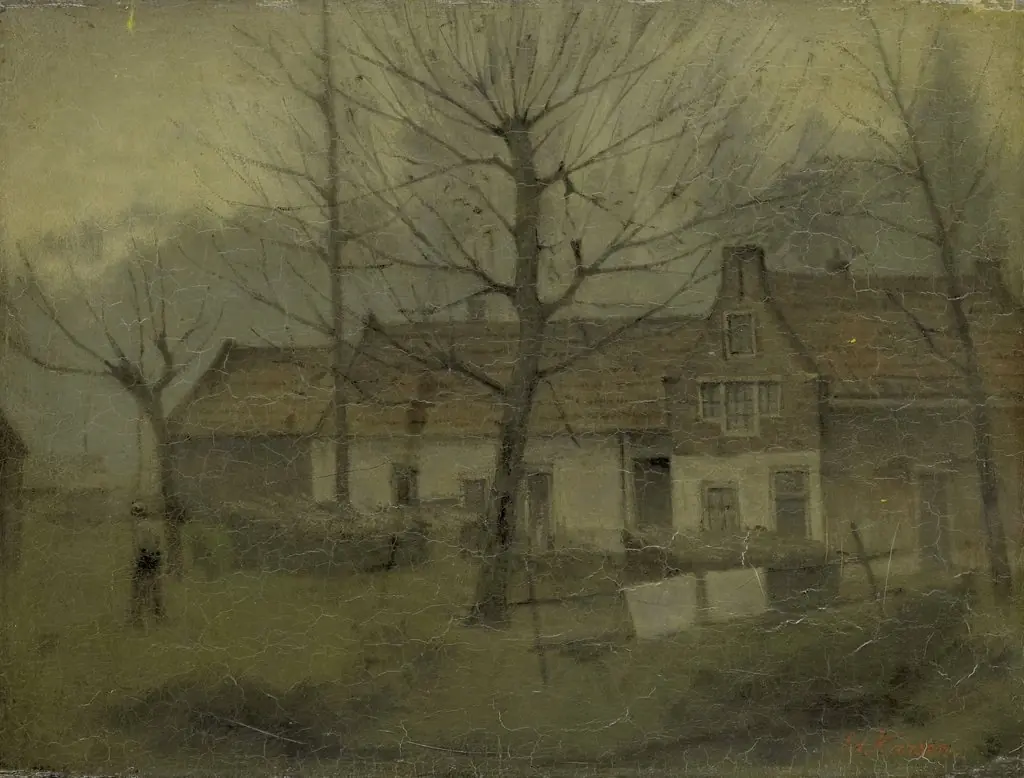
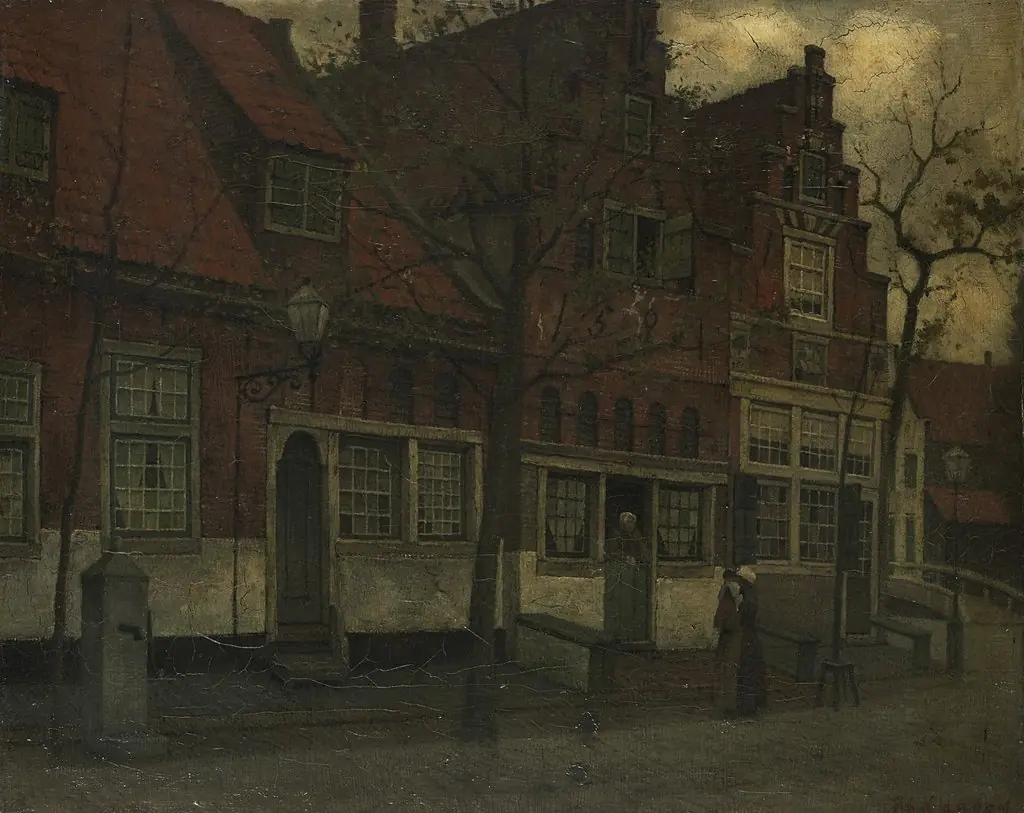
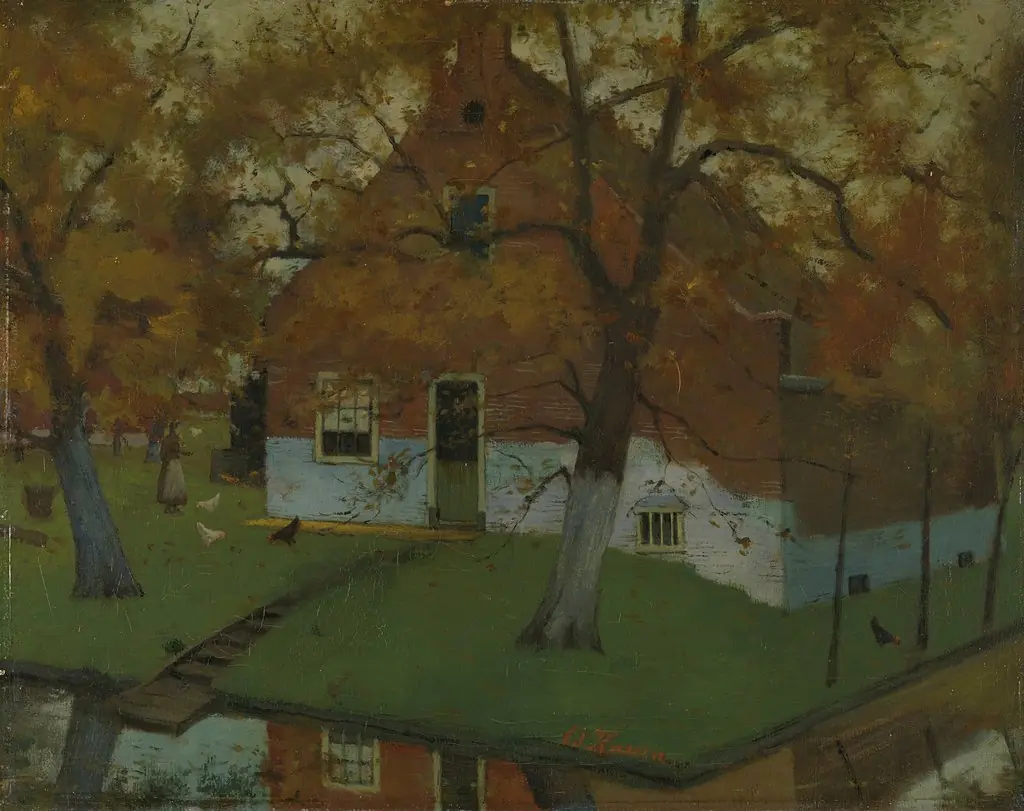
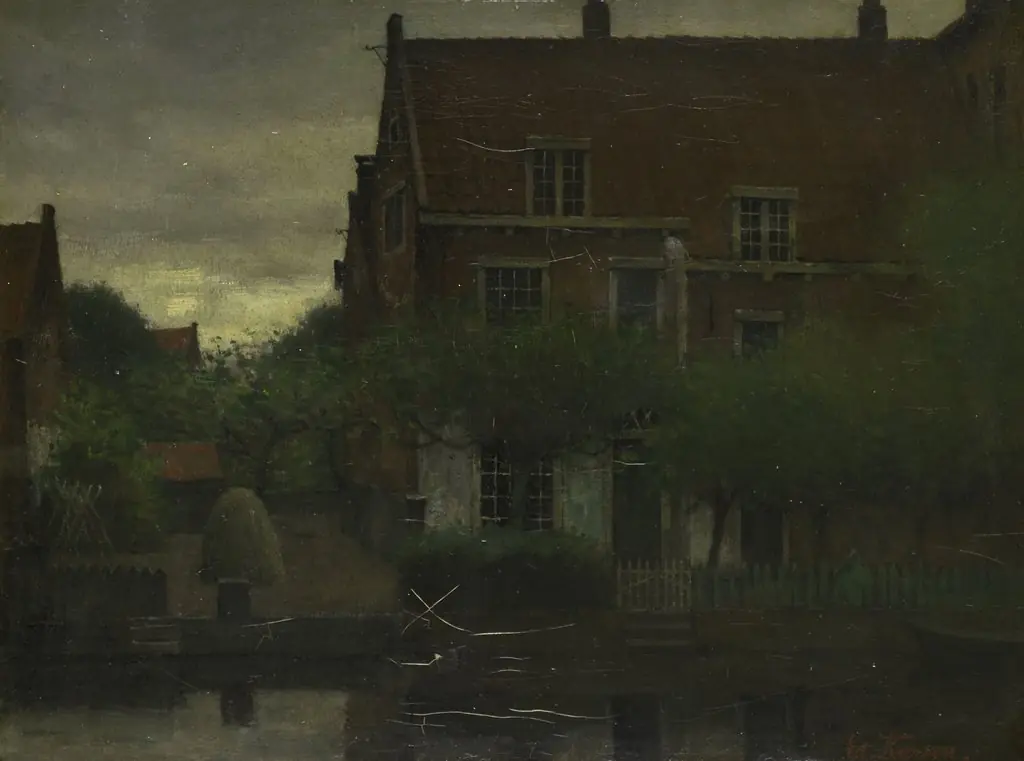
Artwork
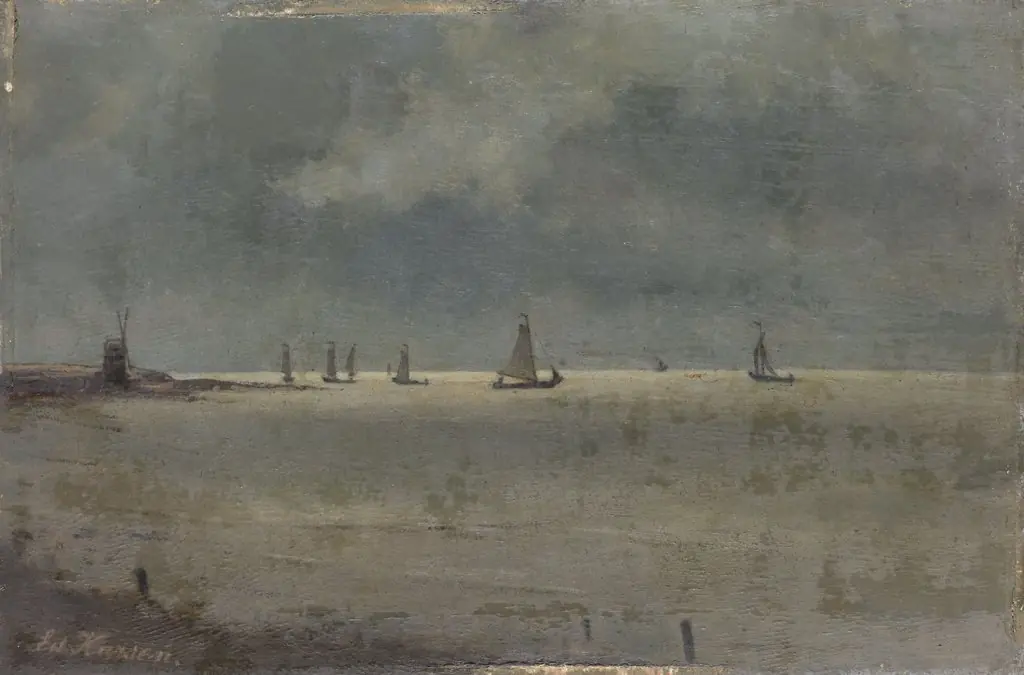
Watercourse with Sail Barges
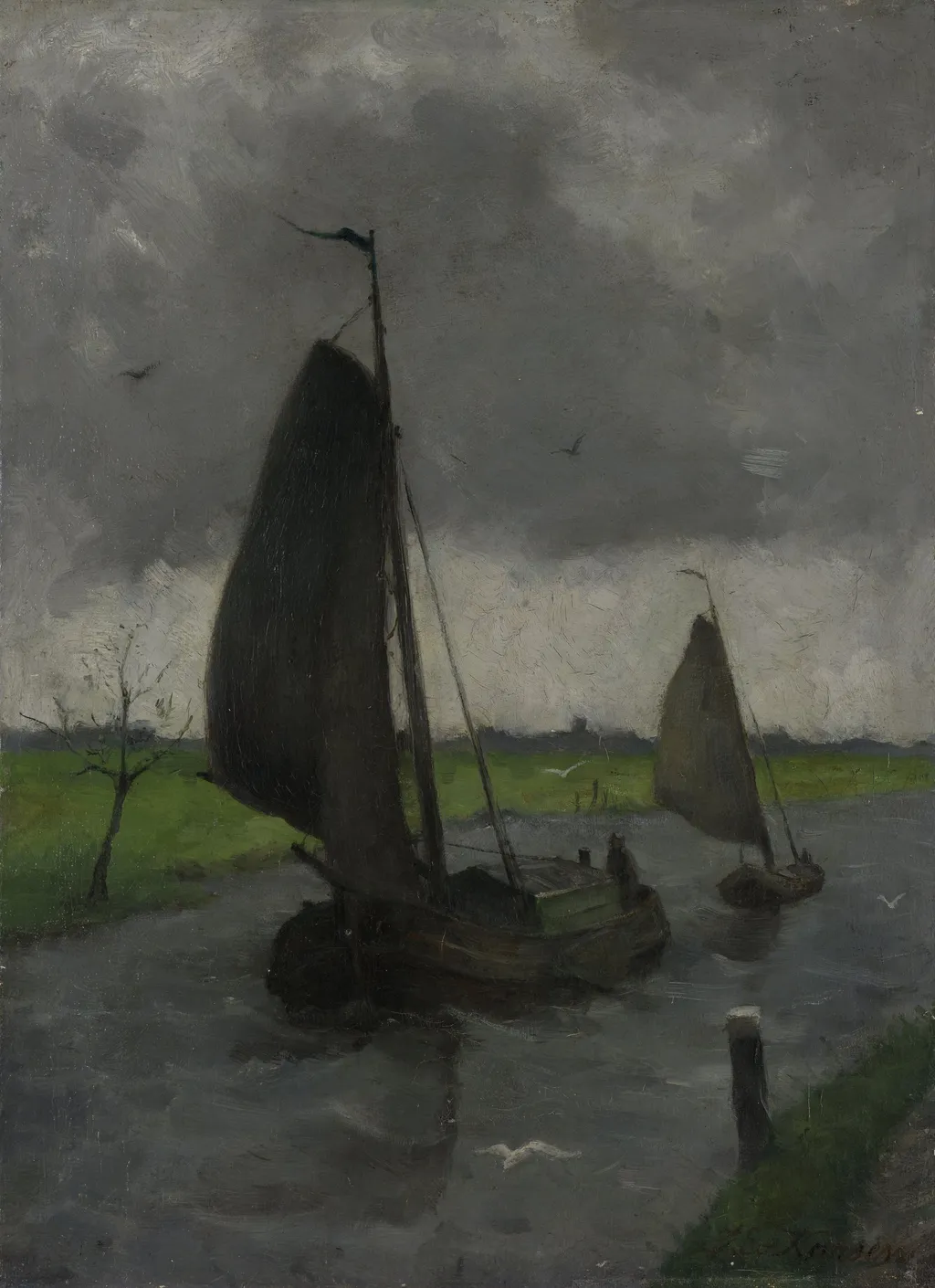
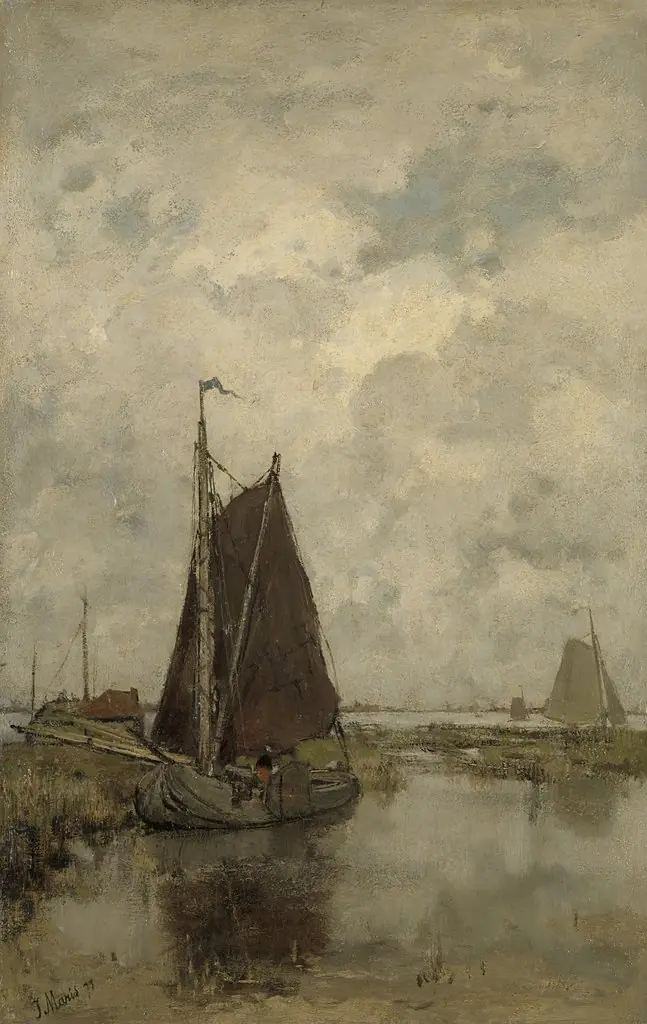
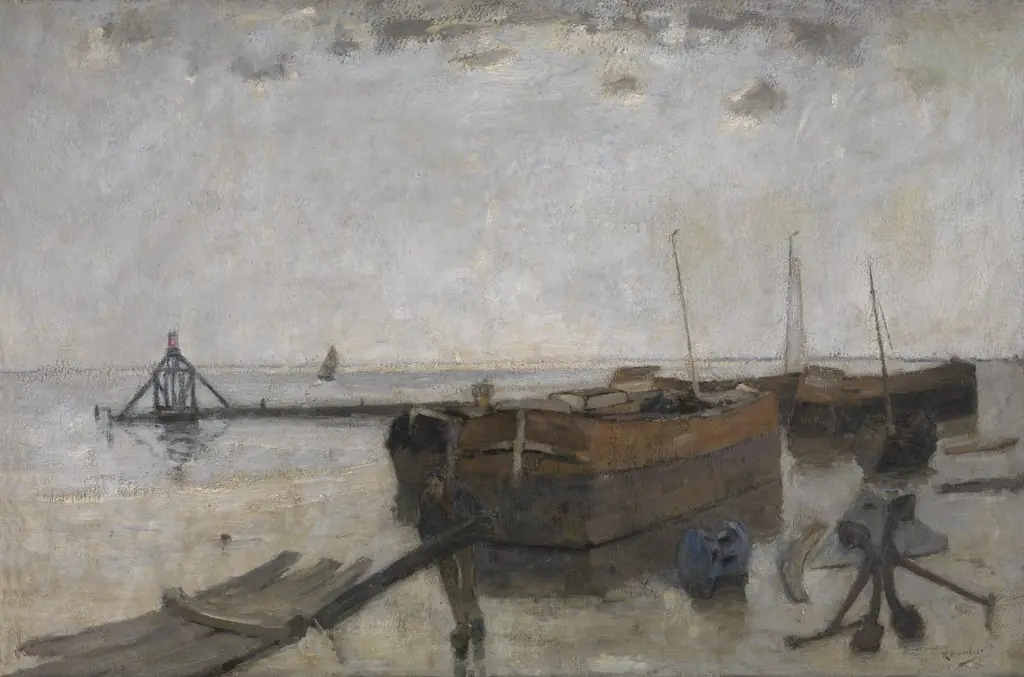
Watercourse with Sail Barges is an oil painting by the Impressionist artist Eduard Karsen. It dates from 1900 and is held in the collection of the Rijksmuseum.
About this work
Overview
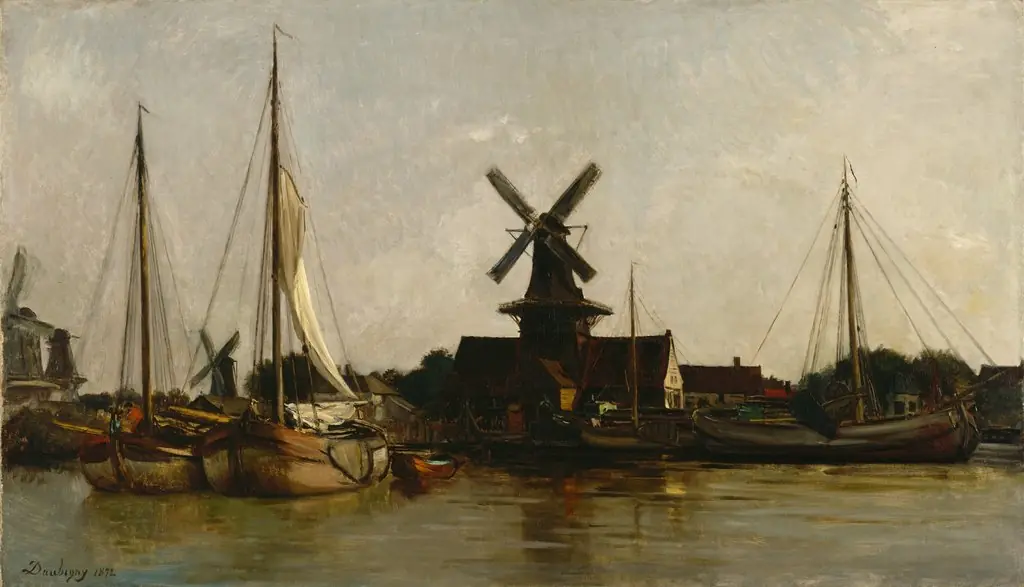
Eduard Karsen’s 1900 oil painting *Watercourse with Sail Barges* presents a quiet river scene in which several sail‑driven barges glide beneath a cloud‑dotted sky. The composition balances the reflective surface of the water with the soft, muted tones of the surrounding foliage, creating a calm atmosphere that invites quiet contemplation.
Subject & Meaning
The work focuses on a modest waterway populated by modest sailing barges, a common sight in the Dutch lowlands. By emphasizing the stillness of the water and the gentle billowing of the sails, Karsen conveys a sense of everyday serenity, reflecting his interest in ordinary, often solitary, rural moments.
Technique & Style
Executed in oil, the painting employs loose brushwork and a restrained palette characteristic of late‑19th‑century Impressionism. Karsen captures the fleeting effects of light on water and sky, allowing color to dissolve forms rather than define them, while maintaining enough detail to render the barges as recognizable focal points.
History & Provenance
Created at the turn of the century, the canvas entered the Rijksmuseum’s collection, where it remains part of the Dutch national holdings. Its acquisition reflects the museum’s commitment to representing the transitional period between Dutch Realism and the emerging modernist tendencies of the early 1900s.
Context
Karsen was linked to the *Tachtigers*, a literary circle that championed personal expression and aesthetic renewal. Though primarily a painter, his affiliation with this group aligns his visual approach with the movement’s broader push toward mood‑laden, introspective depictions of everyday life.
Own this work as a print
Artist & collection
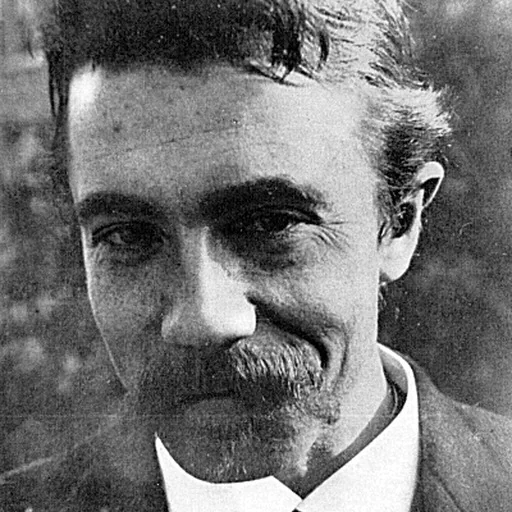
Artist
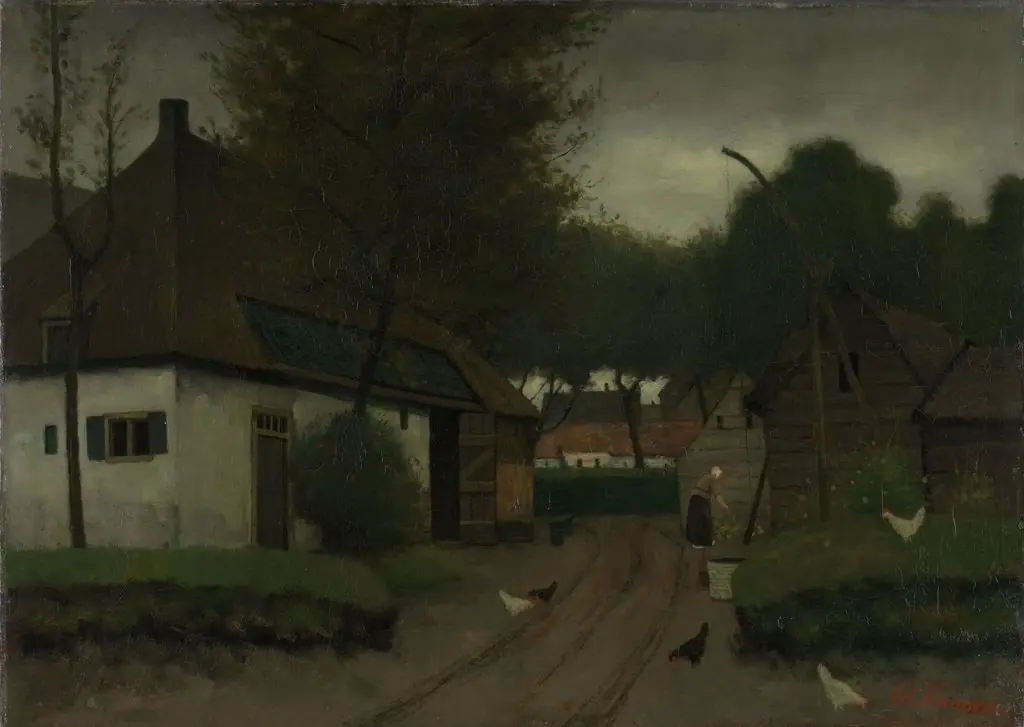
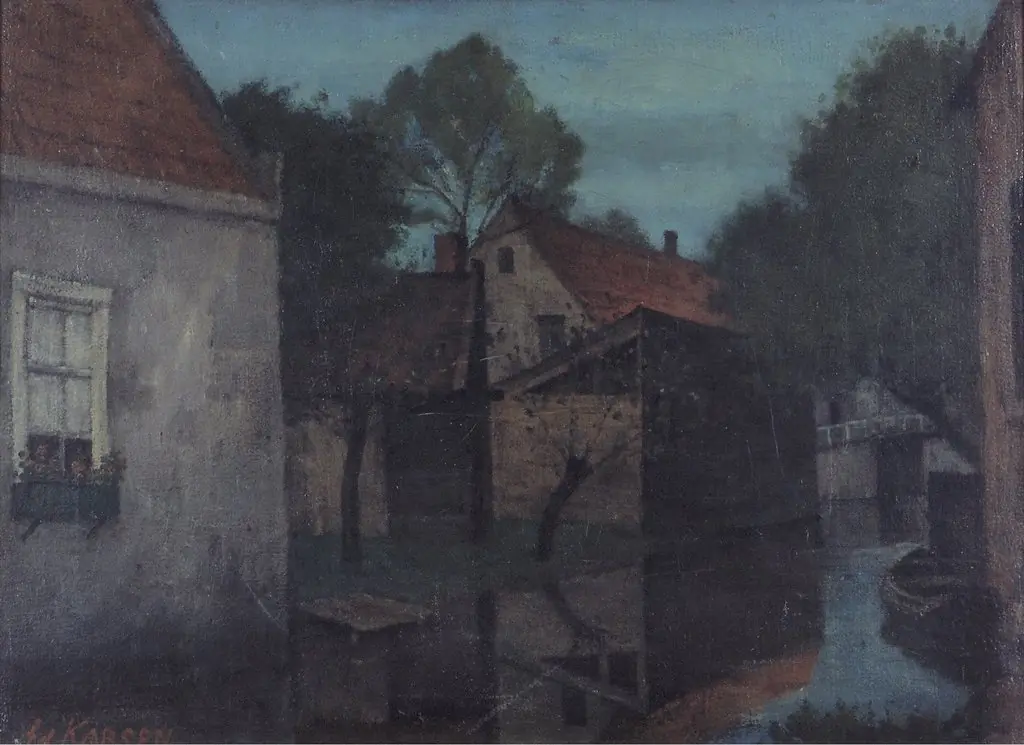
Johann Eduard Karsen (10 March 1860, Amsterdam - 31 October 1941, Amsterdam) was a Dutch Post-Impressionist painter, known for his moody scenes featuring villages and farmhouses; usually containing a solitary figure.