Artwork
Well at the Farmer Wolferl in Bruck-Fusch
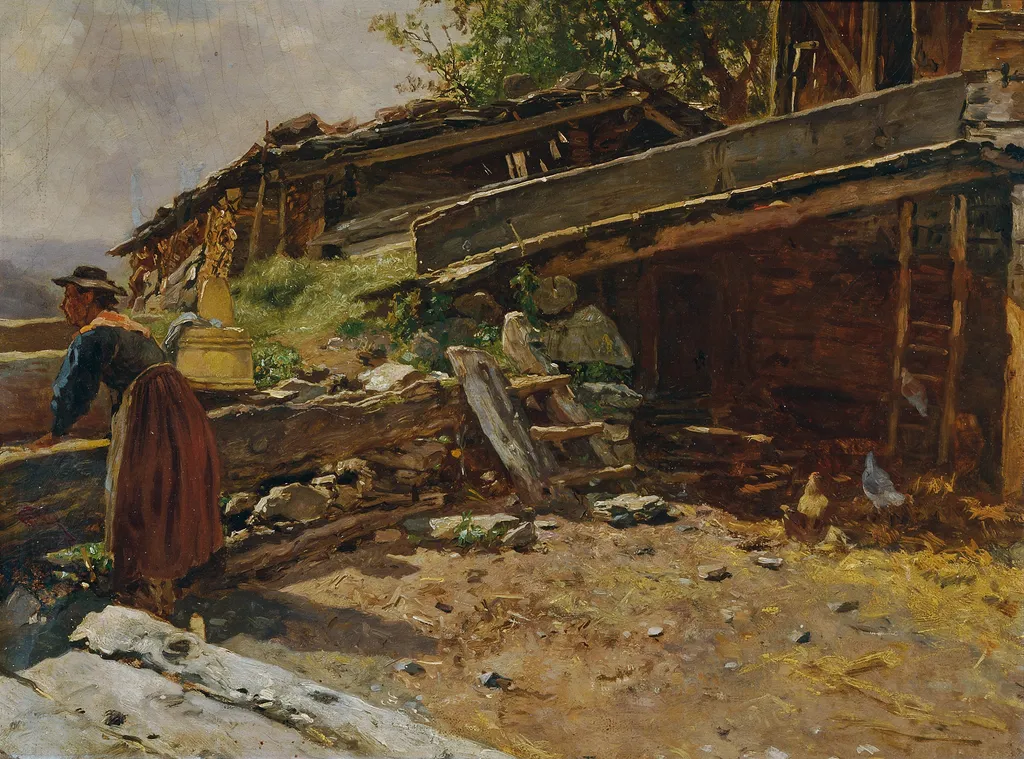
Well at the Farmer Wolferl in Bruck-Fusch is an unspecified painting by the Impressionist artist Anton Schrodl. It dates from 1890 and is held in the collection of the Belvedere.
About this work
Overview
Painted in 1890 by Anton Schrodl, this work captures a quiet moment at a rural well in Bruck-Fusch, Austria. The scene is unadorned and grounded in everyday life, focusing on a single figure and her immediate surroundings. It belongs to the collection of the Kunsthistorisches Museum in Vienna, where it is preserved as an example of late 19th-century Austrian genre painting.
Subject & Meaning
A woman in regional dress stands beside a stone-walled well, holding a bucket. Her stillness and simple attire suggest a routine chore, not a staged event. The painting avoids drama or symbolism, instead emphasizing the dignity of labor and the rhythm of rural existence. The absence of other figures heightens the sense of solitude and quiet endurance in country life.
Technique & Style
Schrodl employs muted earth tones—ochres, grays, and soft browns—to convey the texture of stone, fabric, and soil. Brushwork is restrained, favoring subtle gradations over sharp detail. The sky is rendered in a pale, diffused gray, balancing the weight of the foreground. Light falls evenly, avoiding dramatic contrasts, reinforcing the calm, uneventful mood of the scene.
History & Provenance
The painting was completed in 1890 and entered the Kunsthistorisches Museum’s collection shortly thereafter. It was likely acquired as part of a broader effort to document regional Austrian life during a period of rapid industrialization. Its preservation reflects institutional interest in vernacular culture rather than elite or romanticized subjects.
Context
In the late 1800s, Austrian artists increasingly turned to rural scenes as a counterpoint to urban modernization. Schrodl’s work aligns with this trend, portraying everyday life without idealization. The painting reflects a regional identity rooted in tradition, even as broader societal changes threatened such ways of life.
Legacy
Though not widely exhibited beyond Austria, the painting remains a quiet testament to the genre traditions of the time. It contributes to a visual record of rural labor and dress in the Alps, valued more for its observational honesty than for stylistic innovation. Its presence in a major museum underscores its role as a cultural document.
Own this work as a print
Artist & collection

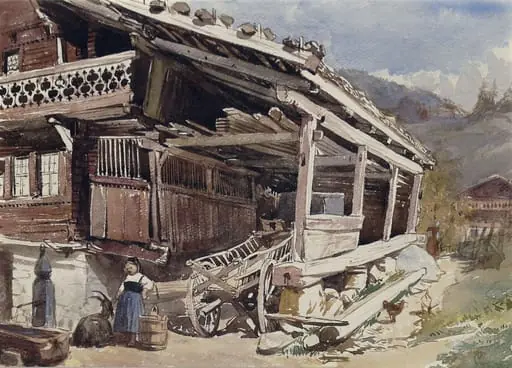 Chalet and Farm in the Bernese Oberland
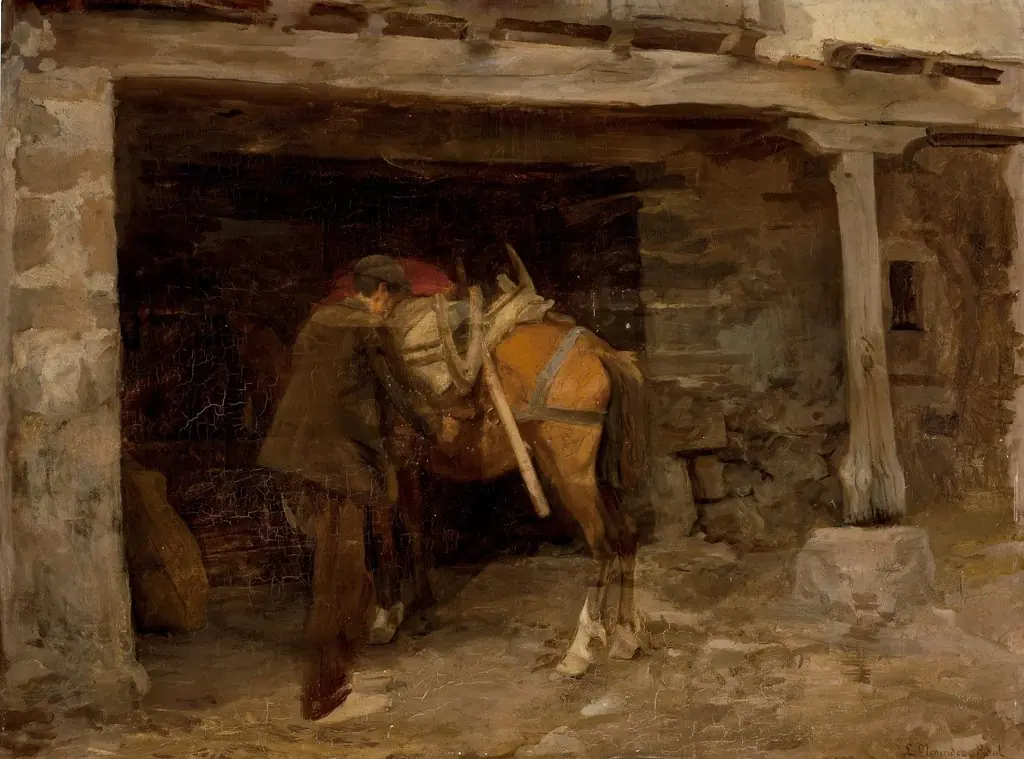 Al trabajo
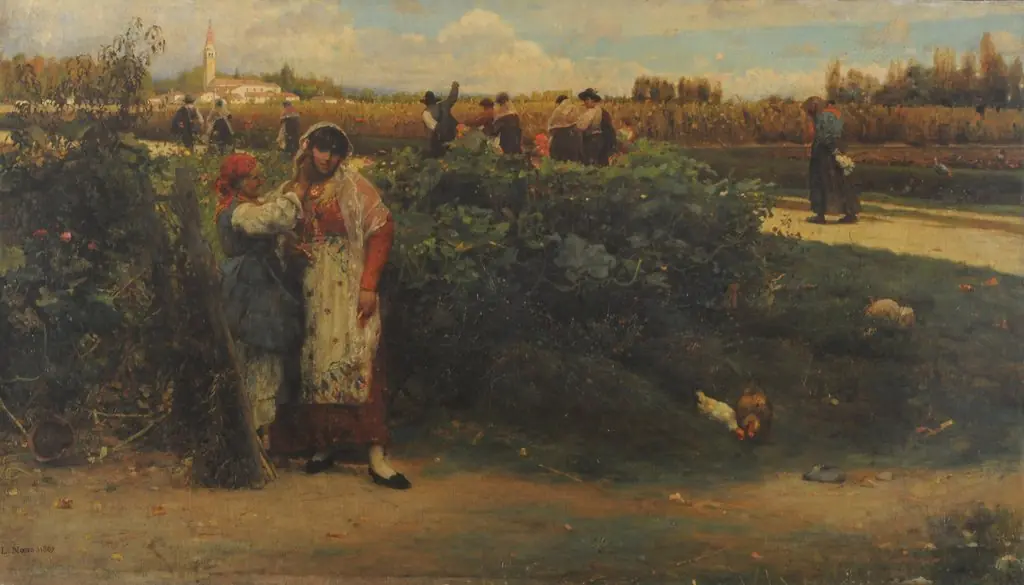 The tendrils of the feast
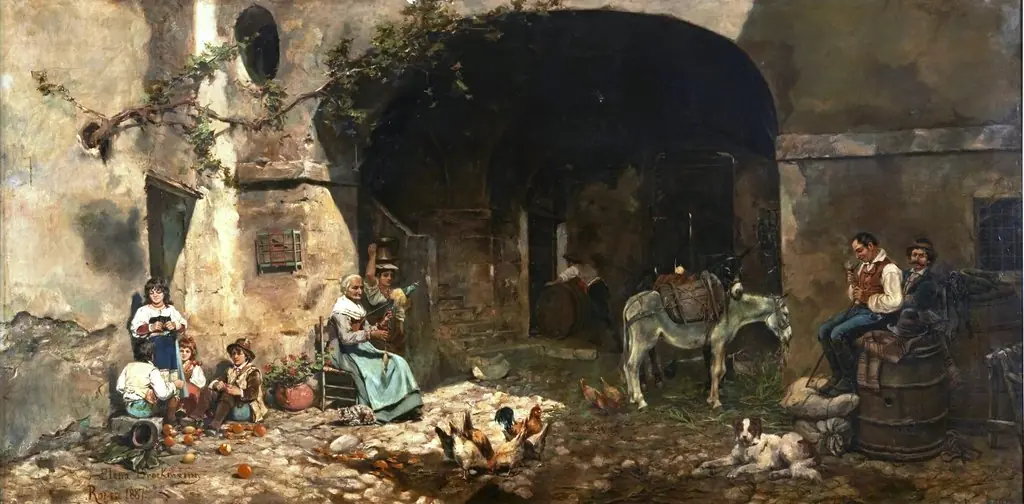 El patio de un parador
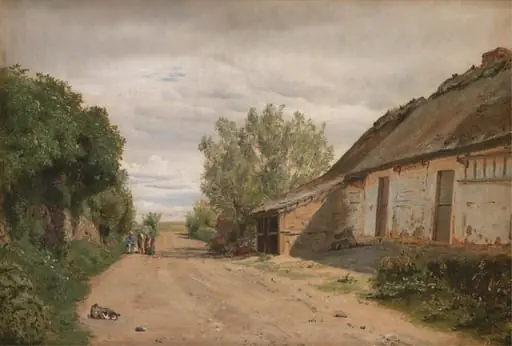 The Outskirts of the Village of Vejby. By the Roadside the Painter J.Th. Lundbye Sketching
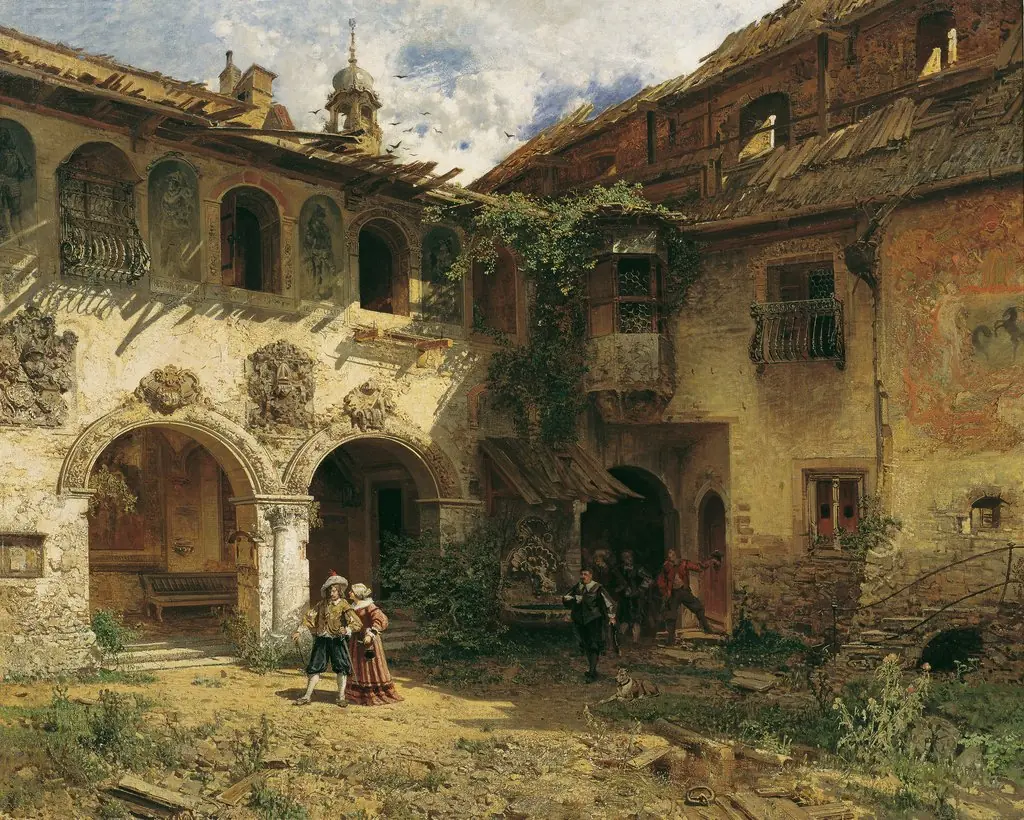 Hof der Fürstenburg in Burgeis
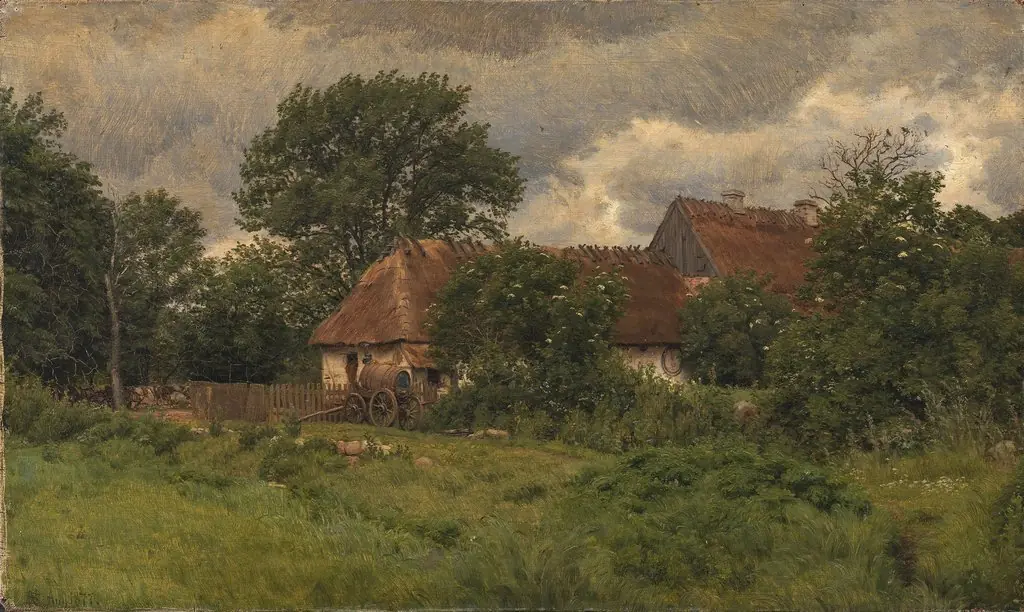 Gamle udbygninger ved en herregård
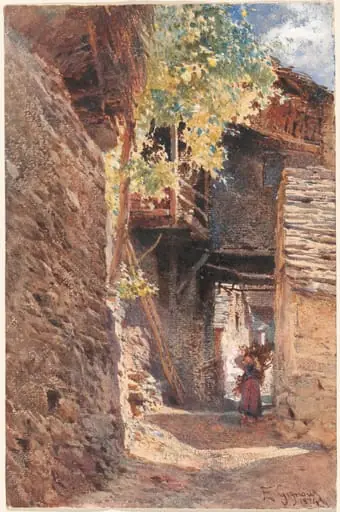 A Village Street in Northern Italy
 Eastern Soldiers with a Horse Drinking
 Gypsies
 In the farmyard