Artwork
Virgin and Child
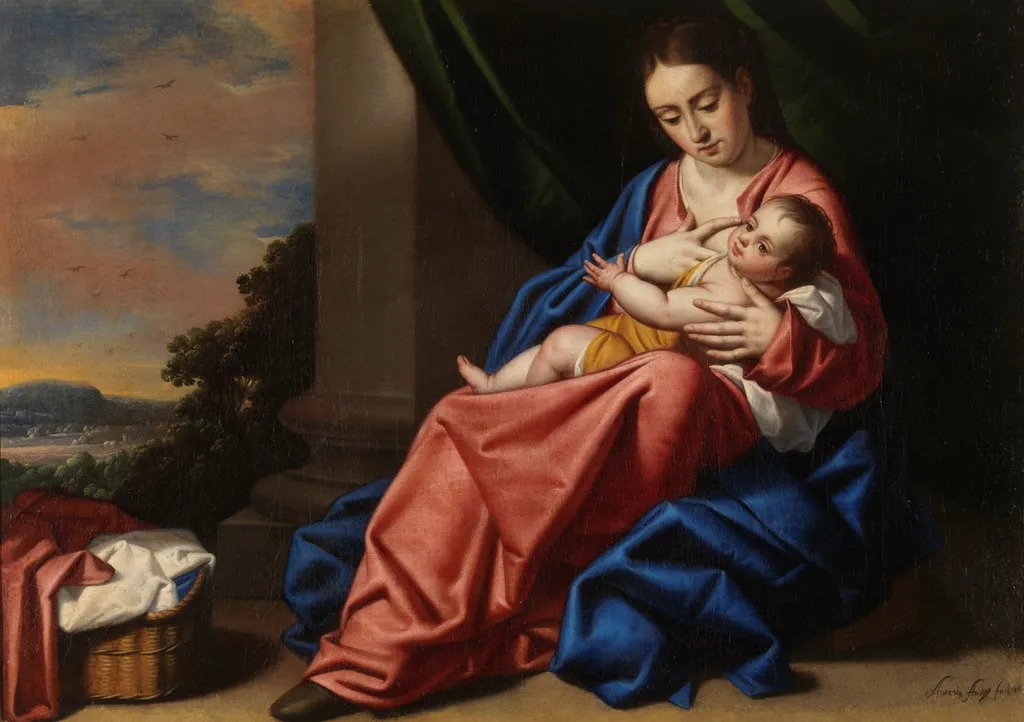
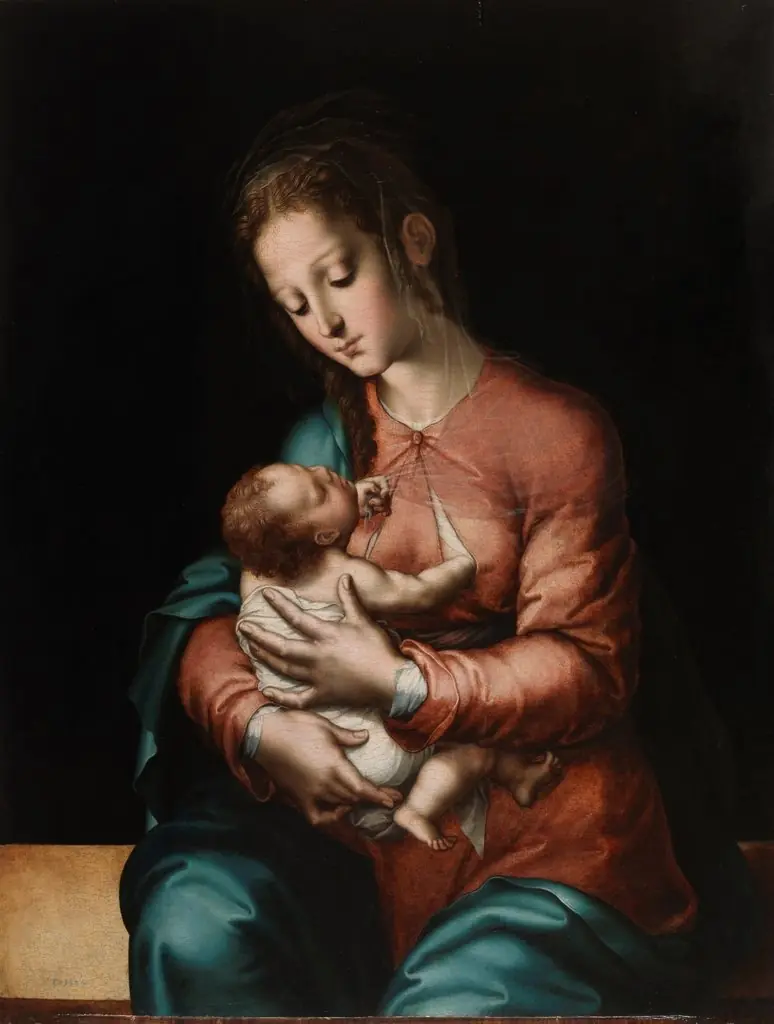
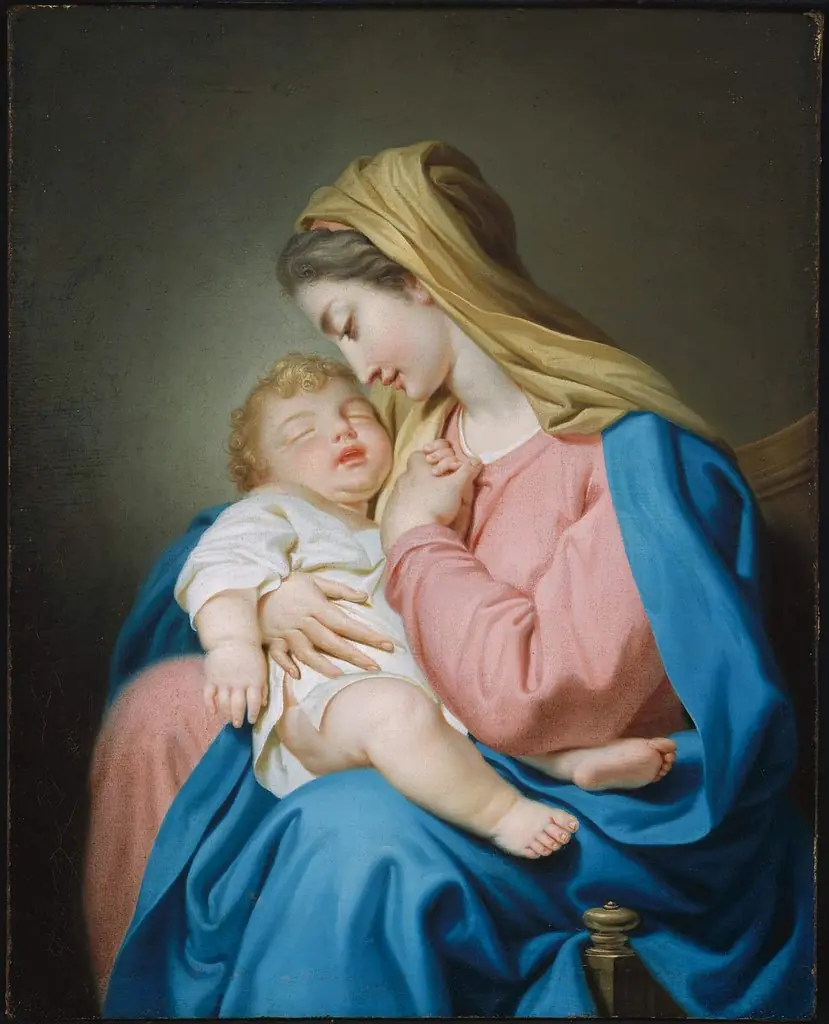
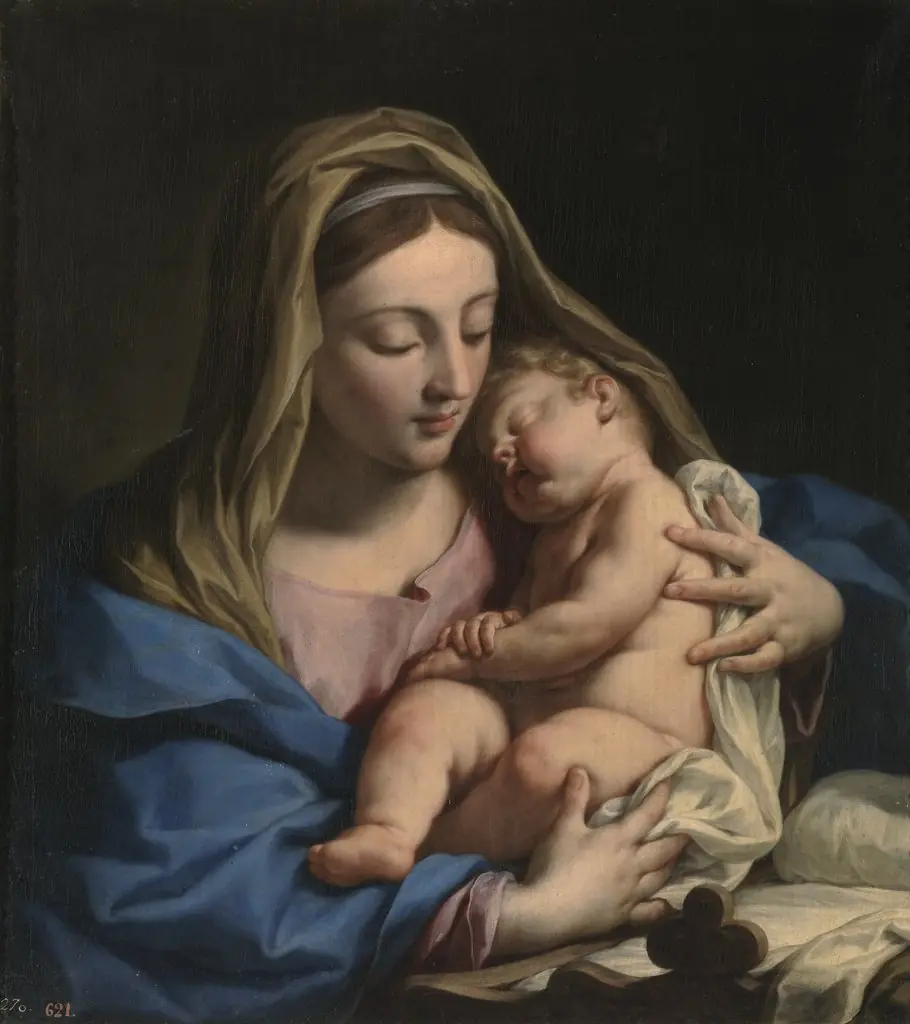
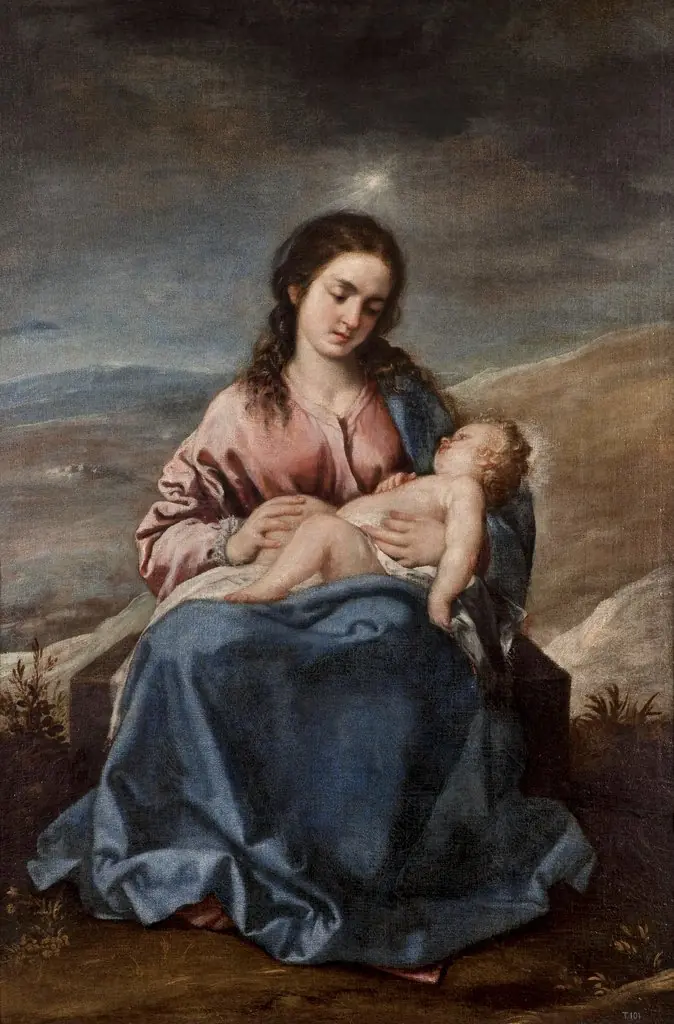
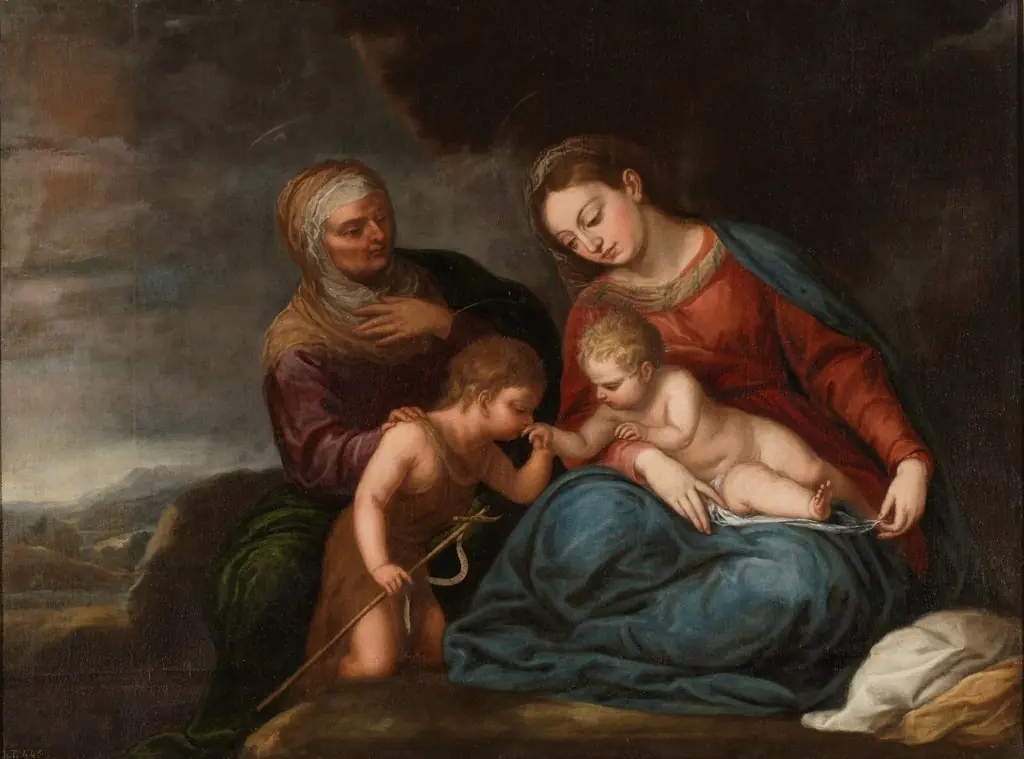
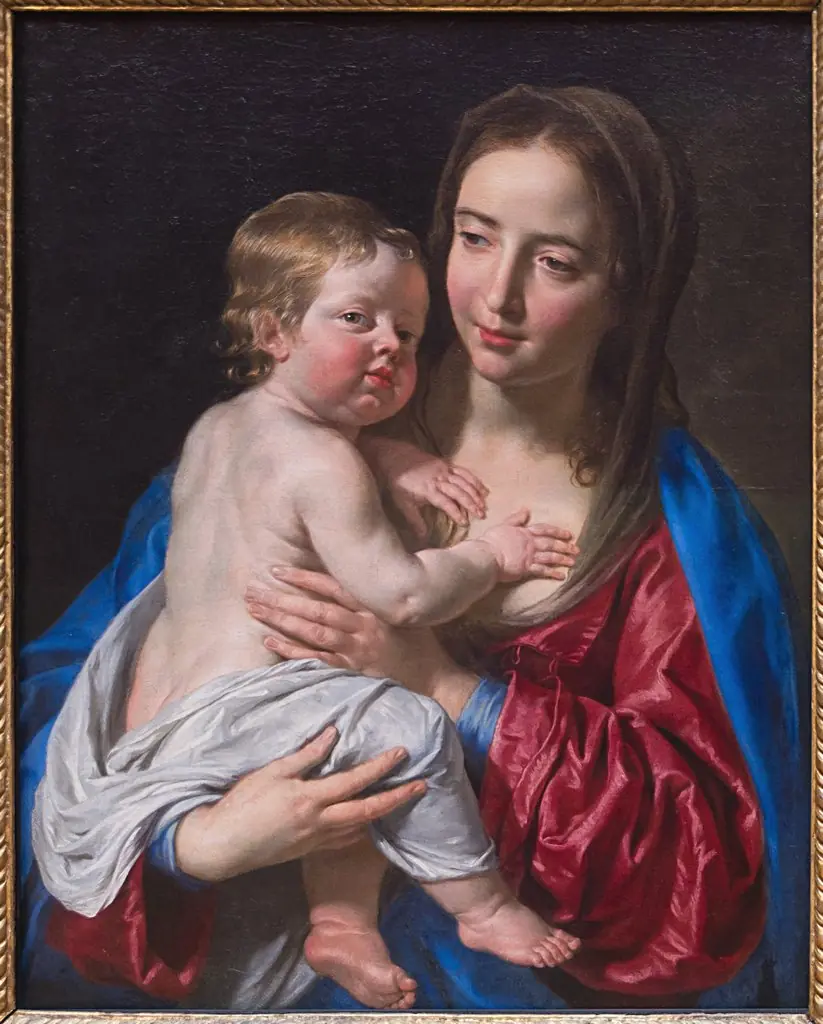
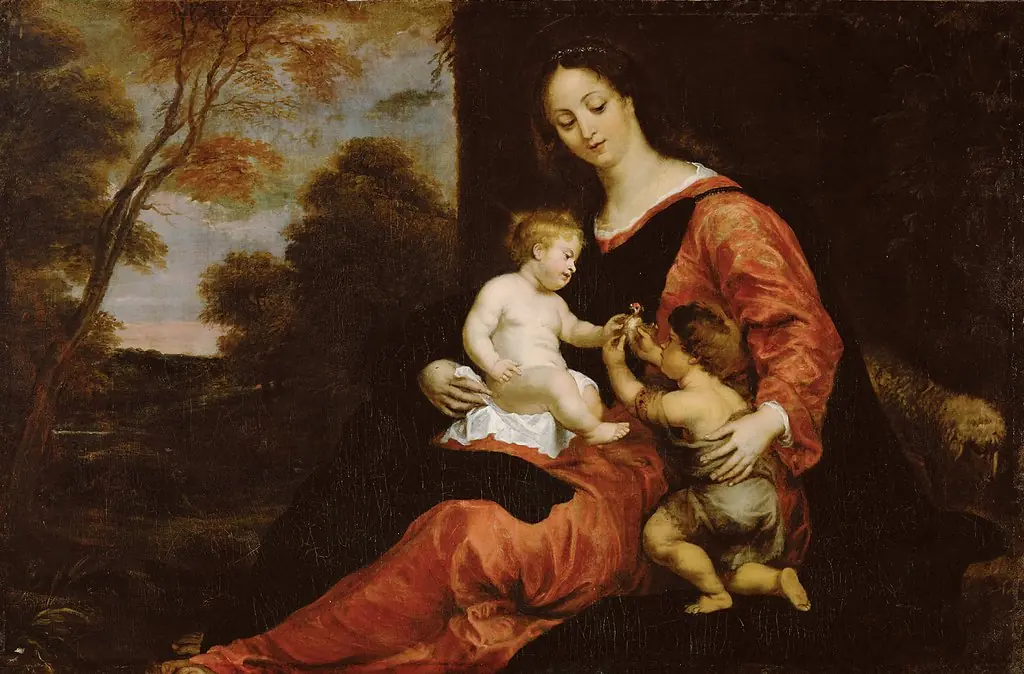
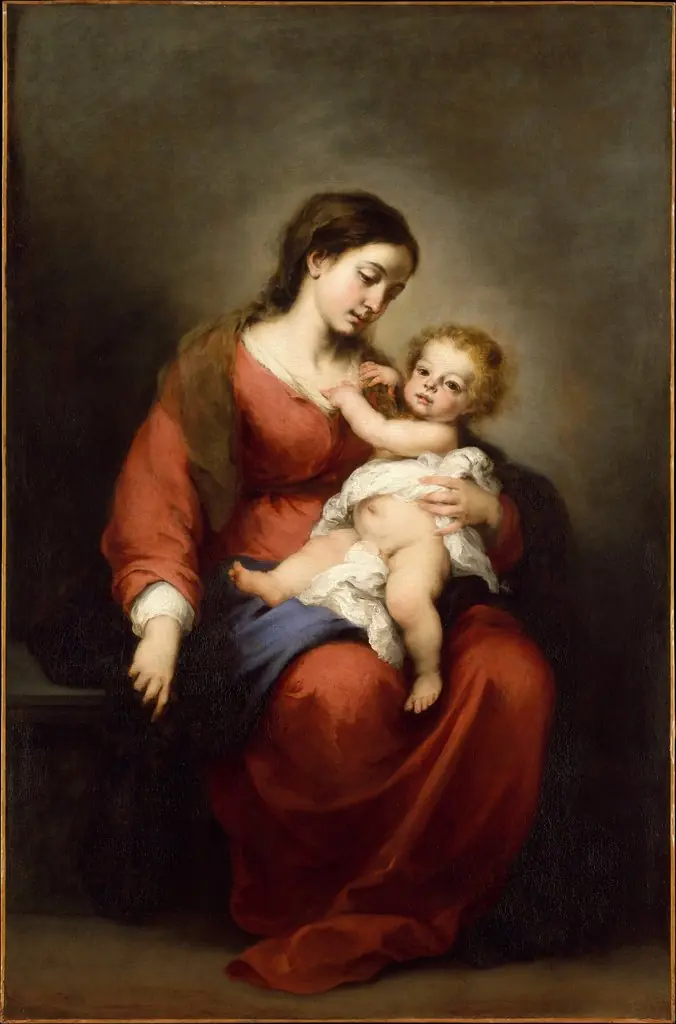
Virgin and Child is an oil painting by the Early Baroque Italian artist Antonio Arias Fernández. It dates from 1655 and is held in the collection of the Museo del Prado.
About this work
Overview
Antonio Arias Fernández’s *Virgin and Child* (1655) is an oil painting that exemplifies the early Baroque style in Italy, though the artist was active in Spain. The work is part of the Prado Museum’s collection and portrays the Virgin Mary seated with the infant Christ, set against a luminous landscape.
Subject & Meaning
The composition shows Mary, dressed in a red mantle over a blue undergarment, cradling a swaddled baby who reaches toward her face. Their calm interaction conveys intimacy and devotion, while the surrounding basketry and cloth suggest domestic modesty.
Technique & Style
Arias employs soft chiaroscuro, allowing gentle shadows to model the figures’ forms and give them a tangible presence. The background features a bright, cloud‑dotted sky, distant trees, and a small town, rendered with a delicate handling of light that enhances depth.
History & Provenance
Born in Madrid around 1614 to a Galician father, Arias trained under Pedro de las Cuevas. By his early twenties he was a sought‑after painter, receiving commissions from notable patrons such as the Conde‑Duque de Olivares. *Virgin and Child* entered the Museo del Prado’s holdings in the 19th century.
Context
The painting reflects the early Baroque’s shift toward naturalism and emotional immediacy, aligning with contemporary Italian trends while retaining a distinctly Spanish sensibility in its modest domestic setting and restrained palette.
Own this work as a print
Artist & collection
Artist
Antonio Fernández Arias (around 1614 – 1684) was a Spanish painter of the Baroque period.