Artwork
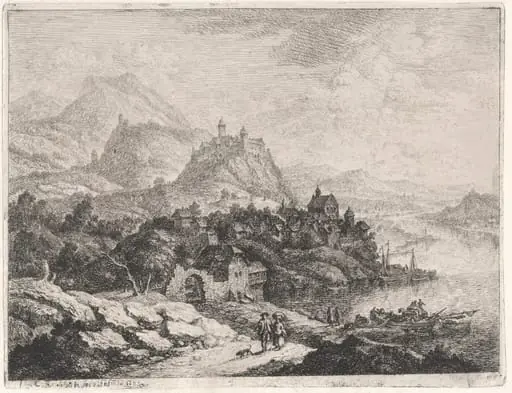
Views: A Pilgrim at Prayer
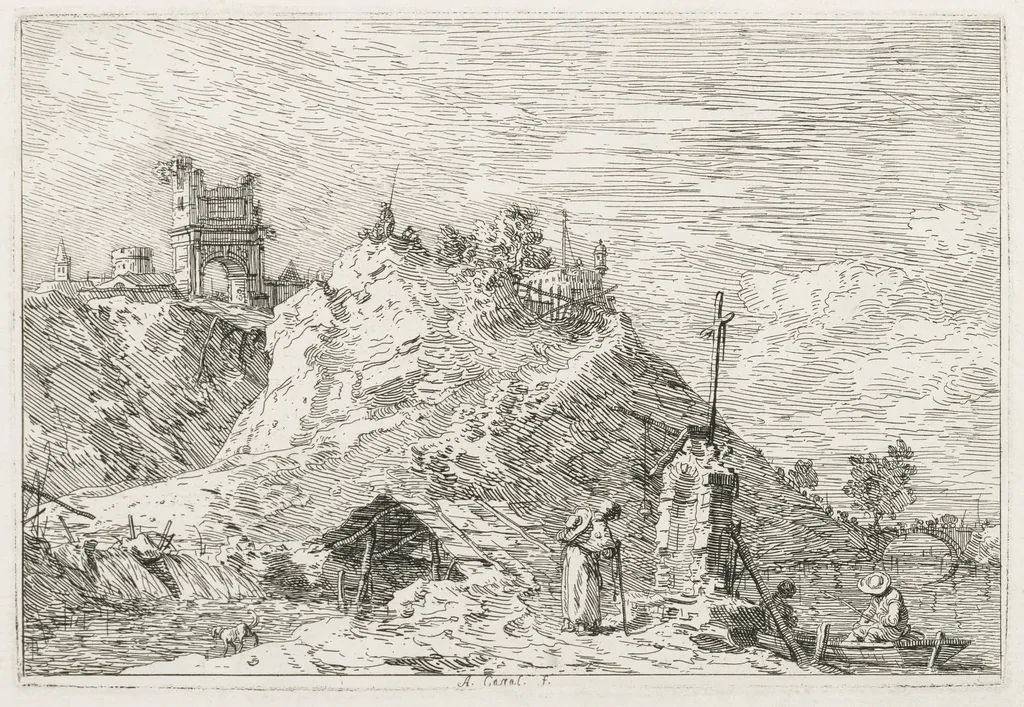
Views: A Pilgrim at Prayer is a print by the Baroque artist Canaletto. It dates from 1740 and is held in the collection of the Cleveland Museum of Art.
About this work
Overview
Created in 1740, this print by Antonio Canaletto departs from his typical Venetian cityscapes to present a dramatic coastal scene.
Created in 1740, this print by Antonio Canaletto departs from his typical Venetian cityscapes to present a dramatic coastal scene. Though best known for precise architectural views, Canaletto here engages with a more spontaneous, almost narrative mode. The work is rendered in monochrome, using fluid, expressive lines to convey motion and emotion. It resides in the Cleveland Museum of Art’s collection as an example of his lesser-known graphic work.
Subject & Meaning
A solitary figure kneels in prayer on a rocky shore, surrounded by the aftermath of a shipwreck. Others gather nearby, their postures suggesting distress or contemplation. The pilgrim’s stillness contrasts with the turbulent environment, implying a moment of spiritual refuge amid chaos. The scene may reference maritime peril and personal devotion, common themes in devotional imagery of the period, though no specific narrative is confirmed.
Technique & Style
Executed in quick, linear strokes, the print employs a sketchlike quality to suggest wind, waves, and crumbling rock. The artist avoids heavy shading, relying instead on rhythmic line work to define form and movement. The background towers and steeple are rendered with minimal detail, anchoring the scene in a recognizable Venetian context without literal precision. This approach reveals Canaletto’s adaptability beyond his polished vedute style.
History & Provenance
The print entered the Cleveland Museum of Art’s collection as part of a broader acquisition of 18th-century Italian graphic works. Its origins are undocumented prior to the 20th century, and it has never been widely exhibited. Scholars note its stylistic divergence from Canaletto’s painted output, suggesting it may have been a preparatory study or an independent experiment in emotional expression.
Context
In mid-18th-century Venice, religious imagery often merged with civic identity, and maritime disasters were frequent subjects in popular prints. Canaletto’s scene aligns with broader Baroque sensibilities—dramatic lighting, emotional tension, and spiritual contrast—though his execution remains restrained. Unlike overtly theatrical compositions, this work favors quietude, reflecting a personal or regional variation on prevailing visual norms.
Legacy
This print stands as a rare example of Canaletto’s engagement with narrative and emotional depth outside his architectural focus. While it did not influence his primary oeuvre, it offers insight into his range as a draftsman. Contemporary scholars value it not for its fame, but for its quiet departure from expectation—revealing an artist capable of subtlety beyond topographical precision.
Artist & collection
Artist
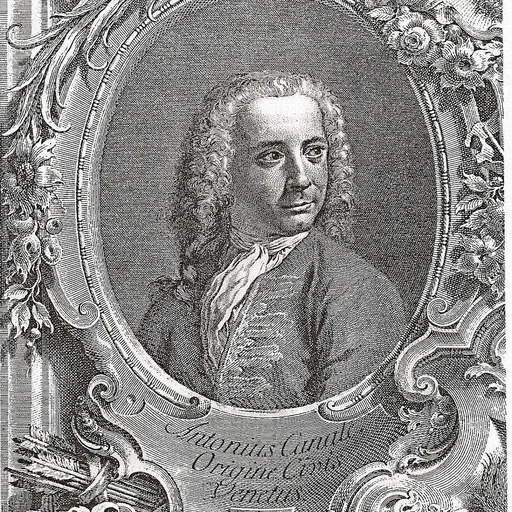
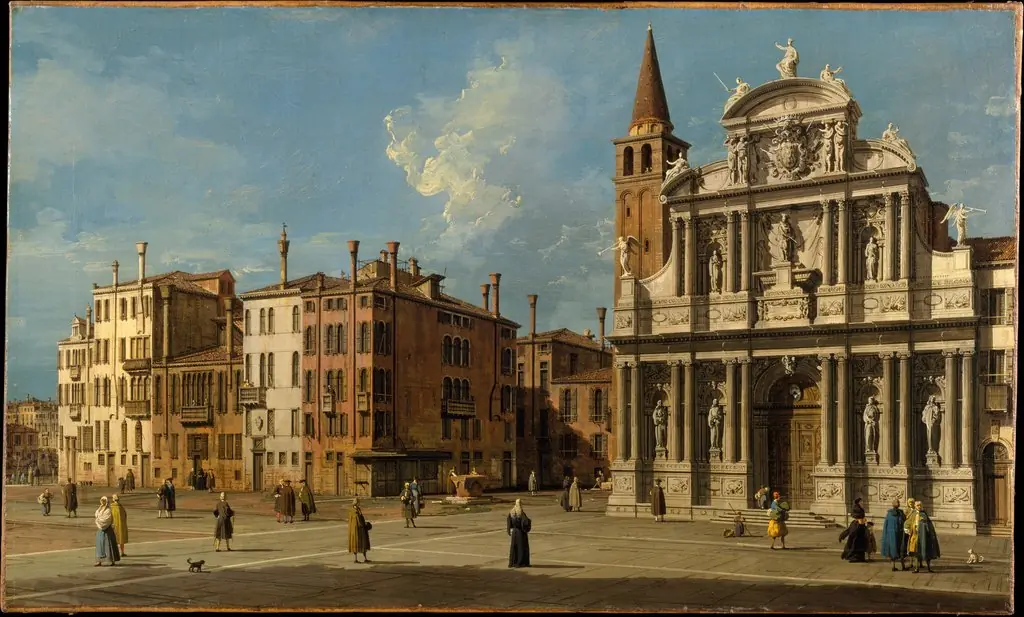
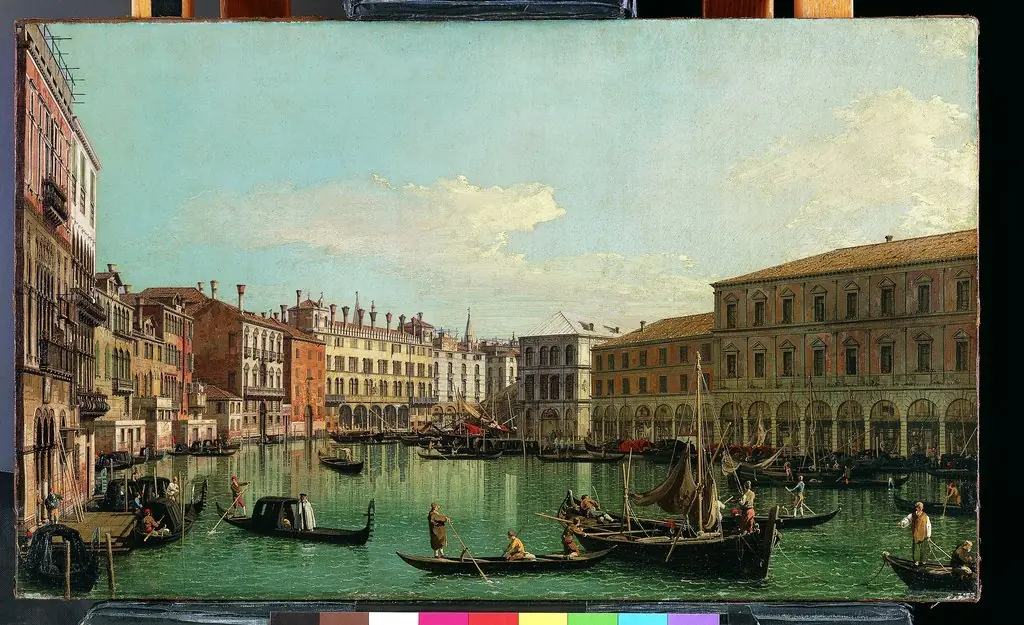
Giovanni Antonio Canal (18 October 1697 – 19 April 1768), commonly known as Canaletto (Italian: ), was an Italian painter from the Republic of Venice, considered an important member of the 18th-century Venetian school.

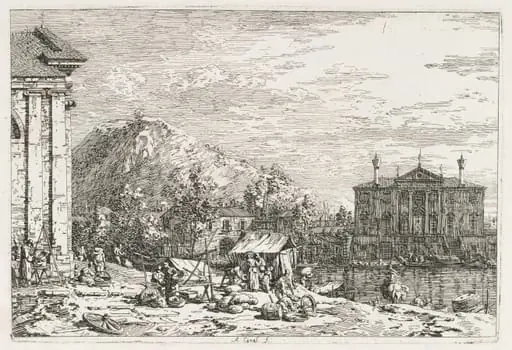
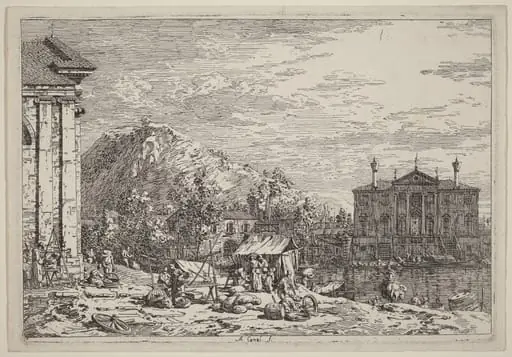 The Market at Dolo
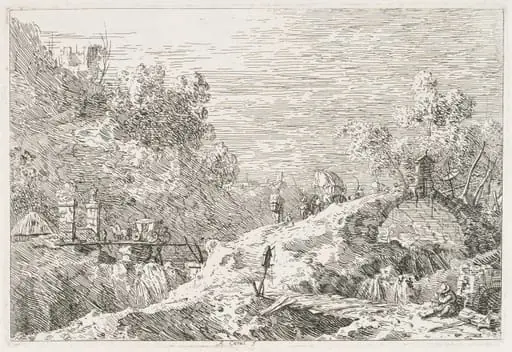 Views: Mountain Landscape with Five Bridges
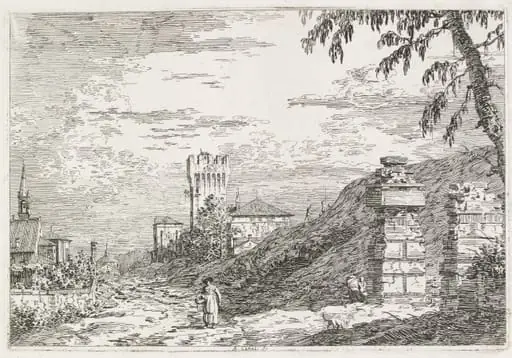 Views: Two Ruined Pillars
![The Market at Dolo [lower left], by Canaletto](https://artifactworldgallery.com/img/canaletto--the-market-at-dolo-lower-left--67bc6365ace095d4-w320.webp) The Market at Dolo [lower left]
The Market at Dolo [lower left]![Landscape with Tower and Two Ruined Pillars [left], by Canaletto](https://artifactworldgallery.com/img/canaletto--landscape-with-tower-and-two-ruined-pillars-left--60d58ba162fec5aa-w320.webp) Landscape with Tower and Two Ruined Pillars [left]
Landscape with Tower and Two Ruined Pillars [left]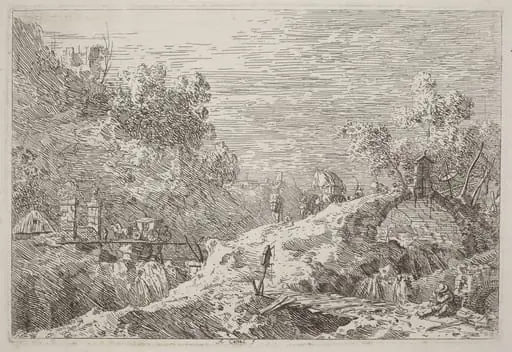 Mountain Landscape with Five Bridges
 Views: A City Beyond a River
![Mountain Landscape with Five Bridges [lower right], by Canaletto](https://artifactworldgallery.com/img/canaletto--mountain-landscape-with-five-bridges-lower-right--69277fee18bd5080-w320.webp) Mountain Landscape with Five Bridges [lower right]
Mountain Landscape with Five Bridges [lower right]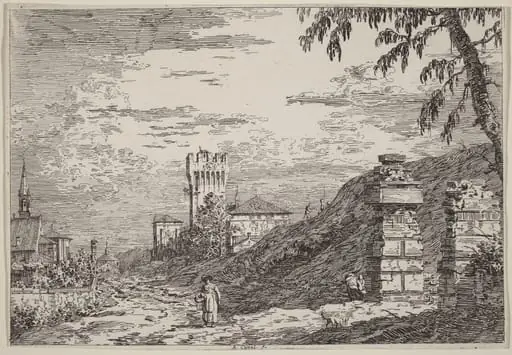 Landscape with Tower and Two Ruined Pillars
 A Wide Riverscape with a View of Heidelberg Castle