Artwork
Views: Imaginary View of Padua
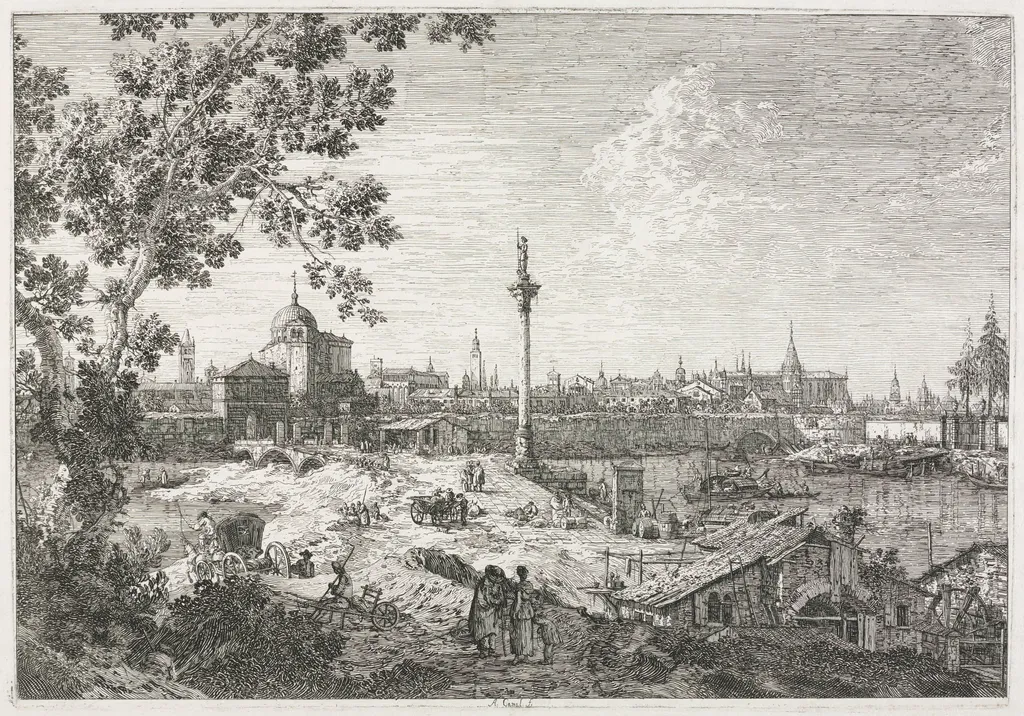
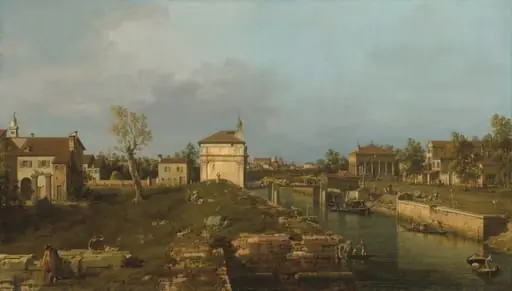
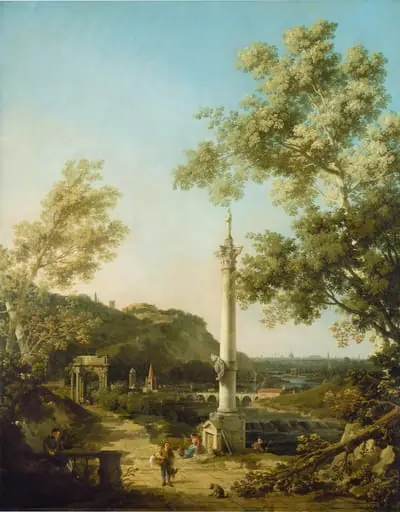
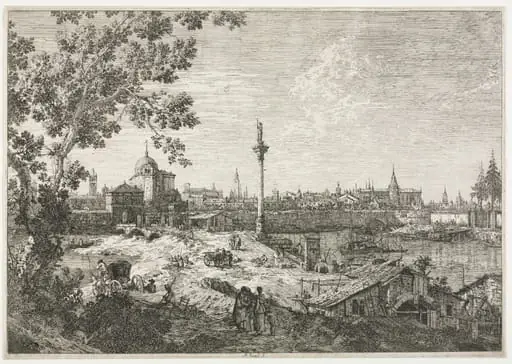
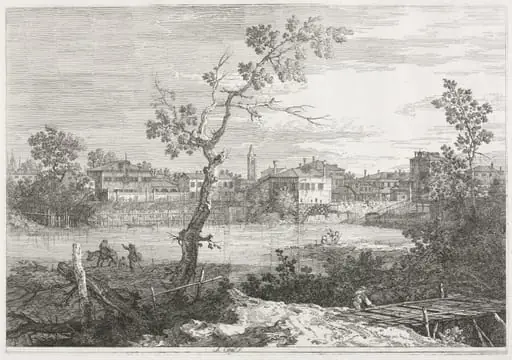
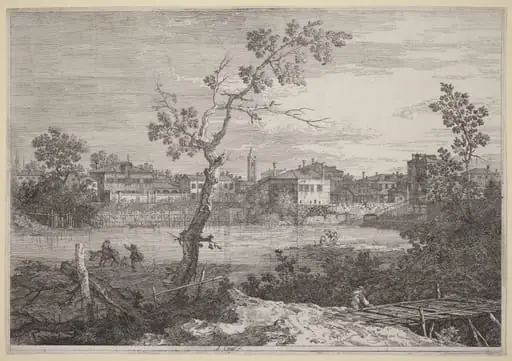
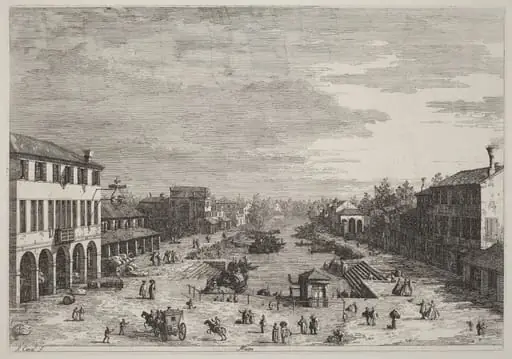
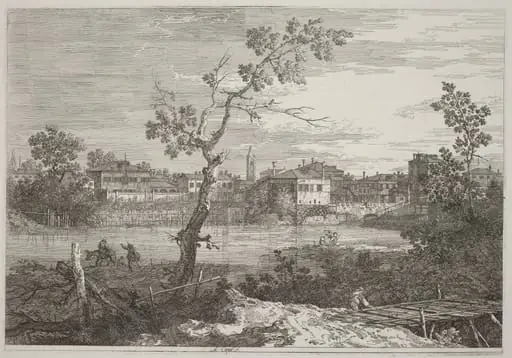
Views: Imaginary View of Padua is a print by the Baroque artist Canaletto. It dates from 1740 and is held in the collection of the Cleveland Museum of Art.
About this work
Overview
Created in 1740, this print by Antonio Canaletto presents a fictionalized landscape of Padua, blending observed architecture with inventive composition.
Created in 1740, this print by Antonio Canaletto presents a fictionalized landscape of Padua, blending observed architecture with inventive composition. Though rooted in the artist’s familiarity with northern Italian urban forms, the scene is not a literal record but a constructed vision. It belongs to a series where Canaletto reimagined real cities through calibrated fantasy, catering to collectors seeking idealized topographies rather than documentary accuracy.
Subject & Meaning
The scene depicts a tranquil riverside town with clustered buildings, arched bridges, and figures engaged in quiet daily activities. No specific landmark is identifiable, suggesting the intent was not to document Padua but to evoke its essence—a harmonious, orderly civic life. The inclusion of a foreground tree draws the viewer into the space, reinforcing a sense of immersion without anchoring the image to a real location.
Technique & Style
Canaletto employed precise linear perspective and subtle tonal gradations to lend architectural forms a sense of solidity. Light falls evenly across the scene, with soft shadows defining surfaces rather than creating dramatic contrasts. The palette is restrained, using muted earth tones and pale skies to unify the composition. While often associated with the Baroque, this work leans toward clarity and restraint, reflecting a more refined, observational approach than theatrical lighting.
History & Provenance
This print emerged during Canaletto’s peak years, when demand for Venetian and northern Italian views was high among Grand Tour travelers. Though originally conceived as a painting, the image was later adapted into an etching to meet market demand. Its circulation helped disseminate his aesthetic beyond Venice, influencing how foreign audiences perceived Italian urban life in the mid-18th century.
Context
In the 1740s, Canaletto was refining his practice of combining topographical fidelity with imaginative liberty. While contemporaries like Guardi emphasized atmospheric mood, Canaletto prioritized structural clarity and architectural precision. His imaginary views, like this one of Padua, responded to a collector’s desire for recognizable yet idealized cityscapes—neither documentary nor purely fantastical, but a middle ground shaped by taste and travel culture.
Legacy
Canaletto’s imaginary views expanded the possibilities of topographical art, demonstrating that accuracy need not mean literalism. His method influenced later artists who blended observation with invention, particularly in 19th-century landscape traditions. Though overshadowed by his Venetian scenes, works like this Padua view reveal his broader contribution to the evolution of urban representation in European printmaking and painting.
Artist & collection
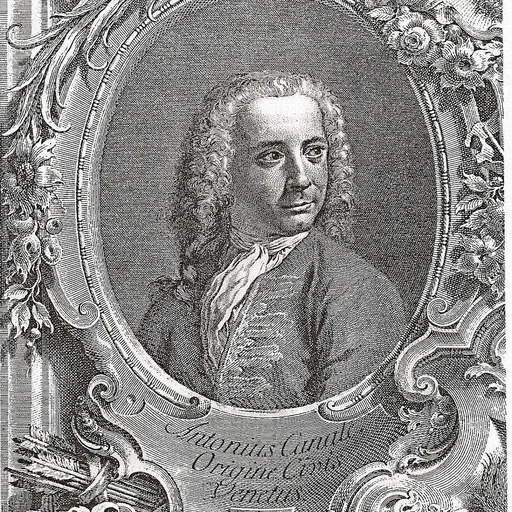
Artist
Giovanni Antonio Canal (18 October 1697 – 19 April 1768), commonly known as Canaletto (Italian: ), was an Italian painter from the Republic of Venice, considered an important member of the 18th-century Venetian school.