Artwork
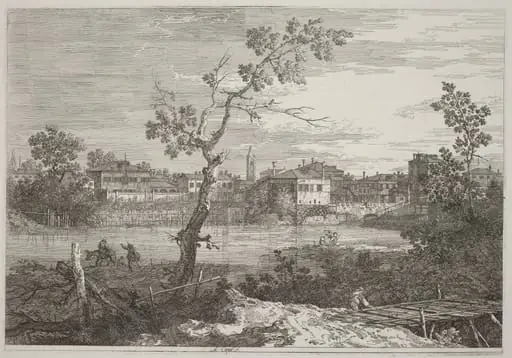
Panorama of a City on a River
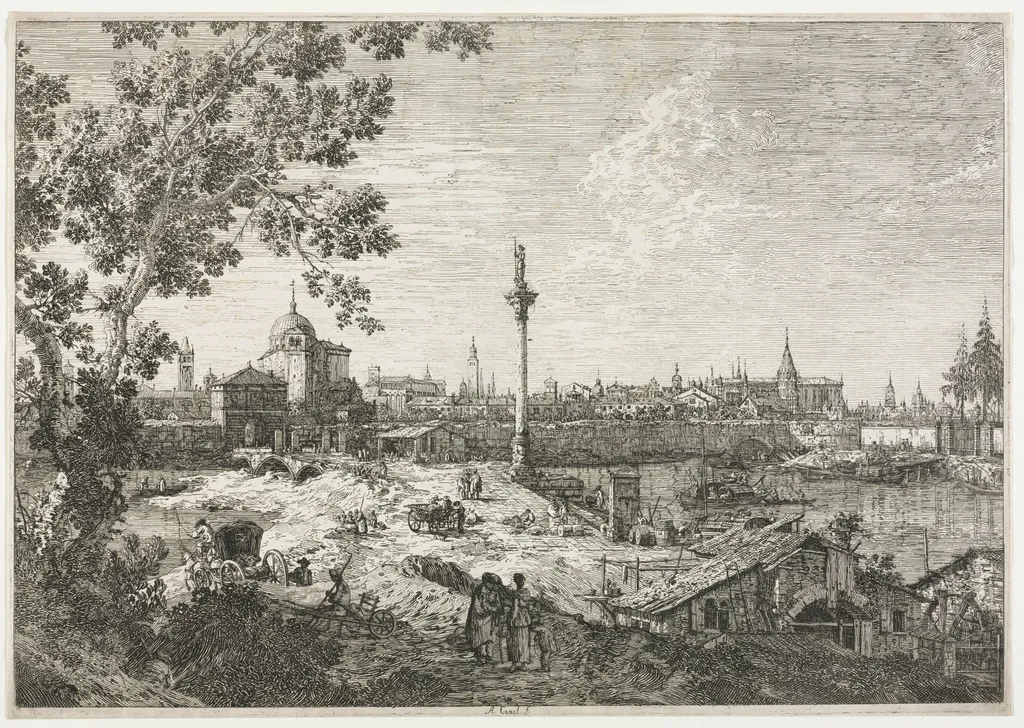
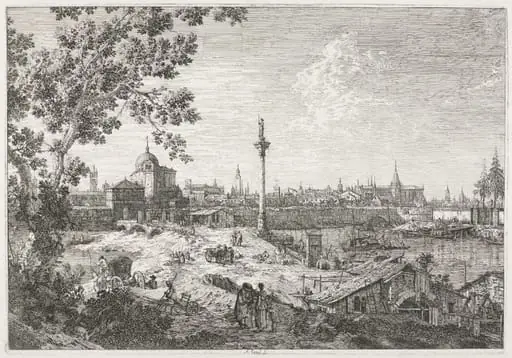
Panorama of a City on a River is a print by the Baroque artist Canaletto. It dates from 1704 and is held in the collection of the Cleveland Museum of Art.
About this work
Overview
Though often associated with oil paintings, Canaletto also produced etchings that captured urban environments with precision.
Created around 1704, this print by Antonio Canaletto presents a meticulously rendered riverside cityscape. Though often associated with oil paintings, Canaletto also produced etchings that captured urban environments with precision. This work reflects his early engagement with vedute, or topographical views, before his later fame in England. The composition emphasizes architectural detail and atmospheric light, characteristic of his emerging style.
Subject & Meaning
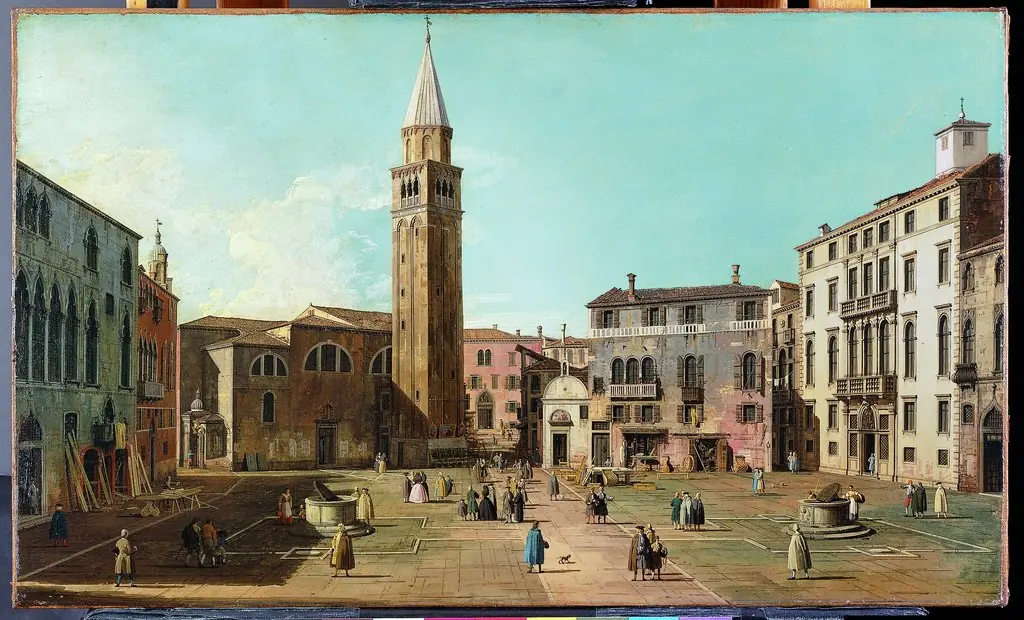
The scene depicts a bustling riverfront city, likely inspired by Venice, with churches, towers, and merchant vessels lining the water. Figures engaged in everyday activities—walking, rowing, standing—anchor the image in lived experience. The absence of a specific named location suggests a generalized ideal of urban life, emphasizing order, commerce, and the harmony between architecture and waterway rather than documenting a single place.
Technique & Style
Executed in etching, the work relies on fine lines to define building facades, water ripples, and foliage. Canaletto’s precision in rendering perspective and architectural form reveals his training as a stage designer. The palette, though limited by the medium, suggests warmth in stone and coolness in sky and water through tonal gradation. The balance between detail and spatial depth reflects a commitment to visual accuracy over dramatic effect.
History & Provenance
This print dates from Canaletto’s formative years in Venice, prior to his well-documented stay in England. It belongs to a series of early vedute that established his reputation among collectors of topographical imagery. While the exact provenance of this specific impression is undocumented, similar works from this period circulated in Venetian print markets and were later collected by European connoisseurs interested in urban representation.
Context
In early 18th-century Venice, demand grew for images that documented the city’s grandeur for travelers and patrons. Canaletto’s prints responded to this trend, offering accessible versions of his detailed views. Though often grouped with Baroque art, his approach was more observational than theatrical, aligning more closely with emerging Enlightenment values of empirical observation and civic pride.
Legacy
Canaletto’s etchings, including this one, helped define the veduta tradition and influenced later topographical artists across Europe. His method of combining architectural fidelity with atmospheric nuance became a model for urban depiction. Though overshadowed by his oil paintings, his prints remain significant for their role in disseminating Venetian imagery and shaping perceptions of the city abroad.
Artist & collection
Artist
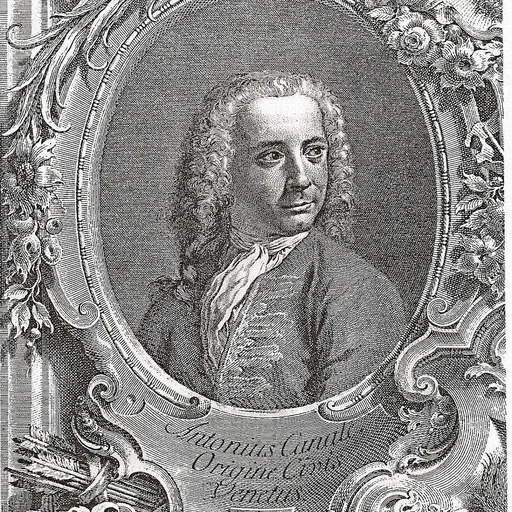
Giovanni Antonio Canal (18 October 1697 – 19 April 1768), commonly known as Canaletto (Italian: ), was an Italian painter from the Republic of Venice, considered an important member of the 18th-century Venetian school.

 Views: Imaginary View of Padua
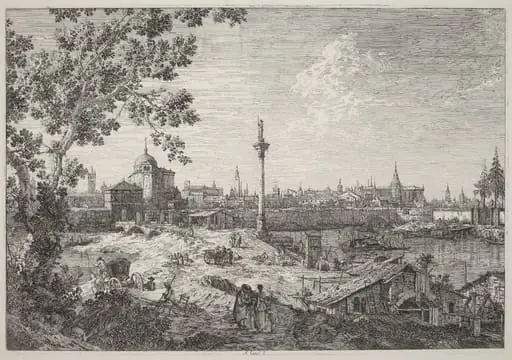 Imaginary View of Padua
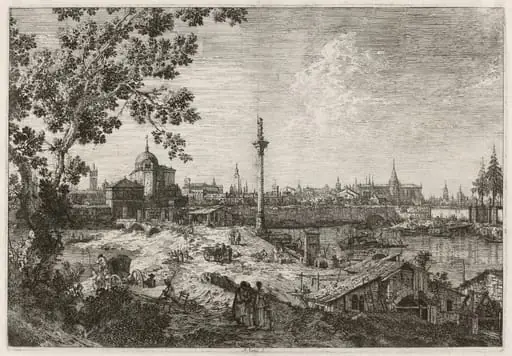 Imaginary View of Padua
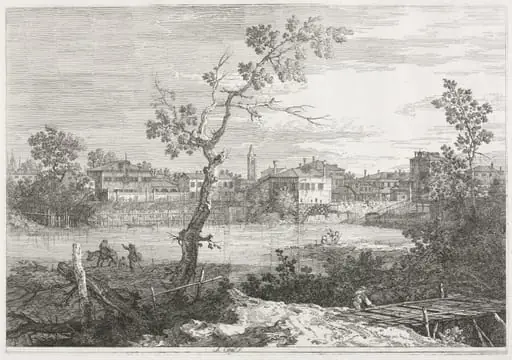 Views: View of Burano, a Town on an Island in the Venetian Lagoon
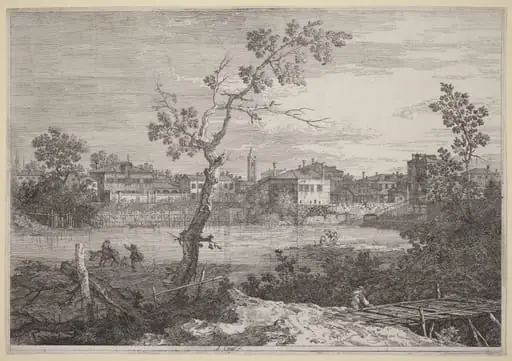 View of a Town on a River Bank
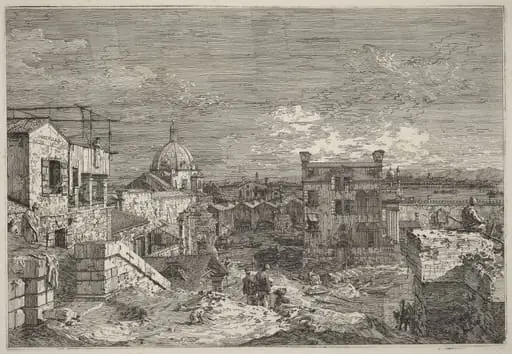 Imaginary View of Venice
 View of a Town on a River Bank
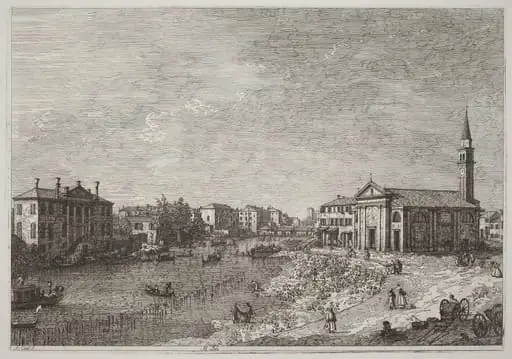 Al Dolo
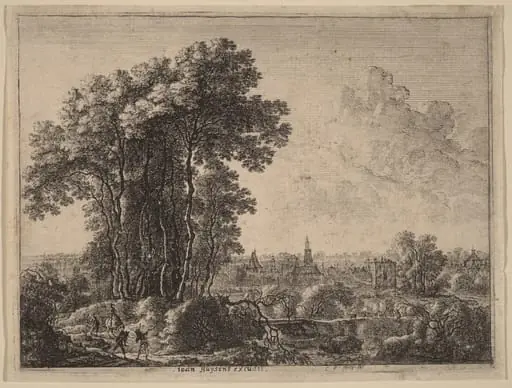 Landscape with Horseman and Three Travelers
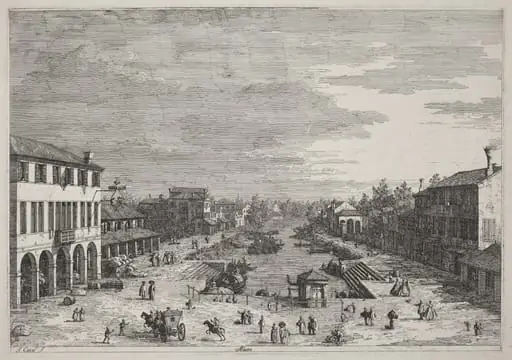 Mestre
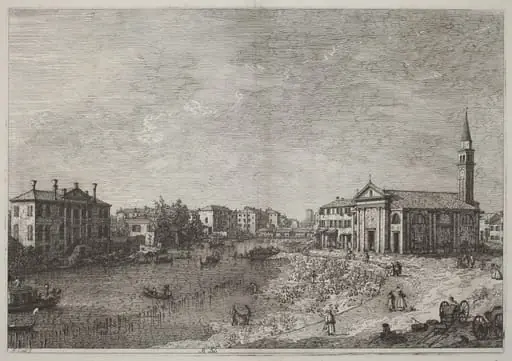 Al Dolo
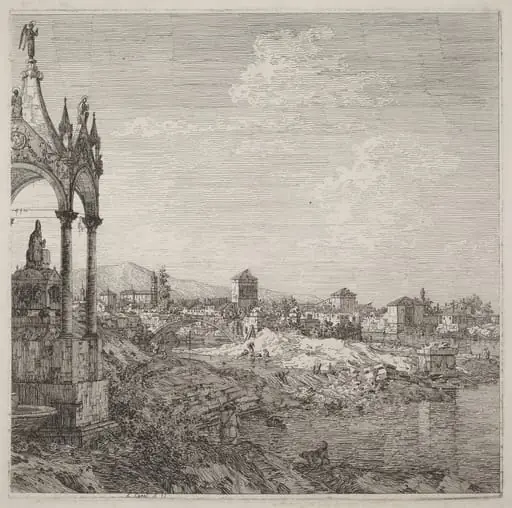 View of a Town with a Bishop's Tomb