Artwork
Views: The Sepulcher of a Bishop
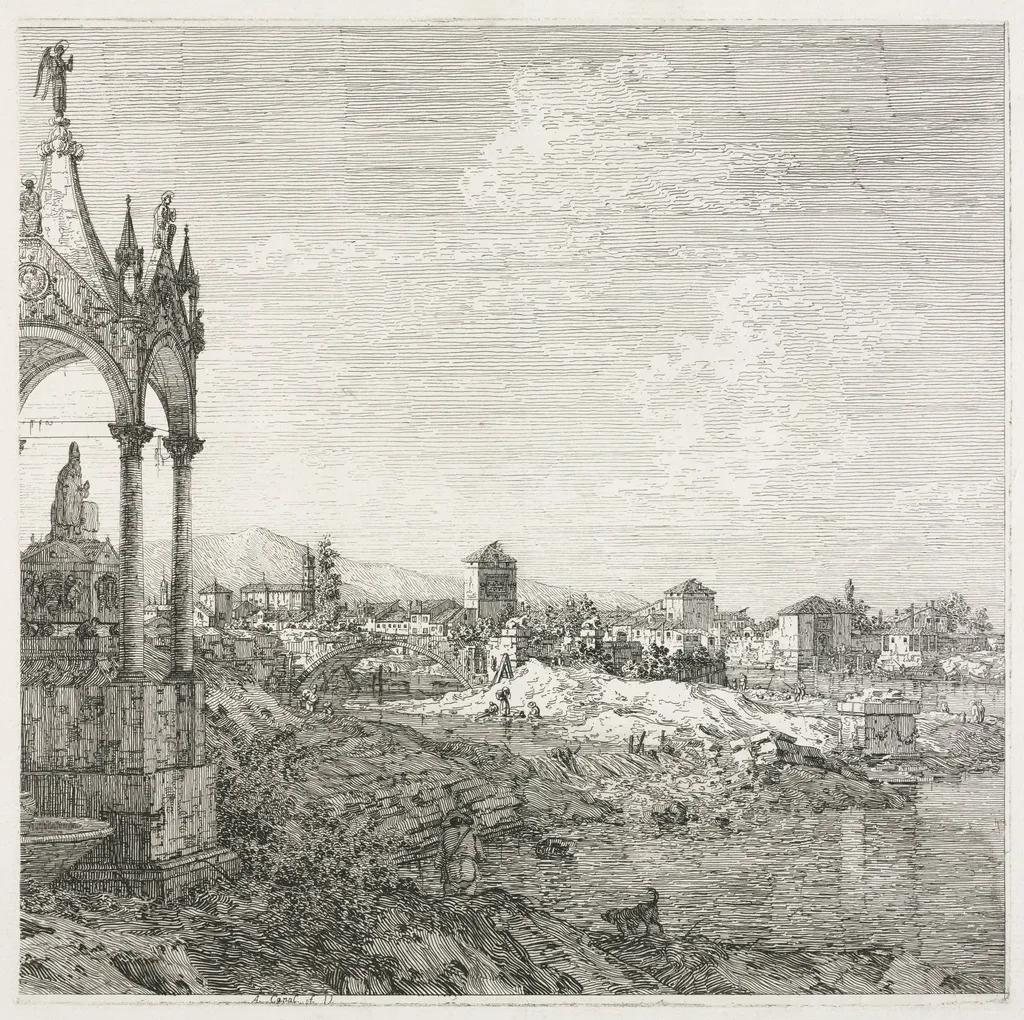
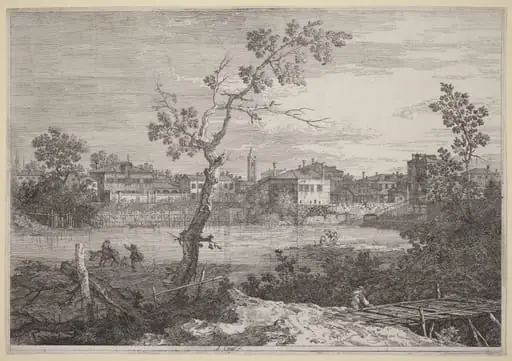
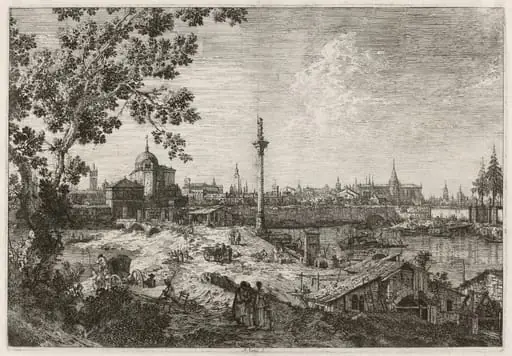
Views: The Sepulcher of a Bishop is a print by the Baroque artist Canaletto. It dates from 1740 and is held in the collection of the Cleveland Museum of Art.
About this work
Overview
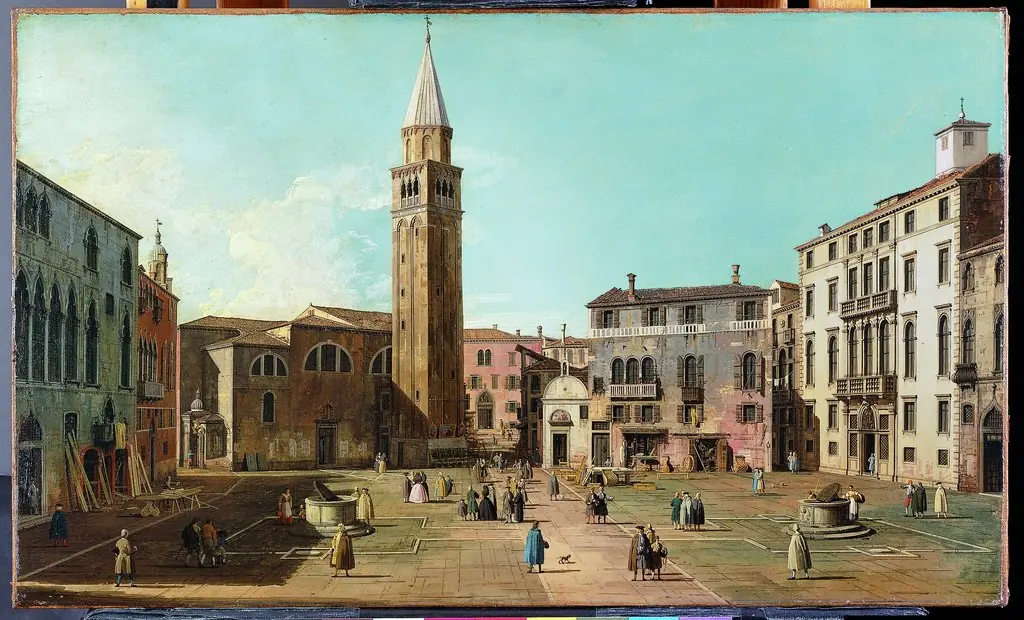
Created in 1740, this print by Antonio Canaletto belongs to a series documenting Venetian architecture. Executed in monochrome, it captures a religious structure amid the city’s urban fabric. Unlike his colorful oil paintings, this work relies on precise linework to convey spatial depth and architectural form, emphasizing structure over color.
Subject & Meaning
The subject is a bishop’s sepulcher, likely located within or adjacent to a prominent church tower. The composition elevates the spire as the visual anchor, suggesting spiritual authority over the bustling city below. The surrounding activity—boats on the canal, figures on streets—frames the monument as both a sacred site and a civic landmark.
Technique & Style
Canaleto employed fine, controlled pen strokes to render intricate facades and aerial perspectives. The sky is left as blank paper, with only faint linear suggestions of clouds, directing focus to the architecture. Buildings are simplified yet accurately proportioned, reflecting his training in stage design and his commitment to topographical fidelity.
History & Provenance
This print emerged during Canaletto’s peak period of architectural documentation, when demand for Venetian views among Grand Tour travelers was high. Likely produced as a preparatory study or independent print, it was part of a broader effort to record Venice’s urban landscape before significant changes occurred in the late 18th century.
Context
In mid-18th-century Venice, religious monuments were central to civic identity. Canaletto’s focus on ecclesiastical architecture aligns with contemporary interest in preserving the city’s heritage. His approach, though precise, avoided overt drama, distinguishing his work from the theatricality of Baroque painting while still engaging its spatial logic.
Legacy
This print exemplifies Canaletto’s influence on topographical drawing, bridging documentary precision with aesthetic order. Later artists and architects studied his methods for capturing urban space. Though less celebrated than his paintings, such works solidified his reputation as a meticulous recorder of Venice’s built environment.
Artist & collection
Artist
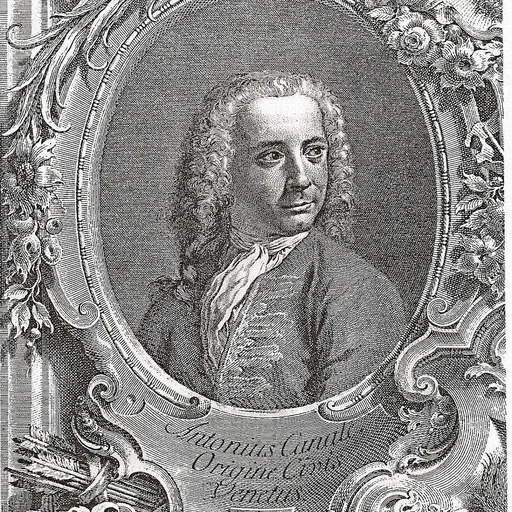
Giovanni Antonio Canal (18 October 1697 – 19 April 1768), commonly known as Canaletto (Italian: ), was an Italian painter from the Republic of Venice, considered an important member of the 18th-century Venetian school.

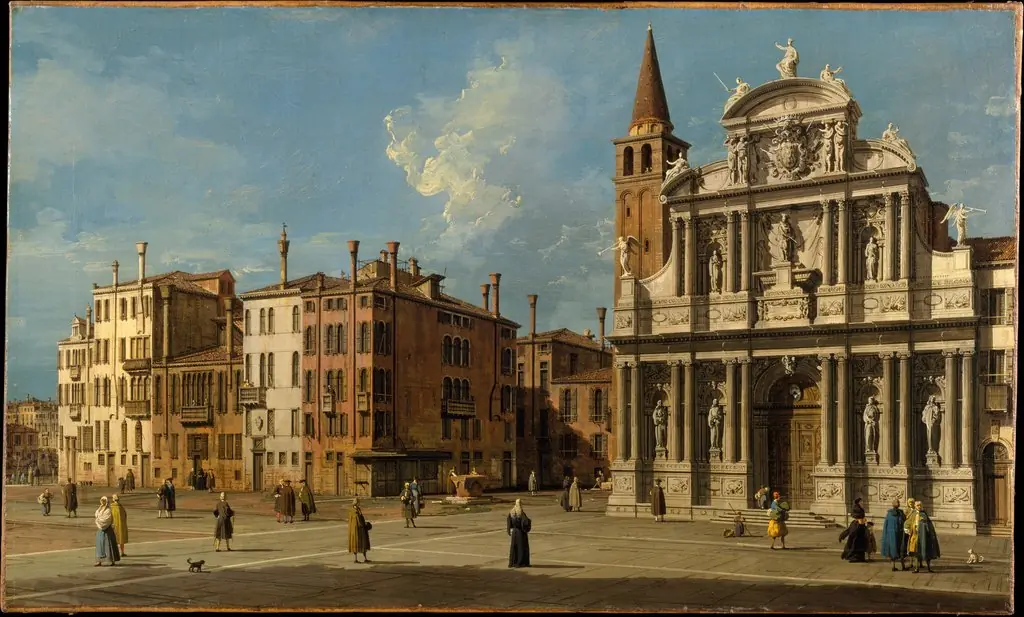
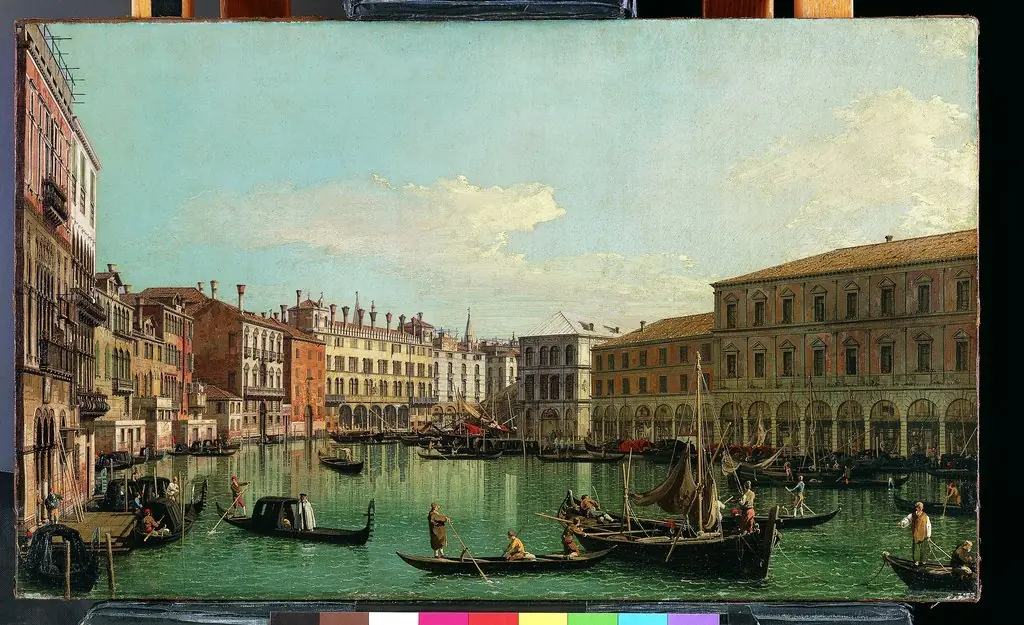
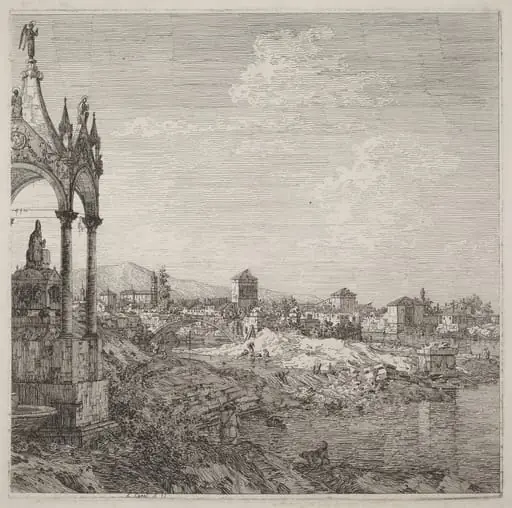 View of a Town with a Bishop's Tomb
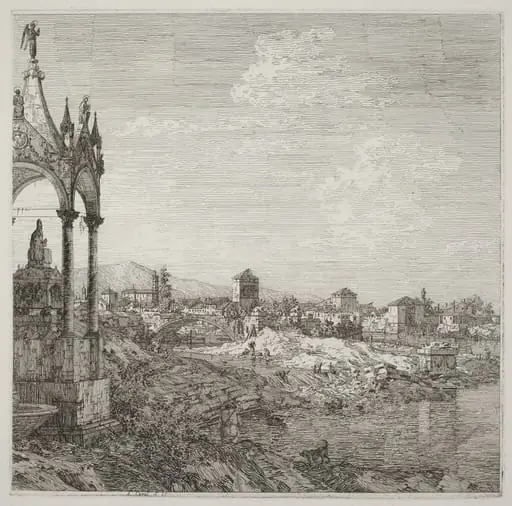 View of a Town with a Bishop's Tomb
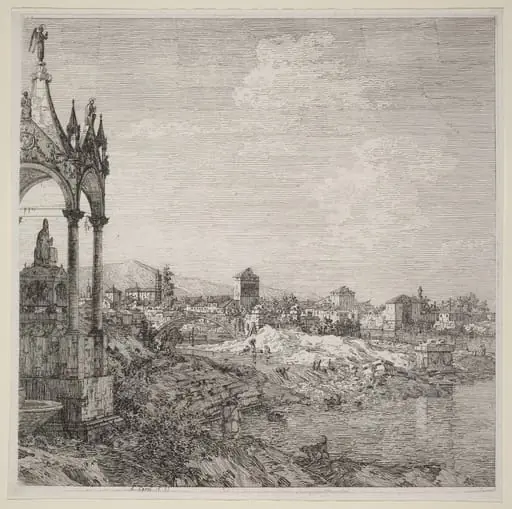 View of a Town with a Bishop's Tomb
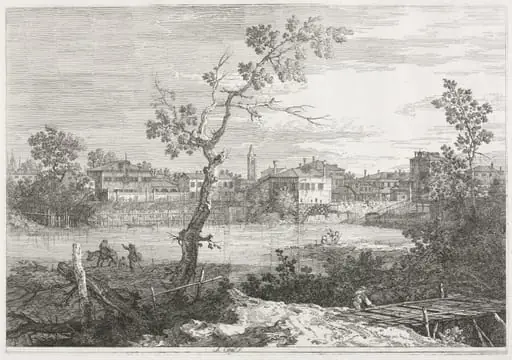 Views: View of Burano, a Town on an Island in the Venetian Lagoon
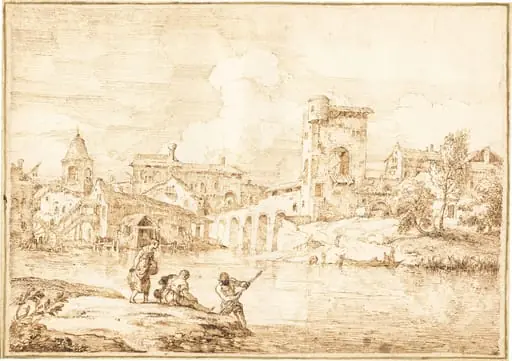 A Fortified Village along a River
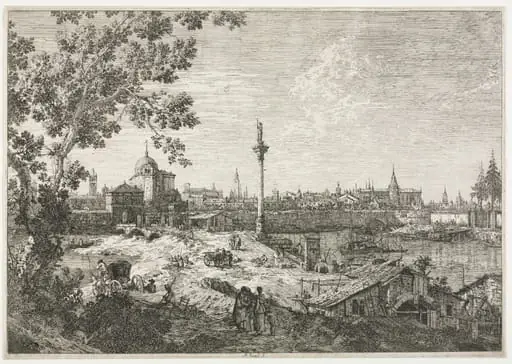 Panorama of a City on a River
 View of a Town on a River Bank
 View of a Town on a River Bank
 The Small Port
 Landscape with a Bridge and Ruined Tower
 Imaginary View of Padua
 Shepherds in a Landscape before a Fortified Town