Artwork
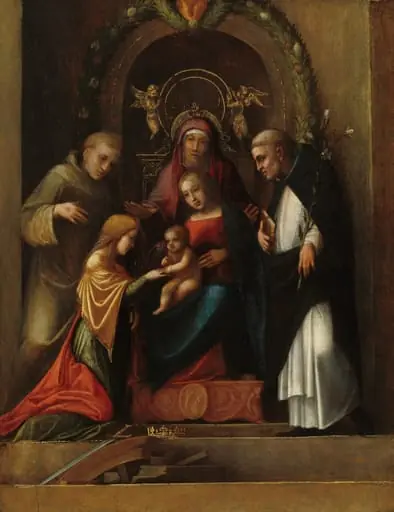
The Mystic Marriage of Saint Catherine
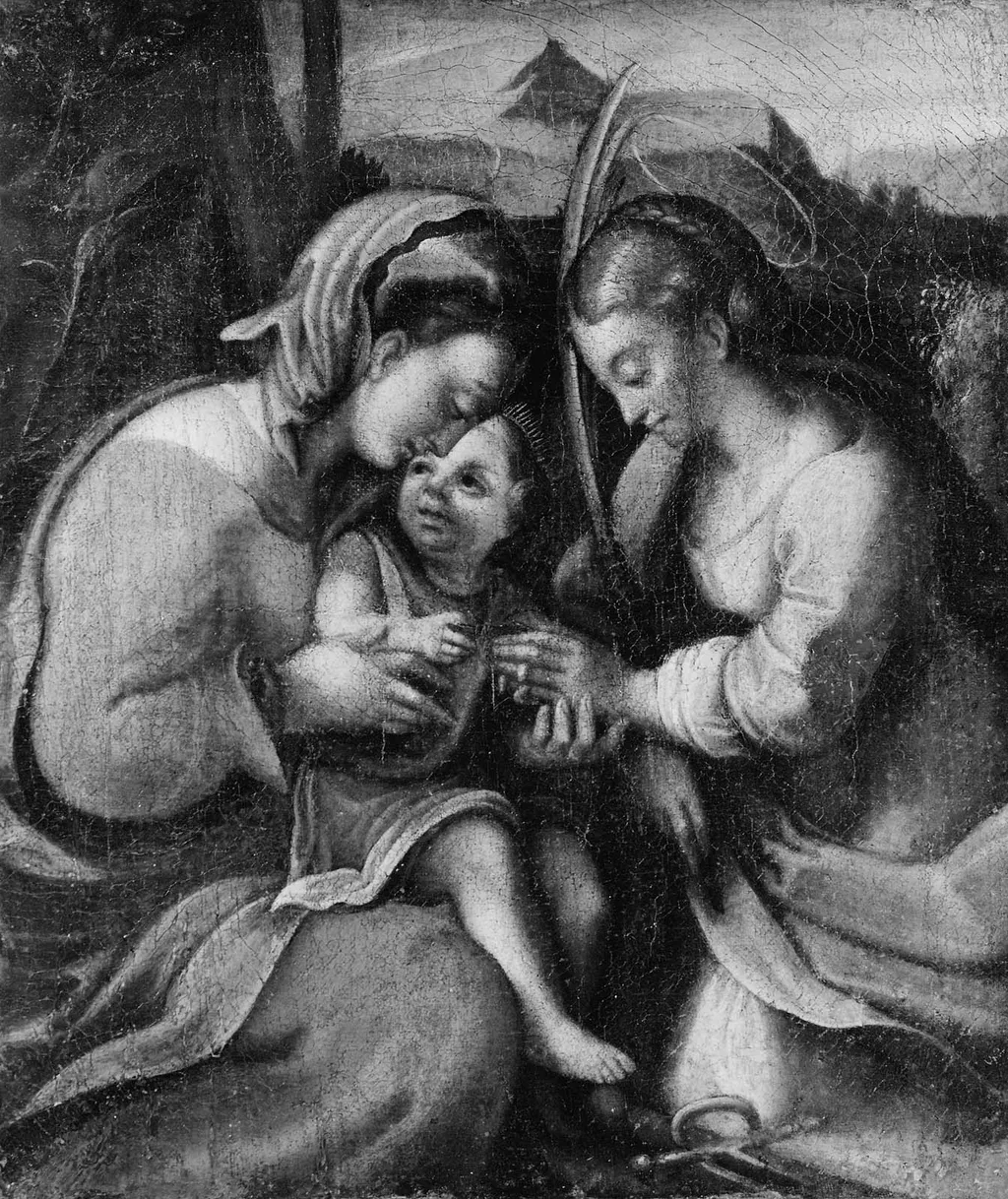
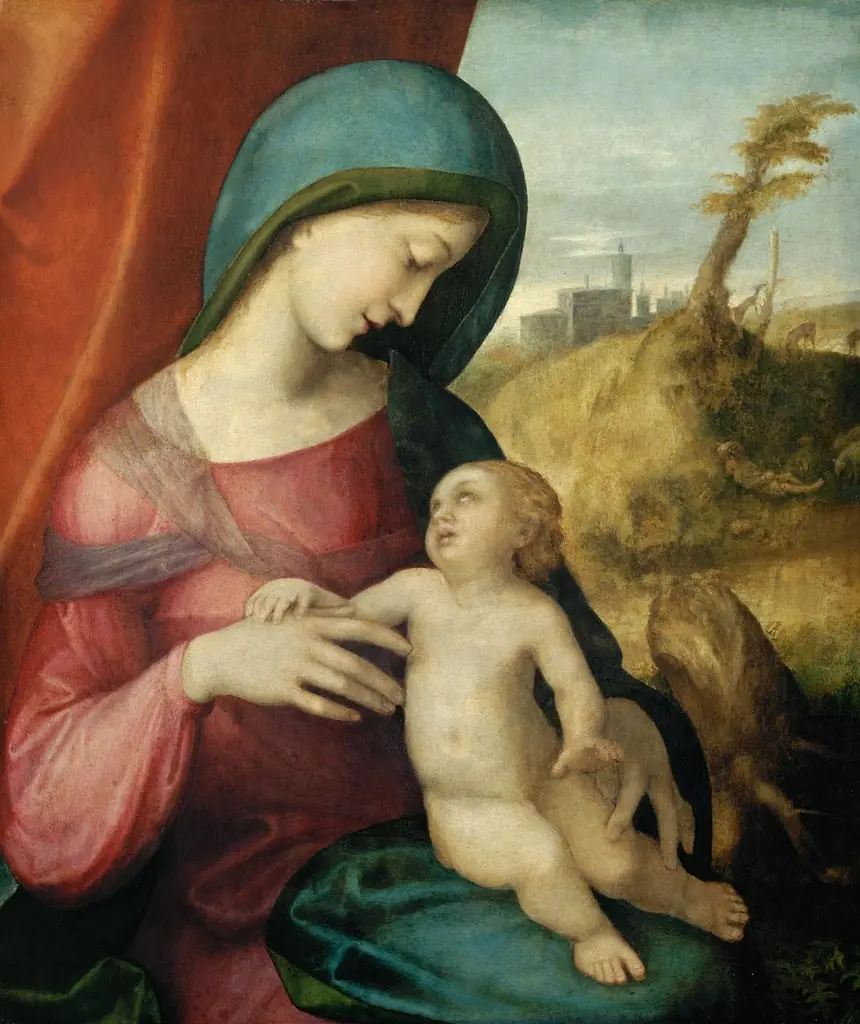
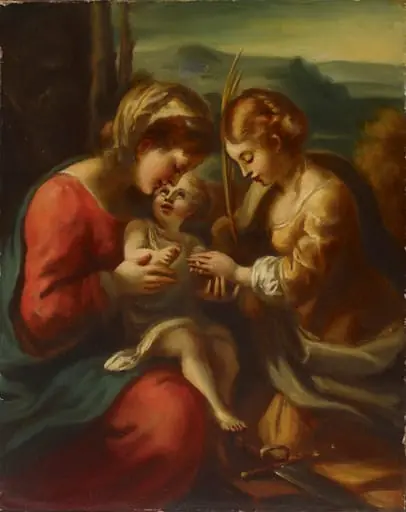
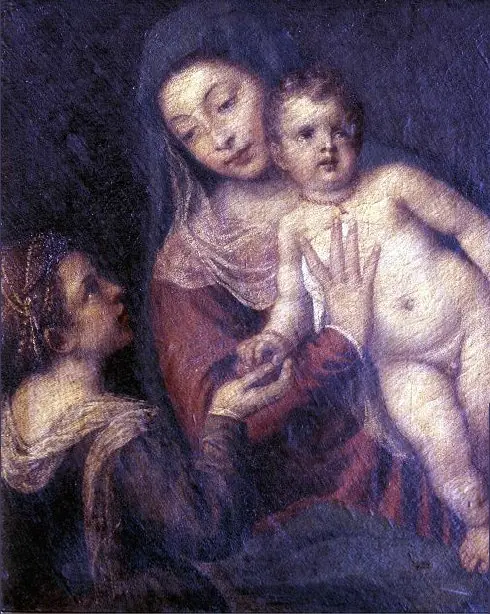
The Mystic Marriage of Saint Catherine is an oil painting by the Mannerist artist Correggio. It dates from 1521 and is held in the collection of the Museum of Fine Arts Boston.
About this work
Overview
Correggio employs a soft, sfumato technique to blend the figures into a unified, pyramidal group, characteristic of his mature style.
Antonio da Correggio's The Mystic Marriage of Saint Catherine, executed in 1521, is a quintessential High Renaissance religious work depicting the spiritual union of Saint Catherine of Alexandria with the Christ Child. The composition centers on the Virgin Mary, who holds the infant Jesus, while Saint Catherine kneels to receive a ring from the child, symbolizing her mystical marriage. A fourth figure, likely Saint Margaret or an angel, often appears in this specific variant, observing the sacred exchange. Correggio employs a soft, sfumato technique to blend the figures into a unified, pyramidal group, characteristic of his mature style. The artist's mastery of light creates a luminous atmosphere, highlighting the delicate textures of the flowing robes and the tender interactions between the figures. Painted during a period when Correggio was establishing his reputation in Parma, the work demonstrates his departure from the rigid formalism of earlier Quattrocento art toward a more dynamic, emotional, and naturalistic approach. The painting reflects the Counter-Reformation emphasis on personal devotion and the sanctity of the Virgin and Child, serving as a significant example of Correggio's ability to infuse religious subjects with human warmth and psychological depth.
Subject & Meaning
The scene depicts a tender exchange where one woman cradles the infant while the other reaches to make contact with the child’s hand, evoking the legendary mystic marriage of Saint Catherine. The child’s inquisitive gaze toward the approaching hand underscores themes of devotion, spiritual union, and gentle affection.
Technique & Style
Correggio employs soft modeling and delicate chiaroscuro to render the figures’ flowing garments and the infant’s flesh with a luminous quality. The muted background recedes, allowing the light to focus on the central interaction, while the painter’s characteristic sfumato creates a seamless transition between light and shadow.
History & Provenance
Created in the early 1520s, the painting entered the Museum of Fine Arts, Boston, as part of its European holdings. Its attribution to Correggio has been affirmed through stylistic analysis and documentary evidence linking the work to the artist’s mature period.
Own this work as a print
Artist & collection

Artist
Antonio Allegri da Correggio (August 1489 – 5 March 1534), usually known as just Correggio (, also UK: , US: , Italian: ), was an Italian Renaissance painter who was the foremost painter of the Parma school of the High…