Artwork
Madonna and Child, with a Bishop, St John The Baptist and Angels
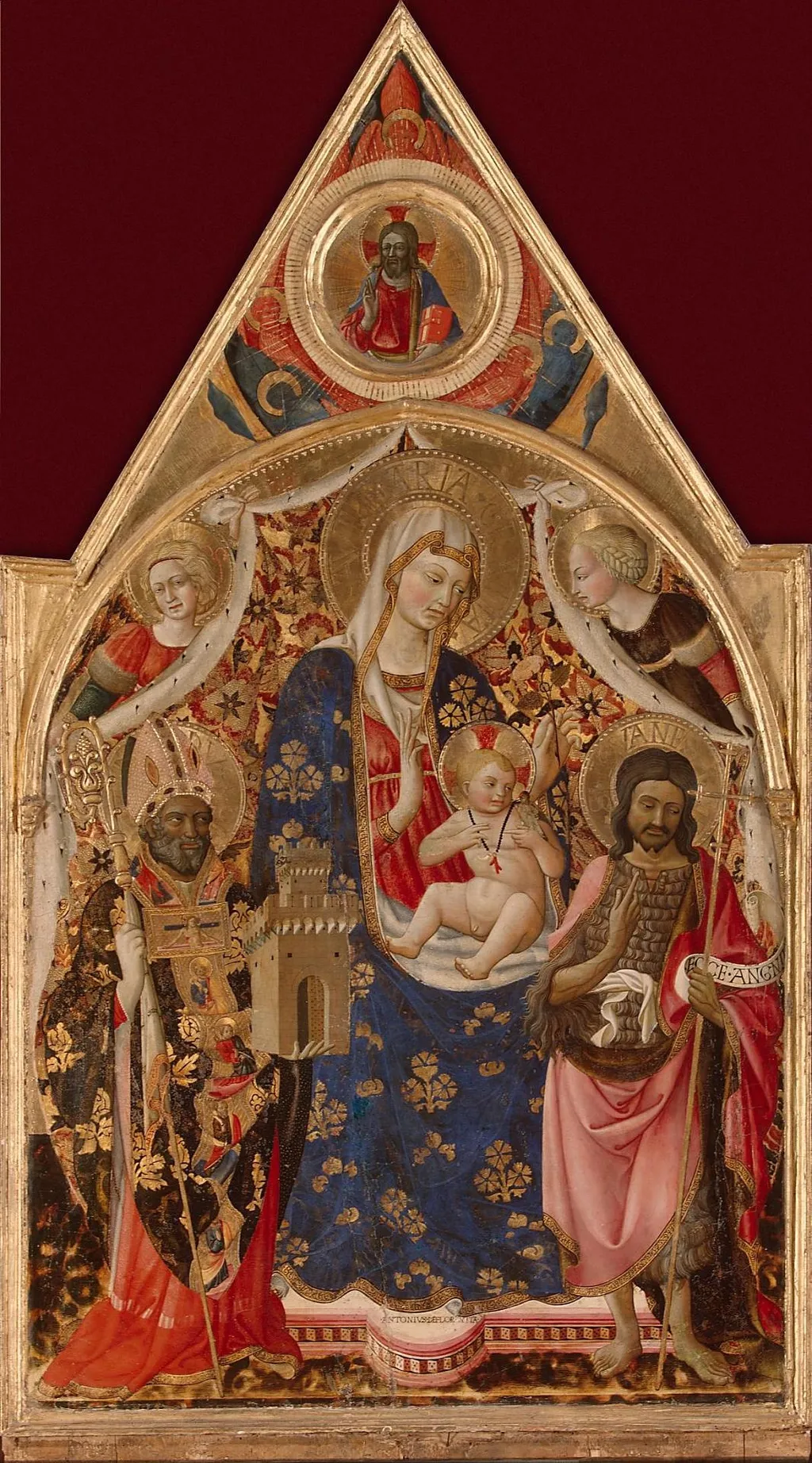
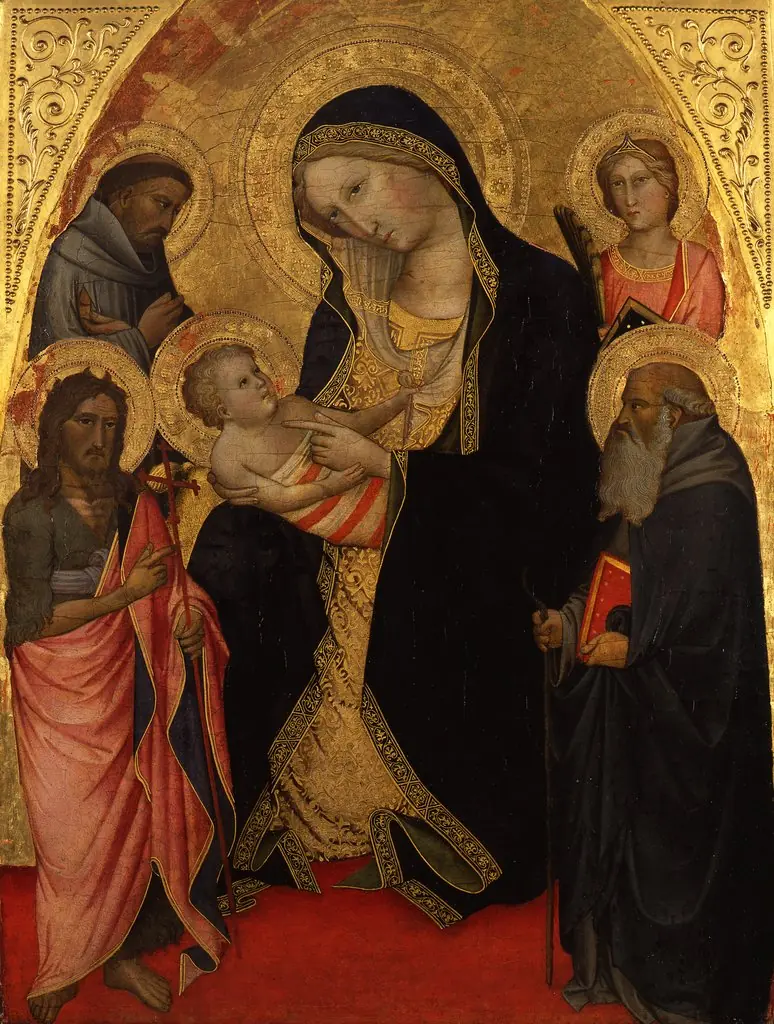
Madonna and Child, with a Bishop, St John The Baptist and Angels is a tempera painting by the Early Renaissance artist Antonio da Firenze. It dates from 1415 and is held in the collection of the Hermitage Museum.
About this work
Overview
The composition rests on a richly gilded throne, its base adorned with a miniature castle motif, and bears an inscription at the lower edge.
Antonio da Firenze’s tempera panel, painted in 1415, presents a devotional scene centered on the Virgin Mary cradling the infant Christ. Flanking her are a dignified bishop holding a book, a youthful Saint John the Baptist with a lamb, and two attendant angels. The composition rests on a richly gilded throne, its base adorned with a miniature castle motif, and bears an inscription at the lower edge.
Subject & Meaning
The work combines traditional iconography: Mary as the intercessor, the Christ Child reaching toward the divine, and John the Baptist as the forerunner, symbolized by his lamb. The bishop, likely a patron or ecclesiastical figure, underscores the painting’s liturgical function, while the hovering angels and celestial halo suggest heavenly approval of the holy family’s presence.
Technique & Style
Executed in egg tempera, the painting employs fine, opaque layers that yield the vivid reds, deep blues, and luminous gold leaf characteristic of early 15th‑century Italian art. The precise brushwork defines delicate facial features and intricate drapery, while the gilded background creates a radiant, otherworldly atmosphere typical of the period’s devotional panels.
History & Provenance
Created in the early Renaissance, the panel eventually entered the collection of the State Hermitage Museum in St. Petersburg, where it remains on display. Its journey from Italy to Russia reflects the broader 19th‑century interest of Russian collectors in Italian quattrocento works.
Context
The painting belongs to a tradition of Marian altarpieces commissioned for churches or private chapels, where the inclusion of a bishop often signified a specific patron’s involvement. Its stylistic traits align with the transitional phase between Gothic ornamentation and the emerging naturalism of the Florentine school.
Artist & collection
Artist
A 15th-century Italian painter working in tempera panels, Antonio da Firenze made altar pieces full of bright colors and delicate gold patterns.