Artwork
Gotisches Gruftgewölbe
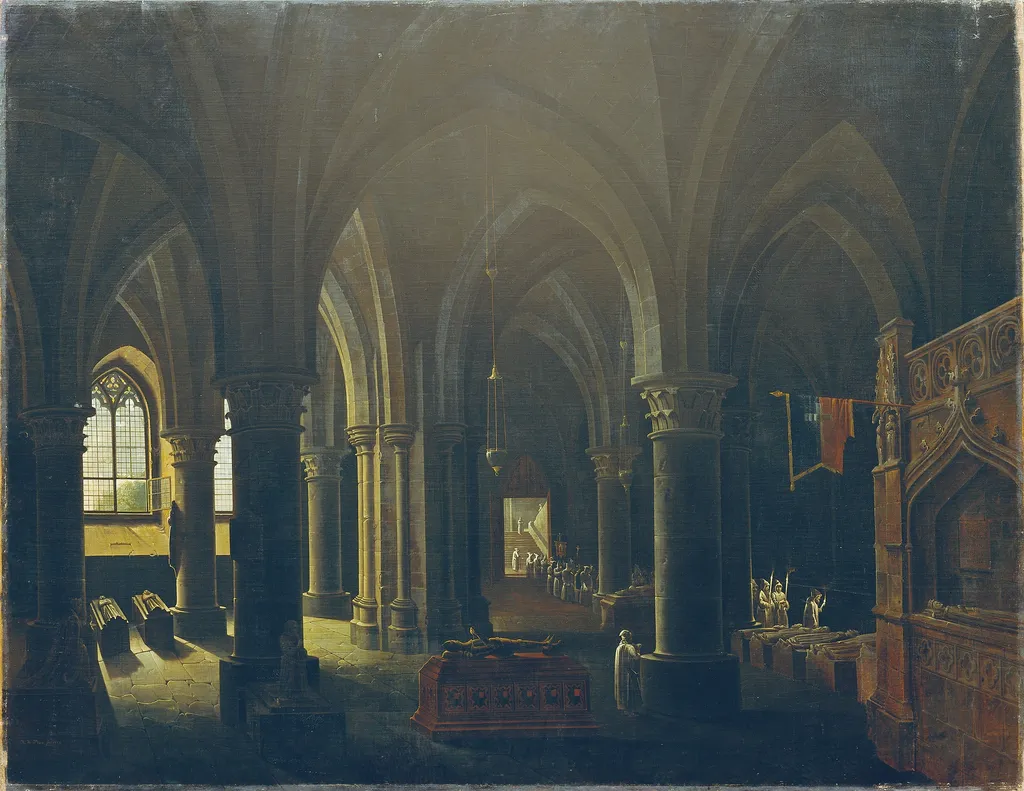
Gotisches Gruftgewölbe is an oil painting by Antonio de Pian. It dates from 1828 and is held in the collection of the Kunsthistorisches Museum.
About this work
Overview
The composition is anchored by a vaulted nave illuminated by muted daylight that filters through stained‑glass windows.
Antonio de Pian’s 1828 oil painting, titled *Gotisches Gruftgewölbe*, presents a solemn Gothic interior. The composition is anchored by a vaulted nave illuminated by muted daylight that filters through stained‑glass windows. Central to the scene is a draped coffin placed on a raised dais, surrounded by a small gathering of figures. The work is part of the collection of the Kunsthistorisches Museum in Vienna.
Subject & Meaning
The canvas captures a funerary rite within a medieval church, emphasizing the ritual’s quiet reverence. The presence of statues, banners, and the modest congregation suggests a commemorative ceremony, perhaps for a noble patron. The interplay of light and shadow underscores the transitory nature of life, casting the coffin in a gentle glow that draws attention to the act of remembrance.
Technique & Style
De Pian employs a pronounced chiaroscuro, using deep shadows around the stone columns and arches to model three‑dimensional space. Sunlight entering from the left creates a warm pool on the floor, contrasting with the cooler, dim interior. This handling of light not only defines form but also guides the viewer’s eye from the windows through the nave to the central coffin.
History & Provenance
Created in 1828, the painting entered the holdings of the Kunsthistorisches Museum, where it remains on display. Its acquisition reflects the museum’s 19th‑century interest in works that document historic architecture and religious customs, providing a visual record of Gothic interior design as interpreted by a Viennese artist.
Own this work as a print
Artist & collection

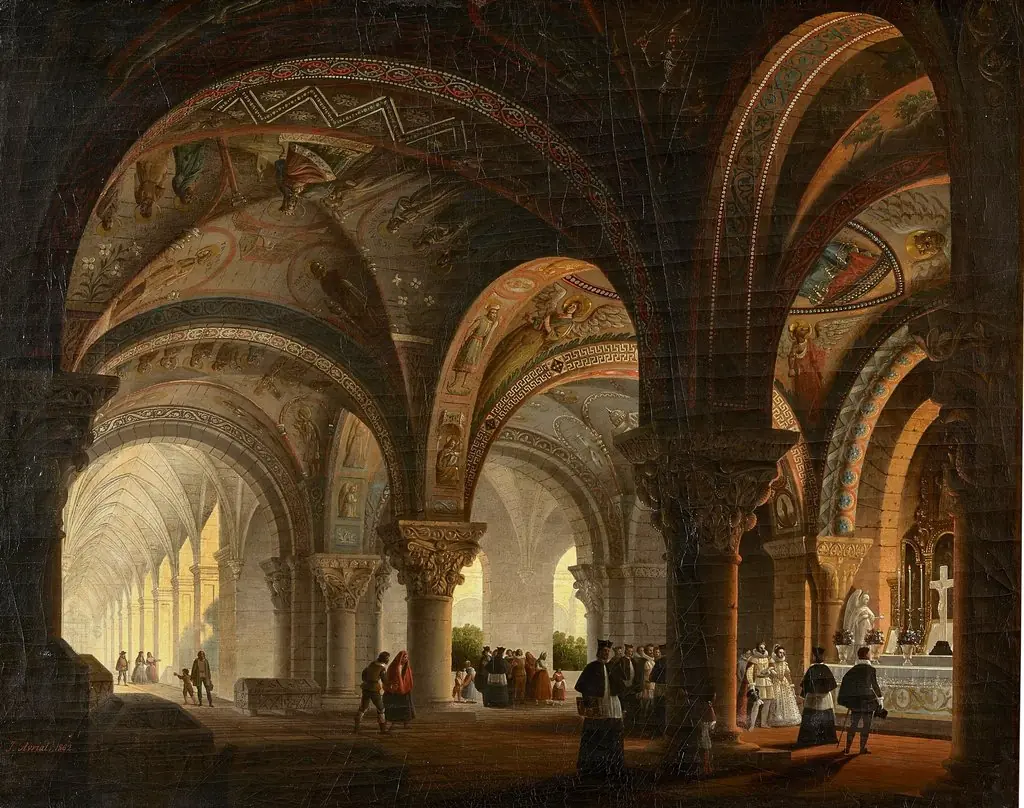 Panteón de los reyes de León
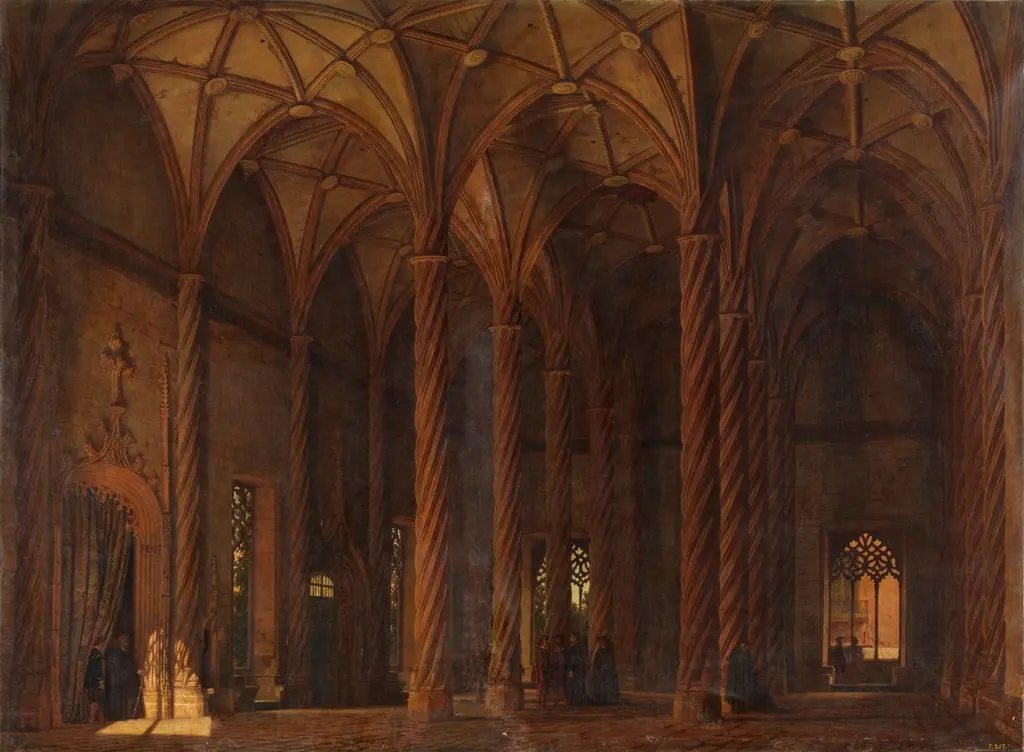 Vista de la Lonja de la Seda en Valencia
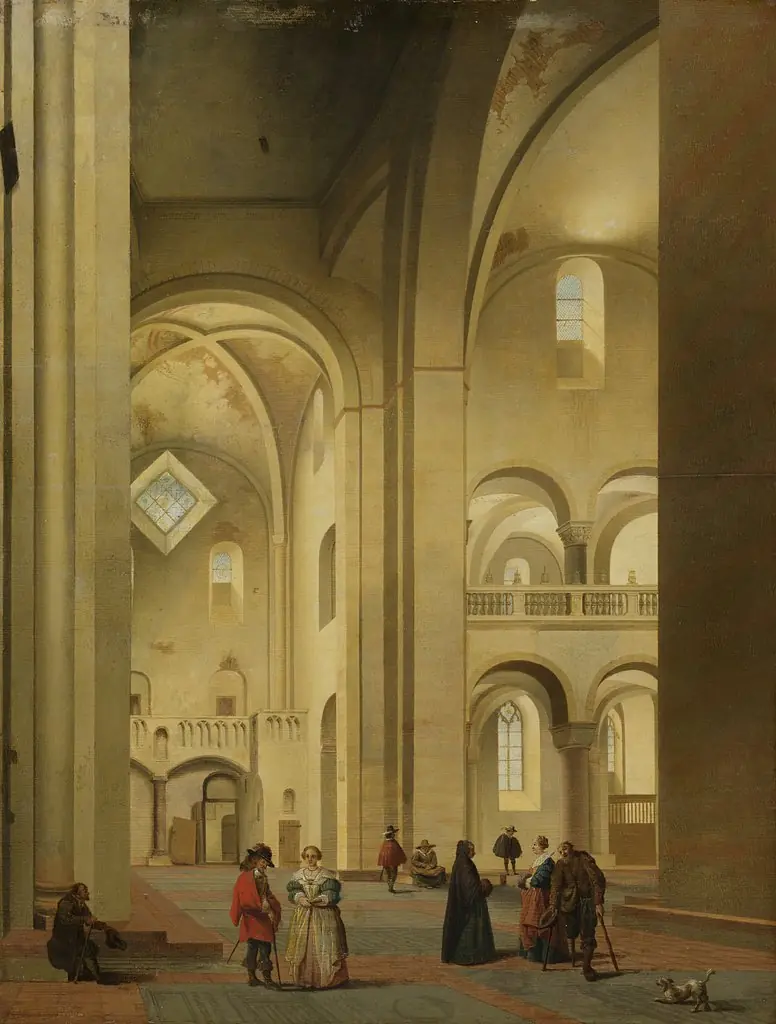 The transept of the Mariakerk in Utrecht, seen from the northeast
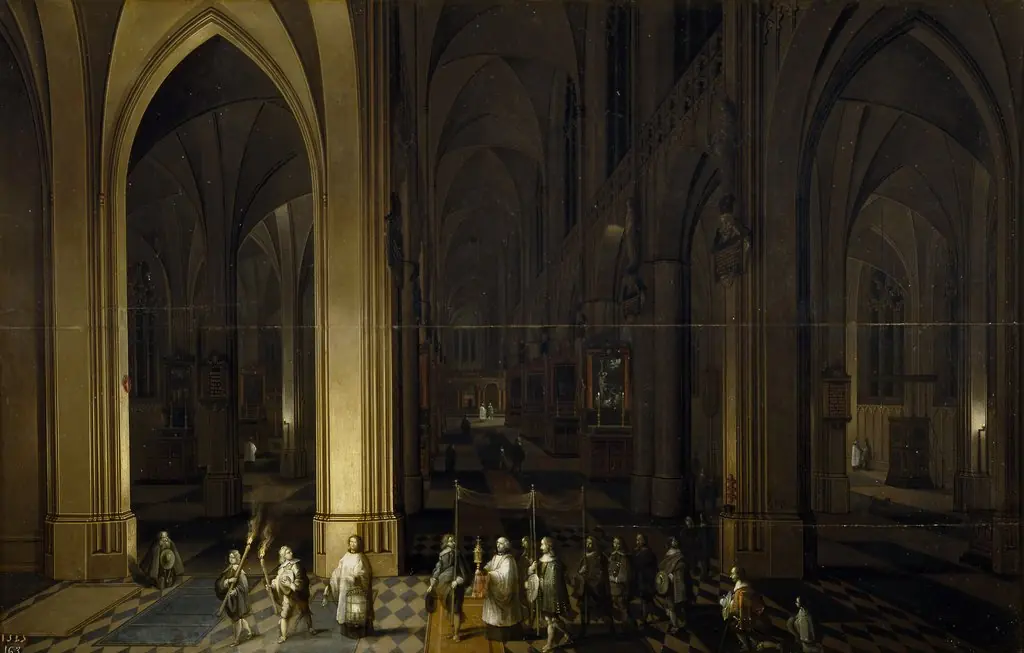 Viaticum inside a church
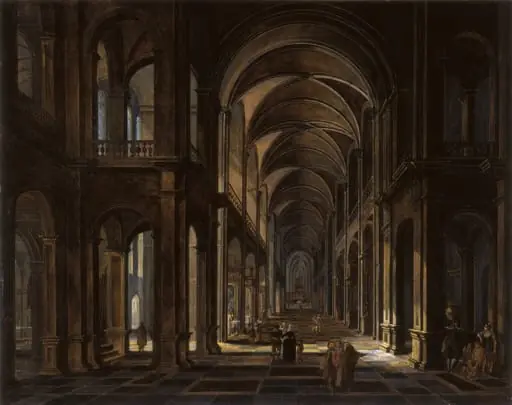 Interior of a Church
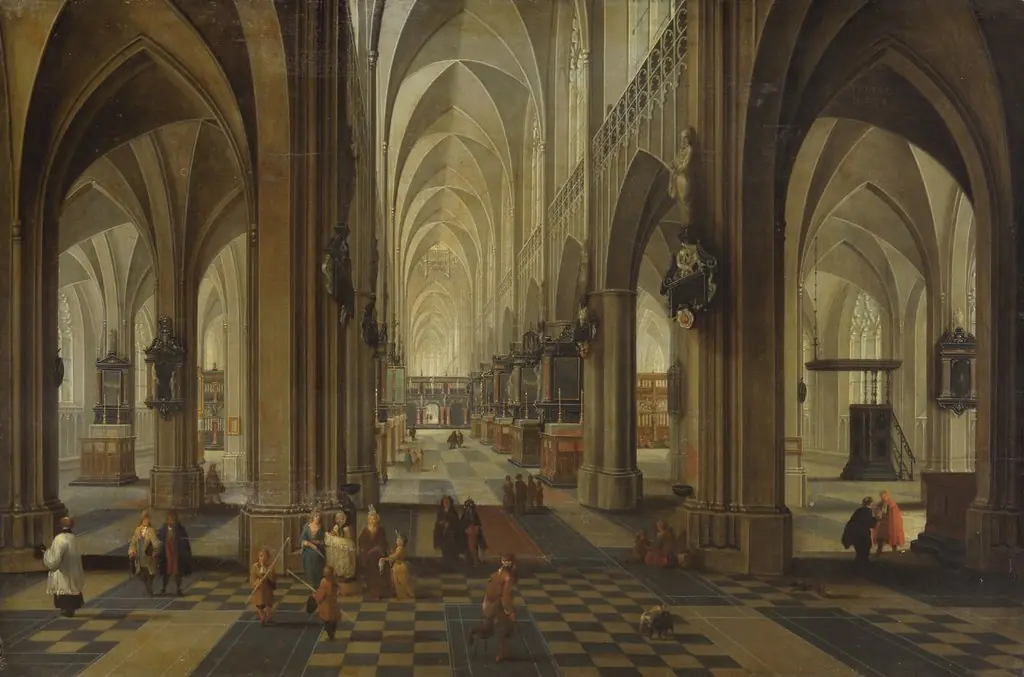 Innenansicht der Kathedrale Nôtre Dame zu Antwerpen
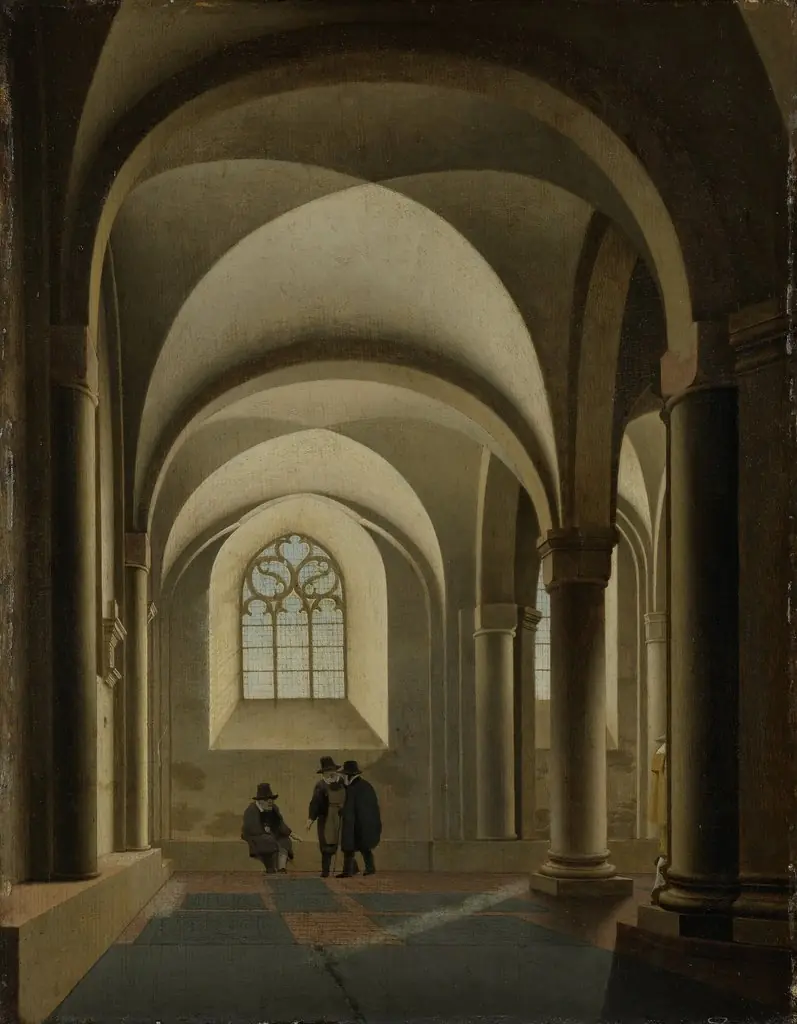 The westernmost bays of the south aisle of the Mariakerk in Utrecht
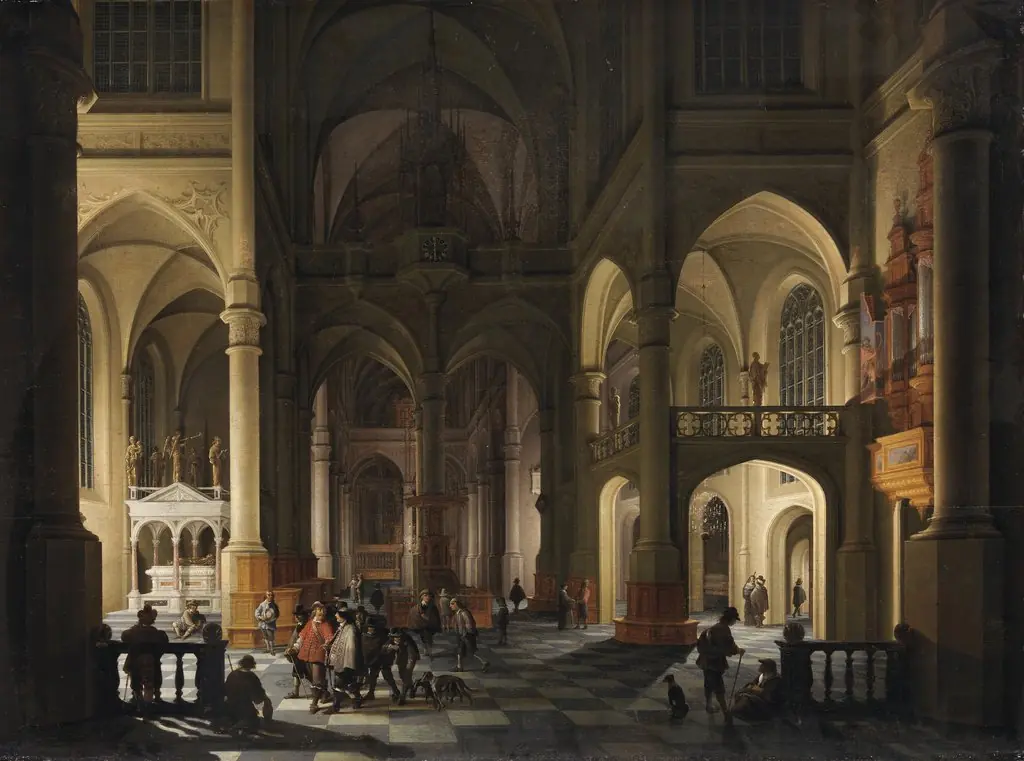 An Interior of a Church
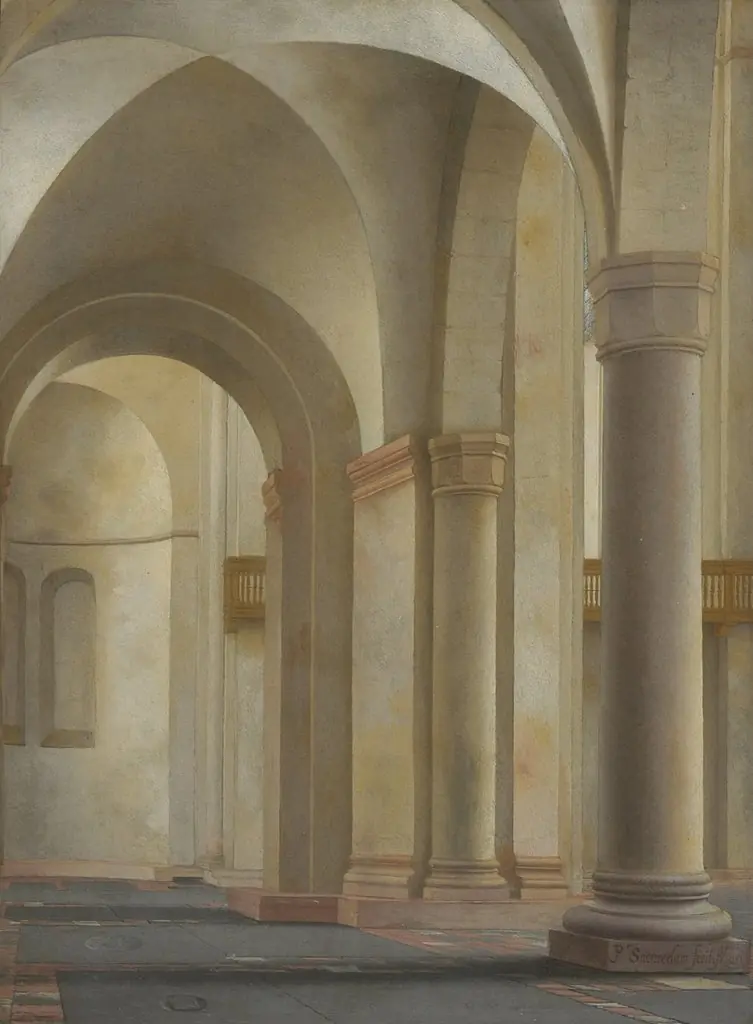 Interior of the Mariakerk, Utrecht
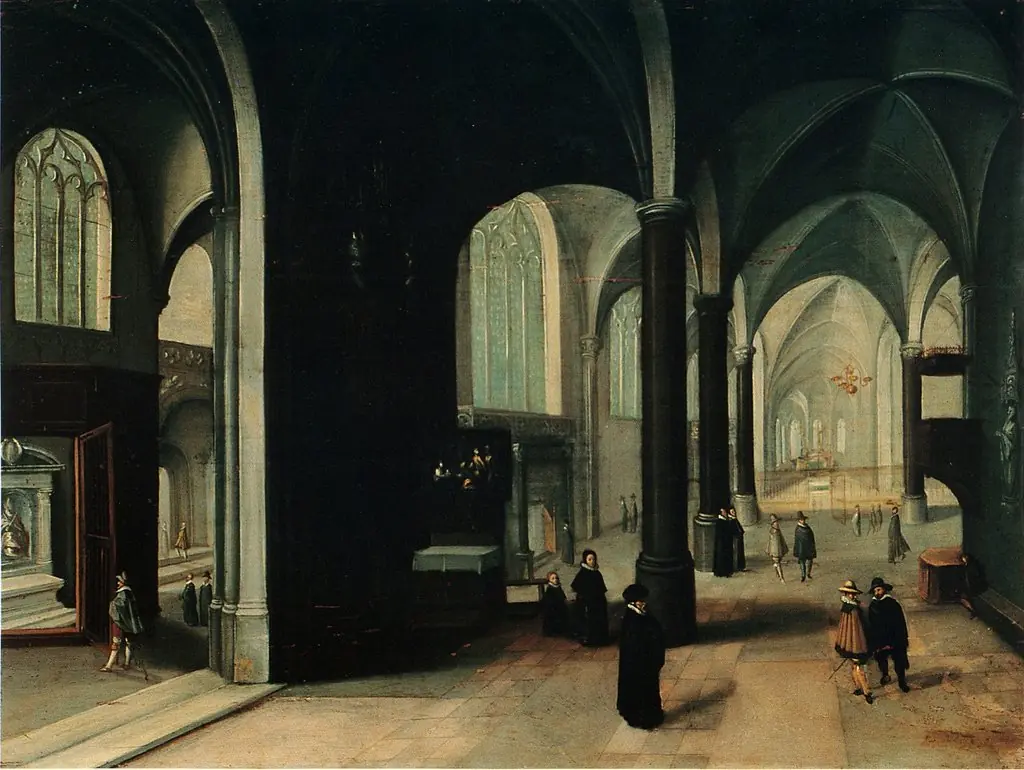 Interior de iglesia
 Interior of the Saint Mary Church in Utrecht
 Church interior