Artwork
Landschaft mit Eberjagd
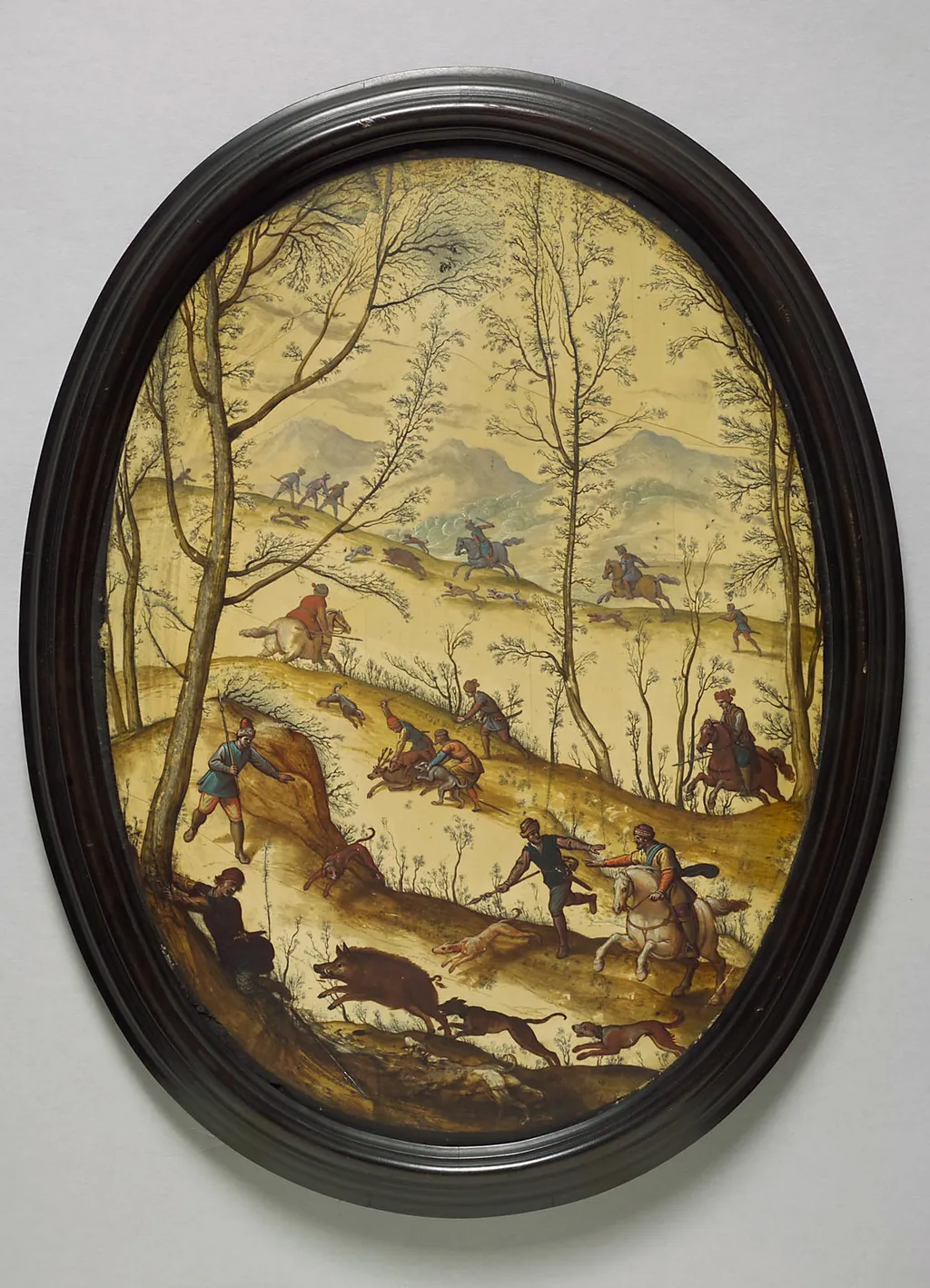
Landschaft mit Eberjagd is an unspecified painting by Antonio Tempesta. It dates from 1602 and is held in the collection of the Kunsthistorisches Museum.
About this work
Overview
Tempesta, an Italian artist active in both Rome and Antwerp, combined his skill in engraving with painterly detail to render a bustling outdoor scene.
Painted around 1602 by Antonio Tempesta, this work is a landscape dominated by a vigorous boar hunt. Tempesta, an Italian artist active in both Rome and Antwerp, combined his skill in engraving with painterly detail to render a bustling outdoor scene. The painting resides in the Kunsthistorisches Museum’s collection and reflects his interest in dynamic, narrative-driven compositions rooted in classical and contemporary hunting traditions.
Subject & Meaning
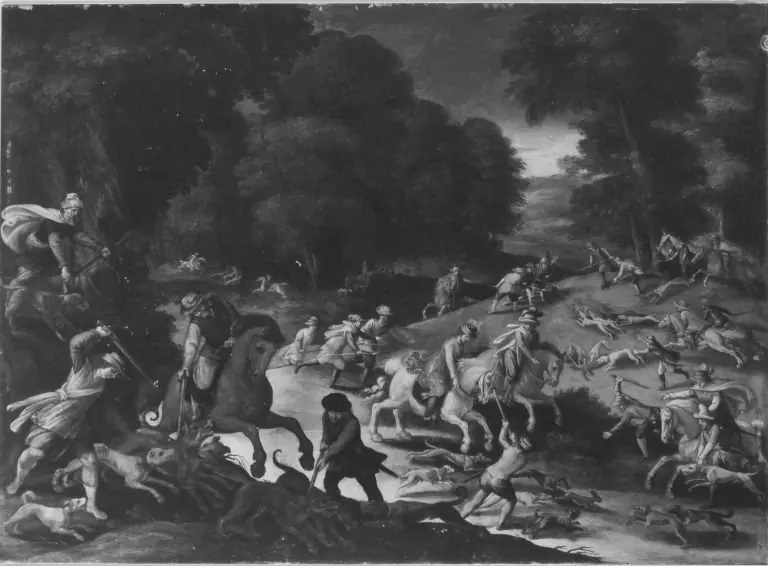
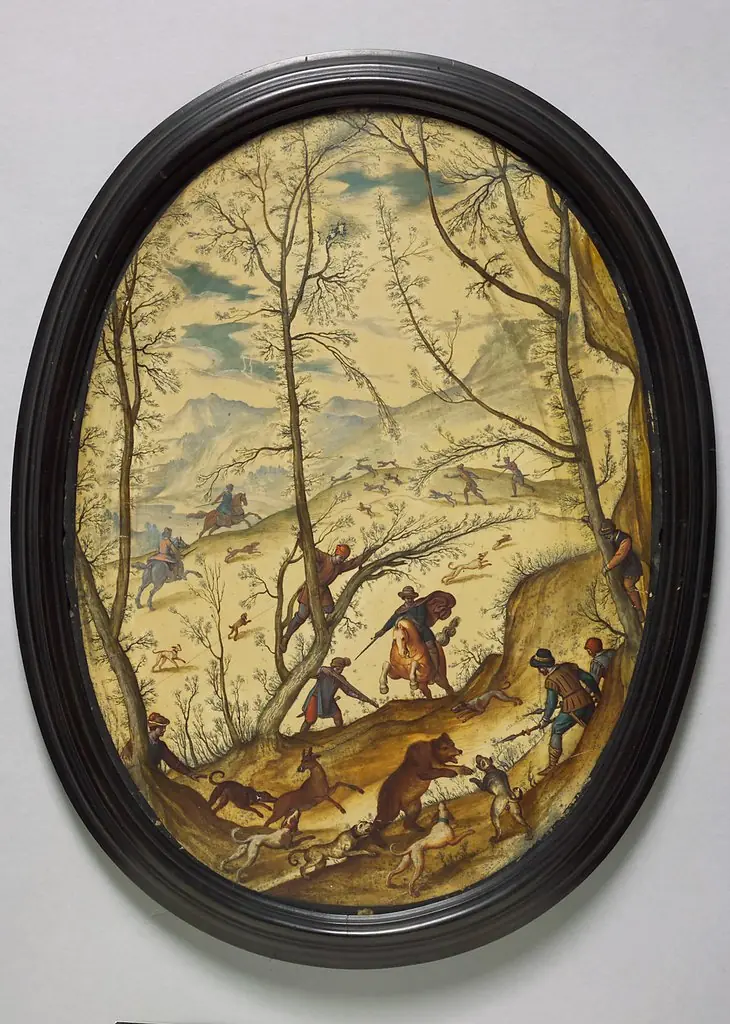
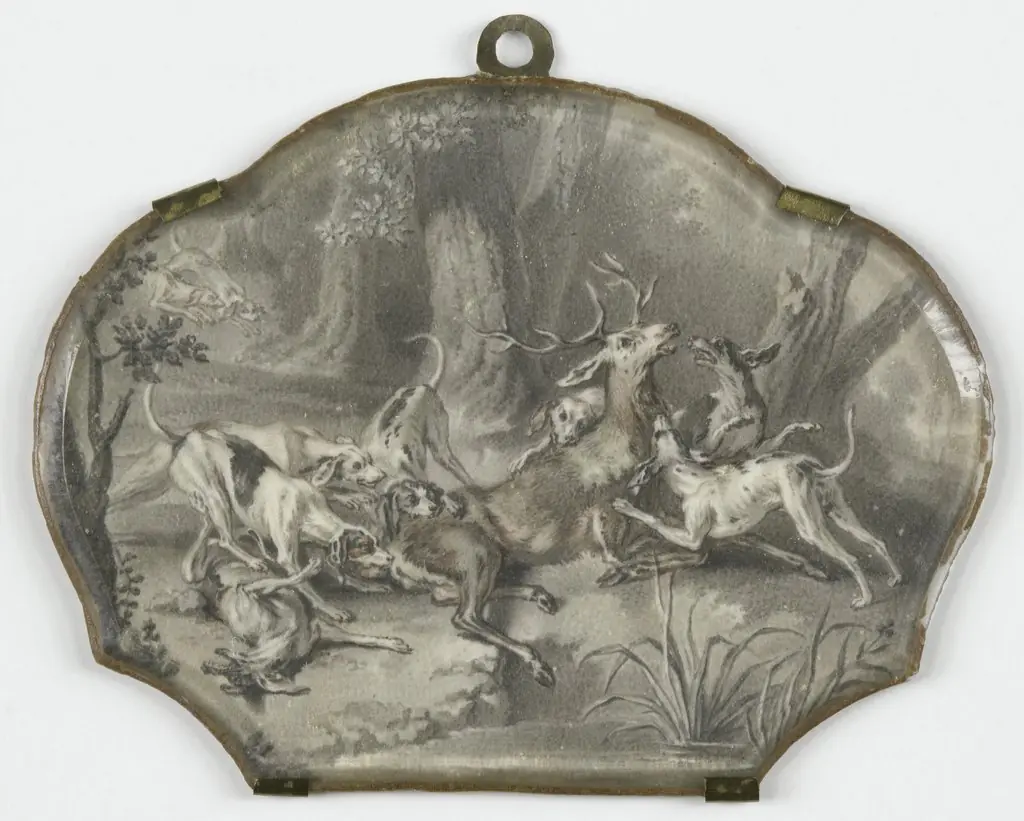
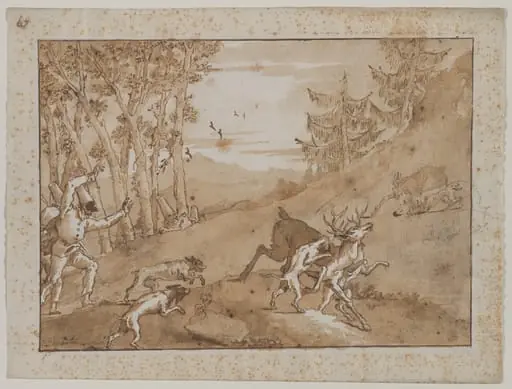
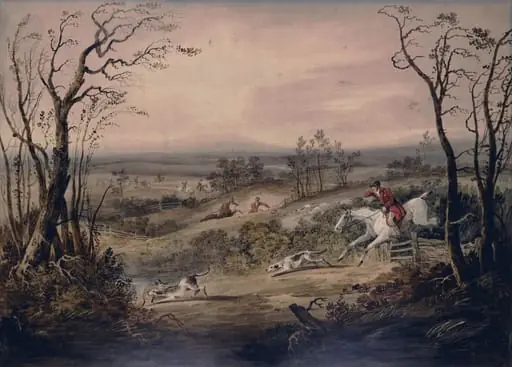
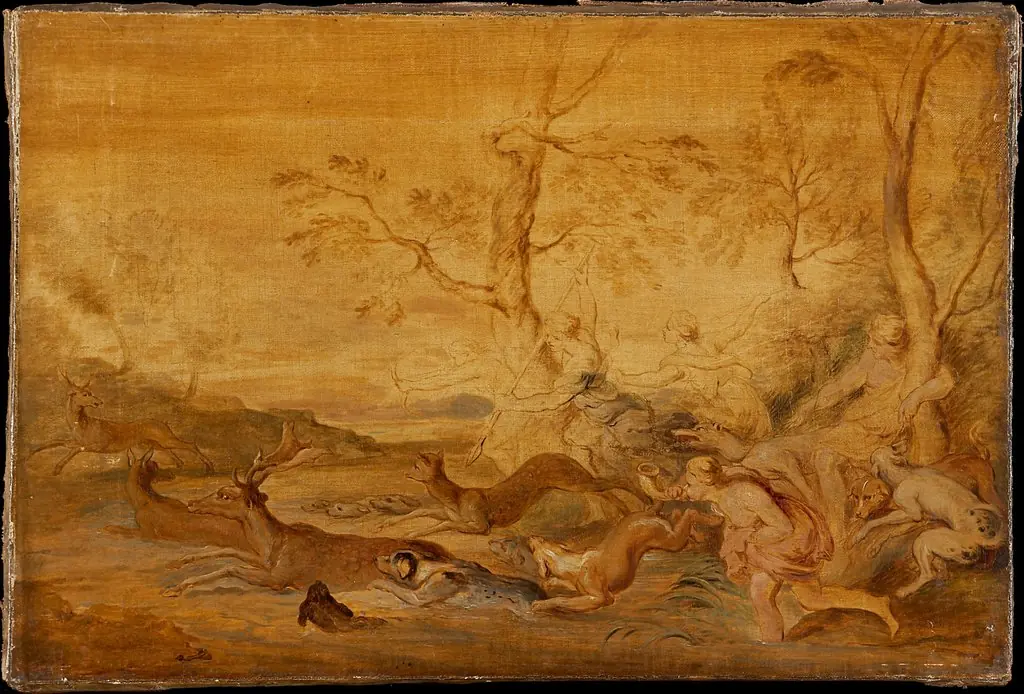
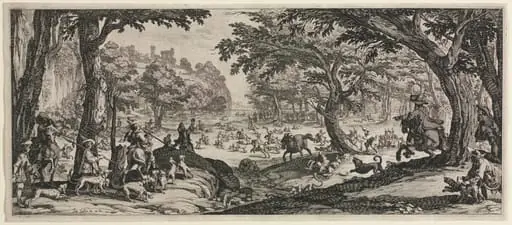
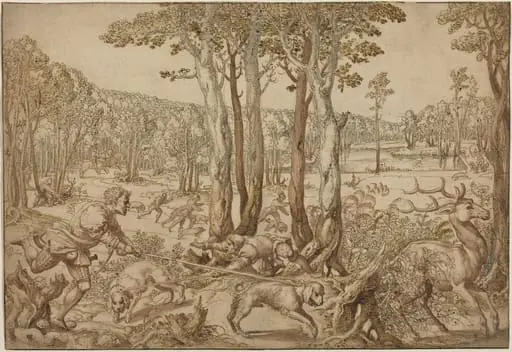
The scene depicts a hunt for wild boar and deer, set in a dense woodland with distant hills. Hunters on horseback and foot, armed with spears and dogs, pursue their prey with urgency. The central figure confronting the boar underscores the peril and valor associated with such pursuits. Beyond mere sport, the image evokes aristocratic pastimes and the human struggle against nature, common themes in early 17th-century European elite culture.
Technique & Style
Tempesta employs a dense, energetic composition with multiple figures in motion, arranged to guide the eye through the wooded terrain. His use of linear precision, inherited from engraving, lends clarity to the crowded scene. While not overtly chiaroscuro-driven, subtle contrasts in light and shadow define forms and depth, enhancing the sense of movement and spatial recession within the natural setting.
History & Provenance
The painting entered the Kunsthistorisches Museum’s holdings as part of the Habsburg imperial collection, likely acquired during Tempesta’s time in Antwerp, where he worked for noble patrons. Its survival in a major European collection suggests it was valued for its narrative vigor and technical skill. No significant alterations or reattributions are recorded, and it has remained in the museum since at least the 19th century.
Context
Tempesta’s work emerged during a period when hunting scenes were popular among European courts, symbolizing power, control over nature, and martial virtue. His Italian training merged with Northern European landscape traditions, creating a hybrid style that appealed to Habsburg collectors. Similar themes appear in the works of contemporaries like Bruegel and Rubens, reflecting broader cultural fascination with the hunt as both spectacle and ritual.
Legacy
Though less celebrated than his engravings, this painting exemplifies Tempesta’s ability to translate printmaking precision into oil on panel. It contributes to the understanding of how Italian artists adapted Northern landscape conventions. The work remains a reference for scholars studying the intersection of hunting iconography and early Baroque composition in Central European collections.
Artist & collection
Artist
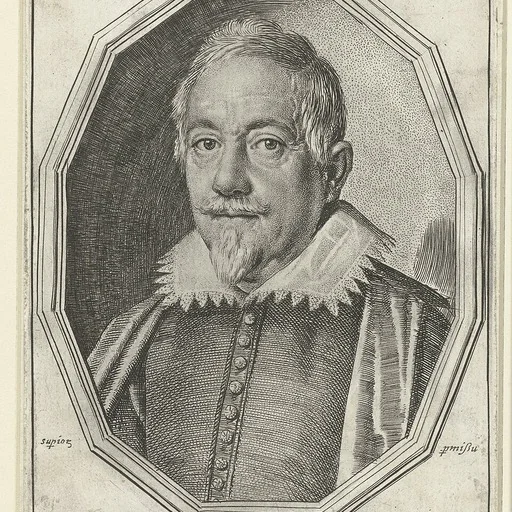
Antonio Tempesta, also called il Tempestino (1555 – 5 August 1630), was an Italian painter and engraver, whose art acted as a point of connection between Baroque Rome and the culture of Antwerp.