Artwork
Mukhino village
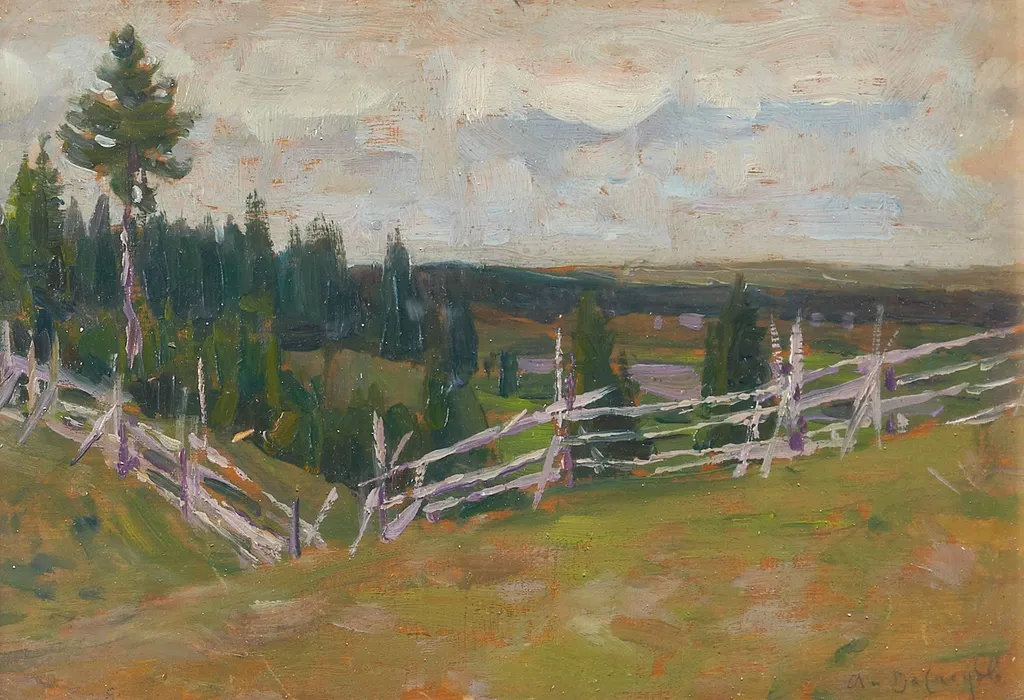
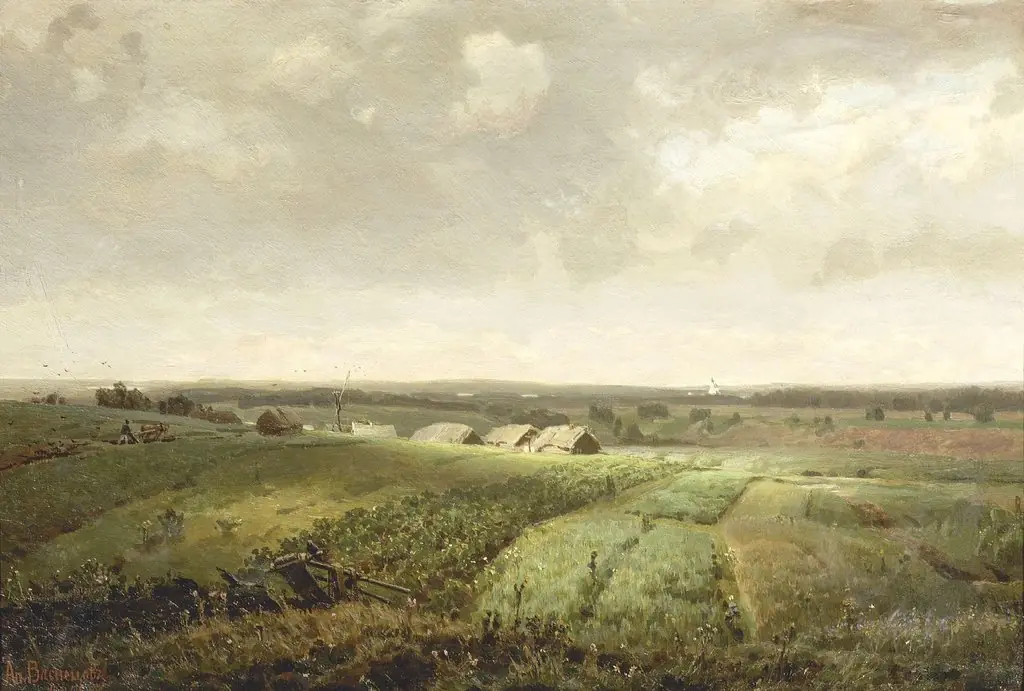
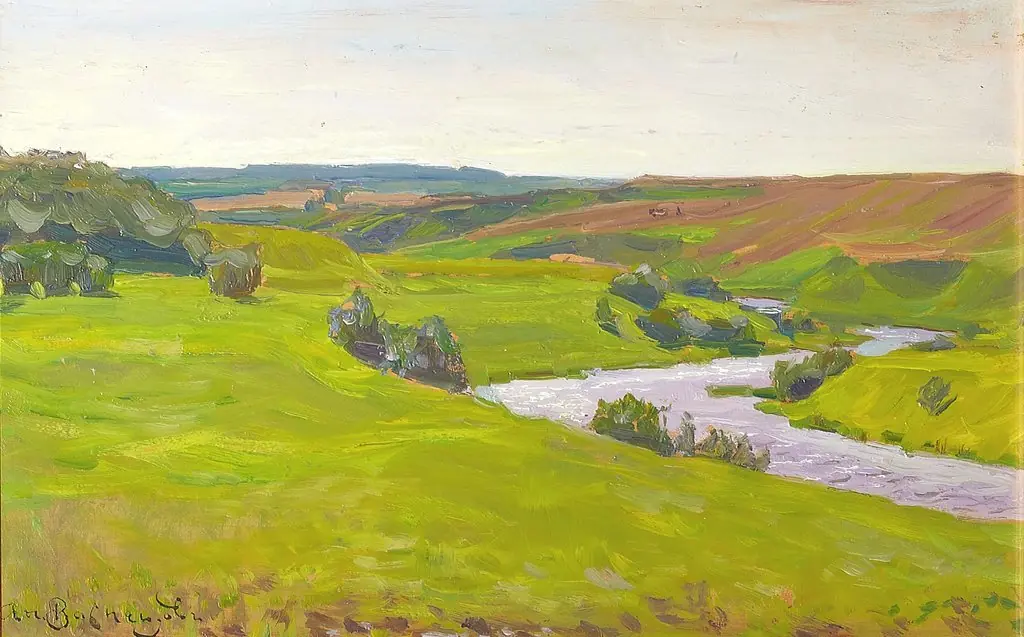
Mukhino village is an oil painting by the Post-Impressionist artist Apollinary Vasnetsov. It dates from 1900 and is held in the collection of the Tretyakov Gallery.
About this work
Overview
The work is part of the Tretyakov Gallery’s collection, reflecting its significance in late 19th-century Russian art.
Painted in 1900, *Mukhino Village* is an oil-on-canvas landscape by Apollinary Vasnetsov, a self-taught Russian artist known for his historical and rural scenes. Though lacking formal academic training, he developed a distinctive style through immersion in artistic circles, particularly at Abramtsevo, where he engaged with contemporaries like Vasily Polenov and his brother Viktor. The work is part of the Tretyakov Gallery’s collection, reflecting its significance in late 19th-century Russian art.
Subject & Meaning
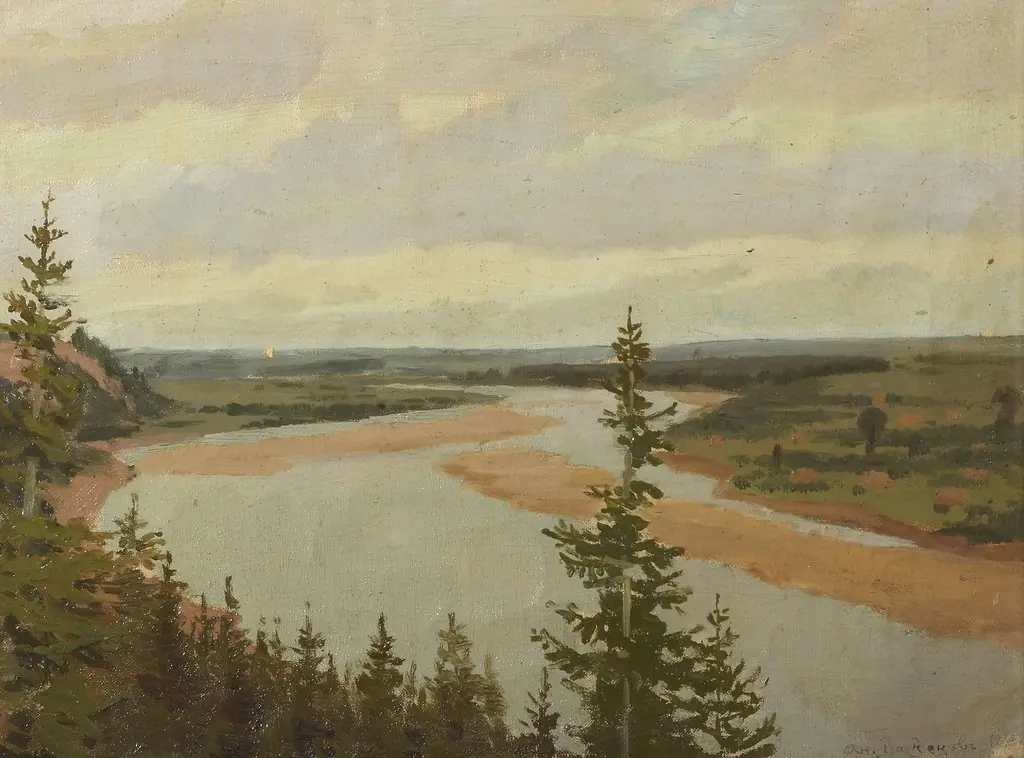
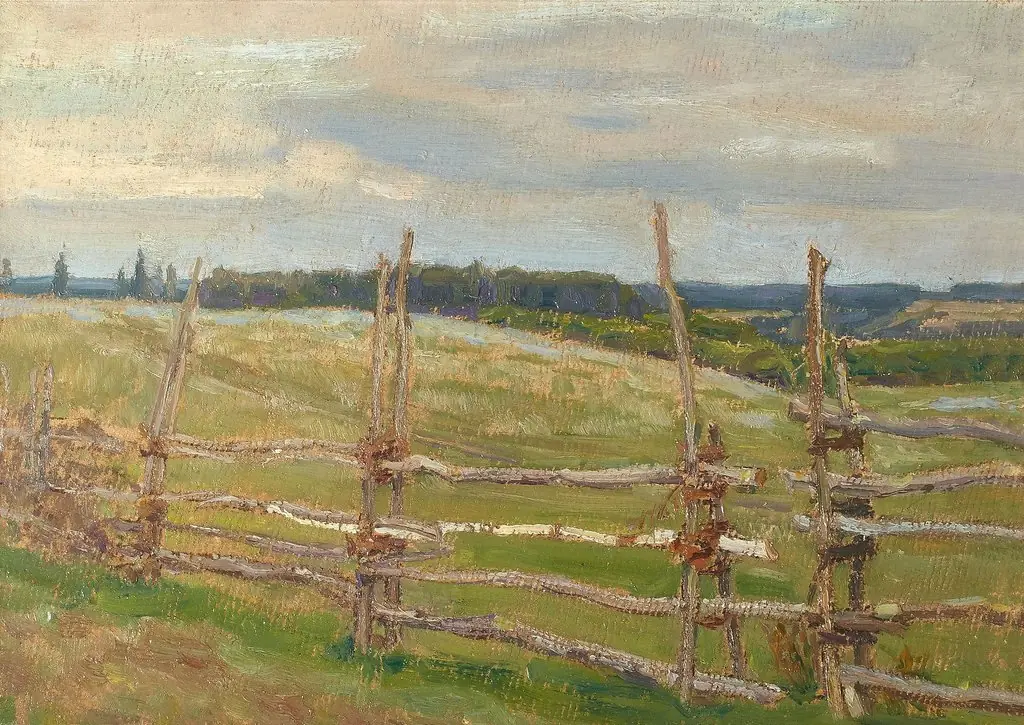
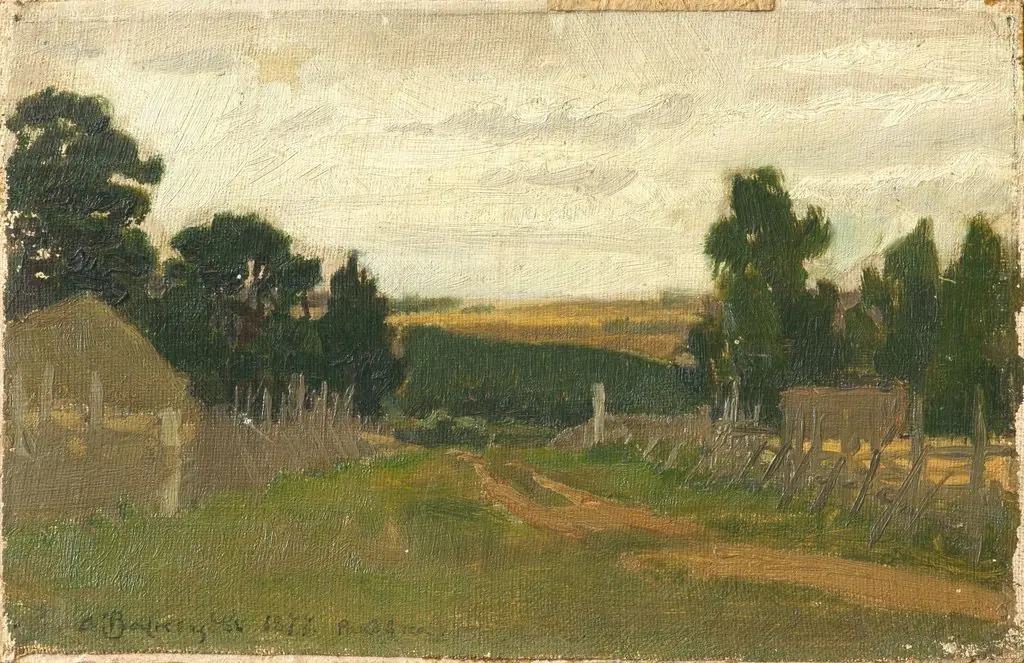
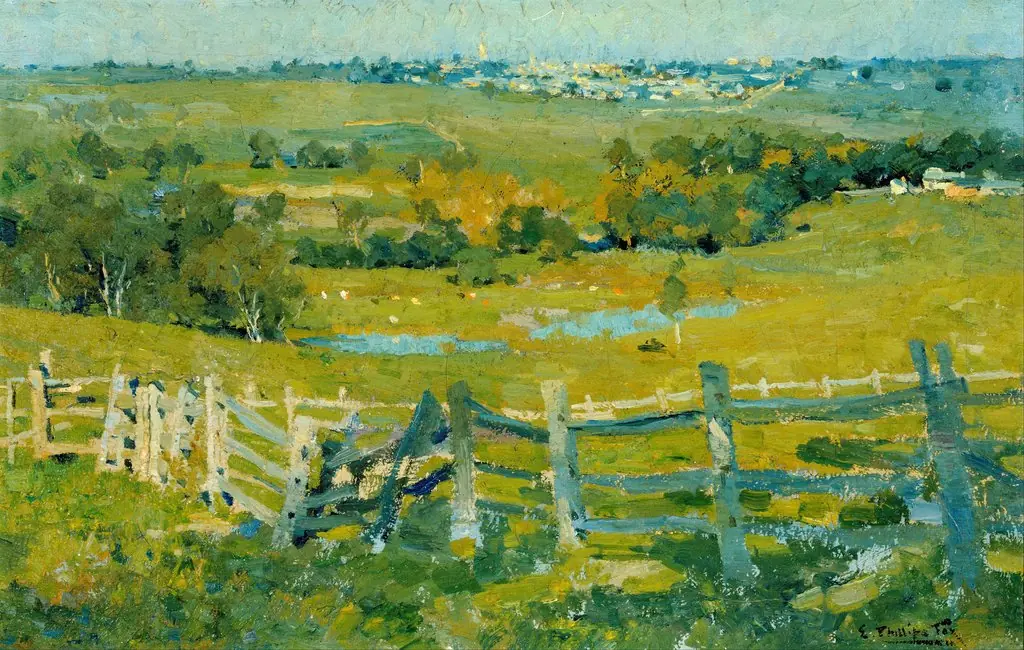
The painting portrays a quiet rural hamlet, centered on a white wooden fence that slices diagonally through the composition. Flanking it are dense thickets of trees and undergrowth, leading the eye toward distant fields and scattered buildings. The scene evokes a sense of stillness and continuity, capturing the everyday rhythm of village life without idealization. It reflects Vasnetsov’s interest in the quiet dignity of the Russian countryside during a time of rapid social change.
Technique & Style
Vasnetsov employed bold, textured brushwork to convey the tactile quality of foliage and earth. His palette favors muted greens, ochres, and soft whites, with subtle shifts in light suggesting late afternoon sun. Rather than precise detail, he built form through layered strokes, creating rhythm and movement across the surface. This approach aligns with post-impressionist tendencies, prioritizing emotional resonance over photographic realism.
History & Provenance
Created in 1900, the painting entered the collection of the Tretyakov Gallery shortly after its completion, likely through direct acquisition or donation. Vasnetsov’s association with the Abramtsevo colony and his brother Viktor’s prominence in Russian art helped secure institutional recognition. The work has remained in the gallery’s holdings since, consistently displayed as part of its narrative on Russian landscape traditions.
Context
In the late 19th century, Russian artists increasingly turned to rural life as a subject, seeking cultural identity beyond urban modernization. Vasnetsov, influenced by the Abramtsevo circle’s nationalist ethos, focused on preserving the visual memory of traditional villages. *Mukhino Village* fits within this movement, offering a contemplative alternative to both academic historicism and Western impressionism.
Legacy
Though less widely known than his brother Viktor, Apollinary Vasnetsov’s rural landscapes contributed to a broader Russian aesthetic that valued authenticity and atmospheric depth. *Mukhino Village* remains a quiet exemplar of this approach, influencing later generations interested in the emotional potential of landscape over narrative spectacle. Its continued presence in the Tretyakov Gallery underscores its role in defining national artistic identity.
Own this work as a print
Artist & collection
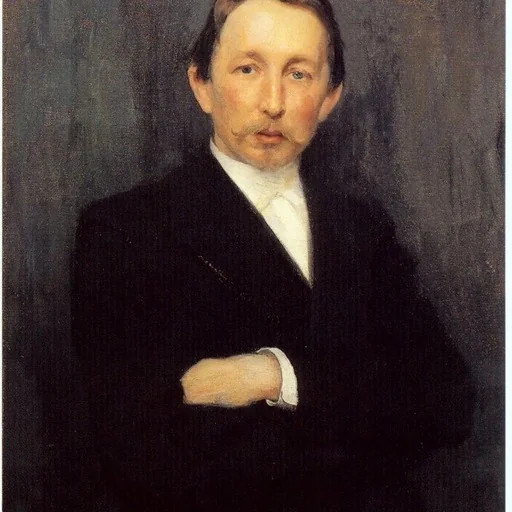
Artist
Apollinary Mikhaylovich Vasnetsov (Russian: Аполлина́рий Миха́йлович Васнецо́в; 6 August 1856 – 23 January 1933) was a Russian painter and graphic artist.