Artwork
Heidelberg
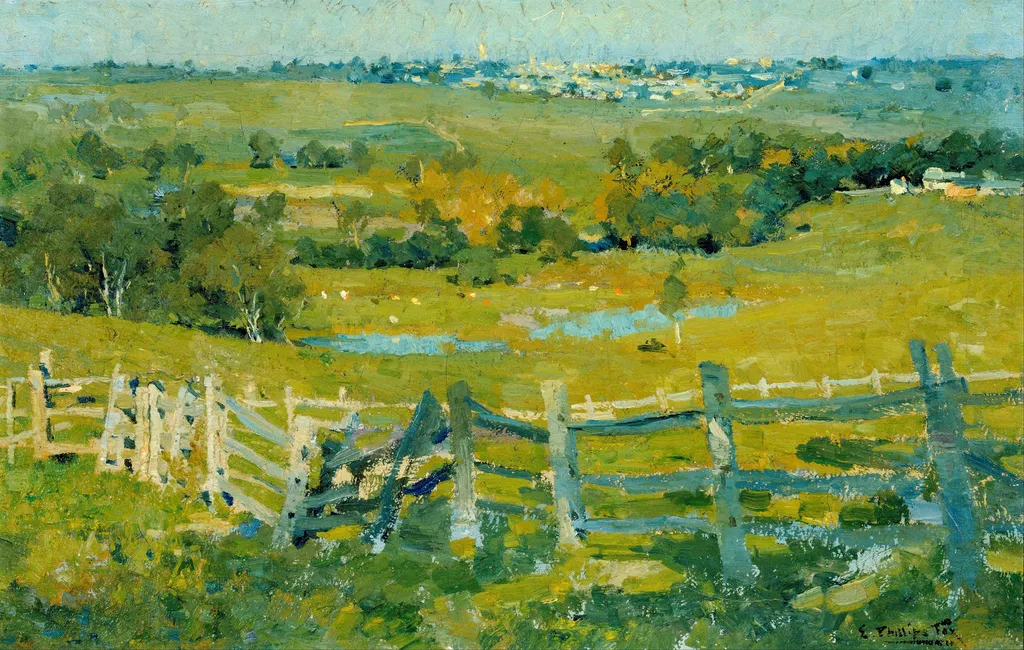
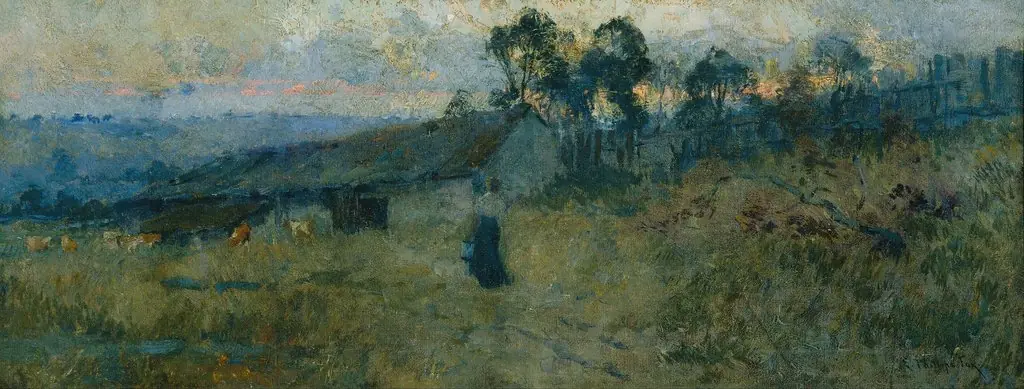
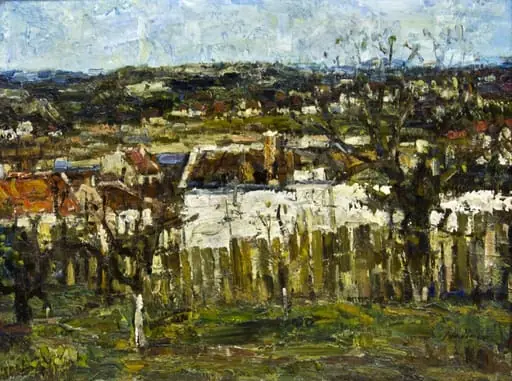
Heidelberg is an oil painting by the Impressionist artist E. Phillips Fox. It dates from 1899 and is held in the collection of the Art Gallery of New South Wales. E.
About this work
Overview
Phillips Fox’s Heidelberg, completed in 1899, is an oil-on-canvas landscape that reflects the influence of French Impressionism on Australian art.
E. Phillips Fox’s Heidelberg, completed in 1899, is an oil-on-canvas landscape that reflects the influence of French Impressionism on Australian art. Painted after Fox’s years of study in Paris, the work belongs to the later phase of the Heidelberg School, a group of Australian artists who sought to capture the local light and terrain through direct observation. The painting presents a quiet rural scene near Melbourne, rendered with soft brushwork and a restrained palette.
Subject & Meaning
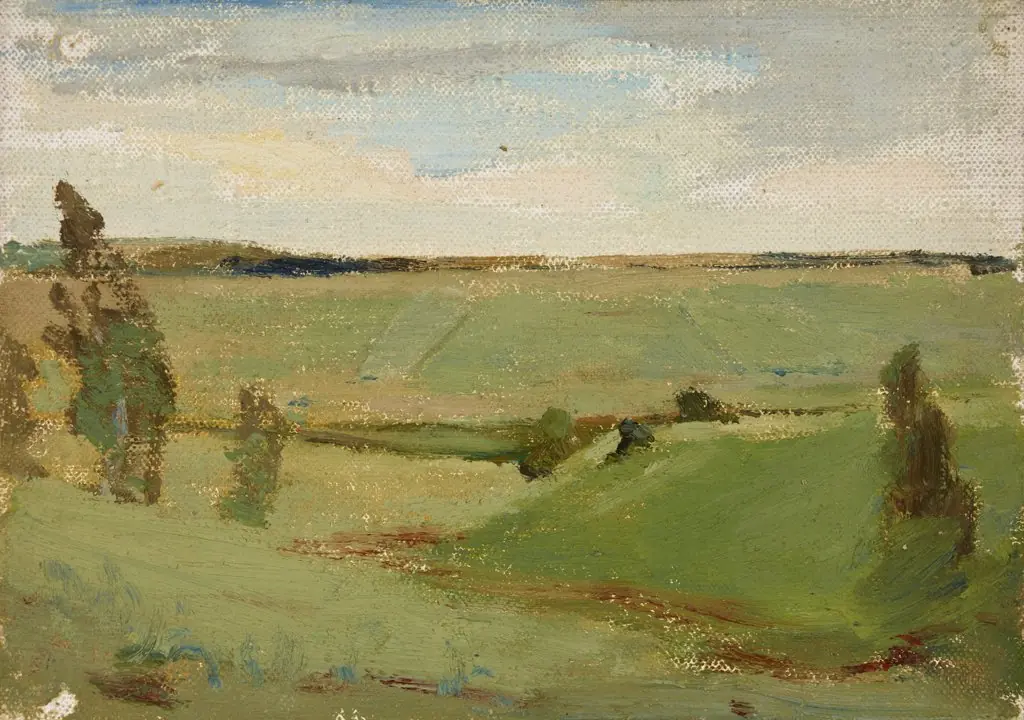
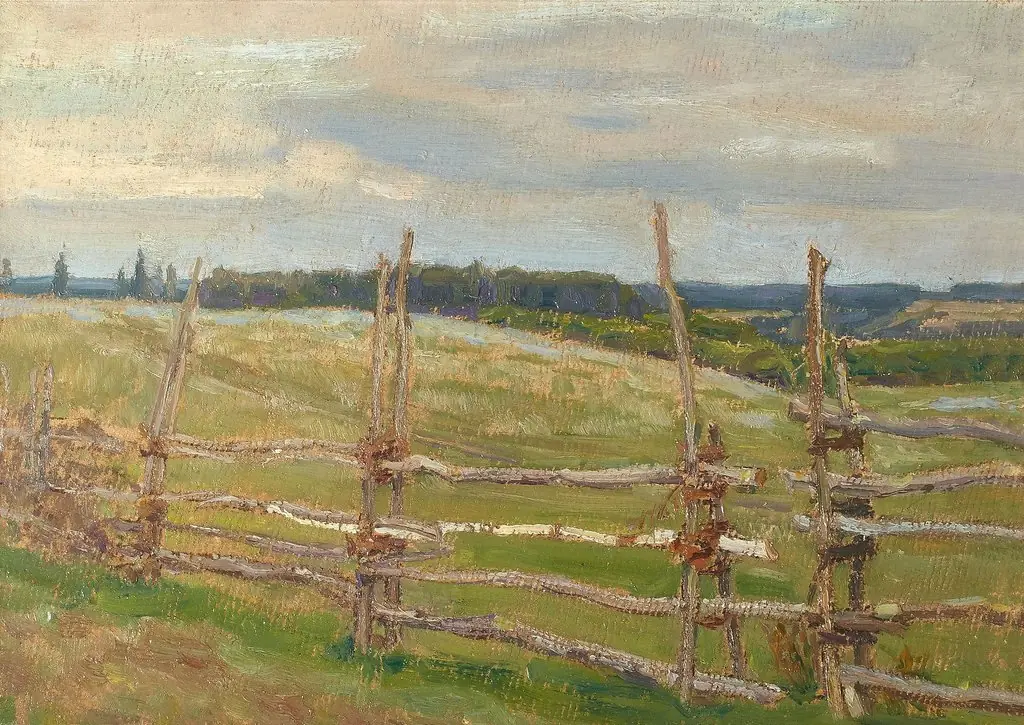
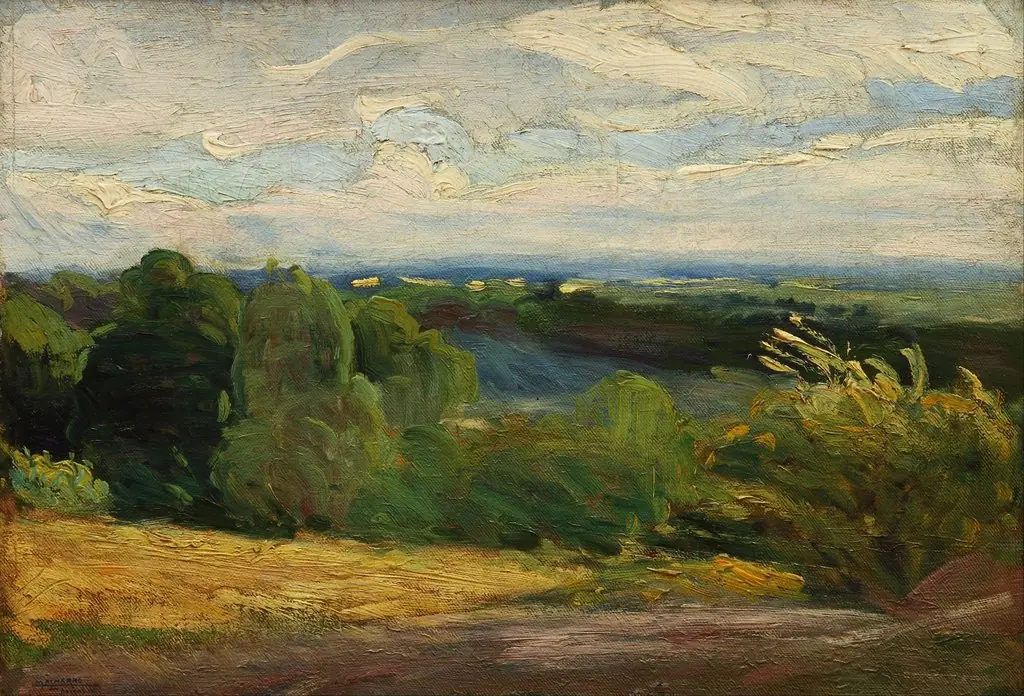
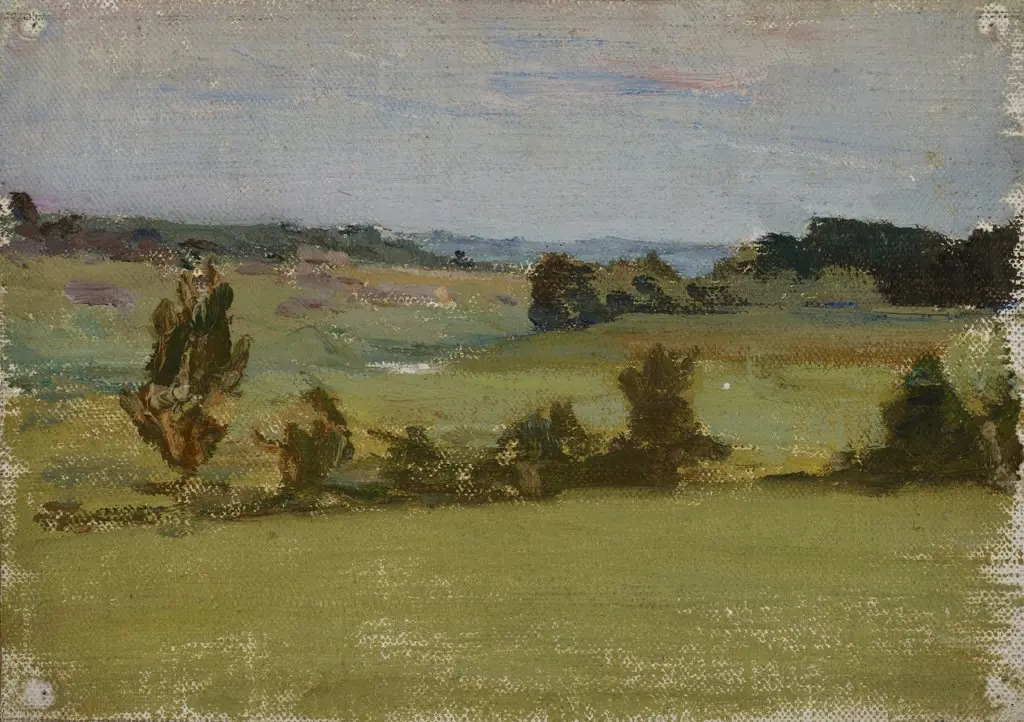
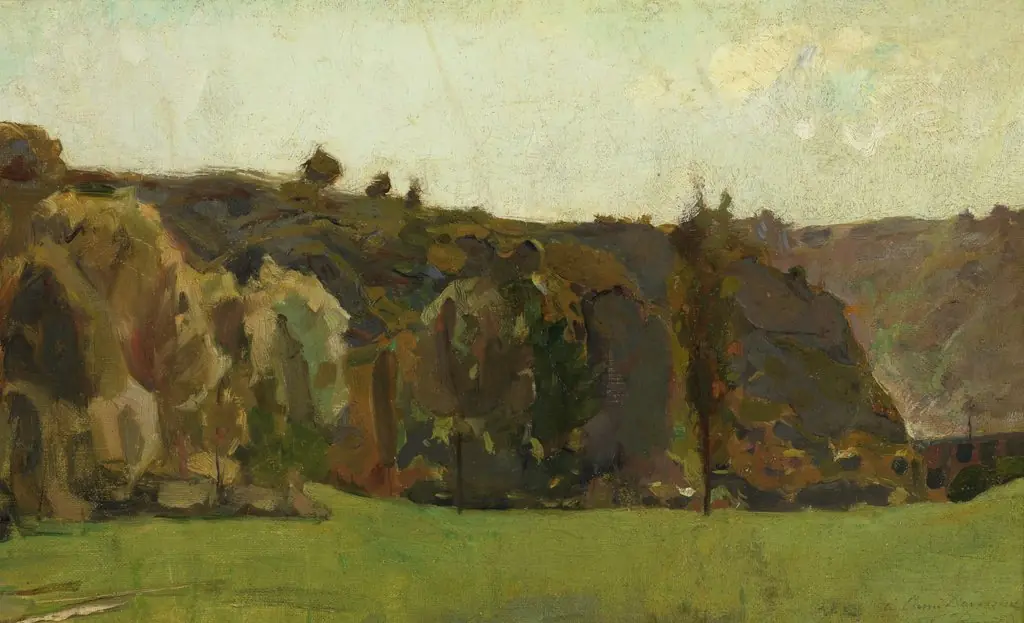
The painting portrays a tranquil stretch of countryside near Heidelberg, a suburb of Melbourne. A low wooden fence separates a sunlit field from a grove of trees, while a distant settlement blurs into the horizon. There is no human presence, emphasizing solitude and the quiet rhythm of the land. The composition suggests a contemplative engagement with the Australian landscape, free from narrative or drama, focusing instead on atmosphere and spatial harmony.
Technique & Style
Fox employed loose, deliberate brushstrokes typical of Impressionist practice, applying oil paint in thin layers to suggest shifting light and texture. The palette is dominated by muted greens, ochres, and browns, avoiding vivid contrasts in favor of tonal subtlety. The horizontal division of the fence creates a balanced structure, while the hazy background dissolves detail, reinforcing the sense of atmospheric depth and the transient quality of natural light.
History & Provenance
Fox painted Heidelberg after returning to Australia from Paris, where he had studied at the Académie Julian and absorbed the techniques of French plein air painting. The work emerged during a period when Australian artists were refining a distinct national style rooted in local scenery. Though not widely exhibited at the time, it became a key example of the Heidelberg School’s evolution beyond its earlier, more robust phase.
Context
Heidelberg was part of a broader movement among Australian painters to depict their homeland with authenticity, moving away from imported European conventions. While the first generation of Heidelberg artists focused on bold sunlight and open-air sketching, Fox’s work introduced a more refined, intimate approach influenced by his European training. This painting reflects a transition toward quieter, more lyrical interpretations of the Australian landscape.
Legacy
Heidelberg stands as a representative work of the Heidelberg School’s second wave, illustrating how Australian Impressionism absorbed international techniques without losing its regional character. It contributed to the growing recognition of Australian landscape painting as a serious artistic pursuit. Today, the painting is held in public collections, valued for its quiet observation and technical restraint rather than dramatic impact.
Own this work as a print
Artist & collection
Artist
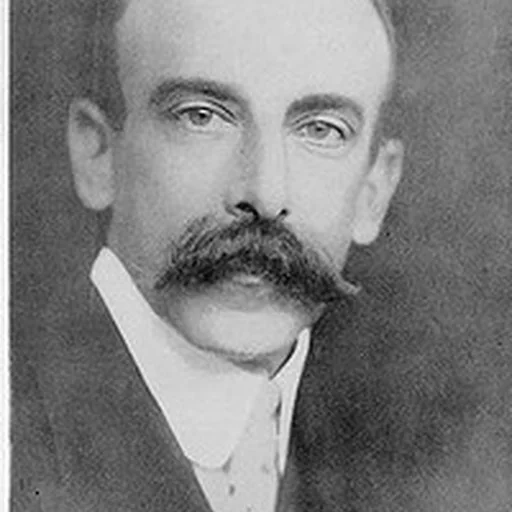
Emanuel Phillips Fox (12 March 1865 – 8 October 1915) was an Australian impressionist painter.