Artwork
The Port of Monaco
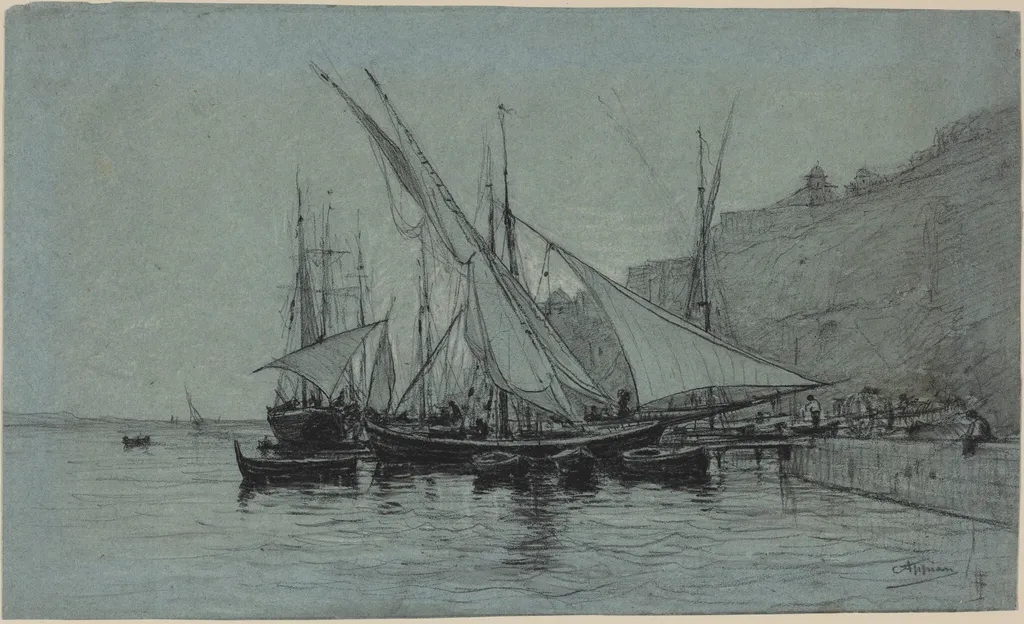
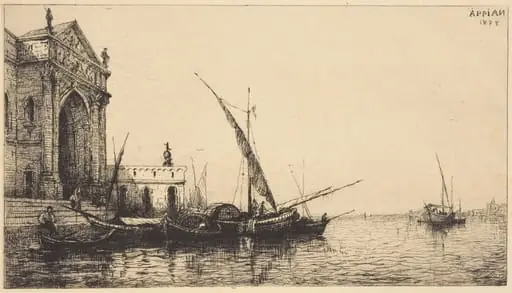
The Port of Monaco is a chalk drawing by the Impressionist artist Adolphe Appian. It dates from 1873 and is held in the collection of the National Gallery of Art.
About this work
Overview
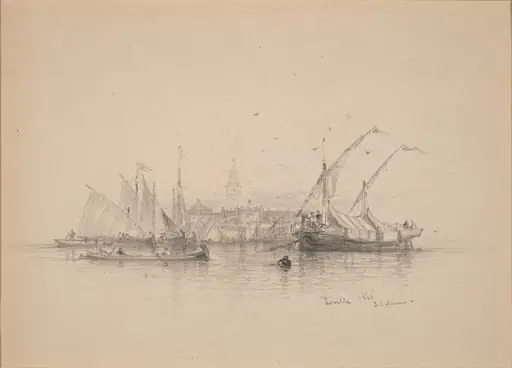
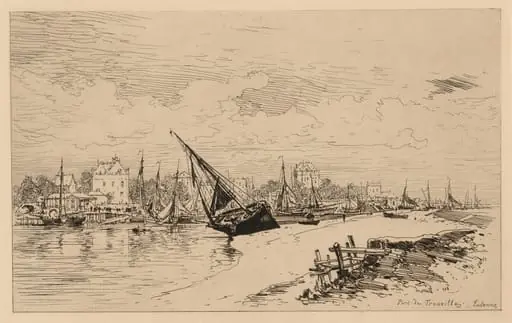
Created in 1873, this drawing by French artist Adolphe Appian portrays the harbor of Monaco. Executed on blue wove paper, the work combines charcoal, black chalk, a gray wash, and highlights of white chalk to render a tranquil maritime scene.
Subject & Meaning
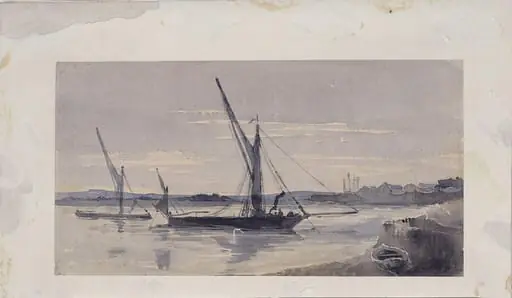
The composition centers on three sizable vessels moored against a rocky shoreline, their masts and rigging rendered with numerous ropes and sails. A few figures stand near the boats, while a modest hill and a cluster of buildings rise in the background, suggesting a quiet, everyday port activity.
Technique & Style
Appian employs a layered approach: soft charcoal establishes the overall forms, a gray wash adds atmospheric depth, and white chalk accents the highlights. The blue ground paper contributes a subtle cool tone, while the loose, sketch‑like rendering of the ships conveys a sense of immediacy and observation.
History & Provenance
The drawing belongs to the period when Appian, known for his landscape etchings, focused on graphic media to explore light and texture. It was produced during his mature phase, shortly after his extensive travels along the Mediterranean coast, and has since been held in private collections before entering a museum archive.
Context
In the early 1870s, many French artists turned to coastal subjects, reflecting both the popularity of seaside tourism and a fascination with the interplay of water, sky, and architecture. Appian’s treatment aligns with this trend, emphasizing tonal subtlety over detailed narrative.
Artist & collection
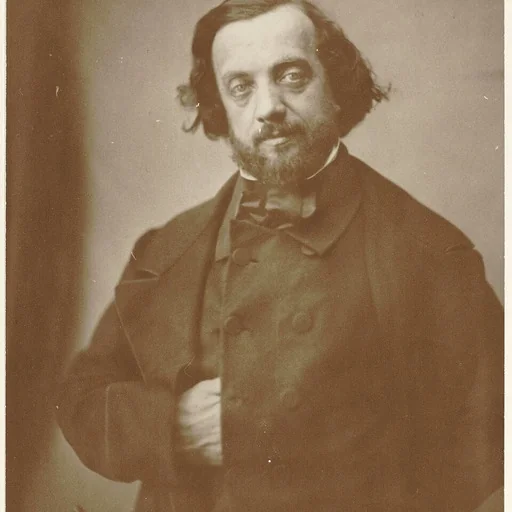
Artist
Adolphe Appian (born as Jacques Barthelemy Adolphe Appian; 28 August 1819 – 29 April 1898) was a French landscape painter and etcher.