Artwork
Seville
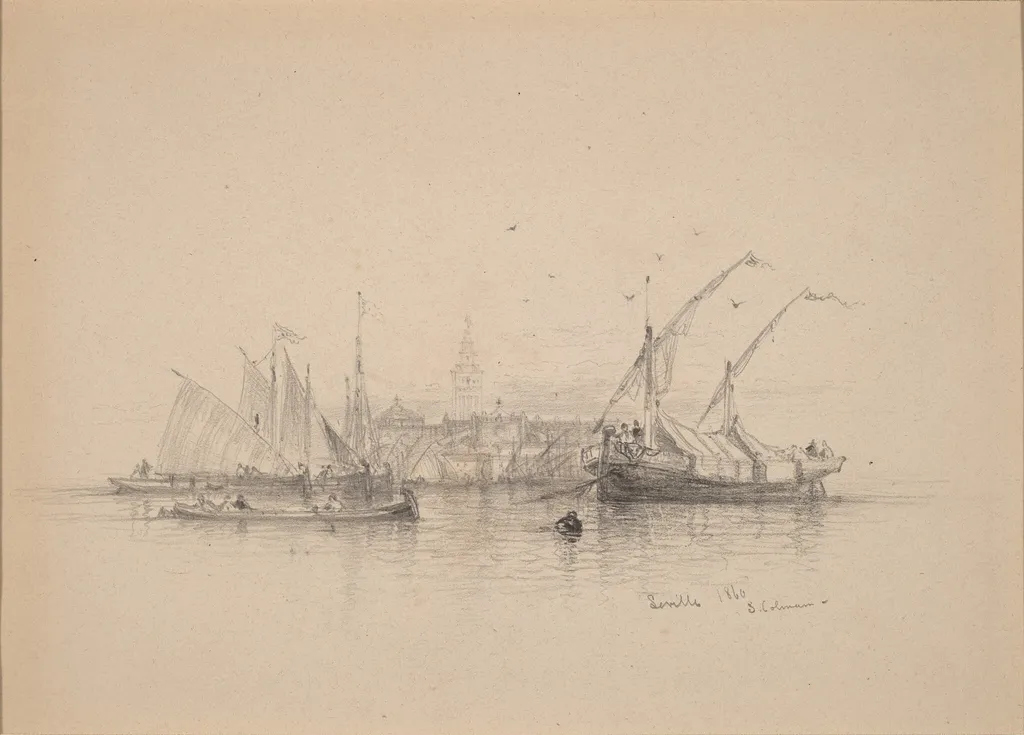
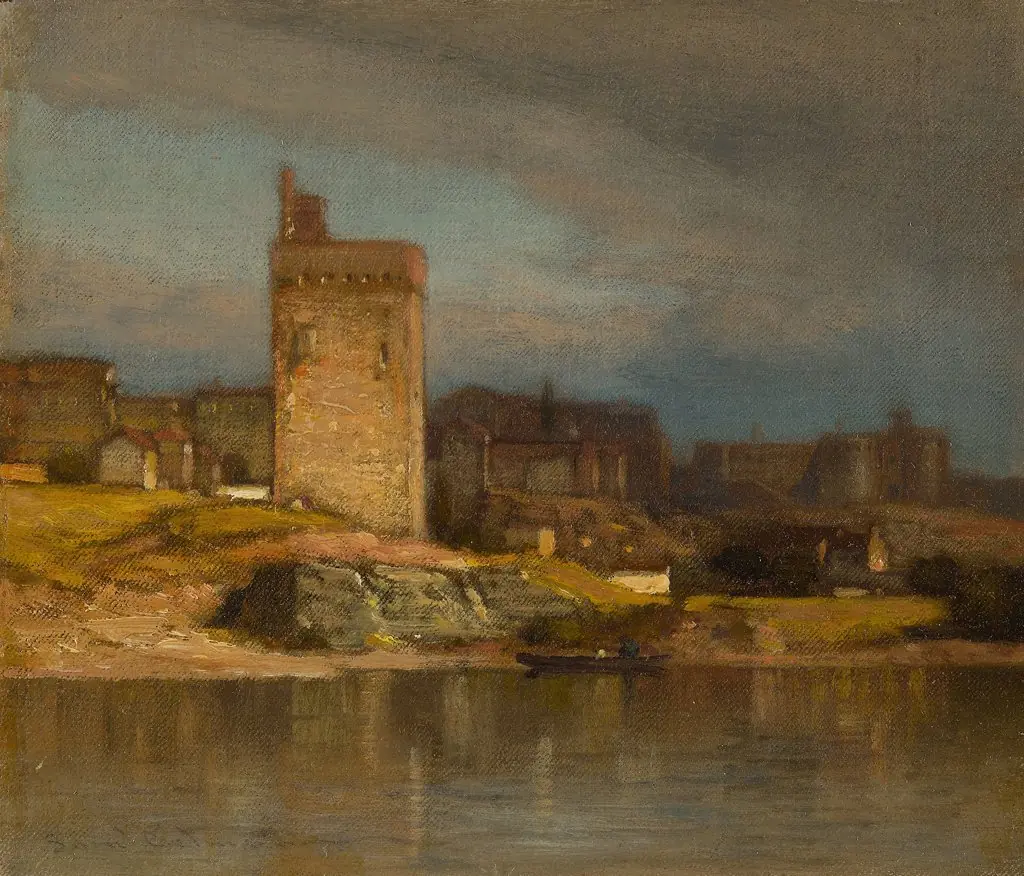
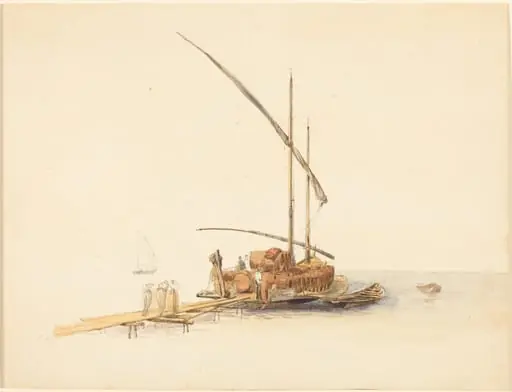
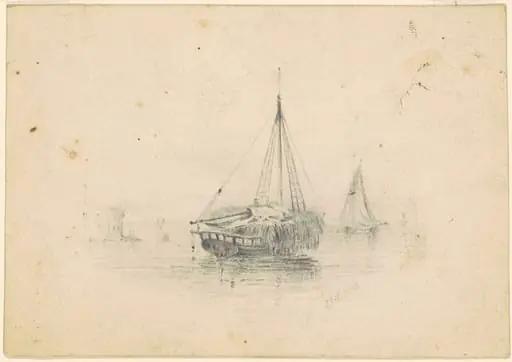
Seville is a graphite drawing by the Impressionist artist Samuel Colman. It dates from 1850 and is held in the collection of the National Gallery of Art.
About this work
Overview
Created in 1850, Seville is a graphite drawing by American artist Samuel Colman. Executed on wove paper, the work reflects his early engagement with European landscapes during a formative period of his career. It captures a moment of quiet observation, likely made during his travels in Spain, and stands as a study in light, structure, and topography.
Subject & Meaning
The drawing depicts a view of Seville, Spain, focusing on architectural forms and urban contours rather than human activity. Colman emphasizes the play of shadow and stone, suggesting a contemplative mood. The absence of figures directs attention to the city’s enduring physical presence, conveying a sense of historical weight through quiet detail.
Technique & Style
Colman employed fine, controlled graphite strokes to model surfaces and suggest depth. The use of wove paper allowed for subtle tonal gradations, enhancing the atmospheric quality of the scene. His approach is precise yet restrained, favoring clarity over dramatic effect, aligning with the topographical traditions of 19th-century travel sketching.
History & Provenance
The drawing was produced during Colman’s European journey in the late 1840s and early 1850s, a period when American artists sought exposure to Old World architecture. It remained in private hands for much of the 19th century before entering a public collection, where it now serves as a record of his early artistic development.
Context
In the 1850s, American artists increasingly traveled abroad to study European art and urban environments. Colman’s sketch of Seville reflects this trend, aligning with broader efforts to document foreign landscapes with accuracy and sensitivity. His work contributed to a growing American interest in international architecture as a subject for serious artistic study.
Legacy
Seville exemplifies Colman’s transition from travel sketch to mature landscape painter. Though not widely exhibited during his lifetime, the drawing remains a significant artifact of 19th-century American artistic practice, illustrating how direct observation abroad shaped domestic artistic sensibilities.
Own this work as a print
Artist & collection
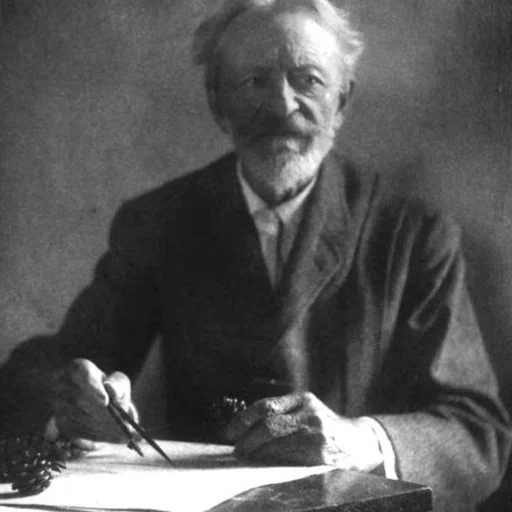
Artist
Samuel Colman (March 4, 1832 – March 26, 1920) was an American painter, interior designer, and writer, probably best remembered for his paintings of the Hudson River.