Artwork
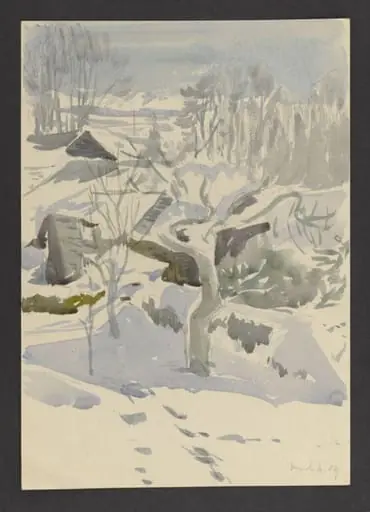
Snow at Tidmarsh
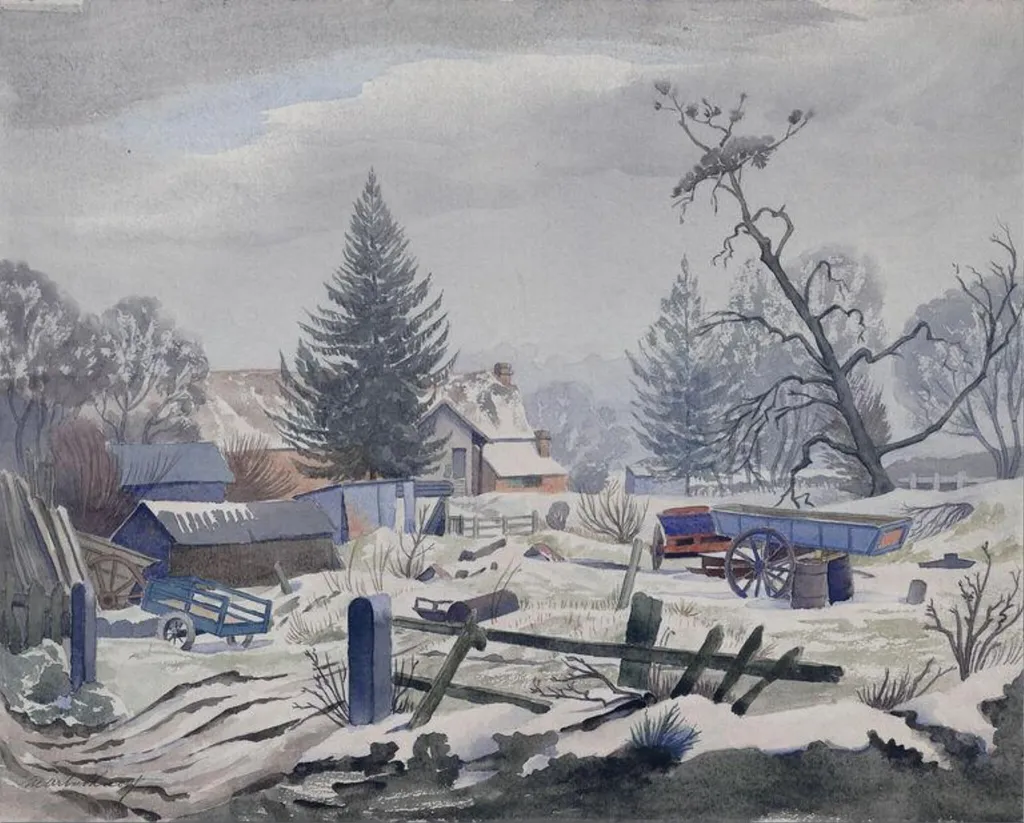
Snow at Tidmarsh is a watercolor work on paper by Malcolm Arbuthnot. It dates from 1850 and is held in the collection of the Victoria and Albert Museum.
About this work
Overview
Malcolm Arbuthnot's watercolour captures a quiet winter landscape at Tidmarsh, rendered in delicate washes of blue, white, and gray.
Malcolm Arbuthnot's watercolour captures a quiet winter landscape at Tidmarsh, rendered in delicate washes of blue, white, and gray. The scene conveys stillness through muted tones and soft edges, emphasizing the quiet accumulation of snow. Executed in 1946, the work was exhibited by the Royal Institute of Painters in Water Colours and later published in The Studio, reflecting its recognition within contemporary watercolour circles.
Subject & Meaning
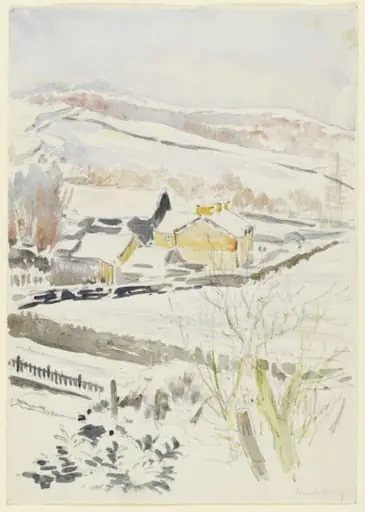
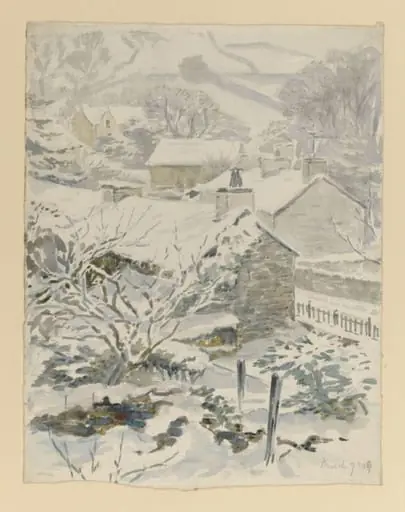
The painting portrays a modest rural yard blanketed in snow, centered on a small house enclosed by a low fence. Nearby, a wooden bench and a wagon rest under bare and snow-dusted trees. Patches of earth emerge through the snow, suggesting the season’s transition. The absence of human figures enhances the sense of solitude, inviting contemplation of winter’s quiet pause in everyday life.
Technique & Style
Arbuthnot employed transparent watercolour washes to build subtle gradations of tone, avoiding heavy outlines. The snow is suggested through layered whites and cool grays, with delicate wet-on-wet techniques creating a soft, drifting effect. Bare branches and grassy patches are rendered with fine, controlled strokes, balancing detail with atmospheric restraint. The overall approach prioritizes mood over precision, characteristic of early 20th-century British watercolour traditions.
History & Provenance
The work was exhibited at the 134th Annual Exhibition of the Royal Institute of Painters in Water Colours in 1946. It was subsequently reproduced in the December 1946 issue of The Studio, a prominent journal for artists and collectors. Its inclusion in these venues indicates its reception within the British watercolour community during the postwar period, though its current location remains undocumented.
Context
In the mid-1940s, British watercolourists often turned to domestic and rural subjects as a counterpoint to wartime upheaval. Arbuthnot’s depiction of Tidmarsh aligns with this trend, emphasizing tranquility and continuity. The painting reflects a broader interest in landscape as a space of quiet resilience, resonating with audiences seeking solace in the natural world after years of conflict.
Legacy
Though not widely known outside specialist circles, Arbuthnot’s work contributes to the understated tradition of British watercolour landscape painting. His focus on subtle light and seasonal change, as seen in this piece, exemplifies a quiet, observational approach that influenced later generations of watercolourists committed to lyrical realism over dramatic effect.
Artist & collection
Artist
Malcolm Arbuthnot kept a tiny Rolleiflex in his coat pocket and shot whenever snow caught the light just right, turning Berkshire lanes into glowing ribbons.

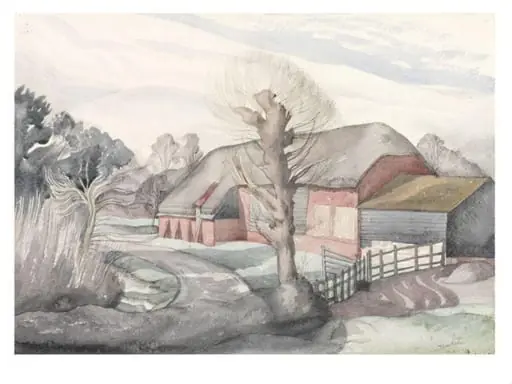 Farm Buildings
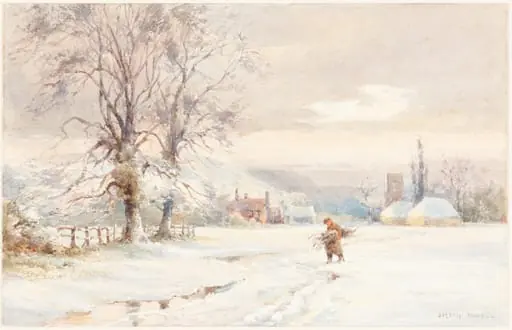 Winter
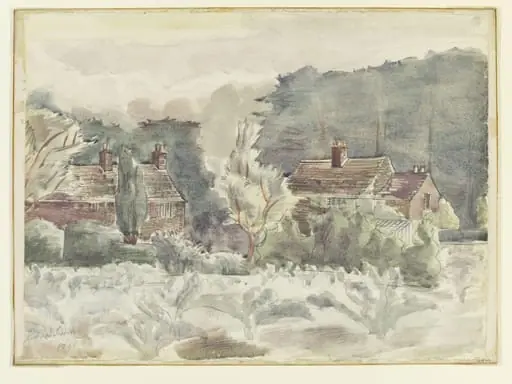 Cottages at Norton, No.5
 Snow scene showing a farm with outbuildings, and hillside beyond (near Sawrey)
 Landscape near Robertson, New South Wales
 A village in snow
 Saddlescombe
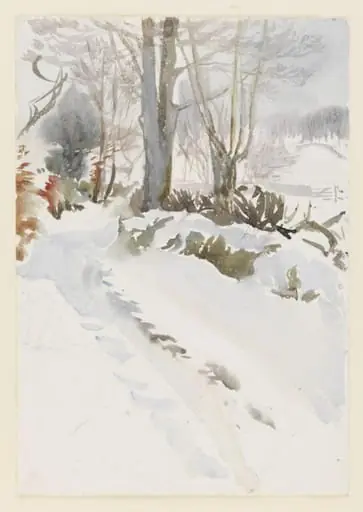 Cart track covered in snow, with fields beyond
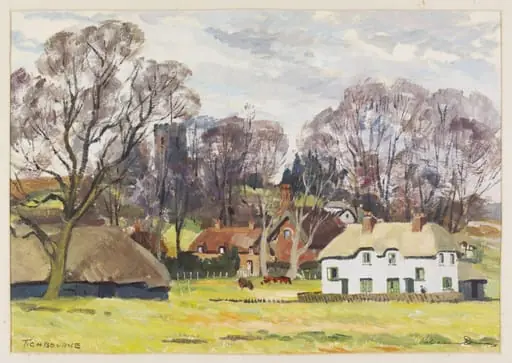 Tichbourne
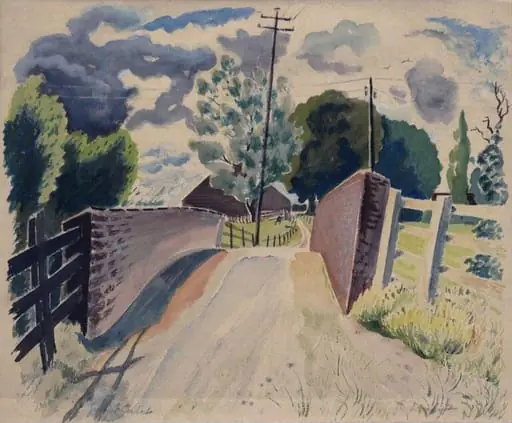 Bridge in a Lane
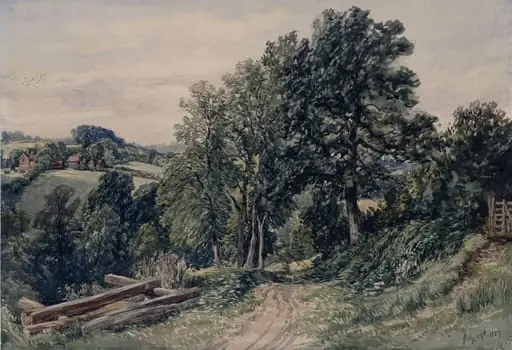 Landscape and cottages, with sawpit, Tedstone, Herefordshire
 Trees and roofs in snow