Artwork
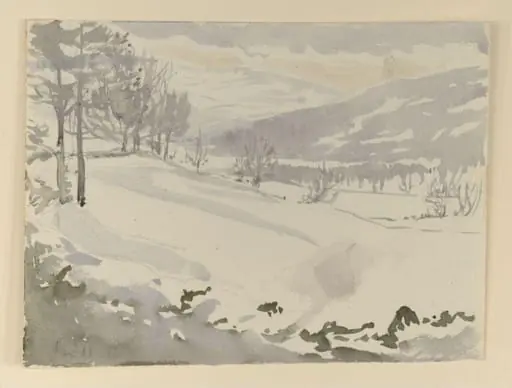
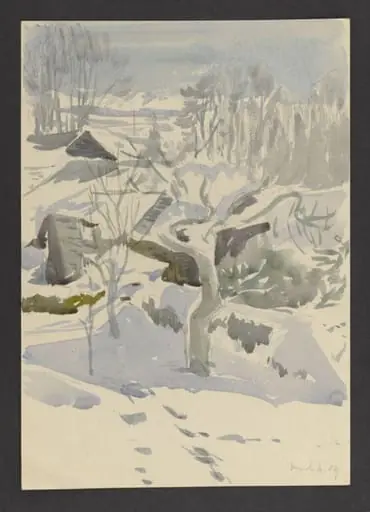
Cart track covered in snow, with fields beyond
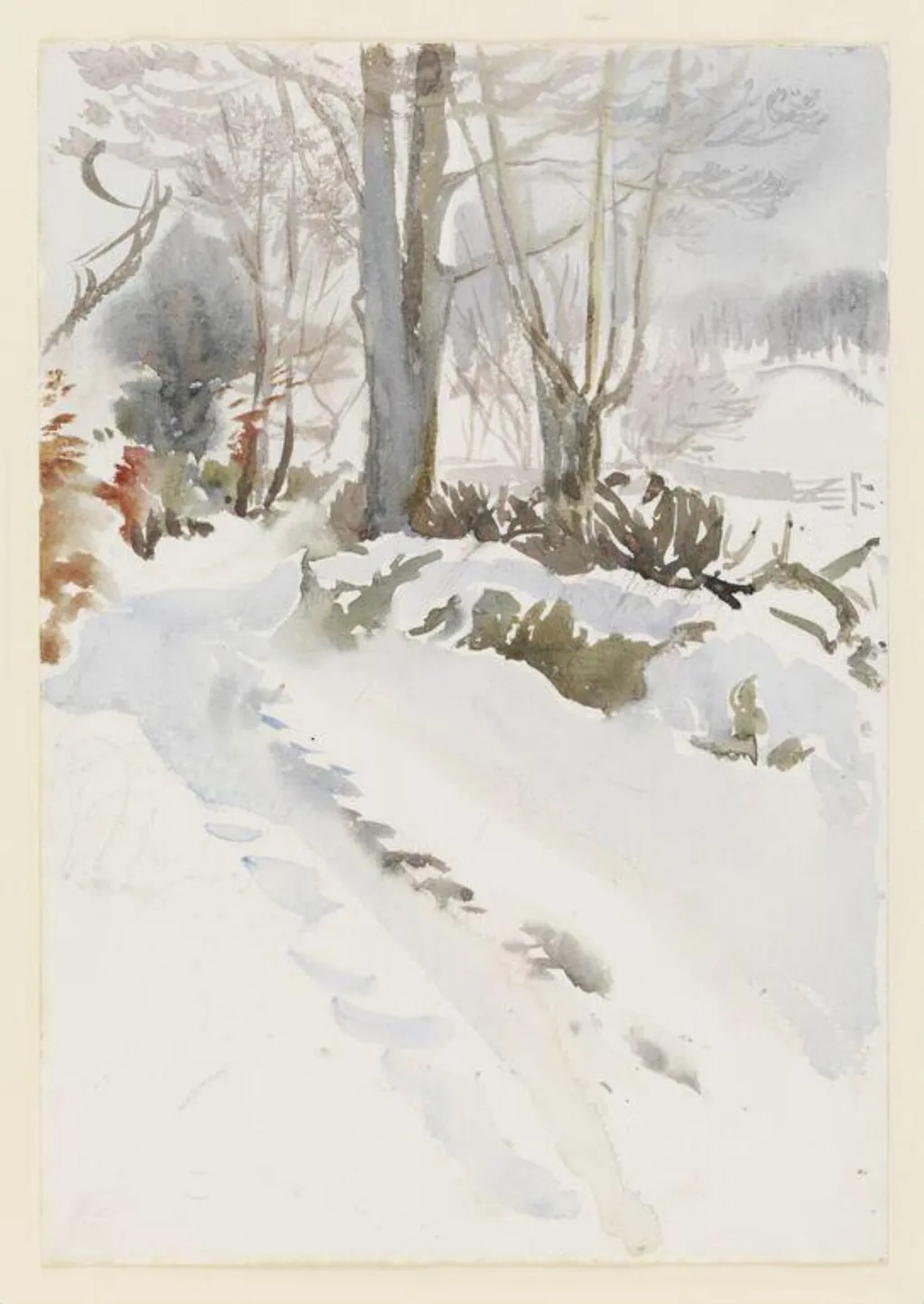
Cart track covered in snow, with fields beyond is a watercolor work on paper by Beatrix Potter. It dates from 1913 and is held in the collection of the Victoria and Albert Museum.
About this work
She used quick watercolour strokes over pencil sketches to show a snow-covered track disappearing into fields.
Here’s a wintry scene by Beatrix Potter. She used quick watercolour strokes over pencil sketches to show a snow-covered track disappearing into fields. The year is close to 1913, when she often painted the Lake District in winter.
Potter wasn’t just a storyteller—she studied the land closely and loved sketching outside, even in the cold.
Look up the Victoria and Albert Museum to see more of her work.
Overview
This watercolour by Beatrix Potter depicts a snow-laden cart track winding through open fields, rendered with loose, expressive brushwork. Created during her time in the Lake District, the piece reflects her habit of sketching directly from nature, even in harsh winter conditions. Though undated, stylistic and contextual evidence suggests it was made between 1909 and 1913, a period when she frequently recorded the seasonal changes around Sawrey.
Subject & Meaning
The scene captures a quiet, everyday rural path buried under snow, leading the eye toward distant fields. There is no human presence, only the subtle imprint of use and the stillness of winter. Potter’s focus on such ordinary landscapes reveals her deep engagement with the natural world beyond her illustrated tales, treating the land itself as a subject worthy of careful observation.
Technique & Style
Potter applied watercolour in broad, fluid strokes over faint pencil underdrawings, allowing the paper’s texture to suggest snow and the chill of air. Her technique prioritizes immediacy over detail, capturing the essence of winter light and form with minimal means. This approach reflects her training in natural history illustration, where accuracy was balanced with the spontaneity of direct observation.
History & Provenance
After purchasing Hill Top Farm in 1905, Potter devoted increasing attention to the surrounding landscape, producing hundreds of watercolours of the Lake District. This work belongs to a series of winter studies made during the early 1910s, a time when she was transitioning from children’s author to landowner and conservationist. Many of these works remained personal, not intended for publication.
Context
Potter’s winter sketches were made during a period of growing environmental awareness in rural England. Her detailed observations of weather, terrain, and seasonal cycles aligned with broader scientific and artistic interests in naturalism. Unlike her published tales, these works reveal a quieter, more contemplative side of her practice, rooted in direct experience rather than narrative.
Legacy
Though less known than her illustrated books, Potter’s landscape watercolours contribute significantly to the record of early 20th-century rural England. They demonstrate her disciplined eye and commitment to recording nature as it appeared, not as it was idealized. Today, these works are held in major collections, including the Victoria and Albert Museum, as vital extensions of her artistic legacy.
Own this work as a print
Artist & collection
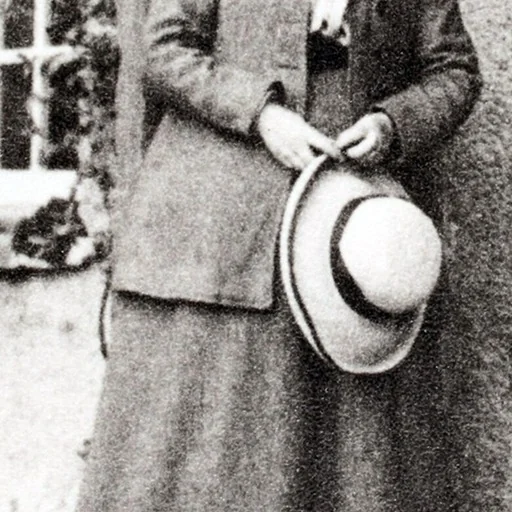
Artist
Helen Beatrix Heelis (née Potter; 28 July 1866 – 22 December 1943), usually known as Beatrix Potter ( BEE-ə-triks), was an English writer, illustrator, natural scientist, and conservationist.

 Mountains and fields in snow
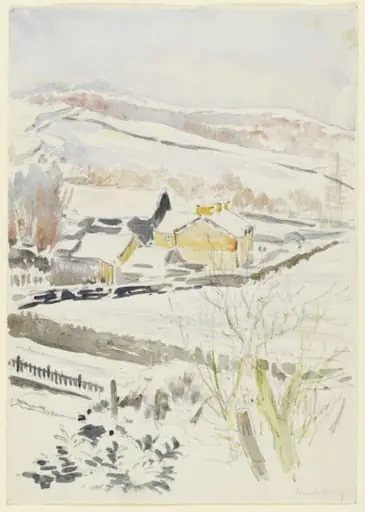 Snow scene showing a farm with outbuildings, and hillside beyond (near Sawrey)
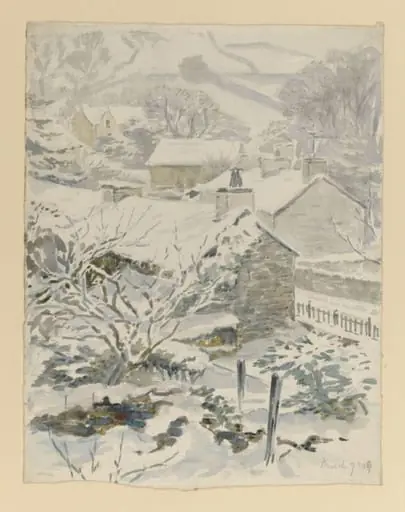 A village in snow
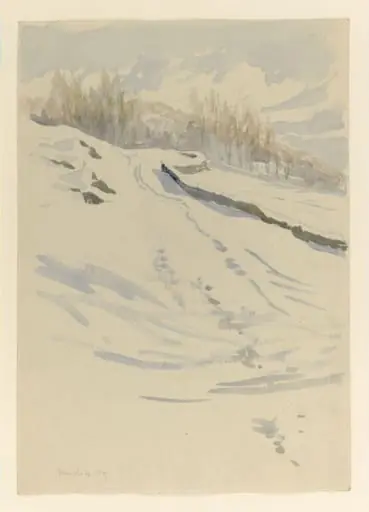 Snow scene with fields and a line of trees
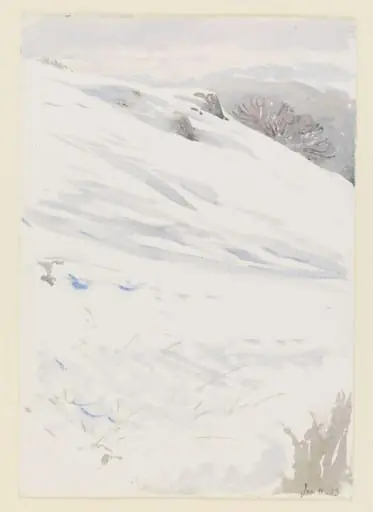 Snowy hillside
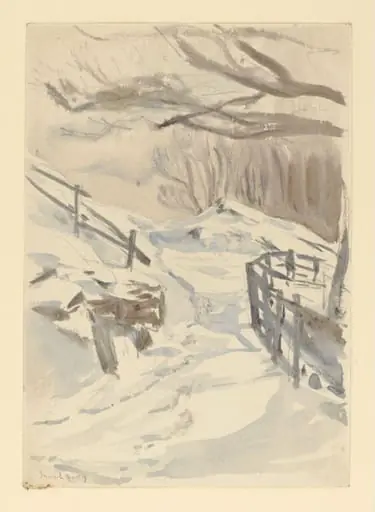 Snowy landscape
 Snow scene with a path and trees
 Snowy landscape with trees
 Untitled
 A clearing under snow
 Trees and roofs in snow
 A pathway to moorland, passing through a stone gateway