Artwork
Venus Genitrix
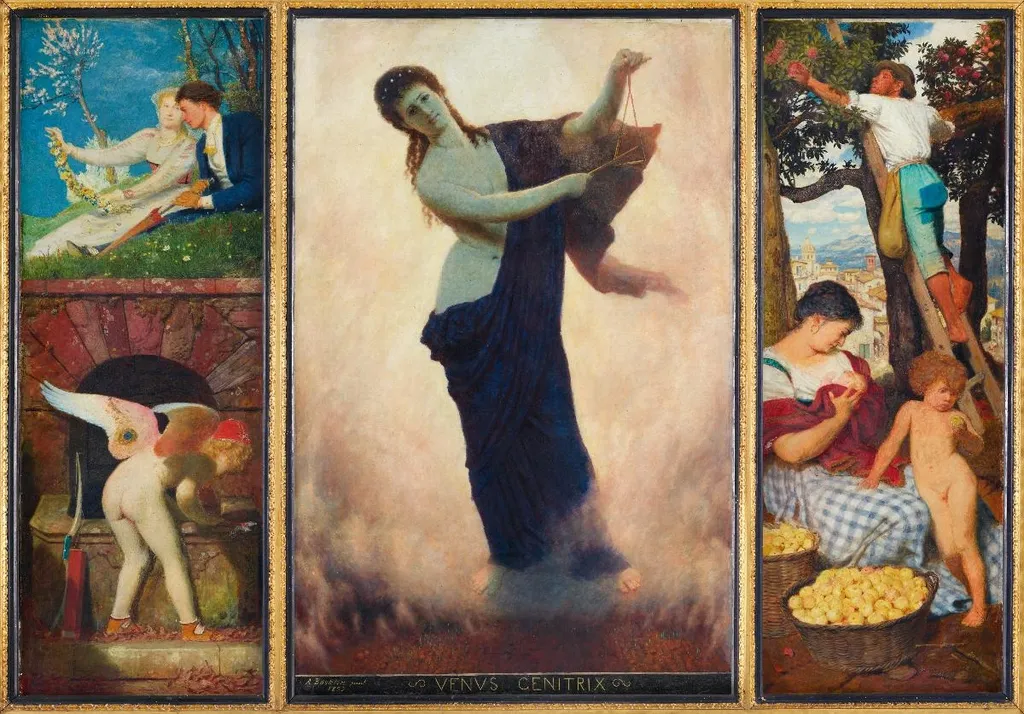
Venus Genitrix is a tempera painting by the Symbolist artist Arnold Böcklin. It dates from 1898 and is held in the collection of the Kunsthaus Zürich.
About this work
Overview
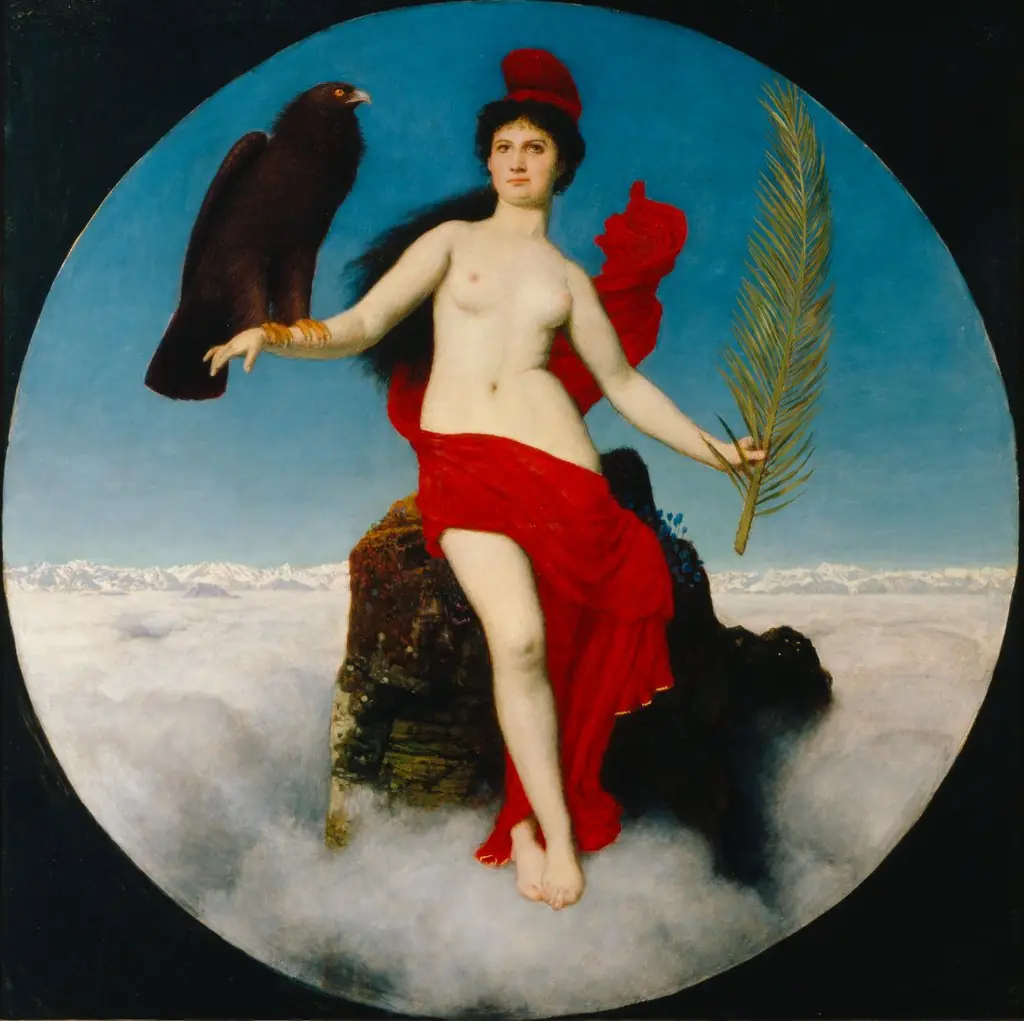
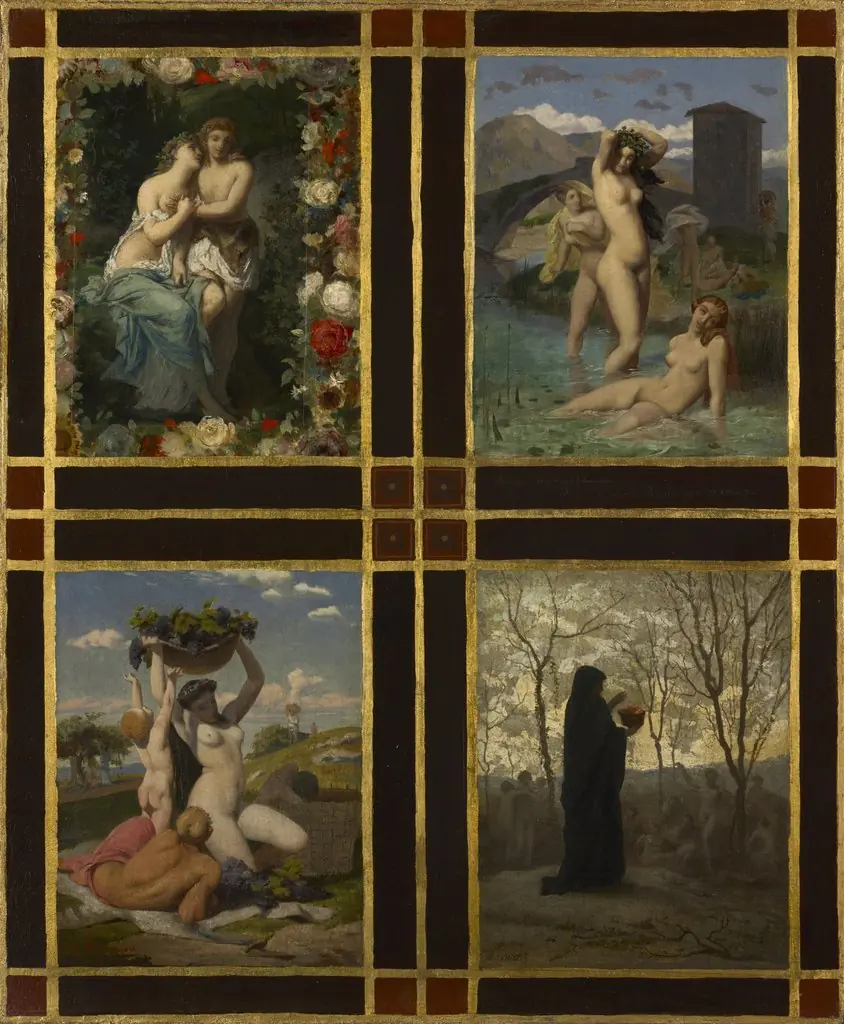
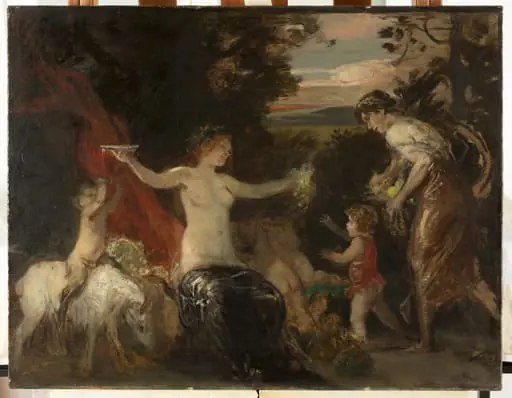
The work presents a central female figure clad in a dark blue robe, holding a bow and arrow, flanked by two smaller narrative panels.
Arnold Böcklin's 1898 tempera painting, titled Venus Genitrix, is held in the collection of the Kunsthaus Zürich. The work presents a central female figure clad in a dark blue robe, holding a bow and arrow, flanked by two smaller narrative panels. The composition is set against a softly blurred, luminous background that enhances the figure’s stillness. Tempera’s matte finish contributes to a quiet, enduring texture, distinguishing it from oil-based techniques common in the period.
Subject & Meaning
The central figure, identified as Venus Genitrix—the Roman goddess associated with motherhood and fertility—holds attributes more commonly linked to Artemis, suggesting a synthesis of divine roles. The left panel depicts an intimate embrace, evoking love and union; the right shows a mother and child gathering fruit, symbolizing nurture and abundance. Together, the imagery layers themes of fertility, domestic harmony, and the cyclical nature of life, reframing myth through a contemplative, earthly lens.
Technique & Style
Böcklin employed tempera, a medium known for its fine detail and layered opacity, to achieve a luminous yet subdued surface. The central figure is rendered with crisp edges and rich pigment, contrasting with the hazy, atmospheric background that recedes into soft tones. The side panels, smaller in scale and more intimate in composition, are painted with equal precision but with looser brushwork, guiding the viewer’s gaze inward toward the main figure while maintaining narrative autonomy.
History & Provenance
Completed in 1898, the painting entered the collection of the Kunsthaus Zürich shortly after its creation. It was acquired during a period when the museum was expanding its holdings of Symbolist and late 19th-century European works. No significant alterations or restorations are documented, and its provenance remains unbroken since acquisition, preserving its original condition and intent.
Context
Created during the waning years of Symbolism, Venus Genitrix reflects Böcklin’s enduring interest in mythological themes reinterpreted through psychological and emotional resonance. While contemporaries like Klimt explored ornament and eroticism, Böcklin favored stillness and ambiguity. The painting aligns with broader fin-de-siècle preoccupations with femininity, nature, and the spiritual dimensions of domestic life, avoiding overt sentimentality in favor of quiet symbolism.
Legacy
Though less widely exhibited than Böcklin’s earlier mythological scenes, Venus Genitrix remains a key example of his mature style—marked by introspection and symbolic layering. It influenced later artists interested in myth as psychological metaphor rather than narrative spectacle. Within the Kunsthaus Zürich, it continues to serve as a quiet anchor in the museum’s Symbolist collection, valued for its restraint and compositional harmony.
Artist & collection
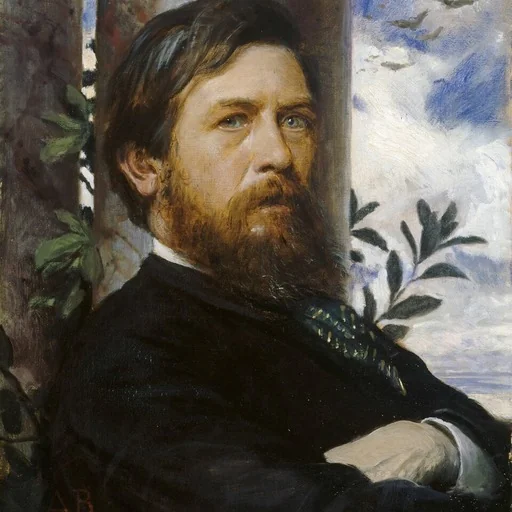
Artist
Arnold Böcklin was a Swiss Symbolist painter. His five versions of the Isle of the Dead inspired works by several late Romantic composers.