Artwork
Die Erziehung des Bacchus
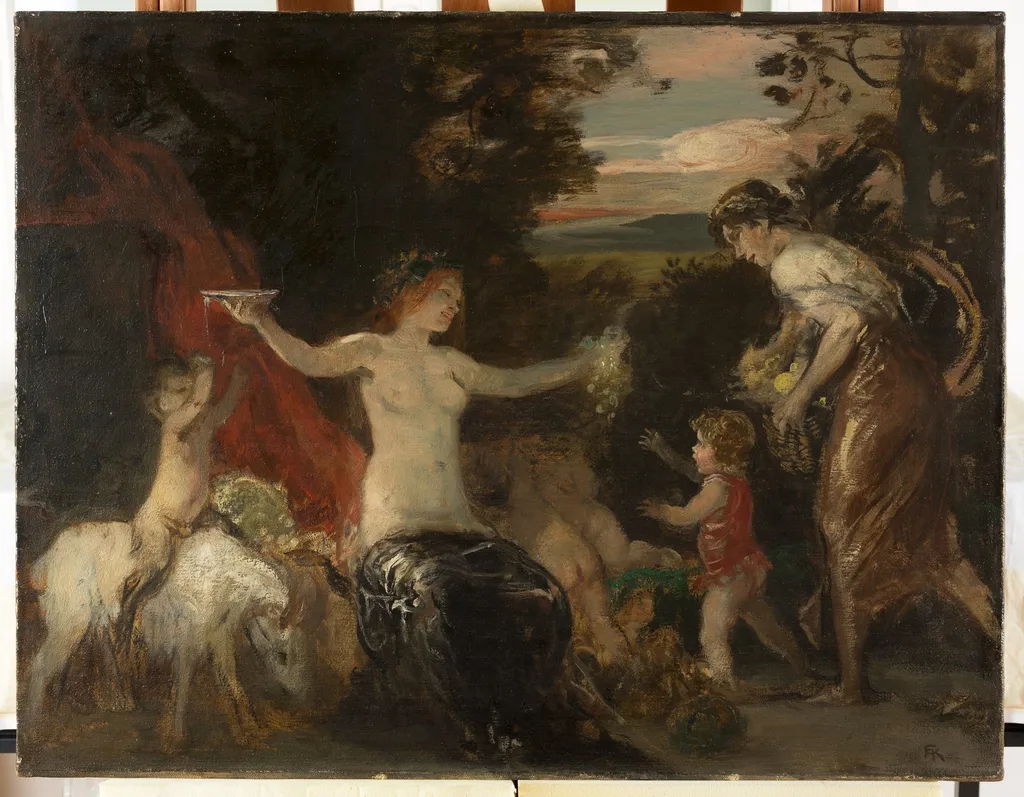
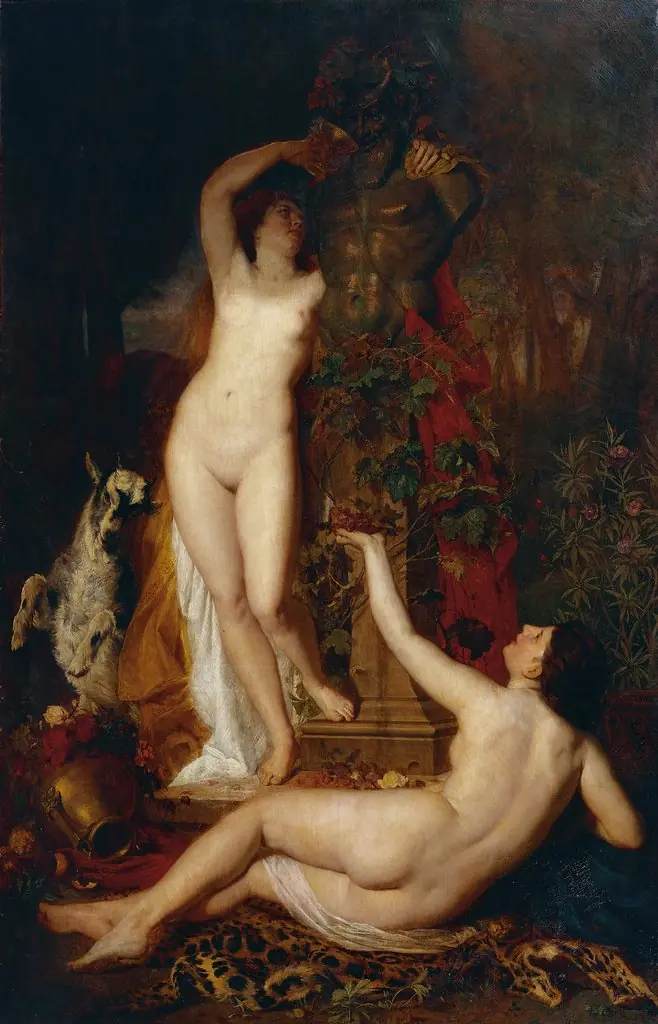
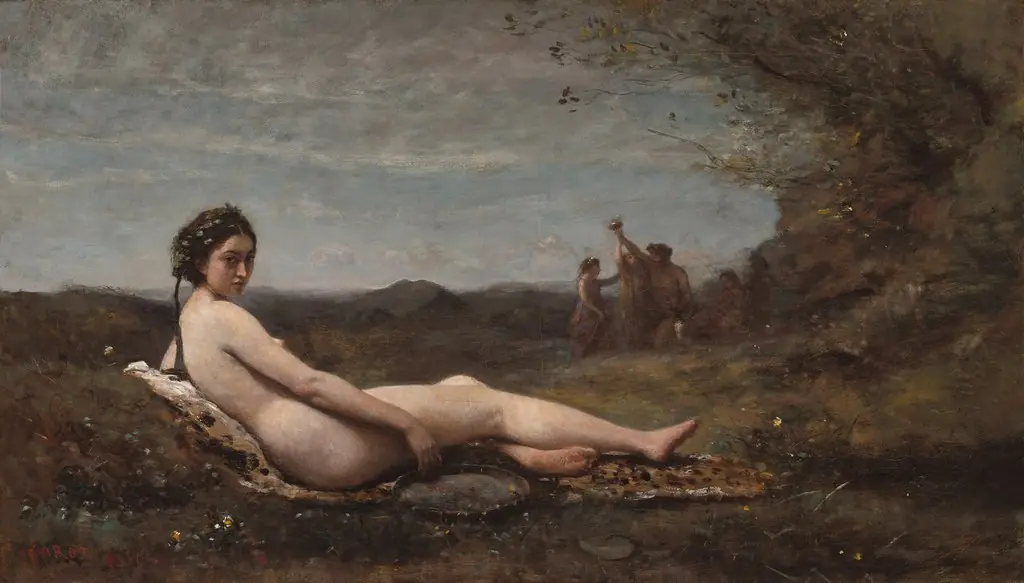
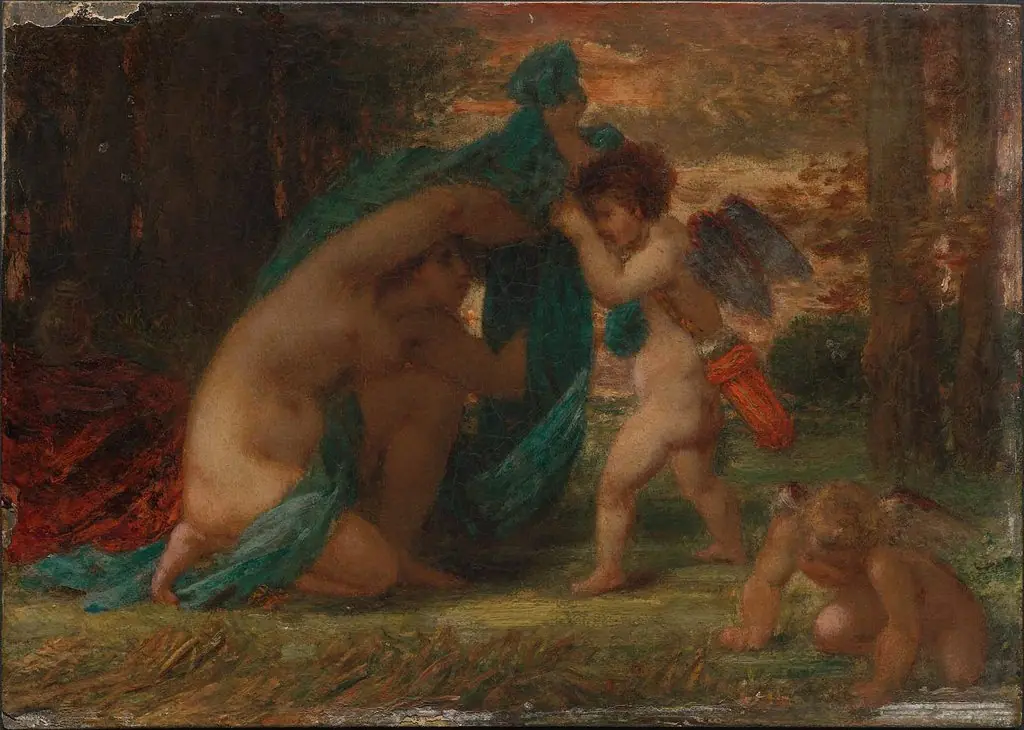
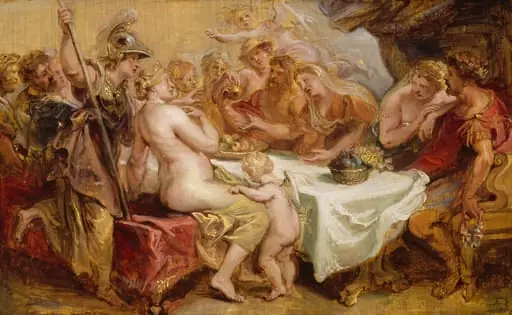
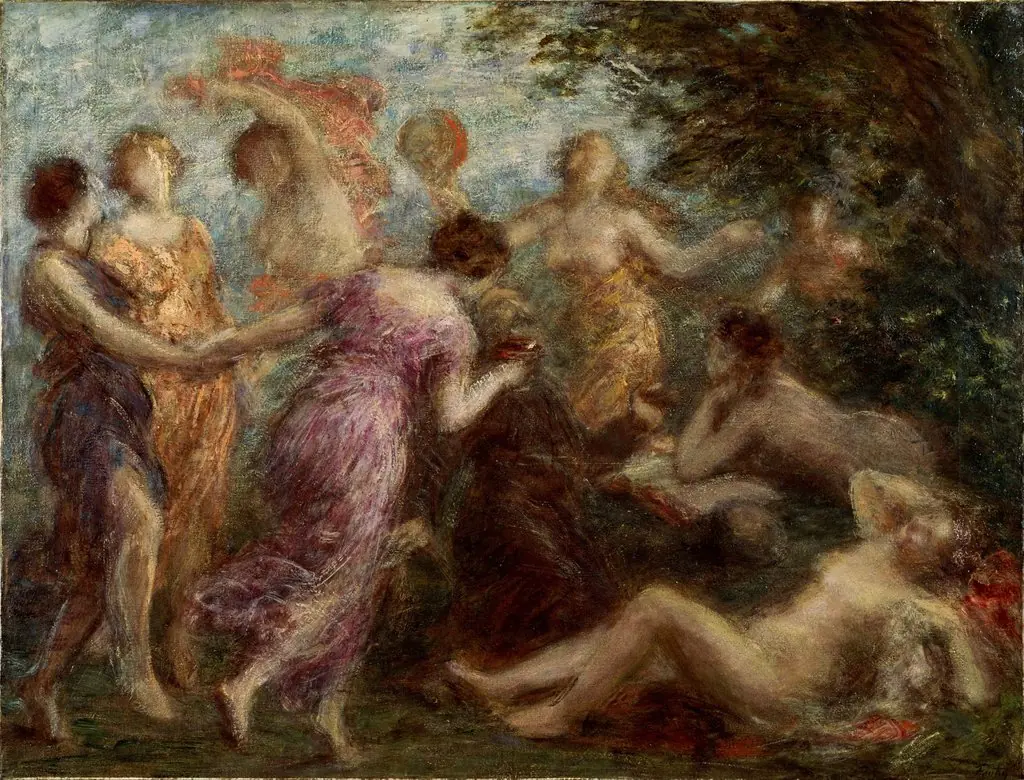
Die Erziehung des Bacchus is a drawing by Unknown. It dates from 1902 and is held in the collection of the Art Collection of the University Göttingen. This oil painting depicts a quiet outdoor scene at twilight, centered on a woman holding a tray of fruit and grapes, crowned with a wreath.
About this work
Overview
This oil painting depicts a quiet outdoor scene at twilight, centered on a woman holding a tray of fruit and grapes, crowned with a wreath.
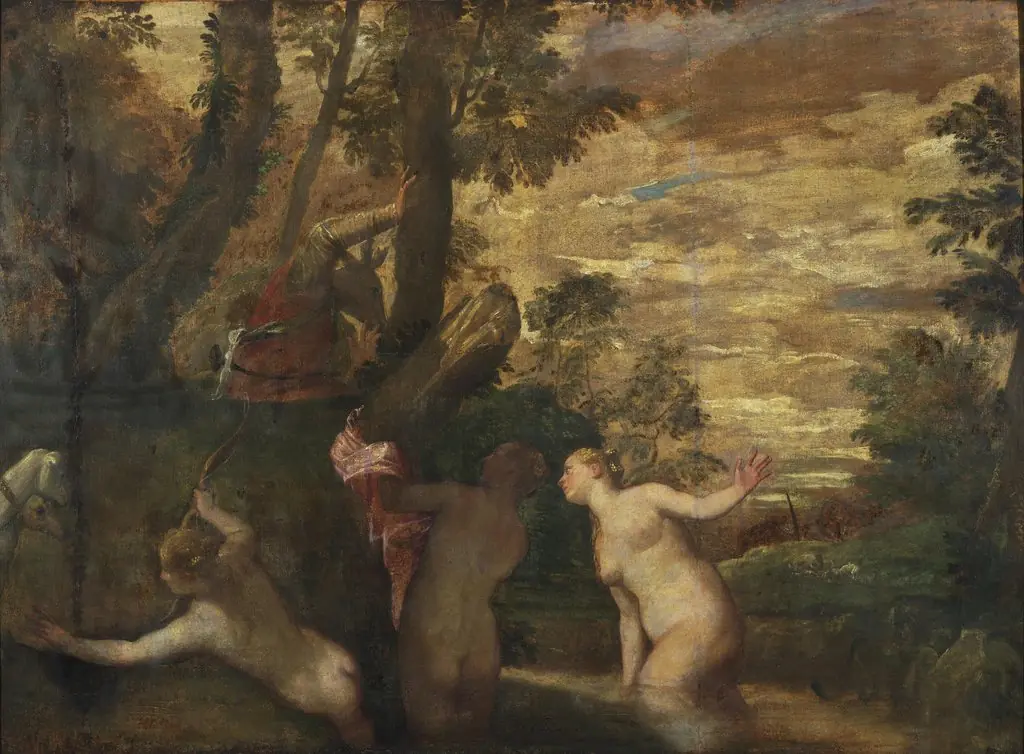
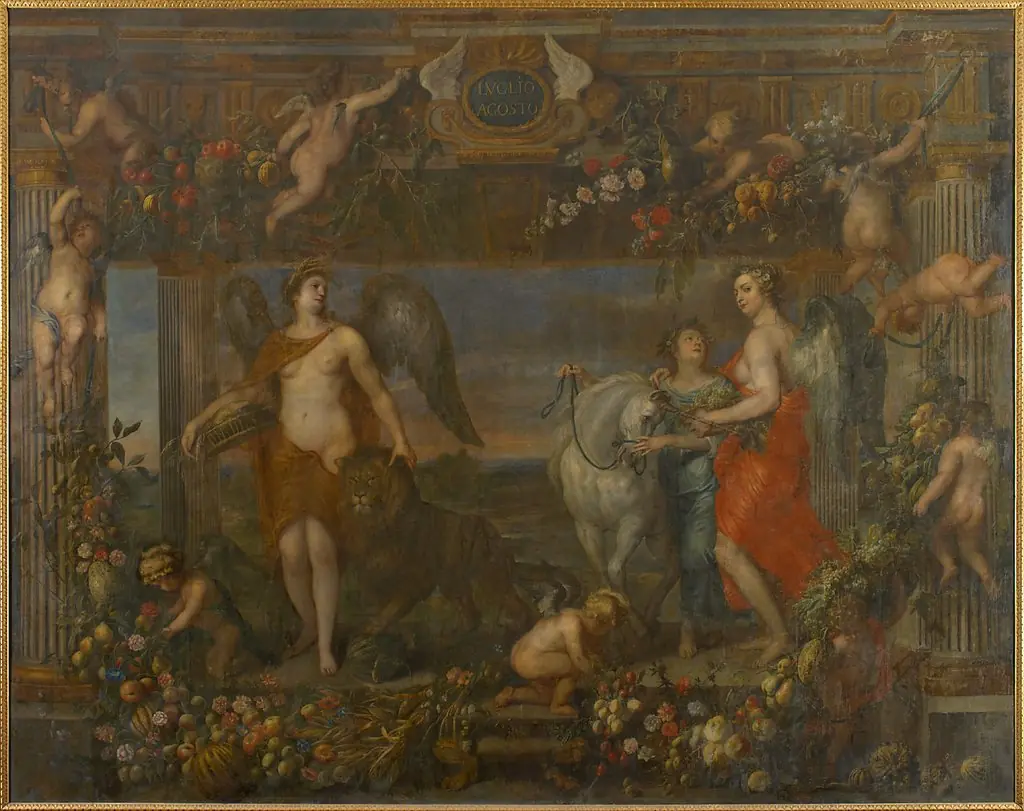
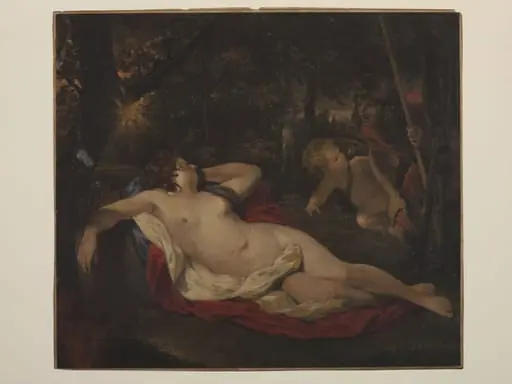
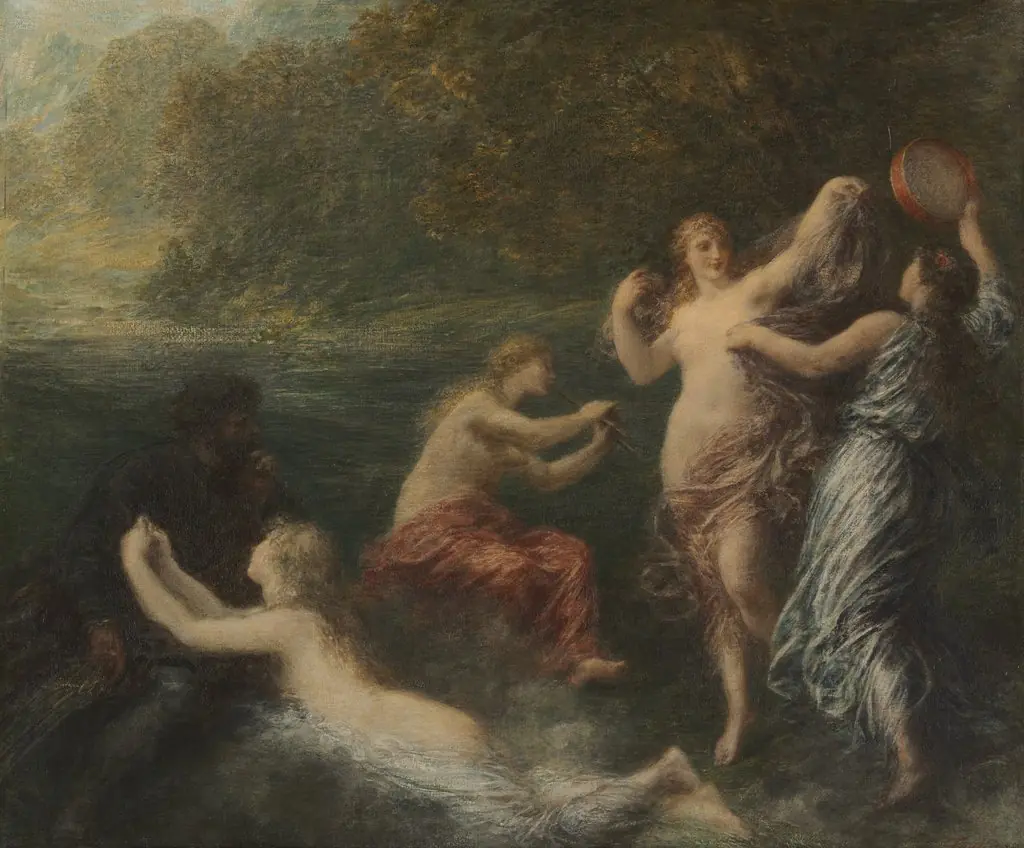
This oil painting depicts a quiet outdoor scene at twilight, centered on a woman holding a tray of fruit and grapes, crowned with a wreath. Surrounding her are two other figures—a woman resting against a tree and a child reaching toward her—set amid sheep and rugged rocks. The background fades into soft, glowing hues of sunset, while the brushwork remains loose and suggestive, avoiding tight detail in favor of atmospheric suggestion.
Subject & Meaning
The wreath and grapes imply a connection to Dionysian or pastoral traditions, evoking themes of nature’s bounty and ritual. The figures appear engaged in a moment of quiet reverence rather than revelry, suggesting a subdued celebration or offering. The child’s gesture toward the central figure may indicate transmission of tradition, while the stillness of the scene invites contemplation over festivity.
Technique & Style
The artist employs loose, visible brushstrokes that convey texture and movement without precise definition. Shadows and forms are suggested through tonal shifts rather than outlined contours, creating a sense of immediacy. Cross-hatching and layered washes subtly model the rocks and foliage, enhancing depth while preserving an unfinished, sketchlike quality that emphasizes mood over finish.
History & Provenance
The painting’s origin and early ownership remain undocumented in public records. It has not been widely exhibited or cataloged in major collections, and its creation date is not firmly established. Its survival suggests it was likely held in private hands, possibly within a regional collector’s circle, before entering its current institutional context.
Context
Created during a period when artists increasingly turned to rural and mythic subjects outside academic conventions, the work reflects a broader interest in pastoral life and classical allusion. Its informal composition and emphasis on natural light align with emerging trends in late 19th-century European painting that valued personal observation over idealized narrative.
Legacy
Though not widely reproduced or studied, the painting contributes to a lesser-known strand of symbolic rural imagery that bridges academic tradition and early modernist experimentation. Its restrained tone and unfinished technique anticipate later movements that valued emotional resonance over polished execution, influencing regional artists focused on atmosphere and quiet symbolism.
Artist & collection
Museum
Art Collection of the University Göttingen
Continue through works from the same source collection.
 Domestic Scene
 Giacomo and Cardinal Marco, investing Andrea, Abbot of San Zeno, with his Benefice
 The Nymph of Fontainebleau
 Portrait of a Woman
 Madonna and Child with Saints in the Enclosed Garden
 Venus and Minerva
 Family Group of Four on Sofa
 Wall painting from Room H of the Villa of P. Fannius Synistor at Boscoreale